Martin Scorsese’s *Goodfellas* opens one of its most iconic scenes with Henry Hill gliding through the Copacabana nightclub in a single tracking shot, greeted by name as he passes the kitchen staff and waiters before being seated at the best table. The moment, narrated by Ray Liotta’s character, presents Hill as a trusted insider in a powerful crime family, a man who helped orchestrate the infamous Lufthansa heist and witnessed murders without ever committing one himself. The film’s story ends with Hill cooperating with the FBI only after his friends turn on him, cementing the image of a mobster bound by a code that ultimately betrayed him. The real Henry Hill, however, was far removed from the charismatic figure audiences came to know.
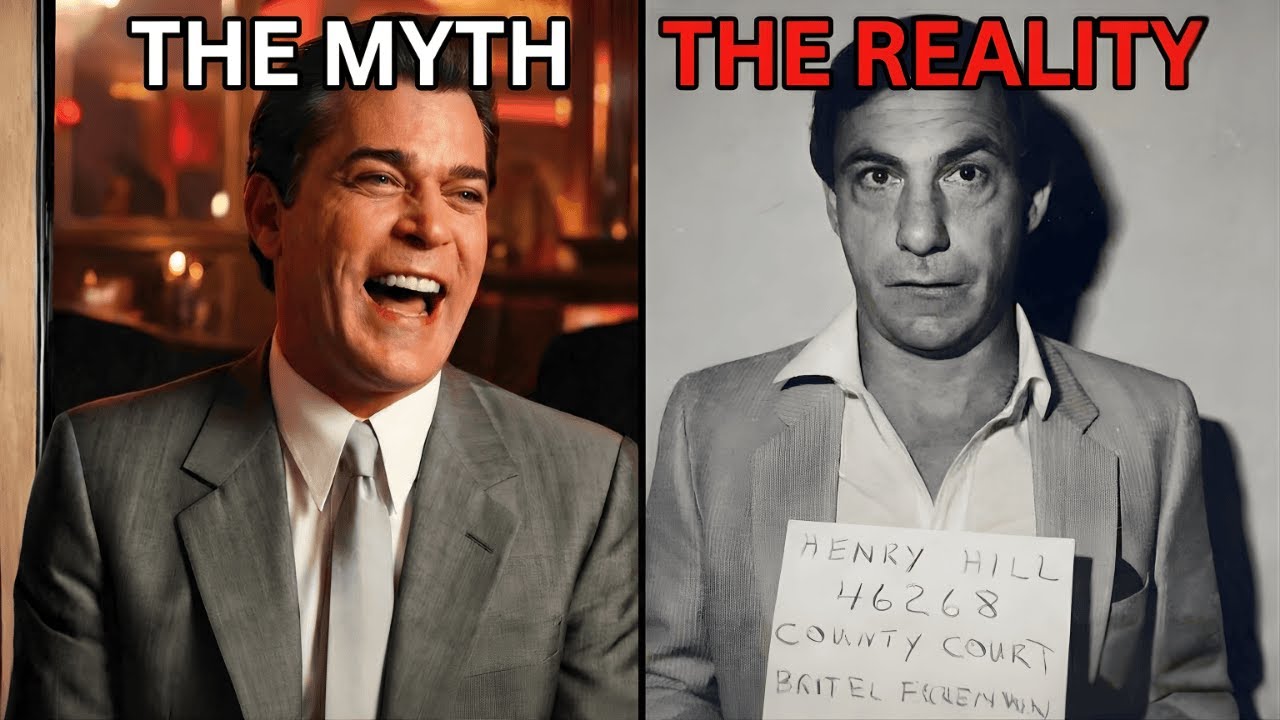
He was a mid-level associate who ran messages, moved stolen goods, and admitted to watching roughly 20 people get murdered while helping bury ten of them. Hill could never become a “made man” because his Irish father disqualified him from full membership. When the law closed in on him, he didn’t flip because loyalty had failed him; he flipped because he saw a deal that could save him from prison. Born in Brooklyn in June 1943 to an Irish father and a Sicilian mother, Hill’s heritage mattered more than anything in the world he wanted to enter.
The mafia did not make half-Irish kids, regardless of their intelligence, loyalty, or ruthlessness. Without pure Italian blood, he would always remain an associate, never sitting at the table when real decisions were made. Hill struggled with dyslexia and began skipping school to watch the wiseguys across the street from his father’s house, who drove Cadillacs, wore tailored suits, and answered to no one. At age 11, Hill started running errands for Paul Vario, a capo in the Lucchese crime family, parking cars and delivering packages.
By his teens, he had earned more money than his father ever made working a straight job. At 20, Hill joined the army but was dishonorably discharged for assault and car theft. He returned to Brooklyn and went back to Vario, and by 1967 he was part of a crew that robbed an Air France cargo terminal at JFK, walking away with $420,000. Hill wasn’t the planner or the muscle; he was the guy who knew the right people, and in that world, that was enough to earn a share.
In 1972, Hill was caught on an extortion charge and served four years upstate. The film portrays prison as a comfortable arrangement where mobsters cooked gourmet meals with contraband ingredients, but reality was harsher. Hill was locked up with violent men, and when he got out in 1978, he went back to the only life he knew. *Goodfellas* transformed Hill’s story into something more compelling than the truth.
The film opens with young Henry idolizing the wiseguys as gods, and Ray Liotta’s voiceover famously claims that being a gangster was better than being president. The Copacabana tracking shot puts Henry at the center of everything, and Scorsese told interviewers in 1990 that he wanted to show the day-to-day texture of mob life, which required a narrator who could access every part of that world. If Hill had been portrayed accurately as a middleman who passed tips and ran errands, the story would have fallen apart. You cannot guide an audience through a world you are only half in, so they elevated him and placed him in rooms he was never actually in.
The Lufthansa heist in December 1978, where $5 million in cash and jewels were stolen from a cargo terminal at JFK, remains one of the biggest cash robberies in U. S. history. In the film, Henry sits with Jimmy Conway, Tommy DeVito, and the crew at Robert’s Lounge mapping out the operation, with his voiceover walking the audience through the plan.
In reality, Hill’s role was passing a tip from an airport worker to a bookmaker, who then passed it to Jimmy Burke. Hill was not at the terminal when the robbery happened. He later told the History Channel that Burke killed nearly everyone involved because it was easier to put a bullet in them than pay their share. Hill knew about the murders but remained peripheral to the heist itself.
Scorsese and co-writer Nicholas Pileggi made him central because it solved a storytelling problem: if the narrator isn’t involved in the biggest set piece, the movie loses momentum. The film’s biggest edit comes in how it handles violence. In *Goodfellas*, Henry never kills anyone, and when Tommy and Jimmy murder Billy Batts in the back of Henry’s bar, the camera stays on Henry’s horrified face. Later, when they dig up the body to move it, Henry throws up.
The film presents him as someone with limits. Hill told biographers he never personally killed anyone, a claim that might be true, but he also admitted to watching about 20 murders and helping dispose of at least ten bodies. He described Tommy DeSimone, the man Joe Pesci plays, as a homicidal maniac who carried pearl-handled revolvers and carved notches for every kill. Scorsese’s editor, Thelma Schoonmaker, explained that they toned down the real violence because showing it accurately would have looked like a snuff film.
Jimmy Burke’s brutality and DeSimone’s sadism, shown as they truly were, would have made the film unwatchable and jeopardized the R rating. The cost is that audiences believe Henry Hill had a conscience. He did not. He helped cover up murders for years and never expressed real remorse.
The name changes in the film tell their own story. Jimmy Conway, Paulie Cicero, and Tommy DeVito were fictionalized versions of Jimmy Burke, Paul Vario, and Tommy DeSimone. Glenn Kenny’s book *Made Men* revealed that Jimmy Burke’s daughter demanded $100,000 to use her father’s name in the film, and Warner Bros. simply renamed him rather than pay.
The other names were changed as well for legal protection against defamation suits and family extortion. The changes gave the screenwriters freedom to fictionalize without getting sued, but they also erased accountability. Audiences don’t know Jimmy Conway is Jimmy Burke, and they don’t realize these were real men who committed real murders while their families profited from keeping their names off-screen. Hill’s downfall came in 1980.
He had been running cocaine, violating Paul Vario’s explicit rule against drug dealing. Vario’s objection wasn’t moral; he cared about federal attention, and Hill was getting sloppy. When Hill was arrested on narcotics charges and released on bail, he heard a wiretapped phone call revealing that Jimmy Burke was planning to kill him to tie up loose ends from the Lufthansa heist. Hill contacted the FBI not because he was forced, but because he was facing 20 years in prison and a murder contract.
He cut a deal, and his testimony put more than 50 mobsters behind bars, including Burke and Vario. Hill and his family entered witness protection but were eventually kicked out for continuing to commit crimes under their new identities. *Goodfellas* frames the cooperation differently. In the film, Henry flips only after his wife Karen finds a gun under the mattress, making it look like a desperate final move from a man with no choice.
The final scene shows Henry in witness protection, miserable, narrating that he used to be somebody and is now a “schmuck. ” The self-pity is Scorsese’s invention. Hill wasn’t reluctant; he saw an opportunity to save himself and took it. After leaving witness protection, Hill spent decades profiting from his notoriety.
He co-wrote *Wiseguy* with Pileggi, sold pasta sauce under his name, painted mob-themed art, gave interviews, and appeared on Howard Stern’s show. He died in 2012 at age 69, never expressing real regret for the violence he enabled. Today, most people believe Henry Hill was a major player who masterminded the Lufthansa heist, never killed anyone, and only cooperated with authorities because his friends betrayed him first. They believe organized crime was bound by a code of loyalty and that Henry’s tragedy was losing that world.
*Goodfellas* is one of the most watched crime films ever made, and Hollywood’s version stuck because it’s better than the truth. A guy who passed tips and buried bodies isn’t compelling; a charming narrator walking through the Copacabana in one unbroken shot is. Scorsese and Pileggi built a myth that works as cinema. They compressed decades into two and a half hours, renamed mobsters to avoid lawsuits, toned down violence to keep an R rating, and elevated Hill’s status so audiences had a guide to follow.
The truth is messier. Hill was complicit in violence he later downplayed, played a smaller role in legendary crimes than the film suggests, and cooperated with federal authorities because it was the smart play, not the noble one. He was opportunistic, not tragic, and spent the rest of his life cashing in on a reputation the movie built for him. What gets lost is an honest picture of organized crime, traded for the seductive fiction of a smooth operator.
Decades from now, when someone mentions Henry Hill, they will still picture Ray Liotta walking through that kitchen, not the real guy who spent 40 years hustling and never stopped.