The New Jersey Supreme Court ruled that Simone Rizzo De Cavalcante, the mob boss known as Sam the Plumber, must continue testifying before the State Commission of Investigation, marking his 18th appearance since his original 1970 subpoena. Before HBO aired a single episode of The Sopranos, before James Gandolfini sat on a therapist’s couch, before Tony Soprano fed ducks in his swimming pool, the FBI had already captured a real mob boss on tape. For six years, in a plumbing supply office in Kenilworth, New Jersey, De Cavalcante talked freely about murder, money, respect, and the frustrations of running a criminal empire. The Sopranos wasn’t just inspired by real life.
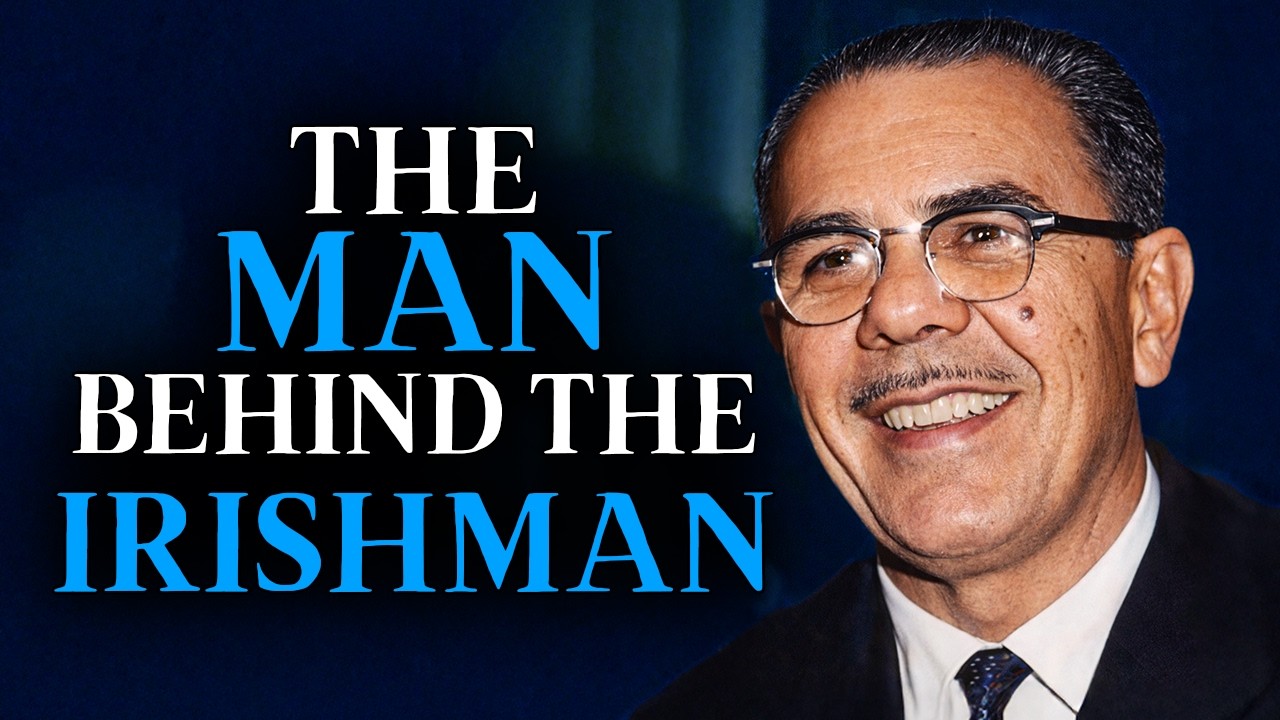
In ways that disturb many viewers, it essentially was real life. Born in Trenton, New Jersey in 1913 to Sicilian parents, De Cavalcante grew up on the edges of organized crime. Like many first-generation Italian Americans of his era, he found the fastest path to money and respect ran through the mob. He built the DeCavalcante family, sometimes called the Kenilworth mob or the Elizabeth mob, into one of the smaller independent crime families in America.
It was not a satellite of the New York families, but it was not their equal either. Sam ran legitimate businesses alongside the rackets, most famously a plumbing and heating supply company called Kenilworth Heating and Air Conditioning. He really did sell pipes and boilers. He also ran gambling operations, loan sharking, and labor racketeering across northern New Jersey.
That combination, a legitimate businessman who was also a mob boss, who complained about work, worried about his reputation, and had people he liked and people he couldn’t stand, became the exact template David Chase used thirty years later to build Tony Soprano. In 1964, the FBI planted a microphone inside De Cavalcante’s plumbing supply office. This was a significant moment for the Bureau. For decades, J.
Edgar Hoover had insisted there was no such thing as a national organized crime syndicate. The 1957 Appalachian meeting, where New York State Police stumbled onto over sixty mob bosses gathered at an upstate farmhouse, finally forced the FBI to acknowledge the reality everyone else had been living in. By 1964, the Bureau was playing catch-up, bugging offices and building files on families they had pretended did not exist. When agents planted that microphone in De Cavalcante’s office, they expected coded conversations about gambling and careful whispered discussions about money.
What they got instead was Sam De Cavalcante running his mouth for six years. Not in code, not in whispers. Sam talked in full sentences, with opinions, complaints, gossip, and laughter, with the casual confidence of a man who believed his office walls were keeping secrets. He discussed business.
He discussed murders. He discussed the internal politics of the Commission. He discussed other bosses by name with assessments ranging from respectful to withering. FBI agents monitoring the bug reportedly could not believe what they were hearing.
One agent described the recordings as the single most valuable source of intelligence about the internal workings of the American Mafia the Bureau had ever obtained. From 1964 to 1965 alone, agents recorded over 2,000 conversations. The transcripts read like nothing law enforcement had ever seen. Here was a mob boss discussing the mechanics of organized crime with the same casual frankness a man might use to complain about his commute.
Murder was discussed the way other men discuss personnel decisions. Corruption was discussed the way other men discuss networking. The entire violent, illegal, meticulously organized structure of the American underworld was laid out in plain conversational English, recorded on tape, sitting in an FBI evidence locker. What made the tapes extraordinary was that Sam could not stop talking about everybody else.
On Carlo Gambino, considered by many to be the most powerful mob boss in America, Sam was respectful but measured. Yet through the transcripts, one can hear a kind of resentment that a man he considered his equal was seated at a table Sam was not invited to. The Commission ate at Sam De Cavalcante. Established by Lucky Luciano in the early 1930s after the Castellammarese War, the Commission was designed to function as a board of directors for organized crime nationwide.
The original members were the bosses of the five New York families plus Chicago. Everyone else was essentially a tributary, operating under the Commission’s framework but not sitting at the table. Sam was in that second category, and it drove him crazy. The tapes captured Sam making his case that New Jersey deserved more respect, that his family’s contributions were not being properly credited, that he was being treated like a regional manager when he had the resume of a CEO.
He worked the relationships, cultivating ties with New York bosses, particularly Gambino. He made himself useful as a mediator in disputes between other families. But being useful is not the same as being equal. Sam wanted a permanent seat.
He never got it. Let’s not forget what Sam actually was. The tapes captured the Joseph Sfera case, one of the clearest examples of mob violence discussed with calm analytical detachment. Sfera was a member of Sam’s own family who had become a problem.
Sam discussed the justification and the logistics the way another businessman might discuss letting an employee go. Sfera was killed. What the tapes revealed about mob violence was not theatrical brutality but something more disturbing: the bureaucratic normalcy of it. Murders were approved the way contracts were approved.
They went up the chain, received authorization, were carried out, and everyone moved on. The conversation on tape did not linger. This is the banality that later became the beating heart of Tony Soprano, a complicated, intelligent, funny, deeply flawed man who also ordered people killed. David Chase has been careful about exactly how much credit he gives the DeCavalcante tapes for inspiring The Sopranos.
He has acknowledged New Jersey as a setting and the real mob families there as general inspiration. But the parallels are numerous and specific. Tony Soprano was boss of a New Jersey family in a complicated, resentful, subordinate relationship with New York. Sam DeCavalcante ran a New Jersey family in exactly that position.
Tony’s sessions with Dr. Melfi became the structural spine of the show. The DeCavalcante tapes contain something that functions as the emotional equivalent: Sam in his office talking, processing, complaining about other bosses, about family members, about people who did not show proper respect. The tapes are, in a very real sense, Sam’s therapy sessions delivered to an FBI microphone instead of a licensed professional.
There are specific details Chase has never fully explained. On the tapes, Sam says he and his men watch The Untouchables and see themselves in it. In The Sopranos, Tony and his crew famously watch and critique mob movies in exactly the same way, arguing about whether The Godfather is accurate, finding themselves reflected in fictional criminals. That meta-awareness of real gangsters watching fictional gangsters was in the DeCavalcante tapes decades before Chase wrote a single scene.
Anthony Rotondo, a DeCavalcante captain who later became a government witness, was reportedly shown episodes of The Sopranos and said, that’s us. That’s exactly us. In 1969, Sam’s world began to come apart. The FBI, armed with transcripts from six years of recordings, moved toward indictment.
The 1969 indictment hit Sam on conspiracy charges related to his gambling operations. It was enough to end his run as an active boss. Sam pleaded guilty and was sentenced to prison. The tapes were not immediately public.
It was only when the New York Times published excerpts in 1969 that the broader public got any sense of what the FBI had been sitting on. What eventually emerged was the single most complete recorded portrait of how the American Mafia actually operated from the inside. Not from informants, not from wiretaps where people were naturally guarded, but from a room where the boss talked freely, openly, and continuously for years. After Sam stepped away, the family went through a succession of leadership that never quite stabilized.
The DeCavalcante family continued to operate into the 1980s and 1990s but never recovered the coherence it had under Sam. He had been, in a real sense, the whole operation. Sam De Cavalcante died in 1997 at age 84. He outlived most of his contemporaries and lived just long enough to see The Sopranos announced, though the show did not premiere until 1999.
Whether Sam ever saw it, whether he recognized himself in the heavy man on the therapy couch in New Jersey, is not recorded. The DeCavalcante tapes represented a turning point in how American law enforcement understood organized crime. Before those tapes, the FBI had theories and informants but not the internal voice of the organization itself. The tapes provided that.
Techniques refined on Sam’s office were applied elsewhere. The legal frameworks developed around the admissibility of this kind of surveillance shaped the RICO statute that would later be used to dismantle multiple families simultaneously. Sam never got his seat at the Commission table, but his voice, preserved on tape, influenced organized crime history more than most of the men who did sit there. The Sopranos premiered on January 10, 1999, running for six seasons and 86 episodes.
It won 21 Emmy Awards and changed American television drama permanently. Every prestige drama that followed owes something to the door The Sopranos kicked open. At the foundation of that show was the sound of Sam De Cavalcante talking in his office, not knowing anyone was listening. David Chase turned it into art.
Sam had already lived it as reality. One of them became a legend. The other one already was.
The difference is that one had a writer and the other had a wire.