Abraham Lincoln is remembered as the president who redefined the Civil War, transforming it from a fight to preserve the Union into a crusade to end slavery. Yet the 16th president drew a clear line between opposing enslavement and supporting racial equality, and for years he backed a little-known plan to send freed Black Americans to a new colony abroad. Since the start of his political career, Lincoln supported the American Colonization Society, founded by Presbyterian clergyman Robert Finley in 1816. The organization pushed for the repatriation of emancipated slaves and freeborn people of color to Africa, arguing that Black Americans, most of whom had lived in the U.
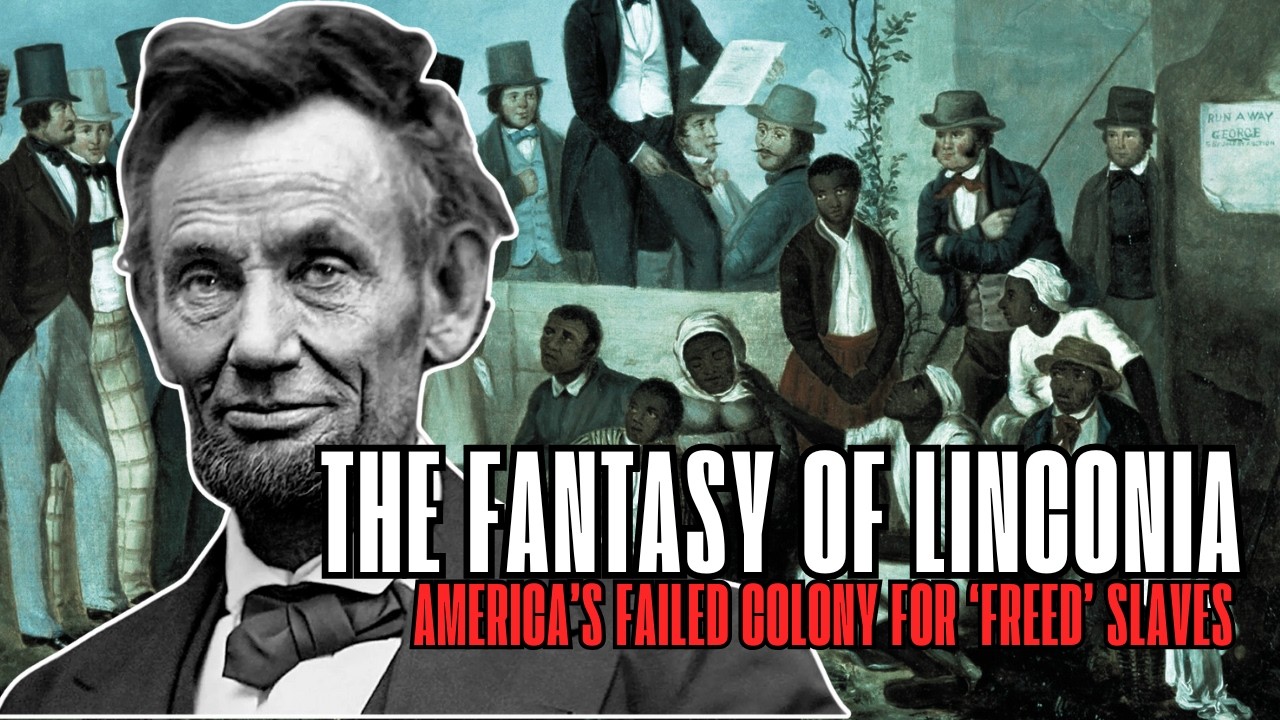
S. for generations, could not integrate into American society. The proposal drew sharp opposition from African-Americans and genuine abolitionists. Between 1821 and 1847, only a few thousand freed slaves made the journey to the West African settlements that later became Liberia.
The idea was not new even then. In 1786, London’s Committee for the Relief of the Black Poor advocated sending impoverished Black British residents to the newly established African colony of Sierra Leone. That scheme, also rooted in racist assumptions, saw only about 276 passengers actually arrive on its shores. On August 14, 1862, Lincoln became the first president to invite African-Americans to the White House to discuss policy.
He urged his guests to support a plan to resettle emancipated slaves on 10,000 acres in present-day Panama, where they would mine coal for the U. S. Navy. Lincoln told the delegation, “You and we are different races and have between us a broader difference than exists between almost any other two races.
But for your race among us, there could not be war. And without the institution of slavery and the colored race as a basis, the war could not have an existence. ”
He said the scheme needed “intelligent colored men” capable of thinking as white men, rather than those who had been systematically oppressed. Delegation chairman Edward Thomas promised to consult his group and respond shortly.
Congress had already set aside funds for resettlement, including $100,000 for free slaves from Washington, $500,000 for slaves whose owners were disloyal to the Union, and a recommendation from the House Select Committee on Emancipation and Colonization that $20 million be appropriated to transport confiscated slaves beyond U. S. borders. On August 28, 1862, Lincoln accepted Kansas Senator Samuel C.
Pomeroy’s offer to organize immigration parties of Black Americans willing to travel to Central America. An agreement was signed with landowner Ambrose W. Thompson to develop the Panama mines where the immigrants would work. Hundreds of Black Americans sold their belongings and gave up their homes, driven by promises of a better life and steady income.
The plan drew fierce criticism across the abolitionist movement. Frederick Douglass remarked that the president seemed to possess “an ever-increasing passion for making himself appear silly and ridiculous. ”
The daily newspaper The National Republican ran an editorial titled “The Colony of Linkia,” reporting that “the necessary arrangements for founding a colony on a grand scale have been completed. ”
But the scheme soon unraveled.
Thompson’s rights to the Panama mines were called into question, and representatives from Costa Rica, Nicaragua, and Honduras formally objected. Although Pomeroy claimed to have found 500 volunteers willing to make the trip, Lincoln abandoned the idea, likely realizing he could not expect the people who had fought for the U. S. in the Civil War to be practically exiled afterward.
The president never publicly mentioned the colonization plan again.