Ernst Kaltenbrunner, the Austrian lawyer who inherited command of the Nazi Reich Security Main Office and ran its machinery of terror until the final days of World War II, was hanged at Nuremberg on October 16, 1946, at the age of 42, after a tribunal found him directly responsible for mass murder on a scale that prosecutors said had no precedent in human history.
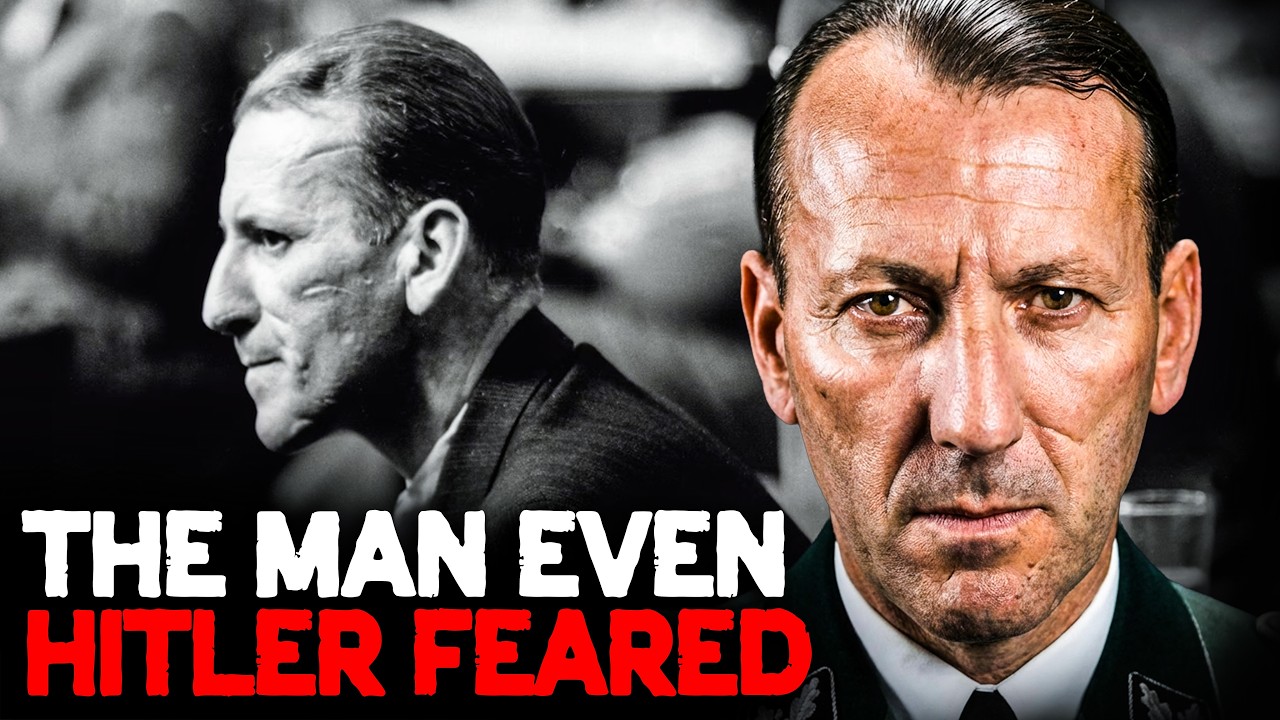
His name never carried the dark fame of Heinrich Himmler or Reinhard Heydrich. Yet when Allied prosecutors assembled their cases against the surviving leaders of Nazi Germany, Kaltenbrunner stood out as the man who had held the entire apparatus of surveillance, arrest, torture, and extermination in his hands.
Born on October 4, 1903, in Ried im Innkreis in Upper Austria, Kaltenbrunner was the son of a respected provincial lawyer. He grew up in Linz, the same Danube city where Adolf Hitler spent his formative years, in a solidly middle-class Catholic household that gave no outward sign of the path its eldest son would take.
He studied law at the University of Graz, earning his degree in 1926, and threw himself into the German nationalist fraternities that dominated Austrian student life. There he acquired the dueling scars on both cheeks that would mark his face for life and give him a menacing, almost theatrical presence.
Allied interrogators later described him as physically intimidating even in defeat, a tall, broad-shouldered man, reportedly about six feet two inches, whose scarred face and cold gaze projected contained violence. In the culture of the SS, where physical dominance was prized, his appearance served him well.
He joined the Nazi Party in 1930, receiving membership number 300,179, and entered the SS the following year with number 13,039, a low number reflecting his early commitment to Himmler’s organization. He was a true believer, not an opportunist boarding a rising train.
When the Austrian government banned the Nazi Party and the SS in 1933, Kaltenbrunner continued organizing underground in Upper Austria. He built cells, recruited members, maintained contact with German SS leaders across the border, and engaged in the clandestine political violence of the Austrian Nazi movement.
Arrested in 1934 for plotting against the state, he spent roughly six months in prison. The experience did not moderate him. If anything, it hardened his conviction that the Austrian government was an illegitimate obstacle to union with Germany, and he resumed underground work immediately upon release.
The Anschluss of March 1938 transformed his life overnight. Within weeks he was appointed Higher SS and Police Leader for the Danube region, placing him in command of all SS and police forces in Austria, and State Secretary for Security in the Austrian administration.
In those dual roles, Kaltenbrunner presided over the immediate post-Anschluss terror. Political opponents of every stripe were arrested. The jails of Vienna filled rapidly.
It was in Vienna that Adolf Eichmann developed the bureaucratic techniques of forced emigration and dispossession later applied across occupied Europe.
During the Kristallnacht pogrom of November 9 and 10, 1938, Austria was among the worst-affected regions. Under Kaltenbrunner’s authority, Austrian Jews suffered the destruction of synagogues, mass arrests, beatings, and killings that shattered the community and drove thousands to flee.
In August 1938, just months after the Anschluss, the Mauthausen concentration camp was established near the town of the same name in Upper Austria. It fell under Kaltenbrunner’s authority throughout his tenure as the region’s senior SS figure.
Mauthausen was notorious even within the camp system for its granite quarry, where prisoners were forced to carry enormous blocks of stone up 186 steps known as the stairs of death, under conditions deliberately designed to work them to death in the shortest possible time.
On January 30, 1943, exactly ten years after Hitler’s appointment as Chancellor, Himmler summoned Kaltenbrunner to Berlin and placed him in charge of the Reich Security Main Office, the RSHA, the organization that controlled the Gestapo, the SD, and the Kripo.
The RSHA was the central nervous system of the Nazi state’s system of surveillance, terror, and mass murder. It had been built by Heydrich, who organized the Wannsee Conference and oversaw the Einsatzgruppen, until his assassination by Czech paratroopers in May 1942.
Kaltenbrunner was not the most obvious successor. He lacked Heydrich’s administrative brilliance and experience with complex intelligence bureaucracies. But Himmler chose him because he was absolutely loyal, personally brutal, and could be trusted to run the RSHA as an instrument rather than an independent power base.
He was promoted to SS Obergruppenführer and General of Police, one of the highest ranks in the SS hierarchy, and now commanded roughly 50,000 employees with tentacles reaching into every corner of occupied Europe and authority to arrest, imprison, torture, and 𝓀𝒾𝓁𝓁.
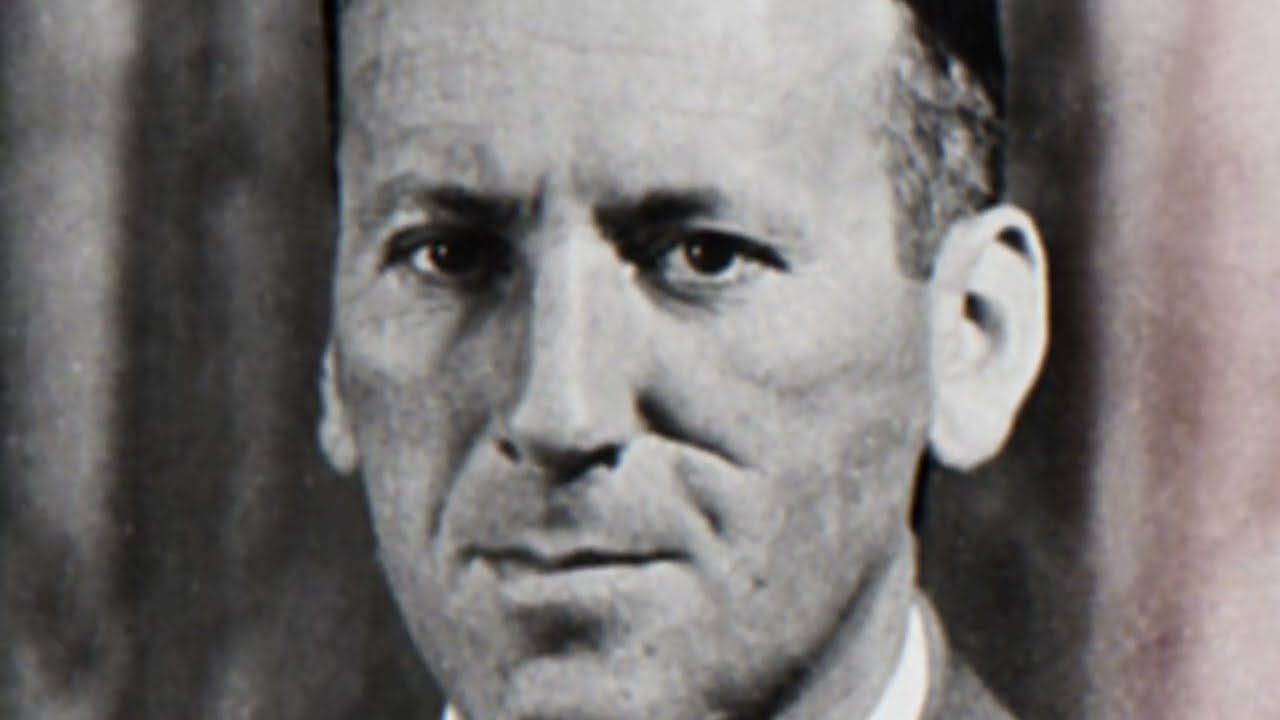
Where Heydrich had been an innovator and a builder, Kaltenbrunner was a consolidator and an implementer. He was a heavy drinker, blunt in his briefings, and more personally involved in the physical details of the violence the RSHA organized and supervised.
Under his authority, the Gestapo intensified its operations against political enemies. Suspects were seized in the night, transported to Gestapo headquarters, and subjected to what the organization euphemistically called enhanced interrogation, meaning torture, in soundproof cells across Europe.
The Gestapo relied heavily on informants, maintaining a vast network of ordinary citizens who reported on neighbors, colleagues, and even family members. Historians later showed the organization was thinly staffed, its power resting on legal impunity, torture, and the population’s knowledge that denunciation could mean death.
Under Kaltenbrunner’s direct authority, executions in German prisons and concentration camps rose dramatically. The guillotine at Plötzensee Prison in Berlin worked overtime in 1943 and 1944, and he received personal reports on the executions carried out under his authority.
But it was in the implementation of the Final Solution that his authority was most catastrophically exercised. He inherited the killing machinery in full operation and sustained and extended it through the period when Germany’s military decline made the regime desperate to complete the genocide.
At the center of the bureaucratic management of the Holocaust within the RSHA was Amt IV B4, the Gestapo section dedicated to the so-called Jewish question, headed by Adolf Eichmann, who reported to Kaltenbrunner through Gestapo chief Heinrich Müller.
Documents produced at Nuremberg demonstrated beyond reasonable doubt that Kaltenbrunner was fully informed of Eichmann’s activities and personally authorized and approved the deportations organized from 1943 onward. His signature appeared on hundreds of documents related to the management of Jewish populations.
He was not a man who could claim ignorance. He was the man making it happen. The deportations from Greece, from Italy after the German occupation of September 1943, and from the remaining Jewish communities of France, Belgium, the Netherlands, Romania, Bulgaria, and Slovakia were coordinated by Eichmann’s office within his RSHA.
Witnesses testified that Kaltenbrunner visited concentration camps, including Mauthausen, and was present at demonstrations of execution methods, including gassing with carbon monoxide, watching with the detached interest of a man inspecting an industrial process.
The year 1944 was the year of Hungary, and the Hungarian deportations provided some of the most damning documentary evidence against him. Germany occupied Hungary in March 1944, removing the last obstacle to the deportation of its approximately 700,000 Jews.
The deportations began on May 15, 1944, and proceeded with 𝓈𝒽𝓸𝒸𝓀𝒾𝓃𝑔 efficiency. In less than eight weeks, approximately 437,000 Hungarian Jews were deported to Auschwitz-Birkenau. Trains ran four times a day at peak operation, each carrying thousands in cattle cars.
Most who arrived at Auschwitz were selected for immediate death in the gas chambers. The scale and speed pushed the killing machinery to its limit, with crematoria working around the clock and bodies sometimes burning in open pits when capacity was exceeded.
Kaltenbrunner met personally with Eichmann to discuss the progress of the deportations and received regular reports on the numbers deported. When Horthy tried to halt the operation in July 1944 under international pressure, Kaltenbrunner worked to circumvent his orders.
On July 20, 1944, Colonel Claus von Stauffenberg placed a briefcase bomb under a conference table at Hitler’s Wolf’s Lair headquarters. Hitler survived, and the failure triggered the most brutal wave of repression in the history of the Third Reich, with Kaltenbrunner at its absolute center.
Within hours he was in direct contact with Himmler and Hitler, directing the RSHA’s response to a conspiracy involving hundreds of senior military officers, diplomats, and civilian officials. Thousands were arrested, interrogated with extraordinary brutality, and tried before the People’s Court.
Executions were carried out by hanging from meat hooks with piano wire, and Hitler ordered them filmed so he could watch. By the time the reprisals were complete, nearly 5,000 people had been executed in connection with the July 20 conspiracy.
Kaltenbrunner also personally signed the Kugel Erlass, or bullet decree, of March 1944, ordering that recaptured escaped prisoners of war who were not British or American, primarily Soviet and Polish officers, be delivered to Mauthausen and executed by shooting.
The decree followed the great escape from Stalag Luft III, when 76 Royal Air Force officers escaped through a tunnel and 73 were recaptured. On Hitler’s personal orders, 50 of the 73 were executed, a violation of the Geneva Conventions that became its own war crimes prosecution.
As the Allied armies closed in through 1944 and into 1945, the RSHA took on an additional function: maintaining the will to fight among a population and military increasingly aware the war was lost, hunting down anyone expressing defeatist sentiment.
Flying courts-martial sentenced deserters and alleged cowards to summary execution. The bodies of those executed were sometimes left hanging from lampposts with signs identifying their alleged crimes, in a deliberate attempt to intimidate others into continued compliance.
In the spring of 1945, as the American army advanced, the SS authorities at Mauthausen faced what to do with tens of thousands of surviving prisoners. Some were executed in the final weeks, others forced onto death marches that killed thousands through exhaustion and cold.
On April 28, 1945, the last major mass execution at Mauthausen took place when 33 Dutch Secret Service agents were shot under orders that traced back through the RSHA to Kaltenbrunner himself. Within days he had fled into the Austrian Alps as the Reich collapsed.
Germany’s unconditional surrender was signed on May 7, 1945. Hitler was dead by his own hand in Berlin. Himmler would swallow a cyanide capsule on May 23.
Kaltenbrunner, calling himself Dr. Ernst Unterhuber, retreated to a remote mountain hut near Altaussee with his mistress, Gisela von Westarp.
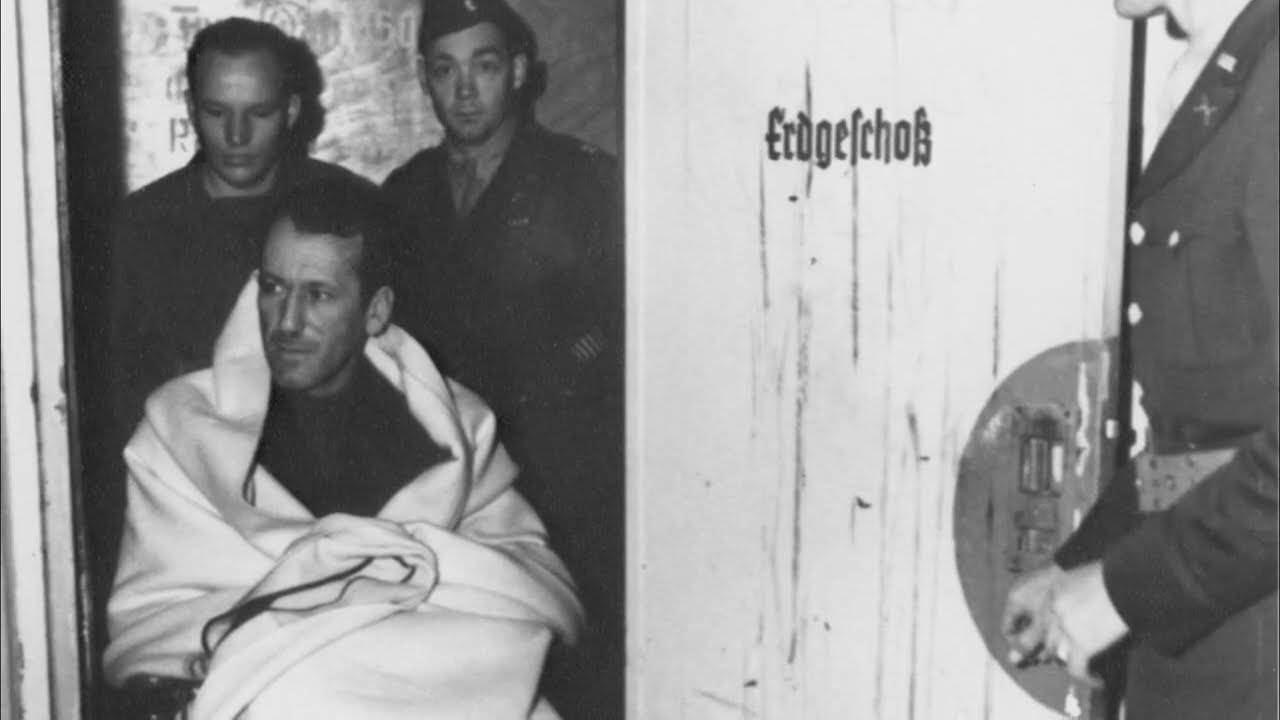
He grew a beard and stayed away from populated areas, hoping that in the chaos of the post-war period a single man could disappear. He was wrong. On May 12, 1945, just five days after Germany’s surrender, American Counter Intelligence Corps agents, acting on a tip, tracked him down.
His enormous physical presence, his distinctive scarred face, and documents found in the hut made any sustained deception impossible. The highest-ranking surviving SS official was under arrest, and he was transferred to the facilities where the most senior Nazi prisoners were held.
The International Military Tribunal at Nuremberg opened on November 20, 1945, with 24 of the most senior surviving Nazi leaders indicted on four counts: conspiracy to wage aggressive war, crimes against peace, war crimes, and crimes against humanity.
Kaltenbrunner occupied a unique position among the 21 defendants ultimately present. He was the highest-ranking SS officer in the dock, and the evidence of direct personal involvement in the administration of mass murder against him was the most concentrated and specific.
His defense was a systematic denial of knowledge and responsibility. He claimed to have been essentially an intelligence gatherer rather than an operational commander, insisting that subordinates operated with independence and that he had not understood the full implications of documents he signed.
The prosecution demolished this defense with methodical precision. Document after document bearing his signature was introduced, each relating to mass murder or persecution. Letters ordering executions, reports on deportations, authorizations for Sonderbehandlung, the RSHA’s euphemism for execution without trial.
In late November 1945, shortly after the trial began, he suffered what was described as a cerebral hemorrhage and was hospitalized for several weeks. Whether the episode genuinely incapacitated him or was exaggerated as a tactical move remains unclear.
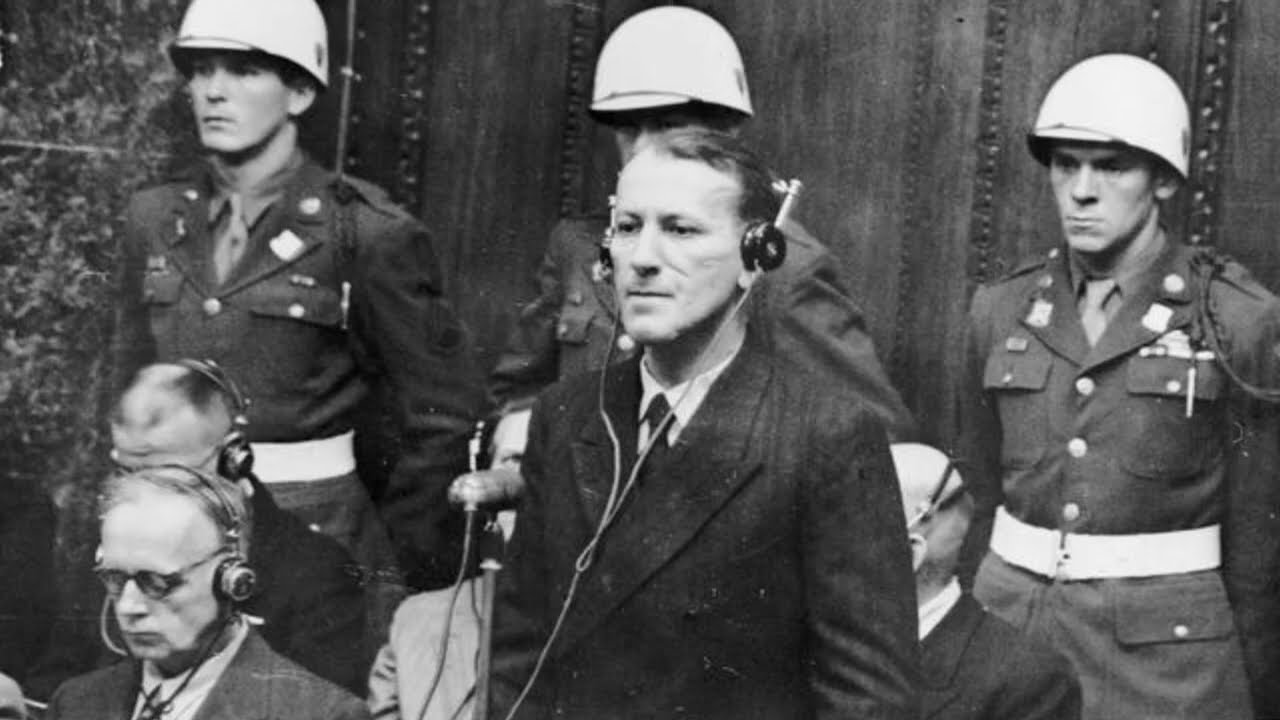
When he finally took the witness stand in his own defense in April 1946, he maintained his denials with a consistency many observers found extraordinary. He acknowledged heading the RSHA and signing some documents, but insisted his role had been primarily informational.
 The tribunal was not persuaded. On September 30 and October 1, 1946, the judges read their verdicts. Kaltenbrunner was found guilty on counts three and four, war crimes and crimes against humanity.
The judgment was unambiguous: he was directly responsible for an enormous number of murders, tortures, and other crimes.
Twelve defendants were sentenced to death by hanging, including Göring, Ribbentrop, Keitel, Rosenberg, Frank, Frick, Streicher, Sauckel, Jodl, Seyss-Inquart, Bormann in absentia, and Kaltenbrunner. Göring cheated the hangman by swallowing cyanide on the evening of October 15.
The hangings began in the early hours of October 16, 1946, in the gymnasium of the Nuremberg prison, carried out by American Army Master Sergeant John C. Woods. The gallows had been hastily constructed, and witnesses described a grim and somewhat chaotic 𝒶𝒻𝒻𝒶𝒾𝓇.
Ribbentrop was first, then Keitel, then Kaltenbrunner. He walked to the gallows with a steadiness observers described as remarkable, his large frame upright, his scarred face composed. Asked for final words, he claimed he had served the German people and done his duty as a German officer.
He expressed no remorse, no acknowledgement of the suffering he had caused, no recognition of the enormity of the crimes for which he was being executed. He was hanged at 2:45 in the morning on October 16, 1946. He was 42 years old.
His relative obscurity in popular memory, compared with Himmler, Heydrich, or Eichmann, reflects several factors. He lacked Heydrich’s biographical 𝒹𝓇𝒶𝓂𝒶, and he was not, like Eichmann, the subject of a celebrated trial that gave rise to profound philosophical reflections on evil and bureaucratic complicity.
But his significance cannot be overstated. The RSHA under his direction was the organizational heart of the Holocaust and the Nazi terror. It identified, tracked, arrested, deported, and killed the victims of the regime, and he held it together through the final, desperate period of the war.
He kept the killing machinery running until the very end, when thousands died in the final weeks and days of the war under the authority of a man already effectively defeated in the field. For him, the killing was not a tool to be laid aside when inconvenient. It was the purpose.
His story raises profound questions about personal responsibility within bureaucratic systems of mass murder. He was not a monster in any cartoonish sense. He was a lawyer, a husband, a father, a man who studied law and climbed professional hierarchies with ordinary ambition and calculation.
What made him a criminal of the first magnitude was the combination of a brutal ideology fully embraced, a willingness to use violence as an instrument of policy without moral restraint, and an organizational position that gave his decisions the force of life and death over millions.
Mauthausen, the camp established under his authority and operated in his backyard, now functions as a memorial and museum. The stairs of death still stand. The gas chambers and crematoria are preserved as monuments to what happened there, visited each year by hundreds of thousands.
His children grew up in post-war Austria carrying a name infamous throughout Europe. His twin sons with Gisela von Westarp, born in the final months of the war, grew up knowing their father had been hanged as a war criminal at 42.
Austria’s own reckoning with its Nazi past was long delayed by the post-war myth of the country as Hitler’s first victim, a narrative that Kaltenbrunner’s career inconveniently contradicted. Not until the Waldheim controversy of the 1980s did a more honest accounting begin.
The Nuremberg verdict was not only legally correct, it was historically accurate. Ernst Kaltenbrunner was guilty of the crimes for which he was hanged, and the sentence carried out in the early hours of October 16, 1946, represented, imperfectly as all human justice must, the best that the civilization he had so systematically violated could offer by way of accountability.