Nearly eight decades after the guns fell silent across Europe, a striking historical parallel is reemerging from the archives of World War II armored warfare, one that places two of the conflict’s most aggressive commanders on the same analytical battlefield despite the fact they never once faced each other in combat. German General Heinz Guderian, the architect of the blitzkrieg that shattered French defenses in 1940, spent his postwar years studying the campaigns of American General George S. Patton, and what he found was not merely a kindred spirit but a warning written in the same tactical language he himself had pioneered years earlier.
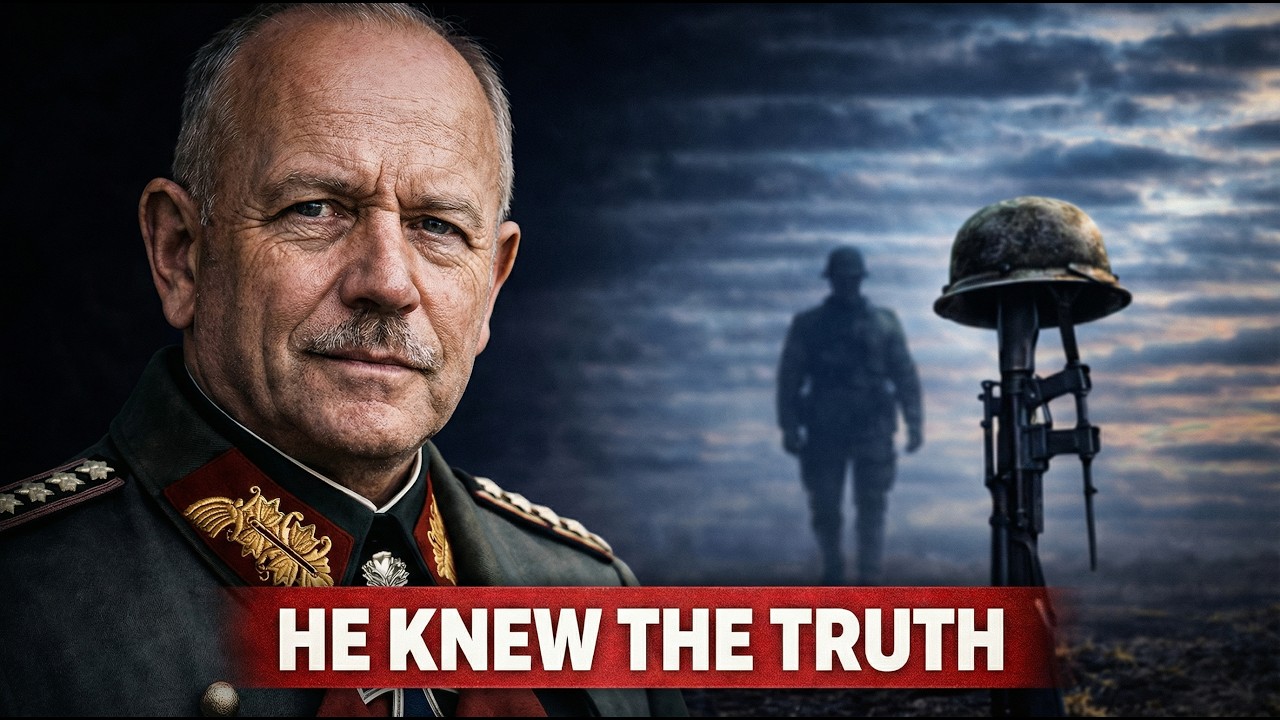
The comparison, drawn from a detailed examination of both commanders’ operations, reveals a pattern that military historians say cuts to the heart of what makes a great general and what makes a dangerous one. Guderian never wrote a formal analysis of Patton. The two men fought on different fronts, under different conditions, and in entirely different phases of the war.
But according to the historical record, Guderian did not need to meet Patton to understand him, because he had already lived through the same kind of command, the same fast decisions, the same constant movement, and the same relentless pressure that defined Patton’s drive across France in 1944.
The story begins on May 13, 1940, near the town of Sedan, where Guderian launched one of the most decisive armored operations of the entire war. His 19th Panzer Corps was ordered to cross the Meuse River, a sector French command believed was naturally protected by difficult terrain and a wide waterway that made large-scale armored movement unlikely. Guderian saw opportunity where others saw obstacle.
He concentrated more than 1,000 tanks at the crossing point while the Luftwaffe launched continuous airstrikes against French positions. The goal was simple and brutal: break the line, and do it fast.
Within 48 hours, the French defensive system collapsed. But what happened next defined Guderian’s command style and foreshadowed everything that would follow in his career. German High Command ordered him to stop, to secure his flanks, and to wait for infantry support before pushing deeper into enemy territory.
Guderian ignored those orders. He believed speed was more important than caution, and instead of stopping, he pushed forward immediately. His units advanced deep into France, and by May 20 they had reached the English Channel, covering more than 300 kilometers in just one week.
That single maneuver cut off Allied forces in northern France and trapped hundreds of thousands of British and French soldiers, leading directly to the evacuation at Dunkirk, one of the most dramatic moments of the war. Guderian later wrote that speed and surprise decide everything in modern warfare. But behind that success was a growing risk that would haunt him for the rest of his career.
The faster his forces moved, the more 𝓮𝔁𝓹𝓸𝓼𝓮𝓭 they became. Supply lines stretched to the breaking point, coordination weakened, and control became harder to maintain with every passing mile.
Four years later, in August 1944, General George Patton was given command of the US Third Army, and the situation in France had already begun to shift dramatically. After the Normandy landings in June, German forces were under constant pressure but were not defeated. They remained organized and capable of resistance.
What they lacked was time, and Patton understood that reality better than almost anyone in the Allied command structure. On August 8, his forces captured the city of Le Mans, but instead of slowing down to consolidate, he accelerated.

Patton did not follow a cautious advance. He pushed his army forward in multiple directions at once, and his objective was not just territory but disruption. German units began to lose cohesion.
Communication broke down across the front. Entire formations were bypassed and surrounded before they could react to the speed of the American advance. At times, Patton’s units advanced over 70 kilometers in a single day, a pace that stunned German commanders and threw their defensive planning into chaos.
This was not just speed. This was operational shock on a scale that German command struggled to comprehend. Reports became inconsistent, front lines blurred, and decisions came too late to matter.
Patton believed in constant pressure and once said the key was to keep moving and never give the enemy time to recover. For a moment, it worked perfectly, and the advance became one of the most celebrated maneuvers of the entire war. But there was a problem that grew more severe with every kilometer gained.
The faster his army moved, the more it depended on fuel, and fuel could not keep up with the pace of the advance. Supply convoys stretched across hundreds of kilometers of French roads, congestion slowed deliveries, and at one point Patton’s advance nearly stopped. Not because of German resistance, but because his tanks had nothing left to burn.
That moment changed everything, because the question was no longer about success. The question was about limits, and whether Patton was controlling the pace of his advance or whether the pace was beginning to control him.
In June 1941, Heinz Guderian faced the same problem on a much larger scale during Operation Barbarossa, when he commanded Panzer Group II with orders to advance deep into Soviet territory, break the Red Army, and move toward Moscow. At the beginning, everything worked. His forces moved rapidly across Belarus, Soviet defenses collapsed in multiple sectors, entire armies were encircled, and hundreds of thousands of Soviet soldiers were captured.
By July, Guderian’s units had already reached Smolensk, and the road to Moscow appeared to be opening.
But the deeper his forces advanced, the more fragile the situation became. Supply lines stretched across hundreds of kilometers, fuel deliveries slowed, repair units could not keep up with damaged vehicles, and infantry support lagged far behind the armored spearheads. Guderian understood the danger and argued that the advance must remain focused on Moscow as the key objective, warning that every delay increased the risk of failure as winter approached.
 But Adolf Hitler saw the situation differently and ordered Guderian to redirect his forces south toward Ukraine to capture economic resources and secure territory.
Guderian opposed the order, believing it would cost them the momentum that mobile warfare depended on. But the decision was not his to make. His forces turned south, weeks were lost, and when the advance toward Moscow resumed, it was too late.
By December 1941, the German offensive had failed, winter had arrived, Soviet resistance had strengthened, and Guderian was removed from command. This was not just a failed operation but a demonstration of a deeper truth that speed can destroy the enemy but can also destroy your own strategy if the system behind it cannot keep up.
That is exactly the line Patton was approaching in 1944, and it is the reason Guderian would have recognized both the brilliance and the danger in the American general’s campaign. Guderian had seen what happens when speed goes too far, when logistics fall behind, when coordination begins to fail, and when momentum becomes uncontrollable. If he had studied Patton’s campaign in France, he would have recognized all of it: the confidence, the ability to exploit chaos, but also the thin supply lines, the dependence on fuel, and the risk of advancing faster than your own army could sustain.
Military analysts say the comparison raises a fundamental question about command philosophy that remains relevant to modern warfare. Was Patton a brilliant commander? The historical consensus suggests yes, but he was also operating at the very edge of collapse, and that is what makes him one of the most debated generals of the Second World War.
In war, the same quality that creates victory can also lead to failure, and the line between the two is often measured not in kilometers gained but in fuel consumed and supply lines maintained.
Guderian’s own career demonstrated that reality with brutal clarity. His breakthrough at Sedan in 1940 was a masterpiece of speed and concentration, but his defiance of orders to halt nearly cost the German army the opportunity to consolidate its gains. His drive toward Moscow in 1941 showed that even the most aggressive commander can be undone by factors beyond his control, whether political interference from above or the simple reality that armies cannot outrun their supply chains forever.
Patton faced similar constraints in France, where his Third Army’s dramatic advance across the country in August 1944 was ultimately limited not by German resistance but by the inability of Allied logistics to keep pace with his ambitions. The Red Ball Express, the famous supply convoy system that kept the advance moving, could only do so much, and there were moments when Patton’s tanks sat idle waiting for fuel while German forces regrouped and prepared defensive positions.

Historians note that Guderian and Patton shared a fundamental belief that speed and aggression were the keys to victory in modern armored warfare. Both men understood that the psychological impact of rapid movement could be as devastating as any weapon, and both were willing to take enormous risks to achieve their objectives. But both also learned, in different ways and at different times, that there were limits to what even the most aggressive commander could achieve without adequate logistical support.
The question of whether Guderian would have respected Patton’s style or warned against it remains open, and it is a question that military historians continue to debate. Some argue that Guderian would have admired Patton’s willingness to take risks and exploit opportunities, seeing in the American general a reflection of his own approach to armored warfare. Others suggest that Guderian, having experienced the consequences of overextension firsthand in the Soviet Union, would have cautioned against pushing too hard without ensuring that supply lines and support units could keep pace.
What is clear is that the parallel between the two commanders offers a powerful lesson about the nature of military leadership and the delicate balance between aggression and sustainability. Speed can be a weapon, but it can also be a trap, and the greatest commanders are those who understand when to push forward and when to consolidate their gains. Guderian learned this lesson in the frozen approaches to Moscow, and Patton learned it on the roads of France, where his tanks sometimes ran dry within sight of their objectives.
The historical record shows that both men were ultimately limited not by their own abilities but by the systems they served and the resources they could command. Guderian’s genius at Sedan was undone by Hitler’s interference and the vast distances of the Soviet Union. Patton’s brilliance in France was constrained by the sheer difficulty of supplying a modern army across hundreds of kilometers of contested territory.
In both cases, the same quality that created victory also created vulnerability, and that is the paradox at the heart of their shared legacy.
As historians continue to study the campaigns of these two iconic commanders, the comparison between them serves as a reminder that warfare is never solely about tactics or technology. It is also about logistics, politics, and the human factors that determine whether an army can sustain its advance or whether it will collapse under the weight of its own ambition. Guderian and Patton both understood this reality, even if they sometimes chose to ignore it in pursuit of victory, and their careers stand as testament to both the power and the peril of speed in modern warfare.