New research into one of the darkest chapters of the twentieth century is challenging a belief so deeply entrenched that it has functioned for decades as an unspoken law of history: that any German soldier or officer who helped Jews escape the Holocaust was signing his own death warrant.
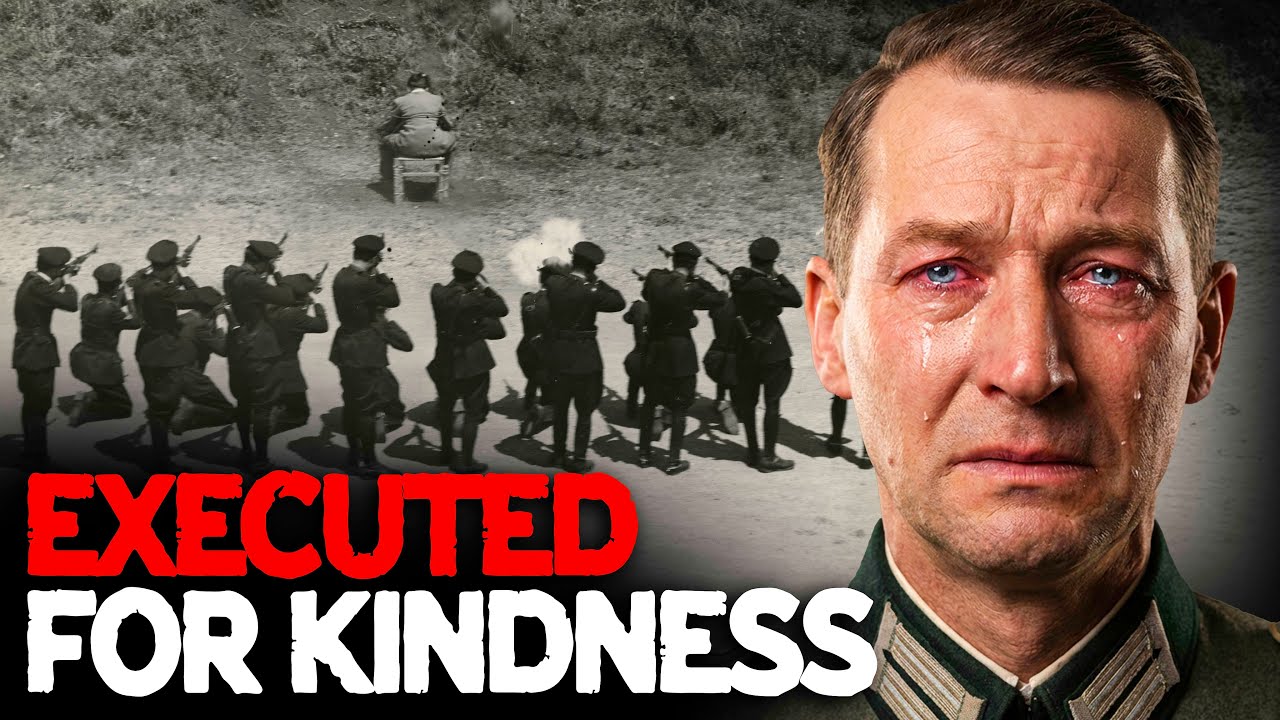
The evidence, drawn from post-war testimonies at Yad Vashem, depositions from war crimes trials, personal memoirs and letters, and archives maintained by organizations dedicated to documenting rescue during the Holocaust, tells a far more complicated and surprising story. Dozens of verified cases now show that German military personnel, police officers and even Nazi Party members actively facilitated Jewish escapes, and that a striking number of them survived the war without ever facing execution.
The prevailing assumption, both during the war and in the decades since, has been absolute. The Nazi regime constructed an atmosphere of total terror in which even the faintest hint of sympathy for Jews could trigger severe punishment. The Gestapo operated everywhere, informants were commonplace, and the penalties for aiding Jews were widely publicized precisely to discourage any impulse toward compassion.
Historians have long maintained that helping Jews as a German soldier or official was effectively suicidal. The documentation is incomplete, and many cases were deliberately hidden or destroyed. Yet the cases that have survived reveal a Nazi system that was brutal and murderous but also bureaucratic, chaotic and inefficient, a system riddled with spaces that determined individuals learned to exploit.
One of the most comprehensive databases is maintained by Yad Vashem, the Holocaust memorial in Israel, which recognizes non-Jews who risked their lives to save Jews as Righteous Among the Nations. Among the thousands honored, a notable number were German soldiers and officials who used their positions to facilitate escapes. More than 600 Germans have been recognized, and a significant portion of them held positions in the military, police or civil administration.
The case of Sergeant Anton Schmid stands as the starkest warning. Born in Vienna in 1900, a devout Catholic and an electrician by trade, Schmid was serving in the German Wehrmacht when he was stationed in Vilnius, Lithuania, in 1941. His assignment to supervise a repair shop and manage stray soldiers awaiting reassignment gave him unusual freedom of movement and access to military vehicles and documents.
Schmid began helping Jews almost immediately. He hid Jewish families in his workshop, provided forged documents and used military trucks to move people to safer locations. Working closely with members of the Jewish resistance, including underground leaders, he helped between 250 and 300 Jews escape the Vilnius ghetto over several months, supplying papers, shelter and transportation.
His activities were discovered in January 1942 when the Gestapo intercepted a letter he had written. Schmid was arrested, court-martialed and sentenced to death. On April 13, 1942, he was executed by firing squad.
Before his death, he wrote to his wife that he had only acted as a human being and had not wanted to hurt anyone.
His case demonstrates that rescue could indeed bring the ultimate punishment. Yet even here, the process took months. He received a formal trial, and his family was not harmed.
That detail alone complicates the image of instantaneous, unlimited reprisal that has dominated popular understanding.
Not all cases ended so tragically. Major Karl Plagge, a Wehrmacht officer and engineer, commanded a forced labor camp in Vilnius. Born in Darmstadt in 1897, Plagge had joined the Nazi Party in 1931 but grew increasingly disillusioned with the regime’s policies.
As commander of the HKP 562 labor camp, which housed about 1,200 Jewish workers and their families, he used his position to protect the people under his authority.
 Plagge deliberately classified as many Jews as possible as essential workers, including women and children, knowing that this status offered some protection from deportation to death camps. He warned the Jews under his supervision about impending SS raids, often in cleverly coded language. In 1944, just before the camp was to be liquidated, he gave a speech warning the workers that he could no longer protect them, effectively telling them to hide or flee.
Thanks to that warning, about 250 Jews survived by hiding in specially prepared bunkers.
After the war, Plagge was investigated but never prosecuted. He lived quietly in Darmstadt until his death in 1957. It was not until decades later that survivors testified about his actions, and in 2005 he was posthumously recognized as Righteous Among the Nations.
His case shows that officers with sufficient authority could actively subvert the Holocaust while facing relatively minimal consequences during the war.
Oskar Schindler remains the most famous German who saved Jews, though his story has been heavily mythologized by the film Schindler’s List. Born in 1908 in what is now the Czech Republic, Schindler was a Nazi Party member and an opportunistic businessman who initially saw the war as a chance to profit. He established an enamelware factory in Krakow, Poland, staffed primarily with Jewish forced laborers.
Over time, whether through genuine moral awakening or a complex mix of motivations, Schindler began actively protecting his workers. He bribed SS officials, falsified production records to classify his workers as essential, and eventually compiled his famous list of more than 1,200 Jews whom he transferred to a new factory in Brunnlitz, effectively saving them from Auschwitz. He spent his entire fortune on bribes and provisions.
Despite his activities being known to various Nazi officials, Schindler was never seriously punished during the war. He was briefly arrested by the Gestapo on three occasions, but his connections and bribery secured his release each time. After the war he was broke and struggled financially, eventually supported by the Jewish survivors he had saved.
He was recognized as Righteous Among the Nations in 1993. His case demonstrates that with enough cunning, connections and money, one could engage in extensive rescue while avoiding severe punishment.
A lesser-known but equally remarkable case is that of Albert Göring, the younger brother of Hermann Göring, Hitler’s designated successor and head of the Luftwaffe. Albert was violently anti-Nazi despite his family connections, and he used his brother’s name and influence to save dozens, possibly hundreds, of Jews and political dissidents.
He forged his brother’s signature on transit documents, helped Jews escape across borders and intervened directly to free prisoners from concentration camps. On one occasion, he joined a group of Jewish women being forced to scrub the streets of Vienna, kneeling beside them until the embarrassed SS guards stopped the humiliation. On another, he persuaded the manager of his factory to fire all SS guards and replace them with more humane personnel.
He maintained lists of the people he helped, which proved crucial in verifying his claims after the war. Despite his activities being widely known, Albert Göring was never prosecuted during the war, protected by his brother’s position. After the war he was arrested by the Allies but eventually released after numerous testimonies from those he had saved.
His famous last name made it impossible for him to find work, and he died in relative poverty in 1966. He was recognized as Righteous Among the Nations posthumously in 1997.
Major Albert Battel, a Wehrmacht officer stationed in Przemyśl, Poland, went beyond mere refusal to participate in atrocities. When he learned that the SS planned to liquidate Jewish workers, he commandeered Wehrmacht vehicles, blocked the bridges into the Jewish quarter with tanks and evacuated between 80 and 100 Jews to military barracks where he placed them under Wehrmacht protection.
While this action eventually brought him to Heinrich Himmler’s attention, Battel was merely reprimanded and transferred to a combat unit. He was never imprisoned during the war, survived the conflict and was recognized as Righteous Among the Nations in 1981. His case is particularly significant because he directly defied the SS using military force, yet faced relatively minor consequences.

Captain Wilhelm Hosenfeld, stationed in Warsaw, was a devout Catholic born in 1895 who became increasingly horrified by Nazi atrocities. He helped numerous Jews and Poles, providing false documents, warnings about raids and sometimes direct shelter. Most famously, he discovered the Jewish pianist Władysław Szpilman hiding in the ruins of Warsaw in 1944 and helped keep him alive until the Soviet liberation.
Hosenfeld was never punished by the Germans for activities he managed to keep hidden. However, he was captured by Soviet forces in 1945 and died in a Soviet prison camp in 1952. He was posthumously recognized as Righteous Among the Nations in 2009.
His case demonstrates that German rescuers often faced greater danger from the Soviets after the war than from their own regime during it.
Ordinary soldiers and low-ranking personnel also acted. Sergeant Hugo Armann, stationed in Poland, regularly smuggled food into the Jewish ghetto, warned people of upcoming deportations and helped several families escape by providing false papers and civilian clothes. His activities were discovered by a fellow soldier who reported him to superior officers.
Armann was arrested and held for several weeks while his case was investigated. Instead of being executed or sent to a concentration camp, he was demoted to private, fined and transferred to a combat unit on the Eastern Front. He survived the war and later testified about his activities.
His relatively light punishment for directly violating anti-Jewish policies is noteworthy.
German police officer Max Liedtke, who served as military commandant in Przemyśl alongside Battel, not only supported Battel’s rescue operation but carried out his own efforts to protect Jews. He issued work permits classifying Jews as essential workers, delayed deportation orders and provided advanced warnings of SS actions. Like Battel, he faced reprimands but no serious punishment during the war.
He died in combat in 1944 and was recognized as Righteous Among the Nations in 1987.
The statistical patterns that emerge from these cases are striking. Approximately 60 percent of German rescuers who held military or official positions faced no punishment whatsoever during the war. Their activities either went undetected or were overlooked by superiors who chose not to investigate.
About 25 percent faced administrative punishment such as reprimands, demotions, fines or transfers, consequences often minor compared to the severity of their actions.
Around 10 percent faced more serious consequences, including arrest, imprisonment or trial. But even among these, actual executions were rare. Only about 5 percent were executed or died as a direct result of their rescue activities.
These figures are remarkable when set against the severity of Nazi racial laws and the regime’s stated commitment to the Final Solution.
Several factors determined whether a rescuer faced consequences. Rank and position mattered significantly, with officers and those holding administrative authority facing fewer consequences than enlisted men. Those who could frame their actions as serving military or economic interests, such as protecting essential workers, often avoided punishment entirely.
The ability to maintain secrecy was crucial, as those whose activities became widely known faced greater risk.
Geography played a role, with those operating in areas of less direct SS oversight enjoying more freedom. Personal connections and the ability to bribe officials could be decisive. Timing also mattered, as enforcement of racial policies sometimes became less stringent as the war turned against Germany.

The methods rescuers used were equally important. Those who helped Jews by providing warnings, documents or temporary shelter generally faced less risk than those who physically sheltered Jews for extended periods. Those who could maintain plausible deniability had a better chance of avoiding punishment.
Using one’s official position to bureaucratically obstruct deportations was often safer than direct confrontation, and working through intermediaries rather than personally handling rescue operations reduced risk.
Secretly recorded conversations among German prisoners of war, preserved in the book Soldaten by Sönke Neitzel and Harald Welzer, offer a further window into attitudes on the ground. The transcripts reveal that some soldiers openly discussed helping Jews or sabotaging anti-Jewish measures, suggesting such actions were not as rare as once believed. The conversations also indicate that many soldiers knew helping Jews was punishable but assessed the actual risk as relatively low if done carefully.
In some instances, entire units were complicit in protecting Jews. Wehrmacht units would collectively agree to classify all Jews in their area as essential workers or would warn entire communities before SS raids. These collective actions made it difficult to assign individual blame and provided safety in numbers.
When entire units participated, prosecution became logistically difficult and potentially harmful to military morale.
What can be concluded from this body of evidence? First, while helping Jews was dangerous and did result in some executions, the risk was not as absolute as commonly believed. Many rescuers survived the war without serious punishment.
Second, those with higher ranks, better connections and more resources had significantly better chances of helping Jews safely. Third, clever use of bureaucracy, bribes and plausible deniability could enable extensive rescue activities. Fourth, the Nazi system, while brutal, was also chaotic and inefficient, creating opportunities that determined individuals could exploit.
It must be emphasized that these cases represent a tiny fraction of German military personnel. The vast majority either participated in atrocities or stood by while they occurred. These stories of rescue are exceptional precisely because they were rare.
They are also important because they demonstrate that choices existed. The narrative that all Germans had to obey orders or face death is not supported by the evidence.
The psychological burden these rescuers carried deserves mention. Many lived with constant fear of discovery, not only for themselves but for the Jews they were hiding and for their own families. Some, like Schindler, struggled with guilt after the war, feeling they could have done more.
Others, like Albert Göring, found themselves ostracized and unable to rebuild their lives because of their infamous family names despite their heroic actions. The price of rescue was not always measured in formal punishment but in lasting psychological and social consequences.
Recognition of these individuals often came decades too late. Many German rescuers died before being acknowledged, their stories lost or deliberately suppressed in postwar Germany, where discussion of individual heroism during the Nazi period was complicated by collective guilt and the desire to move forward. Only through persistent research by historians and testimony from survivors have these stories gradually emerged into public consciousness.
Organizations like Yad Vashem continue to actively seek out new testimonies and evidence of rescue activities. The full story of German rescuers during the Holocaust is still being written, and each new case discovered adds to our understanding of both the depths of human evil and the heights of human courage during this dark chapter of history.
What these stories ultimately tell us is that even in the darkest times, under the most oppressive regimes, individuals retain moral agency. The German soldiers and officers who helped Jews escape made different choices than their comrades. They proved that following orders was not the only option available.
Their heroism stands in stark contrast to the complicity of millions of others who could have made similar choices but did not.