
Frontier life was brutal, isolated, and often deadly, yet the cowboys, settlers, miners, and soldiers who pushed America’s boundaries westward carved out something unexpected from the harshness of their existence: a vibrant, chaotic, and sometimes deeply troubling world of leisure that historians say reshaped American popular culture forever.
From traveling medicine men hawking miracle elixirs to public hangings that drew thousands of spectators, the recreational habits of the Wild West reveal a society hungry for distraction, connection, and spectacle in equal measure. New research and renewed public interest in frontier history are casting fresh light on how these men and women filled the hours between dawn-to-dusk labor and the constant threat of violence.
“The frontier was not just a place of hardship,” said one historian familiar with the era. “It was also a place where people invented new forms of entertainment that would eventually become staples of American life.”
Perhaps no phenomenon better illustrates the era’s strange blend of commerce and amusement than the medicine show. Traveling salesmen rolled into frontier towns by wagon, carrying proprietary and patent medicines they claimed could cure aches, pains, illnesses, and chronic diseases. But the pitch was only half the attraction.
These shows offered genuine entertainment. Muscle men performed feats of strength. Self-styled professors lectured on the miraculous effectiveness of their tonics.
And planted audience members, often actors and actresses positioned before the crowd, would dramatically rise from their seats apparently cured after a single dose.
The most famous of these operations, Kickapoo Indian Medicines, was founded by John Healy and Charles Bigelow and became widely known for its Kickapoo Indian Sagwa. The elixir, a mixture of herbs, roots, and animal fat blended with alcohol, was marketed as a generations-old cure-all. In reality, historians note, it functioned primarily as a powerful laxative.
Such shows, described by some as the Old West version of an infomercial, spread across the country and frequently appropriated Native American healing traditions to lend credibility to products of dubious value.
Equally popular, and far more controversial, were living picture shows, a form of performance art in which actors or models recreated paintings and sculptures in real time. Early versions were educational, but as content grew increasingly risqué, the performances morphed into mass entertainment complete with orchestral accompaniment.
The shows drew fierce criticism. Groups such as the Women’s Christian Temperance Union protested on grounds of immorality and public indecency, labeling the performances degrading, vulgar, and devoid of artistic value. Defenders, including many participants, argued the shows increased public knowledge of art and served a legitimate cultural purpose.

No discussion of frontier entertainment is complete without acknowledging minstrel shows, a form of performance that originated in the early 19th century and featured white performers in blackface delivering musical and comedic acts built on exaggerated and degrading caricatures of African Americans. The practice is widely condemned today as deeply racist.
Yet the history is more complicated than a single narrative suggests. Not all minstrel performers were white, and many African American musicians composed songs for these shows. W.
C. Handy and Ma Rainey, later celebrated as the father and mother of the blues, were both part of the minstrel phenomenon. Handy himself observed that while minstrels were generally viewed as disreputable by most African Americans, the best talent of that generation, including composers, singers, musicians, and stage performers, came through such acts.
James Bland, known as the world’s greatest minstrel man, even attracted African American audiences with his compositions and performances.
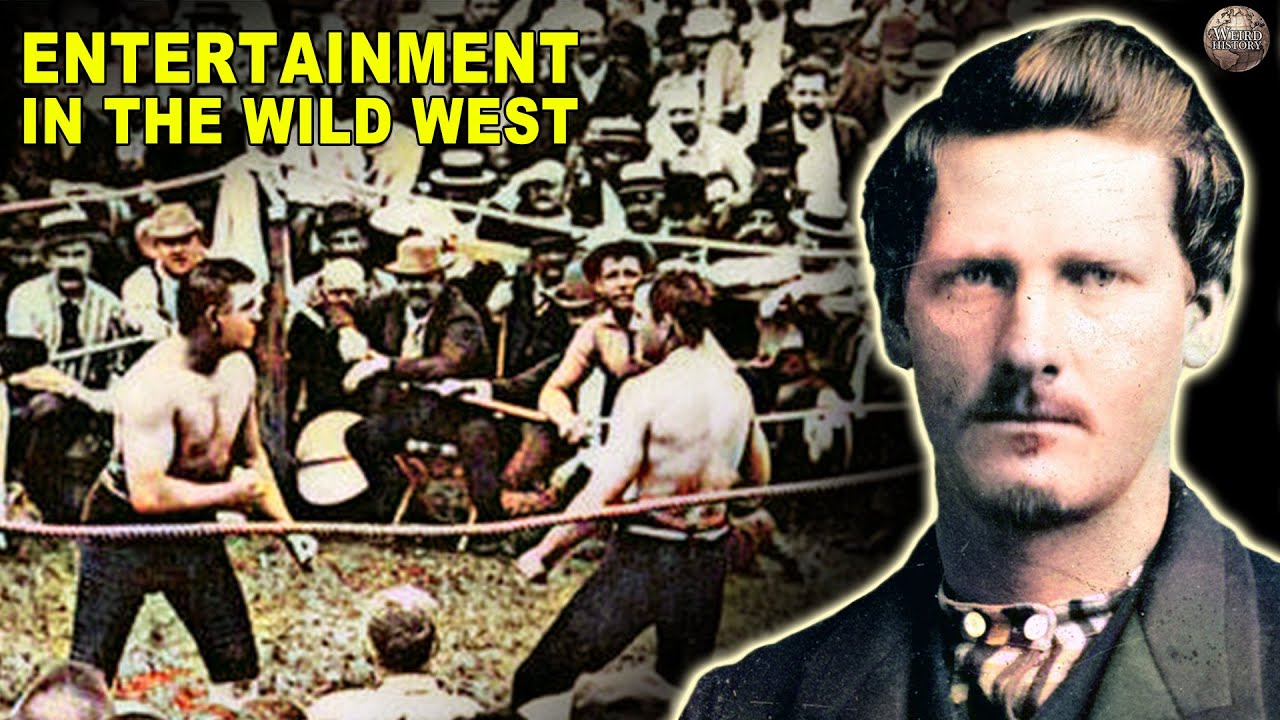
Boxing arrived on the frontier through European fighters such as Jim Mace, who came to the United States in the mid-1800s and helped popularize the sport nationwide. Mace staged exhibitions and fought numerous bouts in California and Nevada. Now regarded as the father of modern boxing, he paved the way for a generation of American pugilists.
The growth of prize fighting in the West owed much to immigrants, particularly the Irish, who brought a long tradition in the sport. But homegrown talent quickly emerged. In 1869, successful American fighters John Shanssey and Mike Donovan squared off in a match refereed by none other than Wyatt Earp, the legendary lawman.
Bare-knuckled combat became so prolific through the late 19th century that the federal government enacted an anti-prize fighting bill in 1896.
If blood sport was not enough, frontier communities also turned to public executions for entertainment. Hangings were carried out ostensibly in the name of justice, but they functioned as popular spectacles. Townspeople and residents from surrounding areas gathered enthusiastically to watch convicted criminals meet their end.
William Van Horn, a convicted slayer from Kansas, was hanged in Colorado in December 1863 before a crowd of at least 1,500 men, women, and children. William Wilson, a ranch hand from New Mexico, was executed in 1875 in front of a large and angry group.
George Maledon, known as the Prince of Hangmen, served as executioner for Judge Isaac Parker in Arkansas. Between 1873 and 1876, Maledon hanged 22 men over seven public hangings. Thousands traveled to witness the executions, which were advertised well in advance and often featured five or six men dropped from the scaffold simultaneously.

For those unable to attend a hanging, viewing a dead criminal’s body was usually an option. Hundreds of people filed past Jesse James’ remains when they were displayed for public viewing in 1882, a turnout that, while smaller than modern box office numbers, underscored the public’s fascination with outlaw culture.
Gambling permeated nearly every corner of frontier life. From horse races to marksmanship contests to card games, wagers were placed on virtually anything. Servicemen and miners gambled in camps, town residents gathered at saloons and gambling halls, and professional gamblers roamed from town to town chasing big scores.
Poker reigned supreme. Legendary figures such as Wild Bill Hickok and Doc Holliday embodied the image of the frontier gambler. The best players were said to sit with their backs to the wall so no one could sneak up behind them or glimpse their cards.
Any session could turn violent in an instant, and smart gamblers stayed ready to draw a sidearm when tempers flared.
Other popular card games included euchre, blackjack, monte, and faro. As settlers migrated west, gambling halls became common in cities such as Omaha, Austin, Virginia City, and San Francisco. Social reformers associated them with aggression, heavy drinking, and moral depravity, while successful gamblers and investors viewed them as engines of public and economic good.
Circuses and sideshows brought a different kind of spectacle. The latter, often a euphemism for so-called freak shows, presented unique physical specimens to enthusiastic audiences. Advance advertising hyped novelty acts and animal wonders, and even the setup became a show in itself as people, animals, and equipment flooded into town by wagon.
Circuses featured elephants alongside galloping horses performing intricate maneuvers. Acrobats and clowns entertained crowds, while sideshow attractions typically included conjoined twins, bearded ladies, and dwarfs. The expansion of the railroad in the late 19th century allowed circuses to move with greater ease and bring even more acts.
By the end of the century, the newly formed Barnum and Bailey Circus had more than 1,200 performers and hundreds of animals regularly performing before thousands under a large canvas tent.
Sports were a constant presence. When cowboys, wrestlers, trappers, and other frontier men gathered, they engaged in hunting, marksmanship competitions, and foot races. Horse racing was widely enjoyed, and boasts of strength frequently led to heated wrestling matches and fights.
Gymnastics, dog and cockfighting, log rolling, and axe throwing all had devoted followings.

Bowling gained popularity in the mid-19th century, as did skiing. Those near one of the stops on the Cincinnati Red Stockings tour of the West could catch a professional baseball game starting in 1869.
Roping, riding, and wrestling contests drew spectators throughout the 19th century, though the term rodeo was not applied to these events until roughly a century later. Born from ranching tradition, rodeos began as informal competitions between cattle wrestlers and cowhands. Cowboys showed off their skills at local saloons or on the open range, and spectators gathered to watch.
Toward the end of the century, declining employment opportunities for cowboys prompted many to join Wild West shows. As the frontier became less wild, audiences sought to capture a piece of that life before their eyes, and rodeos grew in popularity as entertainment.
As early as 1873, William F. Cody, better known as Buffalo Bill, staged exhibitions reenacting frontier adventures. These shows featured rope tricks, cattle wrestling, marksmanship displays, and the presentation of Native Americans in full tribal garb.
By the late 1800s and early 1890s, cowboy competitions in towns such as Prescott, Arizona, and Cheyenne, Wyoming, began offering prizes for the best bronco and steer rides. The sport expanded rapidly, and by 1929 the Rodeo Association of America had formed to oversee it.
Historians say the leisure habits of the Wild West were not merely diversions. They were mirrors of a society negotiating questions of class, race, morality, and identity on a rapidly changing landscape. The medicine show, the gambling hall, the circus tent, and the rodeo arena all became stages on which those tensions played out.
For modern audiences, the era’s entertainment offers both fascination and discomfort. Some activities, like rodeos and baseball, evolved into beloved American institutions. Others, like minstrel shows and public hangings, stand as stark reminders of how far the nation has traveled and how much of that distance remains contested.
What is certain, researchers say, is that the people of the Wild West were not merely surviving. They were laughing, wagering, cheering, and grieving together, building a culture of leisure that would leave a lasting mark on the country long after the frontier itself disappeared.