Teil 1 – Die Stimme, die mein ganzes Leben veränderte
Ich hatte mir diesen Moment so oft vorgestellt. Sechs Monate lang hatte ich jeden Abend daran gedacht, wie es sein würde, endlich wieder durch unsere Haustür zu gehen, meinen Sohn in die Arme zu nehmen und meine Frau wiederzusehen. Sechs Monate waren eine lange Zeit. Sechs Monate voller kalter Morgen, einsamer Hotelzimmer und endloser Arbeitstage, an denen ich nur von dem Gedanken getragen wurde, dass ich das alles für meine Familie tat.
Ich hatte niemandem gesagt, dass ich früher zurückkommen würde. Ich wollte keine große Ankündigung machen. Keine Nachrichten, keine Vorbereitungen, keine Erwartungen. Ich wollte einfach plötzlich vor ihnen stehen und ihre überraschten Gesichter sehen. Ich hatte sogar kleine Geschenke gekauft. Etwas, von dem ich wusste, dass mein Sohn es lieben würde, und etwas für meine Frau, weil ich ihr zeigen wollte, dass ich trotz der Entfernung immer an sie gedacht hatte.
Während des gesamten Fluges stellte ich mir vor, wie mein Sohn zur Tür rennen würde. Wie meine Frau lachen würde. Wie wir endlich wieder als Familie zusammen sein würden.
Ich ahnte nicht, dass ich an diesem Tag nicht nach Hause zurückkehrte, um eine Überraschung zu bringen.
Ich kam nach Hause, um eine Wahrheit zu entdecken, die mein gesamtes Leben verändern würde.
Als ich die Wohnung betrat, war es ungewöhnlich still. Ich hatte erwartet, Stimmen zu hören. Das Lachen meines Sohnes. Vielleicht das Geräusch von Musik oder Fernsehen. Stattdessen lag eine seltsame Ruhe über dem Haus.
Ich stellte meine Tasche ab und rief nach ihnen.
Keine Antwort.
Für einen Moment dachte ich, sie wären vielleicht unterwegs. Vielleicht bei Freunden. Vielleicht draußen spazieren.
Dann bemerkte ich etwas auf dem Tisch.
Ein kleines Spielzeug meines Sohnes lag dort, daneben seine Zeichnungen. Dinge, die er normalerweise überall im Haus verteilte.
Ich lächelte kurz.
Dann hörte ich mein Handy klingeln. Eine Nachricht von meiner Frau. Sie schrieb, dass sie mit unserem Sohn bei meiner Mutter sei.
Meine Mutter.
Allein dieser Gedanke ließ mich kurz innehalten.
Die Beziehung zwischen meiner Frau und meiner Mutter war nie einfach gewesen. Aber ich hatte mir immer eingeredet, dass es nur normale Spannungen zwischen zwei starken Frauen waren.
Ich hatte immer geglaubt, dass beide Seiten ein bisschen übertrieben.
Wenn meine Frau nach einem Besuch bei meiner Mutter traurig nach Hause kam, sagte ich oft:
„Du interpretierst zu viel hinein. Meine Mutter meint es nicht böse.“
Wenn sie mir erzählte, dass bestimmte Kommentare sie verletzt hatten, antwortete ich:
„Du kennst sie doch. Sie redet manchmal direkt, aber sie liebt dich.“
Heute weiß ich, dass diese Sätze vielleicht die schlimmsten Worte waren, die ich ihr jemals sagen konnte.
Denn jedes Mal, wenn ich meine Mutter verteidigte, fühlte sich meine Frau ein Stück weniger gesehen.
Ich nahm ein Taxi und fuhr zum Haus meiner Mutter. Während der Fahrt dachte ich noch immer positiv. Vielleicht war alles besser geworden. Vielleicht hatten sie endlich Frieden geschlossen.
Vielleicht hatte ich mir all die Sorgen umsonst gemacht.
Als ich ankam, stand das Tor offen.
Ich bezahlte den Fahrer und ging langsam zum Haus.
Schon bevor ich die Tür erreichte, spürte ich etwas Merkwürdiges.
Keine fröhliche Atmosphäre.
Keine Familienfeier.
Etwas war anders.
Dann hörte ich Stimmen.
Die Stimme meiner Mutter.
Und die Stimme meiner Frau.
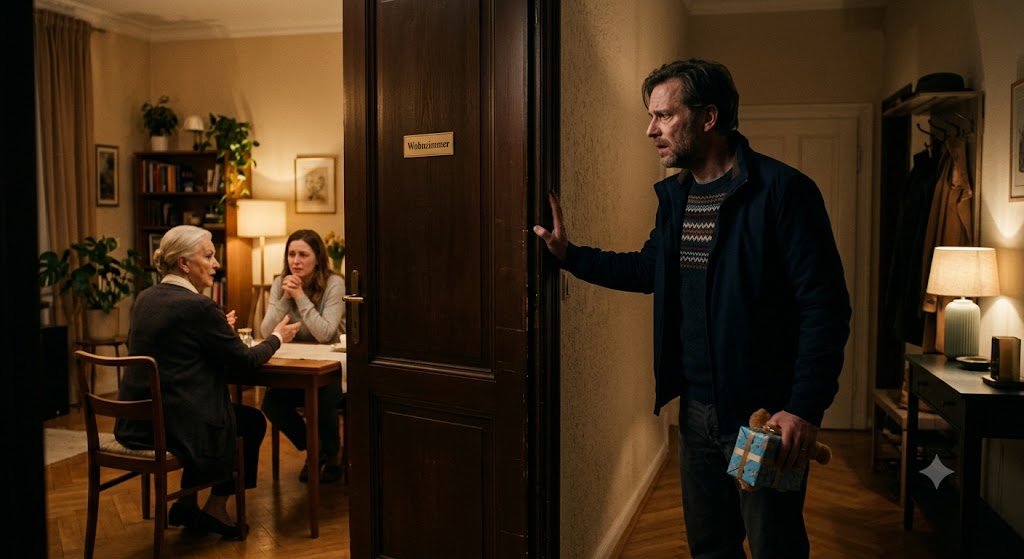
Ich wollte gerade eintreten, als ich meinen Namen hörte.
„Er wird es irgendwann verstehen“, sagte meine Mutter ruhig.
Ich blieb stehen.
Meine Hand lag noch am Türgriff.
„Er glaubt immer noch, dass du die perfekte Frau bist“, fuhr sie fort. „Aber irgendwann wird er erkennen, dass du niemals wirklich zu dieser Familie gehört hast.“
Mein Herz begann schneller zu schlagen.
Ich verstand nicht sofort, was ich hörte.
Dann hörte ich die Stimme meiner Frau.
Leise.
Müde.
„Warum tun Sie das? Ich habe Ihnen nie etwas getan.“
Ein paar Sekunden lang war es still.
Dann sagte meine Mutter etwas, das ich niemals vergessen werde.
„Nimm das Geld und verschwinde aus dem Leben meines Sohnes. Lass das Kind hier.“
Ich erstarrte.
Die Worte trafen mich wie ein Schlag.
Ich hielt noch immer das kleine Geschenk für meinen Sohn in der Hand.
Ein Spielzeug, das ich ihm aus dem Ausland mitgebracht hatte.
Aber plötzlich fühlte es sich schwer an.
Viel schwerer als vorher.
„Sie können nicht ernsthaft glauben, dass ich mein Kind verlasse“, sagte meine Frau.
Ihre Stimme zitterte.
Nicht vor Angst.
Vor Enttäuschung.
Meine Mutter antwortete kalt:
„Jede Frau hat ihren Preis. Manche brauchen nur lange genug, um ihn zu erkennen.“
Ich konnte nicht mehr atmen.
Meine eigene Mutter.
Die Frau, die mich großgezogen hatte.
Die Frau, der ich mein ganzes Leben vertraut hatte.
Sie stand dort und versuchte, die Mutter meines Kindes aus unserem Leben zu entfernen.
Aber das Schlimmste war nicht einmal ihre Grausamkeit.
Das Schlimmste war die Erkenntnis, dass meine Frau diese Situation nicht überraschend fand.
Sie war nicht schockiert.
Sie war erschöpft.
Als hätte sie diesen Kampf schon hundert Mal geführt.
Nur immer ohne mich.
Ich öffnete die Tür nicht.
Noch nicht.
Ich blieb dort stehen und hörte weiter zu.
Meine Mutter sprach über Geld. Über eine neue Wohnung. Über einen Neuanfang.
Als wäre meine Frau ein Problem, das man lösen konnte.
Als wäre die Liebe zwischen zwei Menschen nur eine geschäftliche Entscheidung.
Dann sagte meine Frau etwas, das mir den Boden unter den Füßen wegzog.
„Wissen Sie, was am meisten wehgetan hat? Nicht, dass Sie mich nie akzeptiert haben. Sondern dass Ihr Sohn mir jedes Mal gesagt hat, ich würde mir das nur einbilden.“
Diese Worte waren für mich schlimmer als alles andere.
Denn sie waren wahr.
Ich hatte es gesagt.
Immer wieder.
Ich hatte nicht gesehen, was direkt vor meinen Augen passierte.
Ich hatte geglaubt, ich würde zwischen zwei Menschen vermitteln.
Aber in Wirklichkeit hatte ich nur dafür gesorgt, dass meine Frau alleine blieb.
Dann hörte ich Schritte.
Ich sah durch den kleinen Spalt der Tür.
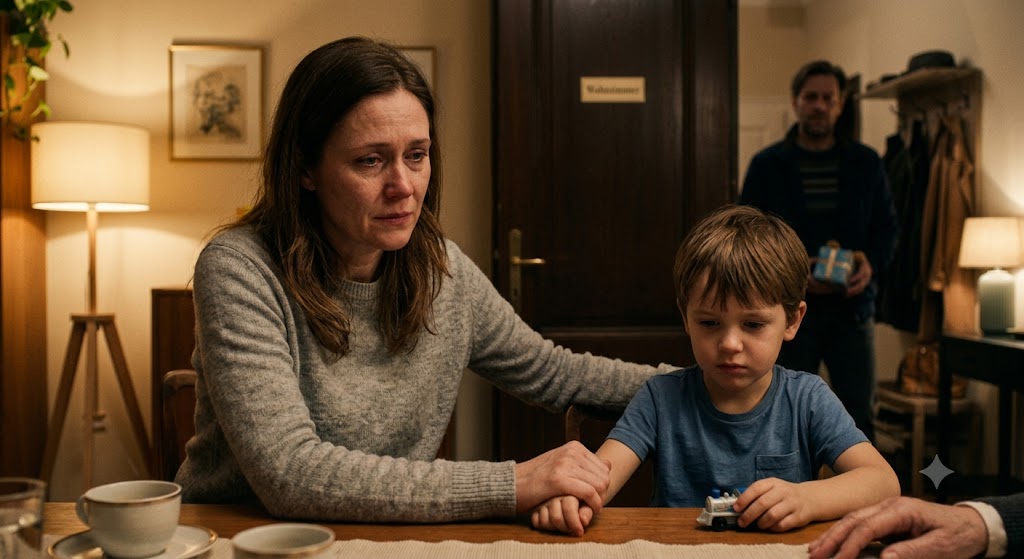
Mein Sohn stand neben seiner Mutter.
Er hielt ihre Hand.
Sein kleines Gesicht war ernst.
Viel zu ernst für ein Kind in seinem Alter.
Und plötzlich verstand ich etwas, das mich innerlich zerbrach.
Mein Sohn wusste mehr, als ich gedacht hatte.
Er hatte Dinge gesehen.
Er hatte Dinge gehört.
Während ich weit weg gearbeitet hatte, hatte er gelernt, seine Mutter zu trösten.
Und ich war nicht da gewesen.
In diesem Moment wusste ich, dass ich nicht einfach die Tür öffnen und so tun konnte, als wäre nichts passiert.
Denn diese Tür war nicht nur eine Tür zu einem Zimmer.
Sie war die Grenze zwischen meinem alten Leben und der Wahrheit.
Und hinter dieser Tür wartete eine Wahrheit, vor der ich mich mein ganzes Leben lang gedrückt hatte.
Teil 2 – Die Wahrheit, die ich jahrelang nicht sehen wollte
Ich weiß noch genau, wie lange ich dort vor der Tür stand. Es waren vielleicht nur wenige Minuten, aber für mich fühlte es sich an wie Stunden. Jede einzelne Sekunde brachte eine neue Erkenntnis, die schwerer auf meinen Schultern lag. Ich hatte immer geglaubt, dass meine Familie ein Ort war, an dem ich sicher sein konnte. Ein Ort, an dem Menschen ehrlich miteinander umgingen. Doch während ich dort stand und die Stimmen meiner Mutter und meiner Frau hörte, wurde mir klar, dass ich jahrelang in einer Geschichte gelebt hatte, die ich selbst geschrieben hatte. Nur leider basierte sie auf Dingen, die ich glauben wollte, nicht auf der Wahrheit.
Ich öffnete schließlich langsam die Tür. Nicht, weil ich wusste, was ich sagen wollte. Nicht, weil ich vorbereitet war. Sondern weil ich es nicht mehr ertragen konnte, weiter zuzuhören. Meine Frau drehte sich sofort um. Ihr Gesicht veränderte sich innerhalb einer Sekunde. Erst Überraschung. Dann Angst. Und danach etwas, das mich noch mehr verletzte: Sie sah aus, als würde sie nicht wissen, ob sie sich freuen durfte, mich zu sehen.
Meine Mutter hingegen wurde vollkommen blass.
Sie wusste sofort, dass ich alles gehört hatte.
„Du bist schon zurück?“, fragte sie leise.
Es war ein seltsamer Satz. Kein „Was machst du hier?“ Kein „Warum hast du nichts gesagt?“ Nur diese eine Frage, als wäre meine unerwartete Rückkehr das Problem und nicht das, was ich gerade entdeckt hatte.
Ich sah sie an und konnte kaum glauben, dass dieselbe Frau vor mir stand, die mich mein ganzes Leben lang beschützt hatte. Die Frau, die mir als Kind gesagt hatte, dass Familie das Wichtigste im Leben sei. Doch jetzt verstand ich langsam, dass sie Familie vielleicht anders definiert hatte als ich.
„Wie lange?“, fragte ich.
Meine Stimme klang fremd.
Meine Frau senkte den Blick.
Meine Mutter sagte nichts.
„Wie lange geht das schon so?“, fragte ich erneut.
„Du verstehst das falsch“, antwortete meine Mutter sofort.
Dieser Satz.
Immer dieser Satz.
Wie oft hatte ich genau diesen Satz selbst benutzt?
Wenn meine Frau mir erzählt hatte, dass meine Mutter sie verletzt hatte, hatte ich gesagt: „Du verstehst sie falsch.“
Wenn sie mir erzählt hatte, dass meine Mutter sie absichtlich ausschloss, hatte ich gesagt: „Das war bestimmt nicht so gemeint.“
Jetzt stand ich dort und hörte genau dieselbe Verteidigung.
Nur diesmal glaubte ich sie nicht mehr.
„Welche Stelle habe ich falsch verstanden?“, fragte ich. „Die Stelle, an der du meiner Frau Geld anbietest, damit sie verschwindet? Oder die Stelle, an der du sagst, dass unser Sohn ohne sie besser aufwachsen würde?“
Meine Mutter öffnete den Mund, aber kein Wort kam heraus.
Mein Sohn stand noch immer neben meiner Frau. Er hielt ihre Hand so fest, als hätte er Angst, dass sie auch noch verschwinden könnte.
Dieser kleine Moment traf mich härter als jedes Gespräch.
Ein Kind sollte keine Angst haben müssen, dass seine Mutter weggeht.
Ein Kind sollte keine erwachsene Last tragen.
Ich ging langsam zu ihm und kniete mich hin.
„Hey“, sagte ich leise.
Er sah mich an.
Normalerweise wäre er sofort in meine Arme gesprungen. Normalerweise hätte er gelacht und mir erzählt, was er in den letzten Monaten erlebt hatte.
Aber diesmal blieb er still.
„Papa ist wieder da“, sagte ich.
Er nickte nur.
Und genau dieses kleine Nicken brach etwas in mir.
Denn ich erkannte, dass meine Abwesenheit nicht nur bedeutete, dass ich sechs Monate nicht zu Hause gewesen war.
Ich hatte auch vorher schon gefehlt.
Ich war körperlich da gewesen, aber emotional hatte ich meine Frau allein gelassen.
Meine Mutter versuchte, die Situation zu kontrollieren.
„Du musst verstehen, warum ich das getan habe“, sagte sie. „Ich wollte nur das Beste für dich.“
Ich stand auf und sah sie an.
„Das Beste für mich?“
Sie nickte.
„Ja. Ich kenne dich. Ich weiß, was gut für dich ist.“
Früher hätte ich diesen Satz vielleicht akzeptiert.
Früher hätte ich gedacht, dass meine Mutter aus Sorge handelt.
Aber jetzt hörte ich etwas anderes.
Ich hörte Kontrolle.
„Nein“, sagte ich ruhig. „Du weißt, was du für mich willst. Das ist nicht dasselbe.“
Meine Frau sah mich überrascht an.
Ich glaube, sie hatte nicht erwartet, dass ich mich zum ersten Mal nicht automatisch auf die Seite meiner Mutter stellte.
Und ehrlich gesagt hatte ich es selbst nicht erwartet.
Denn es gab einen Teil von mir, der immer noch nach Ausreden suchte.
Der Teil, der sagte: Vielleicht gibt es eine Erklärung.
Vielleicht ist alles komplizierter.
Vielleicht ist meine Mutter nicht wirklich so.
Aber dann sah ich meine Frau.
Und ich erinnerte mich an all die kleinen Momente, die ich ignoriert hatte.
An die Abende, an denen sie plötzlich still wurde.
An die Tage, an denen sie nach einem Besuch bei meiner Mutter nicht erzählen wollte, was passiert war.
An die Art, wie sie immer sagte: „Schon gut“, obwohl offensichtlich nichts gut war.
Ich hatte diese Zeichen gesehen.
Ich hatte sie nur nicht ernst genommen.
Meine Mutter setzte sich auf einen Stuhl.
Zum ersten Mal wirkte sie nicht mächtig.
Nicht überlegen.
Nur wie jemand, dessen Geheimnis ans Licht gekommen war.
„Ich habe Fehler gemacht“, sagte sie.
Meine Frau lachte leise.
Es war kein glückliches Lachen.
Es war ein trauriges Lachen.
„Fehler passieren einmal“, sagte sie. „Was Sie getan haben, war eine Entscheidung. Immer wieder.“
Diese Worte blieben im Raum.
Denn sie waren wahr.
Ein Fehler war ein falsches Wort.
Eine falsche Handlung.
Aber über Jahre Briefe zu schreiben, Menschen gegeneinander auszuspielen und jemanden heimlich aus einer Familie drängen zu wollen, war etwas anderes.
Das war kein Moment.
Das war ein Muster.
Ich schaute meine Frau an.
„Warum hast du mir nie alles erzählt?“
Kaum hatte ich die Frage gestellt, bereute ich sie.
Denn ich hörte selbst, wie falsch sie klang.
Als wäre sie verantwortlich dafür, dass ich die Wahrheit nicht gesehen hatte.
Sie sah mich lange an.
„Ich habe es versucht.“
Ihre Stimme war ruhig.
„Viele Male.“
Ich sagte nichts.
„Aber jedes Mal, wenn ich etwas gesagt habe, hast du sie verteidigt.“
Dieser Satz traf mich.
Weil ich keine Antwort darauf hatte.
„Du hast nie gefragt: Was ist passiert?“, sagte sie weiter. „Du hast immer gefragt: Warum machst du meine Mutter schlecht?“
Ich senkte den Blick.
Denn genau so war es gewesen.
Ich hatte nicht versucht, die Wahrheit zu finden.
Ich hatte versucht, meine eigene Vorstellung von meiner Mutter zu schützen.
Meine Frau setzte sich neben unseren Sohn.
„Irgendwann habe ich aufgehört, darüber zu sprechen.“
„Warum?“, fragte ich leise.
Sie sah mich an.
„Weil ich müde war, gegen zwei Menschen zu kämpfen.“
Ich fühlte einen Stich in meiner Brust.
Gegen zwei Menschen.
Meine Mutter und mich.
Ich hatte immer gedacht, ich wäre derjenige, der zwischen ihnen stand.
Aber vielleicht war ich die Person gewesen, die alles schlimmer gemacht hatte.
In diesem Moment kam mein Sohn näher.
Er zog leicht an meinem Ärmel.
„Papa?“
Ich kniete mich zu ihm.
„Ja?“
Er sah kurz zu meiner Mutter und dann zu mir.
„Warum macht Oma Mama immer traurig?“
Ich konnte nichts sagen.
Es gibt Fragen, auf die man keine Antwort vorbereitet hat.
Besonders nicht, wenn sie von einem Kind kommen.
Ich spürte, wie mir die Kehle eng wurde.
Denn plötzlich verstand ich, dass mein Sohn nicht nur Zeuge gewesen war.
Er war mitten darin gewesen.
Meine Mutter begann zu weinen.
„Das stimmt nicht“, sagte sie.
Aber ihre Stimme klang nicht überzeugend.
Mein Sohn sagte nichts mehr.
Er nahm nur die Hand seiner Mutter.
Und diese kleine Bewegung sagte mehr als tausend Worte.
Ich blieb an diesem Abend nicht lange.
Nicht, weil ich fliehen wollte.
Sondern weil ich wusste, dass diese Situation nicht in einer Stunde gelöst werden konnte.
Man konnte nicht jahrelanges Schweigen mit einem einzigen Gespräch reparieren.
Bevor wir gingen, hielt meine Mutter mich noch einmal auf.
„Du wirst das bereuen“, sagte sie.
Früher hätte dieser Satz mich verunsichert.
Früher hätte ich Angst gehabt, meine Mutter zu enttäuschen.
Doch diesmal blieb ich stehen und sah sie an.
„Vielleicht“, sagte ich. „Aber ich bereue lieber, die Wahrheit gesehen zu haben, als weiter eine Lüge zu schützen.“
Sie sah mich an, als hätte sie diesen Satz nicht von mir erwartet.
Vielleicht hatte sie recht.
Vielleicht war ich wirklich nicht mehr derselbe Sohn wie vorher.
Aber vielleicht war das auch notwendig gewesen.
Draußen im Auto saßen wir lange schweigend.
Mein Sohn schlief auf dem Rücksitz.
Meine Frau schaute aus dem Fenster.
Ich wollte so viele Dinge sagen.
Eine Entschuldigung.
Eine Erklärung.
Irgendetwas, das die letzten Jahre rückgängig machen konnte.
Aber es gab keine Worte, die das konnten.
Also sagte ich nur:
„Es tut mir leid.“
Sie antwortete nicht sofort.
Dann fragte sie:
„Wofür?“
Ich atmete tief ein.
Und zum ersten Mal versuchte ich nicht, mich zu rechtfertigen.
„Für jedes Mal, als ich dir nicht geglaubt habe.“
Sie sah mich an.
„Für jedes Mal, als ich dachte, du übertreibst.“
Meine Stimme wurde leiser.
„Und dafür, dass du dich in unserer Familie allein gefühlt hast, obwohl ich neben dir war.“
In ihren Augen standen Tränen.
Aber diesmal waren es keine Tränen der Verletzung.
Es waren Tränen von jemandem, der nach langer Zeit endlich gehört wurde.
Sie sagte nichts.
Sie nahm nur meine Hand.
Nicht als Zeichen, dass alles wieder gut war.
Sondern als Zeichen, dass vielleicht noch nicht alles verloren war.
Doch was wir beide noch nicht wussten:
Die Wahrheit, die ich an diesem Tag entdeckt hatte, war nur der Anfang.
Denn in den nächsten Tagen würde ich erfahren, dass meine Mutter noch viel mehr vor mir verborgen hatte.
Und dass es Beweise gab, die zeigen würden, dass dieser Streit nicht plötzlich entstanden war.
Er hatte Jahre gedauert.
Und jemand hatte alles dokumentiert.
Teil 3 – Die Schachtel mit den Briefen und die Wahrheit meines Vaters
Die nächsten Tage fühlten sich an, als würde ich in einem fremden Leben aufwachen. Alles sah genauso aus wie vorher, aber nichts fühlte sich mehr gleich an. Unser Zuhause war noch dasselbe. Die Möbel standen an denselben Stellen. Die Fotos an den Wänden waren noch immer dort. Das Spielzeug meines Sohnes lag noch immer im Wohnzimmer. Aber etwas hatte sich verändert.
Ich hatte die Augen geöffnet.
Und wenn man einmal wirklich sieht, kann man nicht einfach wieder wegsehen.
Meine Frau sprach in den ersten Tagen kaum über den Vorfall. Das überraschte mich zuerst. Ich hatte erwartet, dass sie wütend sein würde. Dass sie mir Vorwürfe machen würde. Dass sie endlich all den Schmerz herauslassen würde, den sie so lange in sich getragen hatte.
Aber sie tat es nicht.
Sie war ruhig.
Fast zu ruhig.
Und genau diese Ruhe machte mir mehr Angst als jeder Streit.
Denn ich wusste inzwischen, dass ihre Stille nicht bedeutete, dass sie nichts fühlte.
Ihre Stille bedeutete, dass sie zu lange zu viel gefühlt hatte.
Eines Abends saßen wir in der Küche, während unser Sohn bereits schlief. Früher hätte ich wahrscheinlich versucht, die Situation schnell zu lösen. Ich hätte gesagt, dass wir darüber reden müssen, dass wir eine Familie sind und zusammenhalten müssen.
Aber diesmal wartete ich.
Ich wollte nicht wieder den gleichen Fehler machen.
Ich wollte nicht wieder bestimmen, wann sie bereit sein musste zu sprechen.
Nach einigen Minuten legte sie ihre Tasse ab und sagte:
„Ich habe etwas, das du sehen musst.“
Ich sah sie fragend an.
Sie stand auf, ging ins Schlafzimmer und kam mit einer alten Stofftasche zurück.
Mein Herz begann schneller zu schlagen.
Ich wusste nicht warum.
Vielleicht, weil ein Teil von mir bereits ahnte, dass diese Geschichte noch nicht vorbei war.
Sie stellte die Tasche auf den Tisch.
„Ich wollte dir das nie zeigen.“
„Warum?“
Sie sah auf die Tasche.
„Weil ich nicht wollte, dass du deine Mutter hasst.“
Dieser Satz traf mich.
Nicht, weil er meine Mutter verteidigte.
Sondern weil er zeigte, wie sehr meine Frau selbst in all dem Chaos versucht hatte, fair zu bleiben.
Sie öffnete die Tasche.
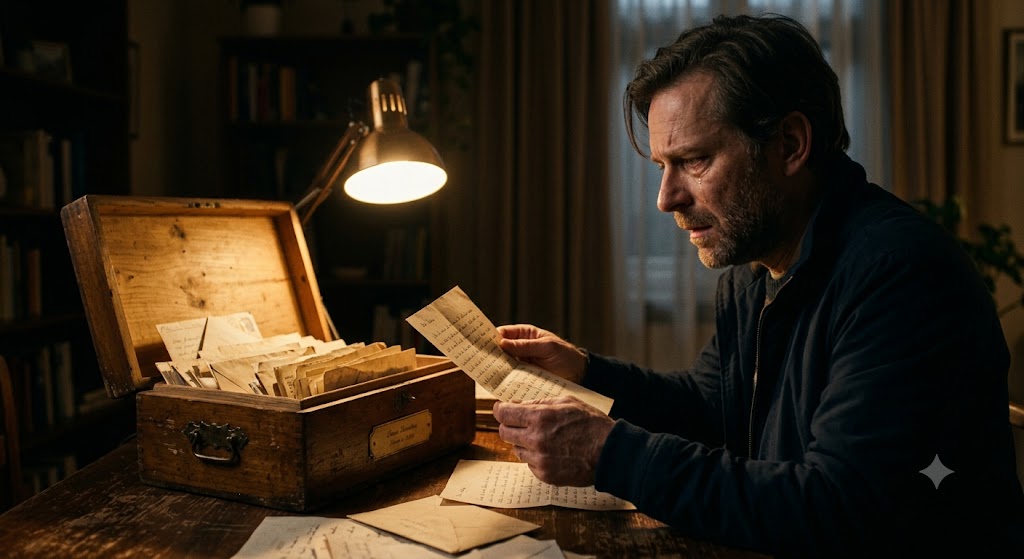
Darin lag eine kleine Holzkiste.
Alt.
Die Kanten waren abgenutzt.
Es war keine wertvolle Kiste. Kein Schmuckstück. Kein Gegenstand, den jemand wegen seines Preises aufbewahren würde.
Es war etwas, das man aufbewahrte, weil der Inhalt wichtiger war als die Verpackung.
„Was ist das?“, fragte ich.
Sie atmete tief ein.
„Beweise.“
Dieses Wort ließ mich still werden.
Sie öffnete den Deckel.
Darin lagen Briefe.
Viele Briefe.
Sauber gefaltet.
Nach Datum sortiert.
Ich nahm den ersten Umschlag in die Hand.
Meine Finger zitterten.
Nicht, weil ich Angst hatte.
Sondern weil ich bereits wusste, von wem diese Briefe waren.
Die Handschrift.
Ich erkannte sie sofort.
Es war die Handschrift meiner Mutter.
Ich öffnete den ersten Brief.
Die ersten Zeilen fühlten sich an wie ein Schlag.
Meine Mutter hatte meiner Frau geschrieben, dass sie niemals wirklich Teil unserer Familie sein würde.
Dass sie nicht verstehen würde, was es bedeutete, den Namen unserer Familie zu tragen.
Dass mein Sohn irgendwann erkennen würde, welche Frau „wirklich zu ihm passte“.
Ich las weiter.
Mit jedem Satz wurde mir schlechter.
Denn plötzlich hörte ich nicht nur die Worte meiner Mutter von diesem Tag.
Ich hörte all die Worte, die sie gesagt hatte, als ich nicht dabei gewesen war.
Meine Frau hatte diese Briefe aufbewahrt.
Nicht, um meine Mutter zu zerstören.
Nicht, um mich gegen sie aufzubringen.
Sondern weil sie irgendwann selbst angefangen hatte, an ihrer eigenen Wahrnehmung zu zweifeln.
„Warum hast du mir das nie gezeigt?“, fragte ich leise.
Sie sah mich an.
„Weil ich wusste, was du sagen würdest.“
Ich schwieg.
Denn ich wusste es.
Ich hätte gesagt:
„Vielleicht war sie nur wütend.“
„Vielleicht hat sie es nicht so gemeint.“
„Vielleicht gibt es einen anderen Zusammenhang.“
Ich hatte immer nach einer Erklärung gesucht.
Nur nie nach der Wahrheit.
Meine Frau nahm einen weiteren Brief.
„Das hier war nach der Geburt unseres Sohnes.“
Ich öffnete ihn.
Meine Hände wurden kalt.
In diesem Brief schrieb meine Mutter, dass ein Kind eine bestimmte Erziehung brauche.
Dass sie nicht glaubte, meine Frau könne unserem Sohn das geben.
Dass sie Angst habe, dass er „unter ihrem Einfluss“ falsch geprägt werde.
Ich musste den Brief zweimal lesen.
Denn ein Teil von mir wollte immer noch glauben, dass es nicht real war.
Dass es nicht meine Mutter sein konnte.
Aber es war meine Mutter.
Jedes Wort.
Jede Zeile.
Jede Entscheidung.
„Wie lange hast du das alles ertragen?“, fragte ich.
Meine Frau schaute aus dem Fenster.
„Zu lange.“
Nur zwei Worte.
Aber sie enthielten Jahre.
Jahre voller Einsamkeit.
Jahre voller Situationen, in denen sie neben mir lag und trotzdem allein war.
Jahre, in denen sie versucht hatte, Frieden zu halten, während andere Menschen entschieden, wie viel Schmerz sie ertragen musste.
Ich nahm ihre Hand.
Diesmal zog sie sie nicht weg.
Aber ich merkte auch, dass sie nicht einfach vergessen konnte.
Und das verstand ich.
Denn Vertrauen verschwindet nicht in einem Moment.
Es verschwindet langsam.
Durch viele kleine Verletzungen.
Und genauso langsam muss es wieder aufgebaut werden.
Am nächsten Morgen rief ich meine Mutter an.
Sie ging sofort ans Telefon.
Als hätte sie auf meinen Anruf gewartet.
„Ich wusste, dass du dich beruhigen würdest“, sagte sie.
Ich schloss kurz die Augen.
Früher hätte dieser Satz mir Sicherheit gegeben.
Jetzt hörte ich etwas anderes.
Sie glaubte noch immer, dass ich irgendwann wieder auf ihre Seite kommen würde.
Dass alles nur eine Phase war.
„Ich habe die Briefe gesehen“, sagte ich.
Am anderen Ende wurde es still.
Zum ersten Mal hörte ich keine Kontrolle in ihrer Stimme.
Nur Unsicherheit.
„Welche Briefe?“
„Die Briefe, die du meiner Frau geschrieben hast.“
Lange Stille.
Dann kam der Satz, den ich erwartet hatte.
„Sie hat sie dir gegeben?“
Nicht:
„Es tut mir leid.“
Nicht:
„Ich hätte das niemals tun dürfen.“
Nur:
„Sie hat sie dir gegeben?“
Als wäre meine Frau diejenige gewesen, die etwas falsch gemacht hatte.
„Sie musste mir nichts geben“, sagte ich. „Ich habe sie gefunden.“
Meine Mutter begann sofort, sich zu erklären.
Sie sprach über Sorgen.
Über Familie.
Über Tradition.
Über Dinge, die sie angeblich nur aus Liebe getan hatte.
Aber diesmal hörte ich genau hin.
Und ich bemerkte etwas.
Sie sprach nie darüber, was sie meiner Frau angetan hatte.
Sie sprach nur darüber, warum sie es getan hatte.
Das war ein großer Unterschied.
„Du verstehst nicht, wie die Welt funktioniert“, sagte sie schließlich.
Dieser Satz erinnerte mich an meine Kindheit.
Meine Mutter hatte immer geglaubt, sie wüsste alles besser.
Was ich tragen sollte.
Welche Freunde gut für mich waren.
Welche Entscheidungen ich treffen sollte.
Und lange Zeit hatte ich das mit Liebe verwechselt.
Aber Kontrolle und Liebe fühlen sich manchmal ähnlich an.
Der Unterschied zeigt sich erst dann, wenn jemand Nein sagt.
„Nein“, antwortete ich ruhig. „Ich glaube, ich verstehe es jetzt endlich.“
Sie schwieg.
„Du hast nicht versucht, meine Familie zu schützen.“
Ich machte eine Pause.
„Du hast versucht, sie nach deinen Vorstellungen zu formen.“
Sie sagte meinen Namen.
Nicht wütend.
Fast flehend.
Aber ich blieb ruhig.
„Ich brauche Abstand.“
Diese Worte auszusprechen war schwerer, als ich erwartet hatte.
Denn trotz allem war sie meine Mutter.
Sie war die Frau, die mich großgezogen hatte.
Diejenige, die in meiner Kindheit neben meinem Bett saß, wenn ich krank war.
Diejenige, die meine Hand hielt, als ich laufen lernte.
Aber gleichzeitig war sie auch die Person, die die Frau verletzt hatte, die ich liebte.
Und ich musste endlich akzeptieren, dass beide Dinge gleichzeitig wahr sein konnten.
Menschen sind nicht nur gut oder schlecht.
Manchmal tragen sie Liebe und Schaden gleichzeitig in sich.
Am Abend erzählte ich meiner Frau von dem Gespräch.
Sie hörte ruhig zu.
„Du musst dich nicht zwischen uns entscheiden“, sagte sie.
Ich sah sie überrascht an.
„Was?“
„Du musst dich nicht gegen deine Mutter entscheiden, um für mich zu sein.“
Diese Worte sagten viel über sie aus.
Denn selbst nach allem wollte sie keinen Krieg.
Sie wollte nur Respekt.
„Aber ich muss Entscheidungen treffen“, sagte ich.
Sie nickte langsam.
„Ja.“
In dieser Nacht schlief ich schlecht.
Nicht wegen meiner Mutter.
Nicht wegen der Briefe.
Sondern wegen einer Erkenntnis, die mich nicht losließ:
Meine Frau hatte nie verlangt, dass ich meine Mutter verlasse.
Sie hatte nur darum gebeten, dass ich sie nicht verlasse.
Und genau das hatte ich getan.
Am nächsten Morgen fand ich eine weitere Sache in der Holzkiste.
Meine Frau hatte sie bisher nicht erwähnt.
Ganz unten lag ein alter Umschlag.
Gelb geworden.
Mit einer Handschrift, die ich nicht sofort erkannte.
Aber als ich den Namen darauf las, blieb mir der Atem weg.
Es war die Handschrift meines Vaters.
Und auf dem Umschlag stand ein Satz:
„Falls mein Sohn eines Tages die Wahrheit erfährt, soll er diesen Brief lesen.“
Ich hielt den Umschlag in der Hand.
Und plötzlich wusste ich:
Mein Vater hatte etwas gewusst.
Etwas, das ich nie erfahren sollte.
Etwas, das meine ganze Familie noch einmal verändern würde.
Teil 4 – Die Wahrheit meines Vaters und der Neuanfang meiner Familie
Ich hielt den alten Umschlag meines Vaters minutenlang in der Hand, ohne ihn zu öffnen. Es war seltsam, wie ein kleines Stück Papier plötzlich schwerer wirken konnte als alles andere in meinem Leben. Ich hatte in den letzten Tagen so viele Dinge erfahren, die mein Bild von meiner Familie zerstört hatten, aber dieser Umschlag fühlte sich anders an. Es war nicht nur ein weiterer Beweis. Es war eine Nachricht von einem Menschen, der nicht mehr da war und der vielleicht etwas gewusst hatte, was ich niemals sehen wollte.
Mein Vater war einige Jahre zuvor gestorben. Sein Tod hatte eine Lücke hinterlassen, die ich nie wirklich geschlossen hatte. Er war immer der ruhigere Teil unserer Familie gewesen. Während meine Mutter laut war, entschlossen und immer überzeugt davon, die richtige Antwort zu kennen, war mein Vater jemand gewesen, der erst zuhörte, bevor er sprach. Als Kind hatte ich das nie verstanden. Ich dachte, meine Mutter sei stärker, weil sie immer wusste, was zu tun war. Erst später begriff ich, dass Stärke nicht bedeutet, immer die Kontrolle zu haben.
Manchmal bedeutet Stärke, die Wahrheit auszuhalten.
Ich öffnete den Umschlag vorsichtig.
Darin lag ein Brief.
Nur ein Brief.
Aber schon die ersten Worte ließen meine Hände zittern.
„Wenn du diesen Brief liest, hast du wahrscheinlich endlich verstanden, was ich schon lange gesehen habe.“
Ich musste aufhören zu lesen.
Mein Herz schlug schneller.
Mein Vater hatte nicht geschrieben, weil er meine Mutter bestrafen wollte.
Er hatte geschrieben, weil er wusste, dass irgendwann jemand die Wahrheit brauchen würde.
Ich las weiter.
Er schrieb, dass er meine Frau von Anfang an kennengelernt hatte. Nicht als die Frau, die meine Mutter in ihr sehen wollte. Nicht als jemand, der angeblich nicht zu unserer Familie passte.
Sondern einfach als Mensch.
Er schrieb, dass er gesehen hatte, wie meine Frau immer wieder versucht hatte, Frieden zu schaffen.
Wie sie niemals verlangt hatte, dass ich mich zwischen meiner Mutter und ihr entscheiden musste.
Wie sie nie wollte, dass eine Familie zerbricht.
Er schrieb einen Satz, der mich lange nicht losließ:
„Eine Frau, die deinen Sohn liebt, versucht nicht, dich von deiner Familie zu trennen. Sie versucht, ein Teil davon zu werden.“
Ich musste den Brief kurz weglegen.
Denn plötzlich sah ich all die Situationen aus einer anderen Perspektive.
Ich erinnerte mich an unseren Hochzeitstag.
Meine Mutter hatte damals kaum mit meiner Frau gesprochen. Ich hatte es bemerkt, aber ich hatte mir eingeredet, dass sie einfach Zeit brauchen würde.
Ich erinnerte mich an die Geburt unseres Sohnes.
Meine Frau war erschöpft, emotional und brauchte Unterstützung. Doch während sie im Krankenhaus lag, hatte meine Mutter bereits angefangen, darüber zu sprechen, wie sie die Erziehung unseres Kindes beeinflussen wollte.
Ich hatte damals gelacht.
Ich hatte gedacht, sie würde einfach nur eine stolze Großmutter sein.
Ich hatte nicht verstanden, dass sie versuchte, ihren Platz zu beanspruchen.
Mein Vater schrieb weiter, dass er oft mit meiner Mutter gesprochen hatte.
Dass er versucht hatte, sie dazu zu bringen, ihre Haltung zu ändern.
Aber sie habe immer gesagt, sie würde nur „das Richtige“ tun.
Und genau das war vielleicht das größte Problem gewesen.
Menschen können viel Schaden anrichten, wenn sie überzeugt sind, dass sie im Namen der Liebe handeln.
Am Ende des Briefes stand eine Zeile, die mich zum Weinen brachte.
„Wenn du irgendwann erkennst, dass deine Frau jahrelang allein gekämpft hat, dann suche die Schuld nicht zuerst bei ihr. Frag dich, warum du nicht hingesehen hast.“
Ich saß lange schweigend am Tisch.
Meine Frau saß mir gegenüber.
Sie sagte nichts.
Sie musste nichts sagen.
Denn zum ersten Mal verstand ich wirklich.
Nicht nur mit meinem Kopf.
Sondern mit meinem Herzen.
Ich hatte meine Frau nicht verloren, weil meine Mutter gegen sie war.
Ich hatte sie fast verloren, weil ich mich geweigert hatte, sie zu sehen.
In den nächsten Wochen begann ein Prozess, den ich mir früher nie hätte vorstellen können.
Ich wollte sofort alles reparieren.
Ich wollte jeden Schmerz zurücknehmen.
Jede Nacht, in der meine Frau allein geweint hatte.
Jeden Moment, in dem sie sich unerwünscht gefühlt hatte.
Jeden Satz, mit dem ich ihr vermittelt hatte, dass ihre Gefühle weniger wichtig waren als die Verteidigung meiner Mutter.
Aber ich lernte schnell, dass echte Veränderung nicht durch große Worte entsteht.
Sie entsteht durch kleine Entscheidungen.
Jeden Tag.
Ich begann zuzuhören.
Nicht um zu antworten.
Nicht um mich zu erklären.
Sondern um wirklich zu verstehen.
Wenn meine Frau erzählte, was sie erlebt hatte, suchte ich nicht mehr nach Gründen, warum meine Mutter vielleicht anders gemeint hatte.
Ich fragte:
„Wie hast du dich damals gefühlt?“
Und manchmal war ihre Antwort schwer auszuhalten.
Aber ich blieb.
Denn genau das hatte sie all die Jahre gebraucht.
Jemanden, der bleibt.
Auch wenn es unangenehm wird.
Auch wenn die Wahrheit weh tut.
Mein Sohn veränderte sich ebenfalls.
Kinder merken mehr, als Erwachsene glauben.
Er wurde wieder leichter.
Er lachte wieder häufiger.
Er hörte auf, ständig die Stimmung zwischen Erwachsenen zu beobachten.
Eines Abends saßen wir zusammen auf dem Boden und bauten ein Spielzeug auf.
Er schaute mich plötzlich an und fragte:
„Papa, bleibst du jetzt öfter hier?“
Diese einfache Frage traf mich mitten ins Herz.
Denn ein Kind sollte seinen Vater nicht fragen müssen, ob er bleibt.
Ein Kind sollte es wissen.
Ich nahm ihn in den Arm und sagte:
„Ja. Ich bleibe.“
Und diesmal meinte ich nicht nur körperlich.
Ich meinte es wirklich.
Währenddessen versuchte meine Mutter, Kontakt aufzunehmen.
Am Anfang schrieb sie viele Nachrichten.
Manche waren wütend.
Manche traurig.
Manche voller Erinnerungen.
Sie schrieb über meine Kindheit.
Über alles, was sie für mich getan hatte.
Und ich glaubte ihr sogar.
Denn sie hatte viel für mich getan.
Das war die komplizierte Wahrheit.
Meine Mutter war nicht nur eine schlechte Person.
Sie war auch die Frau, die mich geliebt hatte.
Aber Liebe allein macht nicht jede Handlung richtig.
Nach einigen Monaten traf ich mich mit ihr.
Allein.
Nicht, weil ich vergessen hatte.
Nicht, weil plötzlich alles wieder normal war.
Sondern weil ich wissen wollte, ob sie wirklich verstanden hatte.
Wir saßen uns gegenüber.
Zum ersten Mal seit langer Zeit ohne Streit.
Sie sah älter aus.
Nicht körperlich.
Aber in ihren Augen.
„Ich habe viel darüber nachgedacht“, sagte sie.
Ich wartete.
„Ich dachte immer, wenn ich dich beschütze, muss ich Entscheidungen für dich treffen.“
Sie machte eine Pause.
„Aber vielleicht habe ich irgendwann vergessen, dass du erwachsen bist.“
Ich sagte nichts.
Denn ich wusste, dass Worte allein nichts bedeuteten.
Aber diesmal hörte ich etwas anderes in ihrer Stimme.
Keine Verteidigung.
Keine Schuldzuweisung.
Nur eine Art Ehrlichkeit.
„Ich habe deine Frau verletzt“, sagte sie leise.
Das war der Satz, auf den ich gewartet hatte.
Nicht weil er alles heilte.
Sondern weil er zeigte, dass sie endlich Verantwortung übernahm.
„Ja“, sagte ich.
Sie nickte.
„Ich weiß.“
Es war kein perfekter Moment.
Es gab keine Umarmung, keine plötzliche Heilung.
Manchmal sind echte Veränderungen nicht spektakulär.
Manchmal beginnen sie nur mit einem Menschen, der zum ersten Mal ehrlich zugibt:
Ich habe etwas falsch gemacht.
Einige Zeit später traf meine Mutter meine Frau wieder.
Es war kein großes Familientreffen.
Keine dramatische Szene.
Nur ein ruhiges Gespräch.
Meine Mutter entschuldigte sich.
Meine Frau nahm die Entschuldigung an.
Aber sie sagte auch etwas Wichtiges:
„Vergeben bedeutet nicht, dass alles wieder wie vorher wird.“
Meine Mutter nickte.
Und diesmal widersprach sie nicht.
Denn vielleicht hatte sie endlich verstanden, dass Respekt nicht bedeutet, jemanden zu kontrollieren.
Es bedeutet, ihn so zu akzeptieren, wie er ist.
Viele Monate später saßen wir an einem Sonntagmorgen zusammen am Frühstückstisch.
Mein Sohn erzählte irgendeine Geschichte aus der Schule.
Meine Frau lachte.
Ich sah sie an und dachte daran, wie nah wir daran gewesen waren, alles zu verlieren.
Nicht wegen eines großen Verrats.
Nicht wegen eines einzigen schrecklichen Moments.
Sondern wegen all der kleinen Momente, in denen ich nicht hingesehen hatte.
Ich hatte einmal geglaubt, eine Familie zu schützen bedeutet, Konflikte zu vermeiden.
Heute weiß ich, dass das Gegenteil wahr ist.
Manchmal schützt man eine Familie nur, indem man bereit ist, die Wahrheit anzusehen.
Auch wenn sie weh tut.
Auch wenn sie von Menschen kommt, die man liebt.
Der Tag, an dem ich hinter dieser Tür stand und hörte:
„Nimm das Geld und verschwinde aus dem Leben meines Sohnes.“
war der Tag, an dem mein altes Leben endete.
Aber vielleicht war es auch der Tag, an dem mein wirkliches Leben begann.
Denn ich verlor nicht meine Familie.
Ich verlor nur die Illusion, dass Schweigen Frieden bedeutet.
Meine Frau sitzt heute manchmal neben mir und sagt, dass sie immer noch nicht vergessen hat, wie allein sie sich gefühlt hat.
Und ich sage ihr nicht mehr:
„Du übertreibst.“
Ich sage:
„Ich weiß.“
Denn manchmal ist das Wichtigste, was ein Mensch hören kann, nicht eine Lösung.
Nicht eine Erklärung.
Sondern die Gewissheit:
Ich sehe dich.
Ich glaube dir.
Und ich bleibe.