Vor drei Wochen stand ich auf der Beerdigung meines Vaters, als mein Bruder vor vierzig Leuten verkündete, dass er unser Elternhaus verkaufen würde, um seine Spielschulden zu begleichen. Meine Mutter nickte. Sie nickte tatsächlich und sagte: „Dein Vater würde das verstehen. Deine Schwester kann sich ja etwas anderes suchen.
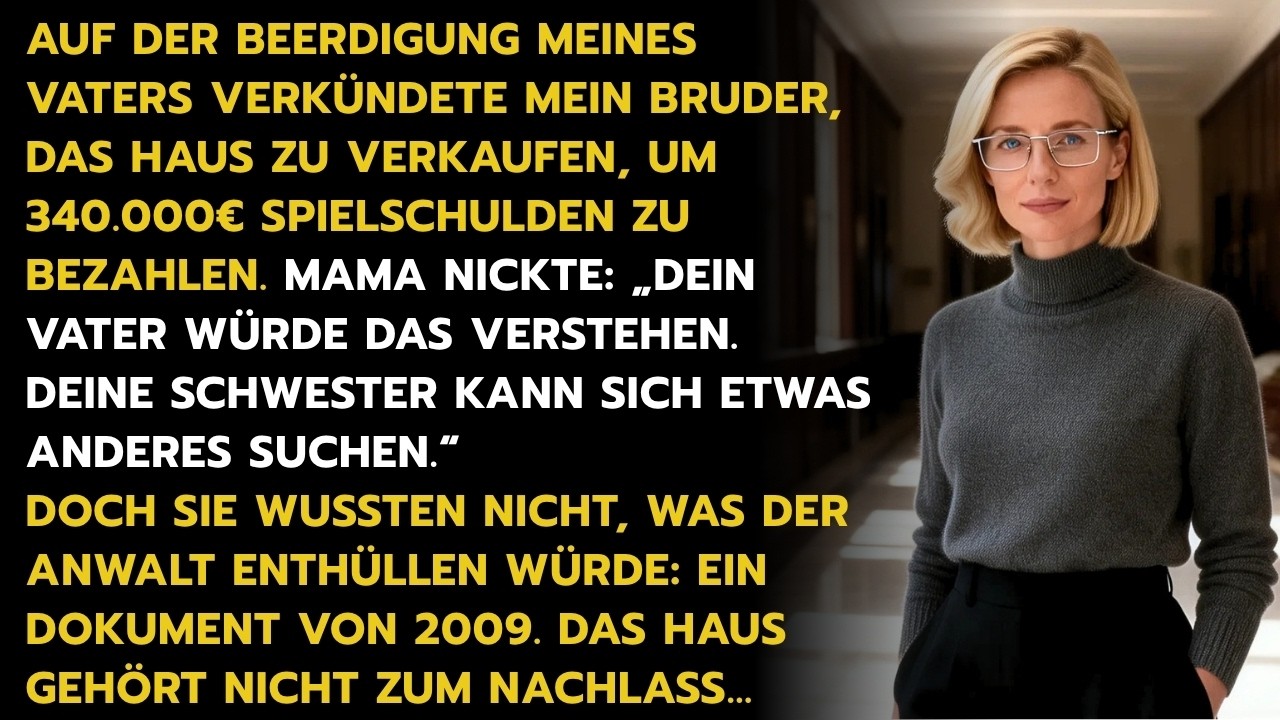
”
Ich stand da, umgeben von Verwandten, die mir nicht in die Augen sehen wollten, und fühlte mich, als hätte man mir mitten in einem vollen Raum eine Ohrfeige gegeben. Aber sie wussten es nicht. Es gab etwas, das der Anwalt bald enthüllen würde. Etwas, das mein Vater fünfzehn Jahre lang geheim gehalten hatte.
Mein Name ist Britta, ich bin achtunddreißig Jahre alt, und das hier ist die Geschichte, wie ich auf der Beerdigung meines Vaters enterbt wurde — und drei Tage später erfuhr, dass ich das Haus längst besaß. Drei Wochen zuvor, um zwei Uhr morgens, leuchtete mein Telefon auf. Mamas Name blinkte auf dem Display. „Dein Vater ist zusammengebrochen.
Komm sofort ins Krankenhaus. ”
Ich fuhr fünfundvierzig Minuten über leere Autobahnen. Als ich die Intensivstation erreichte, war Papa bereits von uns gegangen. Das letzte Mal hatte ich drei Monate zuvor mit ihm gesprochen.
Ein Telefonat, das vielleicht neunzig Sekunden dauerte. Er fragte: „Geht es dir gut? ” Und ich sagte ja. Ich wusste nicht, dass dies das letzte Mal sein würde, dass ich seine Stimme hörte.
Um zu verstehen, was bei dieser Beerdigung geschah, müsst ihr meine Familie verstehen. Mit achtzehn saß ich an unserem Esstisch, die Zulassungsbescheide der Universitäten vor mir ausgebreitet. Ich hatte mein ganzes Gymnasiumleben für diese Briefe gearbeitet. Meine Mutter nahm den Brief der Uni Hamburg in die Hand, warf einen kurzen Blick darauf und legte ihn weg, als wäre er Werbemüll.
„Warum sollten wir so viel Geld für dich ausgeben? Du bist ein Mädchen. Du wirst heiraten, Kinder bekommen. Dein Mann wird für dich sorgen.
”
Ich sah meinen Vater an. Er starrte auf seine Kaffeetasse, den Kiefer angespannt, und sagte nichts. Im selben Jahr bekam Markus, drei Jahre älter, alles auf dem Silbertablett serviert. Keine Stipendien, nur Schecks von unseren Eltern.
Sie hatten ihm einen Audi gekauft und eine Wohnung in der Nähe des Campus gemietet. Ich bekam eine Liste mit Jobs. Also regelte ich es selbst. Stipendien, zwei Teilzeitjobs, fünf Stunden Schlaf pro Nacht, Tütensuppen, weil Lebensmittel ein Luxus waren.
Ich schloss mit Bestnoten ab und machte mein Wirtschaftsprüferexamen. Deshalb habe ich nach dem Abschluss zwei Jahre lang nicht mehr mit meiner Familie gesprochen. „Söhne sind die Säulen der Familie”, pflegte meine Mutter zu sagen. „Töchter sind nur Gäste, die auf der Durchreise sind.
”
Am Morgen nach Papas Tod fuhr ich zum ersten Mal seit drei Jahren zurück in das Haus, in dem ich aufgewachsen war. Markus wartete an der Haustür. „Lange nicht gesehen, Schwesterherz”, sagte er. „Du siehst müde aus.
”
Ich bemerkte die Louis Vuitton Reisetasche im Flur. Die Golfschläger. Die Gucci-Schuhe. Markus war seit acht Monaten arbeitslos.
Ich trug meine Reisetasche nach oben in mein altes Zimmer, aber es war kein Zimmer mehr. Die Wände waren immer noch hellblau gestrichen, aber mein Bett war weg, ersetzt durch Markus’ Designergepäck und Schuhkartons. Ich stand im Türrahmen und spürte, wie sich etwas Kaltes in meiner Brust ausbreitete. Die Beerdigung war für fünf Tage später angesetzt.
Ich kümmerte mich um die Logistik. Ich rief den Bestatter an, schrieb den Nachruf, kontaktierte Verwandte. Markus kümmerte sich um das Beileid. Wann immer ein Nachbar mit einem Auflauf vorbeikam, tauchte er mit einstudierter Trauer auf.
Am dritten Tag bemerkte ich, wie Mama und Markus ständig gedämpfte Gespräche im Wohnzimmer führten. Gespräche, die abrupt aufhörten, sobald ich den Raum betrat. In der vierten Nacht hörte ich Markus am Telefon. „Ich weiß, ich weiß.
Ich werde es bald haben. Geben Sie mir einfach Zeit. ”
Am nächsten Morgen fand ich in Papas Büro einen Ordner mit der Aufschrift „Wichtige Dokumente”. Darin lag ein einzelnes Blatt Papier mit einem Logo, das ich nicht kannte.
Farwell Family Holdings GmbH. Datiert auf das Jahr 2009. Mein Name stand darin. Und meine Unterschrift.
Ich erinnerte mich an diesen Tag. Papa hatte mich angerufen und gebeten, nach Hause zu kommen, um ein paar Papiere zu unterschreiben. „Nur Verwaltungskram für die Firma”, hatte er gesagt. Ich war frisch vom Studium und vertraute ihm.
Also unterschrieb ich dort, wo er hinzeigte, ohne das Kleingedruckte zu lesen. Ich steckte das Papier in meine Handtasche. Die Beerdigung war an einem Donnerstag, grau und kalt. Vierzig Leute kamen.
Markus hielt die Grabrede, als wären sie beste Freunde gewesen. Er erzählte von Angelausflügen und tiefgründigen Gesprächen. Ich saß in der letzten Reihe und hörte Geschichten, die ich noch nie gehört hatte. Nach dem Abschlussgebet trat Markus erneut ans Pult.
„Wir haben eine schwere Entscheidung getroffen. Wir werden das Elternhaus verkaufen. ”
Ein Raunen ging durch die Menge. „Wir haben das bereits als Familie besprochen.
Mutter, ich und Britta waren uns alle einig. ”
Mir wurde flau im Magen. Ich hatte gar nichts zugestimmt. Meine Mutter erhob sich.
„Britta ist eine starke, unabhängige junge Frau. Sie hat einen guten Job, ihre eigene Wohnung. Sie braucht das Haus nicht. Nicht so wie Markus.
Er hatte einige Rückschläge. Er braucht jetzt die Unterstützung der Familie. ”
Dann sah sie mich direkt an. „Deine Schwester findet schon einen anderen Ort.
”
Ich stand wie erstarrt im hinteren Teil des Raumes. Eine entfernte Cousine lehnte sich zu mir: „Du weißt, dass deine Mutter recht hat, Schätzchen. Markus braucht die Hilfe dringender als du. ”
Ich wollte schreien.
Ich tat es nicht. Durch das Fenster beobachtete ich, wie Markus einem Mann in einem grauen Anzug die Hand schüttelte. Sie tauschten Visitenkarten aus. Der Mann hatte eine Mappe mit dem Logo einer Immobilienagentur.
Er hatte einen Makler mit zur Beerdigung gebracht. Sie zeigten das Haus, noch bevor Vater unter der Erde war. Drei Tage später rief Mama zu einem Familientreffen zusammen. Fünfzehn Personen drängten sich im Esszimmer.
Mama stand am Kopfende des Tisches. „Richard hat kein kompliziertes Erbe hinterlassen. Das Haus ist etwa achthunderttausend Euro wert. Mein Plan ist es, es zu verkaufen.
”
Markus schob mir ein Dokument über den Tisch. In der Überschrift stand: „Verzichtserklärung auf Erbansprüche. ”
„Du unterschreibst das und verzichtest formell auf jegliche Ansprüche”, sagte Mama. „Papa hat dir in seinem Testament nichts hinterlassen”, fügte Markus hinzu.
„Das hier macht es nur offiziell. ”
„Wenn ich sowieso keinen Anspruch habe, warum muss ich dann unterschreiben? ”
Seine Kiefermuskeln spannten sich an. „Weil wir die Sache schnell erledigen wollen.
”
„Und wenn ich nicht unterschreibe? ”
Mama lehnte sich vor. „Dann werde ich jedem erzählen, was für eine Tochter du warst. Wie du deinen Vater zwei Jahre lang im Stich gelassen hast.
”
Ich nahm den Stift in die Hand. Papas Montblanc. Ich hielt ihn über die Linie — dann legte ich ihn ab. „Ich brauche Zeit zum Nachdenken.
”
„Du hast vierundzwanzig Stunden. ”
In dieser Nacht saß ich in meiner Wohnung im Dunkeln. Ich holte das Papier mit dem Logo heraus. Farwell Family Holdings GmbH.
Irgendetwas sagte mir, dass ich einen Anwalt brauchte. Ich fand Papas alten Notar, Gerald Whitemore. Sein Büro lag in der Hamburger Innenstadt. Er war Ende sechzig, mit weißem Haar und einer Drahtbrille.
Aber seine Augen waren wachsam, als er mir die Hand schüttelte. „Fräulein Henderson, ich hatte gehofft, dass Sie anrufen würden. ”
Ich schob ihm das Dokument über den Schreibtisch. „Meine Mutter sagte, die Firma wurde vor Jahren aufgelöst.
”
„Ihre Mutter irrt sich. ”
Er öffnete eine Schublade und holte eine dicke Mappe heraus, als hätte er sie bereitgehalten. „Es gibt etwas, das Ihr Vater mich gebeten hat, Ihnen zu sagen, aber erst, wenn der richtige Zeitpunkt gekommen ist. ”
Mein Puls beschleunigte sich.
„Das Familienhaus ist nicht Teil des Nachlasses Ihres Vaters. Im Jahr 2009 hat er die Immobilie in die Farwell Family Holdings GmbH übertragen. Das Haus gehört der GmbH, nicht ihm persönlich. ”
„Und wer ist der Eigentümer der GmbH?
”
Whitemore sah mich über seine Brille hinweg an. „Das sind Sie, Fräulein Henderson. Sie sind die alleinige Gesellschafterin. Seit fünfzehn Jahren.
”
Einen langen Moment konnte ich nicht sprechen. „Warum? “, brachte ich schließlich hervor. „Ihr Vater liebte Ihren Bruder, aber er vertraute ihm nicht.
Er wusste, wenn ihm etwas zustieße, würde Markus einen Weg finden, jeden Vermögenswert der Familie zu plündern. Also schuf er eine Struktur, um den wertvollsten Besitz zu schützen. Er übertrug das Haus auf die GmbH und setzte Sie als alleinige Gesellschafterin ein. ”
Ich spürte, wie mir die Tränen in die Augen stiegen.
All die Jahre hatte ich sein Schweigen als Gleichgültigkeit gedeutet. Die ganze Zeit über hatte er eine Festung um mich herumgebaut. „Er war nicht gut mit Worten”, sagte Whitemore sanft. „Aber er war akribisch mit Dokumenten.
Das war seine Art, das zu sagen, was er nicht aussprechen konnte. ”
Er reichte mir einen versiegelten Umschlag. Mein Name stand in Papas Handschrift auf der Vorderseite, zittrig und ungleichmäßig. „Er hat mir das vor drei Monaten gegeben.
Er bat mich, es aufzubewahren, bis Sie es brauchen. ”
Ich öffnete den Brief erst am Abend vor der Testamentseröffnung. Seine Worte waren knapp, aber klar:
„Britta, ich weiß, dass deine Mutter und dein Bruder dich nicht fair behandelt haben. Es tut mir leid, dass ich nie den Mut hatte, das laut auszusprechen.
Ich war kein guter Vater, aber ich habe versucht, dir etwas zu hinterlassen, das sie dir nicht wegnehmen können. Du bist die einzige, der ich vertraue, worauf es ankommt. ”
Am Freitagmorgen, zehn Uhr, versammelten sich alle im Konferenzraum des Notars. Mama kam zuerst, wieder ganz in Schwarz.
Markus schlenderte zehn Minuten zu spät herein, im frisch gebügelten Anzug. Onkel Frank, Tante Dorothy, Oma und eine Handvoll Cousins folgten. Markus fing meinen Blick auf und zwinkerte mir zu. „Hast du diesmal einen Stift dabei?
”
Ich antwortete nicht. Whitemore begann mit den Formalitäten. Persönliche Gegenstände gingen an Mama. Das Auto an Markus.
Die Ersparnisse in Höhe von siebenundvierzigtausend Euro an Linda. Dann kam das Haus. „Was das Haus betrifft”, sagte Whitemore langsam, „gibt es eine Besonderheit. ”
Markus setzte sich aufrecht hin.
„Was für eine Besonderheit? ”
„Das Anwesen ist nicht Teil des privaten Nachlasses. Die Immobilie gehört einer Gesellschaft mit beschränkter Haftung namens Farwell Family Holdings GmbH. ”
„Schön”, sagte Markus.
„Wem gehört die Firma? ”
Whitemore sah mich an. Alle Köpfe folgten seinem Blick. „Diese Person ist Britta Henderson.
”
Die Stille dauerte genau drei Sekunden. Dann sprang Markus auf. „Das ist Betrug! Sie hat ihn manipuliert!
”
„Die Dokumente wurden 2009 unterzeichnet”, sagte Whitemore ruhig. „Ihr Vater war dreiundfünfzig und bei bester Gesundheit. Die Unterschriften wurden notariell beglaubigt. ”
Mutter sprach schließlich, ihre Stimme kaum mehr als ein Flüstern.
„Er hat es mir nie gesagt. Fünfundzwanzig Jahre Ehe. Und er hat kein Wort gesagt. ”
„Sie haben sich entschieden, das öffentlich zu tun”, sagte ich.
„Sie haben mich vor vierzig Leuten wie die undankbare Tochter dastehen lassen. Jetzt sage ich die Wahrheit genauso öffentlich. ”
Markus stürmte nach vorne. Onkel Frank packte ihn am Arm.
„Setz dich hin. Du hast schon genug Schaden angerichtet. ”
Ich wandte mich an meine Mutter. „Du kannst im Haus bleiben.
Aber unter einem Mietvertrag. Ein Euro im Monat. Und Markus wohnt nicht dort. ”
„Das kannst du nicht.
”
„Das Haus gehört meiner GmbH. Ich entscheide, wer darin wohnt. ”
Markus schuldete dreihundertvierzigtausend Euro Spielschulden. Das sagte ich laut, vor allen.
Tante Dorothys Hand flog an ihre Brust. Onkel Frank starrte Markus an, als hätte er ihn nie zuvor gesehen. Ich nahm meine Tasche. „Ich bin nicht hier, um jemanden zu bestrafen.
Ich bin hier, weil Papa wollte, dass ich das bekomme. ”
Ich ging hinaus. Auf dem Parkplatz holte Markus mich ein. Zum ersten Mal sah ich hinter den teuren Anzug.
Dunkle Augenringe, zitternde Hände. „Die Leute, denen ich Geld schulde, sind nicht geduldig. Sie lassen mich beschatten. Letzte Woche haben sie mir die Reifen aufgeschlitzt.
Ich habe Angst. ”
„Du brauchst einen Entzug. Kein Geld. Ein echtes Programm.
”
„Mindestens neunzig Tage”, sagte ich. „Wenn du dich wirklich darauf einlässt, können wir darüber reden, wie es weitergeht. Aber nicht vorher. ”
Mama wartete an meinem Auto.
Ihr Make-up war verschmiert. Sie wirkte irgendwie kleiner. „Hat er mir irgendetwas hinterlassen? Richard?
Irgendeine Nachricht? ”
„Nein”, sagte ich. „Er hat dich mit keinem Wort erwähnt. ”
Sie zuckte zusammen, als hätte ich sie geschlagen.
„Er hat mir das Haus hinterlassen”, sagte ich, „nicht weil er mich mehr geliebt hat. Sondern weil er wusste, dass du und Markus es durchbringen würdet. ”
„Ich habe getan, was ich für das Beste für die Familie hielt. ”
„Du hast getan, was das Beste für Markus war.
Da gibt es einen Unterschied. ”
Zwei Wochen später zog ich wieder in das Haus in der Maple Street ein. Nicht dauerhaft, aber ich verbrachte die Wochenenden dort. Das erste, was ich tat, war mein altes Schlafzimmer leer zu räumen.
Markus’ Designergepäck, die Schuhkartons, der Fernseher — alles kam in die Garage. Dann strich ich die Wände neu. Ein sanftes Salbeigrün. Diesmal eine Farbe, die ich mir immer gewünscht, aber nie verlangt hatte.
Mama zog ins Gästezimmer. Wir redeten nicht viel, aber wir stritten auch nicht. Es war eine Art Frieden, den ich nicht erwartet hatte. Zerbrechlich, aber echt.
Markus meldete sich selbst in einem Entzugsprogramm in Brandenburg an. Ich schickte einen Brief, nur eine Zeile: „Ich drücke dir die Daumen. ” Er schrieb zwei Wochen später zurück, zwei Worte: „Danke dir. ”
Gestern Abend saß ich auf der Veranda, als die Sonne unterging, mit einer Tasse Ingwertee — dieselbe Sorte, die Papa jeden Abend getrunken hatte.
Ich hatte seinen Brief inzwischen hundertmal gelesen. Das Papier wurde an den Knicken schon dünn. Lange Zeit dachte ich, mein Vater würde mich nicht lieben. Ich dachte, sein Schweigen sei der Beweis dafür, dass ich es nicht wert war.
Aber ich hatte es falsch verstanden. Papa wusste nicht, wie man Liebe laut ausspricht. Er zeigte es auf die einzige Weise, die er kannte: indem er mich mit Dokumenten schützte, wenn er mich nicht mit Worten schützen konnte. Papa hat nie „Ich liebe dich” gesagt.
Aber er hat meinen Namen auf jedes Dokument geschrieben, das zählte. Das war seine Art, es zu sagen. Und ich habe ihn endlich gehört.