Pamiętam tę ciszę po jej słowach.
Taką dziwną ciszę, która trwa tylko kilka sekund, ale potrafi zmienić całe życie.
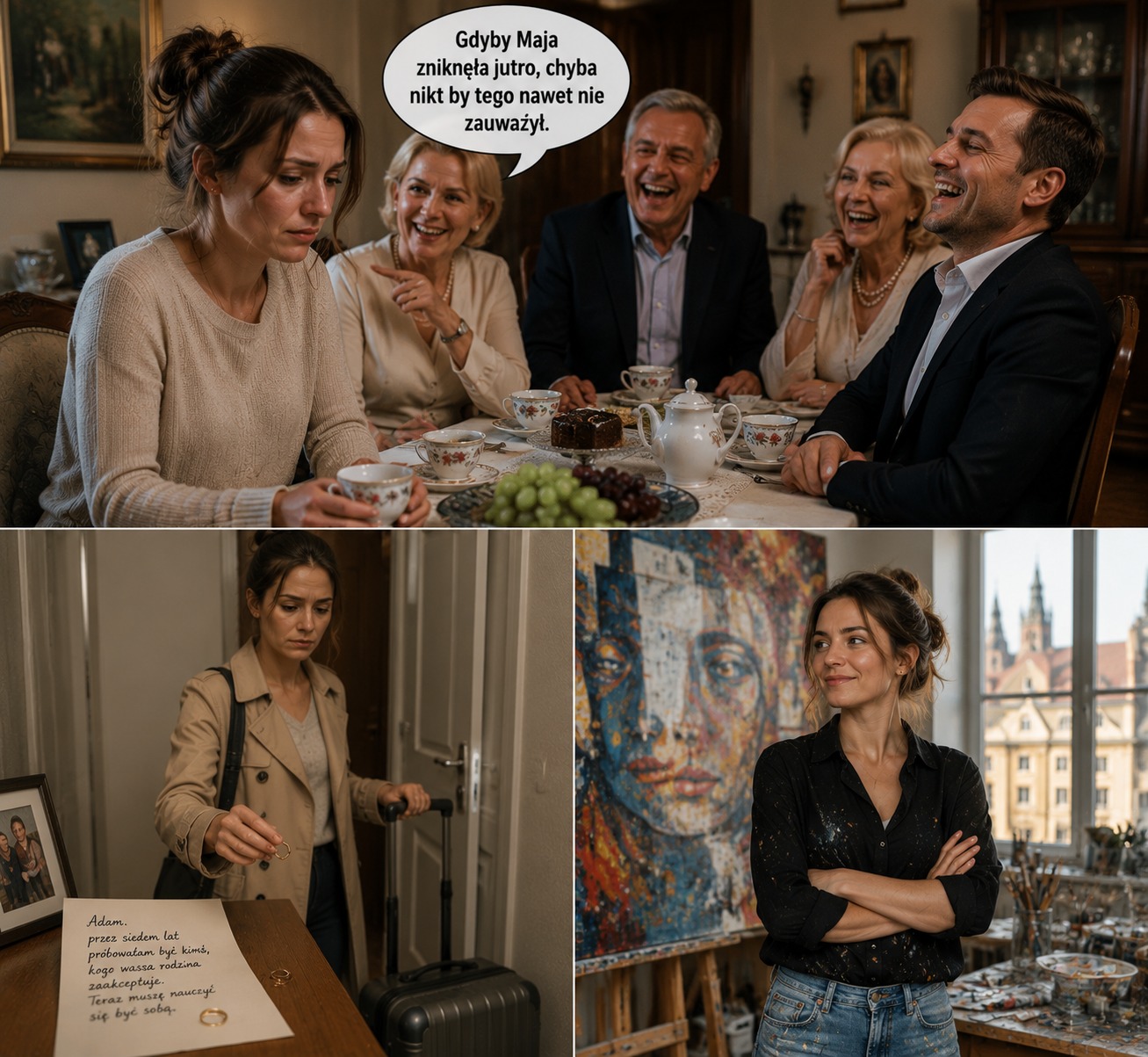
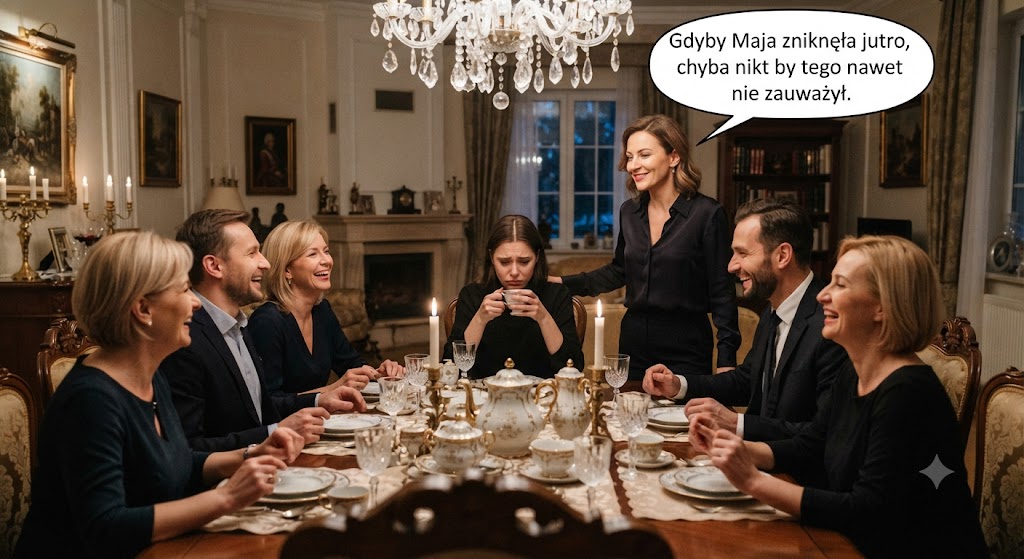
Ewa siedziała naprzeciwko mnie i uśmiechała się szeroko.
Jakby właśnie powiedziała coś zabawnego.
Jakby moja nieobecność była tylko kolejnym rodzinnym żartem.
Jerzy się śmiał.
Grażyna się śmiała.
Nawet Adam.
Mój mąż.
Człowiek, z którym dzieliłam łóżko przez siedem lat.
Spojrzałam na niego i przez chwilę czekałam.
Może powie:
„Przestań, to nie jest śmieszne.”
Może spojrzy na mnie i zobaczy, że coś we mnie właśnie pękło.
Ale on tylko się uśmiechnął.
I wtedy powiedziałam spokojnie:
— Wyzwanie przyjęte.
Postawiłam filiżankę na stole.
Nikt nie zrozumiał, że mówiłam poważnie.
Nazywam się Maja Wiśniewska.
Kiedyś myślałam, że największym szczęściem jest zostać zaakceptowaną przez rodzinę człowieka, którego kocham.
Dzisiaj wiem, że największą stratą było to, że przez lata próbowałam zasłużyć na coś, czego oni nigdy nie zamierzali mi dać.
Akceptacji.
Szacunku.
Miejsca.
Rodzina Wiśniewskich była zupełnie inna niż moja.
Ja wychowałam się w małym domu.
Moja mama była krawcową.
Pracowała po godzinach, żebyśmy miały wszystko, czego potrzebowałyśmy.
Nie mieliśmy wielkiego nazwiska.
Nie mieliśmy prestiżu.
Ale mieliśmy siebie.
Rodzina Adama wyglądała inaczej.
Pieniądze.
Kontakty.
Znane nazwisko w Krakowie.
Dom na wsi, do którego wszyscy przyjeżdżali.
Długie stoły.
Eleganckie kolacje.
Rozmowy o firmach i inwestycjach.
Na początku byłam tym zachwycona.
Nie będę kłamać.
Adam dawał mi poczucie bezpieczeństwa.
Był spokojny.
Opiekuńczy.
Wydawał się człowiekiem, przy którym mogłam odpocząć.
Ale z czasem zrozumiałam, że razem z nim dostałam coś jeszcze.
Całą rodzinę, która uważała, że nigdy nie będę wystarczająco dobra.
Pierwszy raz poczułam to podczas kolacji kilka miesięcy po ślubie.
Opowiadałam historię z pracy.
Użyłam słowa, którego nauczyłam się w mojej rodzinnej miejscowości.
Ewa od razu się odezwała.
— Maja, tutaj tak się nie mówi.
Spojrzałam na nią.
— Jak?
Uśmiechnęła się.
— No wiesz.
— Trochę kultury.
— Powiedz „proszę mi wybaczyć”, a nie takie wiejskie wyrażenia.
Przy stole zapadła cisza.
Spojrzałam na Adama.
Czekałam.
Ale on patrzył w talerz.
Jak zawsze.
Potem były kolejne rzeczy.
Małe.
Prawie niewidoczne.
Ale powtarzały się tak często, że zaczęły zmieniać sposób, w jaki patrzyłam na siebie.
Kiedy opowiedziałam o nowym kliencie i sukcesie mojej firmy, Jerzy uśmiechnął się pobłażliwie.
— Marketing to nie jest takie proste, jak ci się wydaje.
— Trzeba rozumieć finanse, ryzyko, marżę.
Mówił do mnie jak do dziecka.
Jakby dziesięć lat prowadzenia własnej działalności nie miało znaczenia.
Jakby moje doświadczenie było tylko zabawą.
Najbardziej bolały mnie jednak słowa Grażyny.
Bo zawsze wypowiadała je z uśmiechem.
— To urocze, że masz swoje małe hobby.
Powiedziała kiedyś, patrząc na moje portfolio.
Małe hobby.
Dziesięć lat pracy.
Dziesięć lat budowania marki.
Dziesięć lat zdobywania klientów.
Jedno zdanie wystarczyło, żeby przy innych ludziach sprowadzić mnie do roli kobiety, która „coś tam sobie robi”.
A Adam?
Milczał.
Najgorszy moment przyszedł wtedy, kiedy straciłam dziecko.
Byłam w piątym miesiącu ciąży.
Adam był wtedy w delegacji w Berlinie.
Pamiętam szpitalny korytarz.
Zimną ścianę za plecami.
Moje ręce.
I pielęgniarkę, która trzymała mnie za dłoń, bo nie miałam obok nikogo.
Grażyna wysłała krótką wiadomość.
„Trzymamy kciuki. Wracaj do zdrowia.”
Ewa zadzwoniła.
I zamiast współczucia usłyszałam:
— Może gdybyś mniej pracowała, a bardziej o siebie dbała…
Nie dokończyła.
Nie musiała.
Zrozumiałam.
Według niej sama byłam winna.
Adam wrócił trzy dni później.
Przytulił mnie.
Powiedział, że mu przykro.
Ale kiedy zapytałam:
— Dlaczego twoja mama nie przyjechała?

Odpowiedział:
— Ona taka jest.
— Nie umie okazywać uczuć.
Zawsze była jakaś wymówka.
Zawsze ja miałam rozumieć.
Zawsze ja miałam być tą dojrzalszą.
Jedyną osobą, która naprawdę mnie widziała, była moja siostra Zuzanna.
Pewnego wieczoru zadzwoniła do mnie.
— Maja.
— Oni cię nie widzą.
Milczałam.
— Może po prostu tacy są?
Próbowałam ich bronić.
Bo przez lata nauczyłam się bronić wszystkich oprócz siebie.
Zuzanna westchnęła.
— Nie.
— Ty po prostu nauczyłaś się ich usprawiedliwiać zamiast chronić siebie.
Te słowa zostały ze mną.
Z czasem zaczęłam znikać.
Nie fizycznie.
Emocjonalnie.
Ograniczyłam swoją firmę.
Brałam mniej klientów.
Więcej czasu poświęcałam rodzinie Adama.
Pomagałam Grażynie po operacji.
Organizowałam dom.
Dbałam o wszystko.
A pewnego dnia stanęłam przed lustrem i zorientowałam się, że nie pamiętam, kiedy ostatni raz zrobiłam coś tylko dla siebie.
Bez pytania:
„Czy to będzie pasować?”
„Czy oni to zaakceptują?”
Po tamtej niedzieli z żartem Ewy już wiedziałam.
Nie mogłam dalej żyć w miejscu, gdzie moja obecność była traktowana jak coś opcjonalnego.
Zadzwoniłam do Zuzanny.
— Chcę odejść.
Po drugiej stronie zapadła cisza.
A potem usłyszałam:
— Wreszcie.
— Pomogę ci.
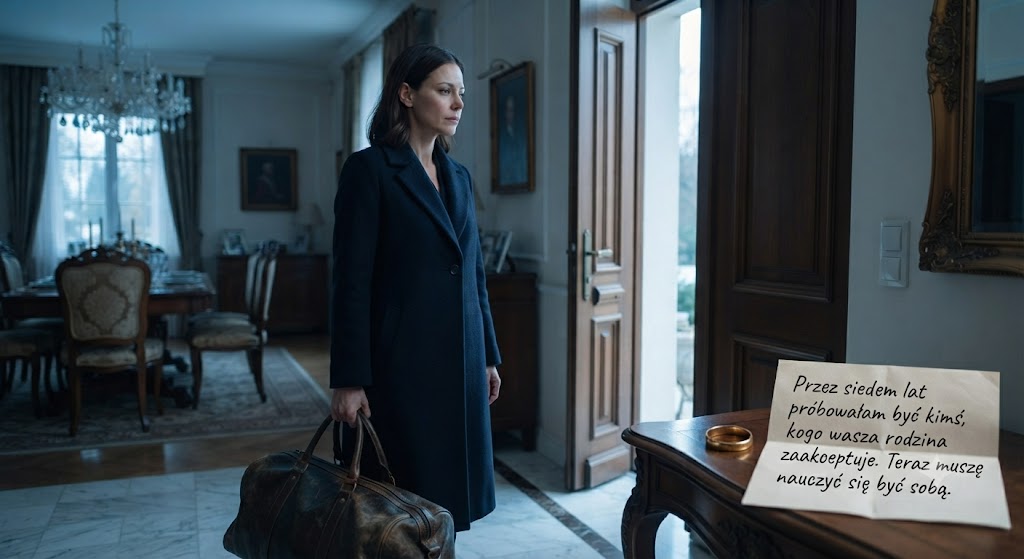
Spakowałam tylko najważniejsze rzeczy.
Ubrania.
Laptop.
Dokumenty.
Pamiątki po mamie.
Zdjęłam obrączkę.
Położyłam ją na stole.
Obok zostawiłam kartkę.
„Adam, przez siedem lat próbowałam być kimś, kogo wasza rodzina zaakceptuje. Teraz muszę nauczyć się być sobą.”
I wyszłam.
Bez krzyku.
Bez zemsty.
Po prostu wyszłam.
Pierwsze miesiące były najtrudniejsze.
Przeprowadziłam się do Nowego Sącza.
Straciłam część klientów.
Straciłam dawną wygodę.
Były noce, kiedy siedziałam sama i zastanawiałam się:
„Czy zrobiłam dobrze?”
Ale Zuzanna zawsze powtarzała:
— Nie musisz być silna cały czas.
— Wystarczy, że nie wrócisz tam, gdzie znowu znikniesz.
Zaczęłam terapię.
Teresa, moja psycholog, powiedziała kiedyś:
— Przez całe małżeństwo próbowała pani zdobyć akceptację ludzi, którzy już dawno zdecydowali, kim pani jest.
— Teraz musi pani zdecydować sama.
To było trudne.
Ale pierwszy raz od lat zaczęłam poznawać siebie.
Pewnego dnia szukałam pracy dodatkowej.
Trafiłam do małej kawiarni Bożeny Kruk.
Chciałam pracować jako kelnerka.
Ale Bożena zauważyła moją teczkę.
— Co to jest?
Zapytała.
Pokazałam jej projekty.
Ilustracje.
Rysunki.
Rzeczy, które robiłam po nocach tylko dla siebie.
Przeglądała je długo.
A potem powiedziała:
— Maja.
— To jest lepsze niż wszystko, co mam na ścianach.
— Zrobisz mi mural?
To był pierwszy raz od dawna, kiedy ktoś zobaczył we mnie coś więcej.
Nie żonę Adama.
Nie dziewczynę z małego miasta.
Mnie.
Dwa lata później miałam własne studio.
Małe.
Ale moje.
Miałam klientów.
Asystentkę.
Projekty, które naprawdę kochałam.
Nie odzyskałam starego życia.
Stworzyłam nowe.
Spotkałam Adama przypadkiem na konferencji w Krakowie.
Stałam na scenie.
Prezentowałam projekt, który stworzyłam sama.
W pierwszym rzędzie zobaczyłam Jerzego.
Ewę.
I Adama.
Po prezentacji podszedł do mnie.
— Maja…
— Nie wiedziałem, że to ty stworzyłaś ten projekt.
Uśmiechnęłam się.
— Wiele rzeczy o mnie nie wiedziałeś.
Zamilkł.
Kilka dni później poprosił o spotkanie.
Zgodziłam się.
Nie dlatego, że chciałam wrócić.
Byłam po prostu ciekawa.
Siedział naprzeciwko mnie.
Inny.
Mniej pewny siebie.
— Maja…
— Dopiero teraz rozumiem.
— Nigdy cię nie broniłem.
— Powinienem był.
Pokiwałam głową.
— Tak.
— Powinieneś.
Nie było złości.
Nie była potrzebna.
Prawda wystarczyła.
— Czy jest jeszcze jakaś szansa?
Patrzyłam na człowieka, którego kiedyś kochałam.
A potem odpowiedziałam:
— Adam.
— Przez lata próbowałam być kobietą, którą twoja rodzina chciała widzieć.
— Teraz jestem kobietą, którą sama wybrałam.
Wstałam.
I wyszłam.
Dziś wiem jedno.
Największą stratą nie był rozwód.
Największą stratą było to, ile czasu spędziłam próbując udowodnić swoją wartość ludziom, którzy nigdy nie chcieli jej zobaczyć.
A największym zwycięstwem nie było to, że oni w końcu mnie zauważyli.
Było to, że ja sama w końcu przestałam siebie ignorować.