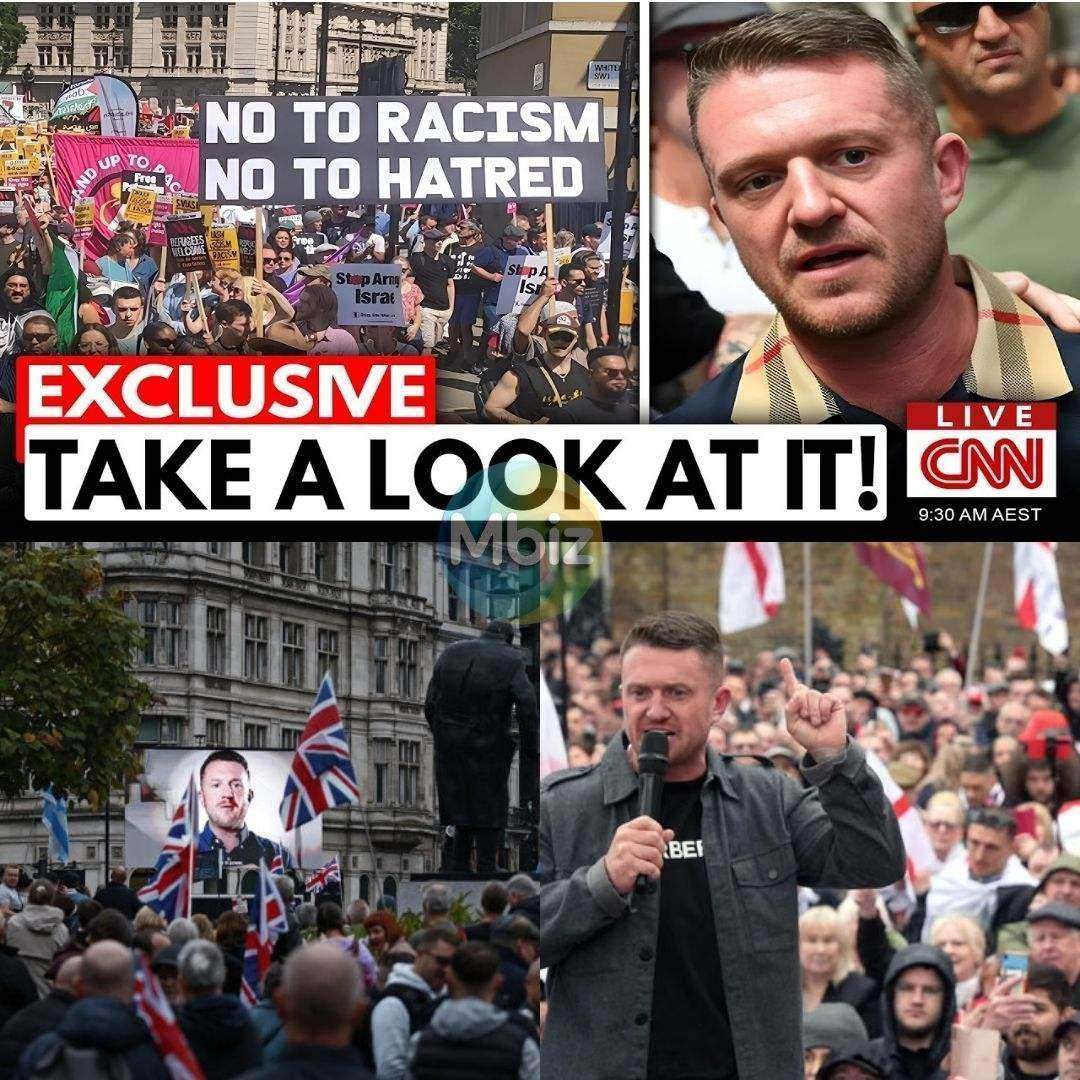
BREAKING: Tommy Robinson has issued a fierce and urgent warning ahead of the massive rally set to flood London on September 13th. Calling for absolute discipline, Robinson pleads for peace, urging supporters to avoid violence to protect the movement’s integrity and shape Britain’s future.
 The countdown has begun. On September 13th, thousands will descend on London for what organizers declare a defining moment for Britain’s silent majority. This rally isn’t merely a protest—it’s positioned as a pivotal act of resistance and unity against what supporters view as a betrayal by politicians and media elites.
Tommy Robinson’s message is blunt and clear: do not drink excessively, do not engage in violence, do not wear masks or balaclavas. Anyone hiding their face will be deemed an infiltrator. This strict rule responds to fears of provocateurs and undercover agents aiming to incite chaos and discredit the movement.
The rally’s organizers emphasize discipline as the ultimate weapon. They warn that one act of aggression would provide their opponents—media, government officials, and critics—a weapon to paint the event as violent extremism, destroying months of careful preparation. The stakes, they insist, could not be higher.
 This movement stems from rising anger across the UK, frustration with political betrayal, and concerns over cultural erosion. Supporters deeply resent being labeled as far-right extremists simply for voicing their fears, and this rally is framed as a profound statement to reclaim their identity and voice without resorting to violence.
Organizers are working closely with the Metropolitan Police, aiming to maintain order and ensure safety. Previous events under this cooperative approach have recorded no arrests, no clashes, and no breakdowns in discipline. They hope to replicate and amplify this success during the large-scale September rally.
Tommy Robinson repeatedly stresses the rally isn’t about rioting or aggression. Rather, it’s about standing proud, showcasing unity across generations, families, and communities. The event is described as a festival of British identity—a vivid, powerful assertion that patriotism can be proud and peaceful.
Security will be tight. Supporters are urged to intervene if anyone breaks the rules. Transparency is key: no hidden faces or balaclavas, no alcohol-fueled disorder. Maintaining peaceful visibility is paramount, countering every attempt by detractors to delegitimize the movement by focusing on potential violence.
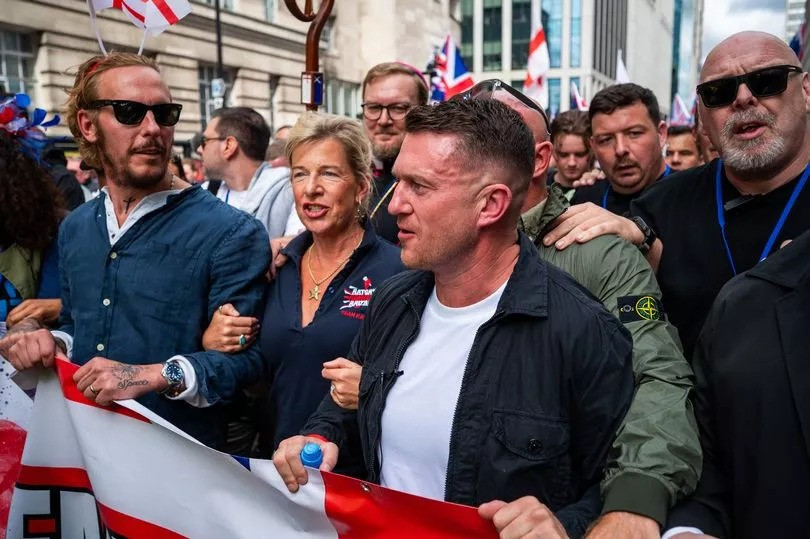 The rally also sends a bold message to Parliament and media whom organizers accuse of betrayal and silencing dissent. The political class is labeled as traitors selling out Britain’s future, desperate to depict the rally as extremist chaos. This demonstration aims to shatter that narrative through massive, disciplined turnout.
Tommy Robinson’s words expose deep fears behind the rally: the safety of daughters, the survival of British culture, and the right to be heard. Opponents dismiss these concerns as racist or extremist labels, but for supporters, September 13th is the day to reject those slurs and reclaim national pride openly.
In embracing cooperation with police and demanding strict discipline, the organizers seek not only to prevent violence but to craft a new image of protest. London’s streets will become a stage for a peaceful, joyful display—flags waving, voices united, a compelling picture of resistance untainted by chaos.

Critically, the rally is meant to pre-empt provocations. Undercover agents and agitators are expected, but supporters and security teams will act swiftly to neutralize these threats. Their vigilance is vital to preserving the rally’s message and preventing any single flashpoint from destroying the movement’s momentum.
September 13th is framed not just as a protest but as a generational milestone—a turning point where Britain’s silent majority roars back to life. Ordinary citizens are set to reclaim power, sending a united, unmistakable signal that British identity will not vanish quietly or without fight.
Robinson paints a vivid image of the rally as a spectacle of discipline and patriotism rather than riot or conflict. This movement’s strength lies in self-control and visibility—a peaceful but formidable front that organizers believe can shock the establishment and redefine the narrative about British dissent.
The rally serves as a direct challenge to what organizers call a “political elite” that has betrayed Britain’s people. Their fear is unity, a peaceful yet massive show of solidarity that no media spin or political 𝓈𝓂𝑒𝒶𝓇 can diminish. September 13th should resonate far beyond London’s streets.
 Supporters are urged to come with families, flags, and voices raised in unity, not fists or bottles. This message of restraint underscores the movement’s strategic goal: to prove peaceful protest holds unmatched strength and can decisively alter public perception and political realities.
As the date approaches, the atmosphere is tense but hopeful. Organizers continue stressing that this is not a moment for outbursts but for deliberate, disciplined presence. The future of British political and cultural identity, they argue, hinges on this critical mass standing firm yet peaceful.
Tommy Robinson’s urgent warnings are a call to responsibility. “Do not hand the media and politicians the weapon to destroy us,” he says. This rally’s success depends on every participant embodying discipline, unity, and resolve—turning frustration into a powerful, orderly declaration of national pride.
 Those attending must understand the immense risks and opportunities presented. This could be a movement-defining moment or a squandered chance. Failure to control conduct could unravel everything; success could inspire not just Britain but all Western democracies facing similar cultural and political challenges.
In conclusion, September 13th is cast as the day Britain’s silent majority awakens—steadfast, disciplined, and unapologetically proud. Tommy Robinson and the rally’s leaders believe that by rising above provocation and insisting on peace, they will etch this date into history as a turning point for Britain’s future.