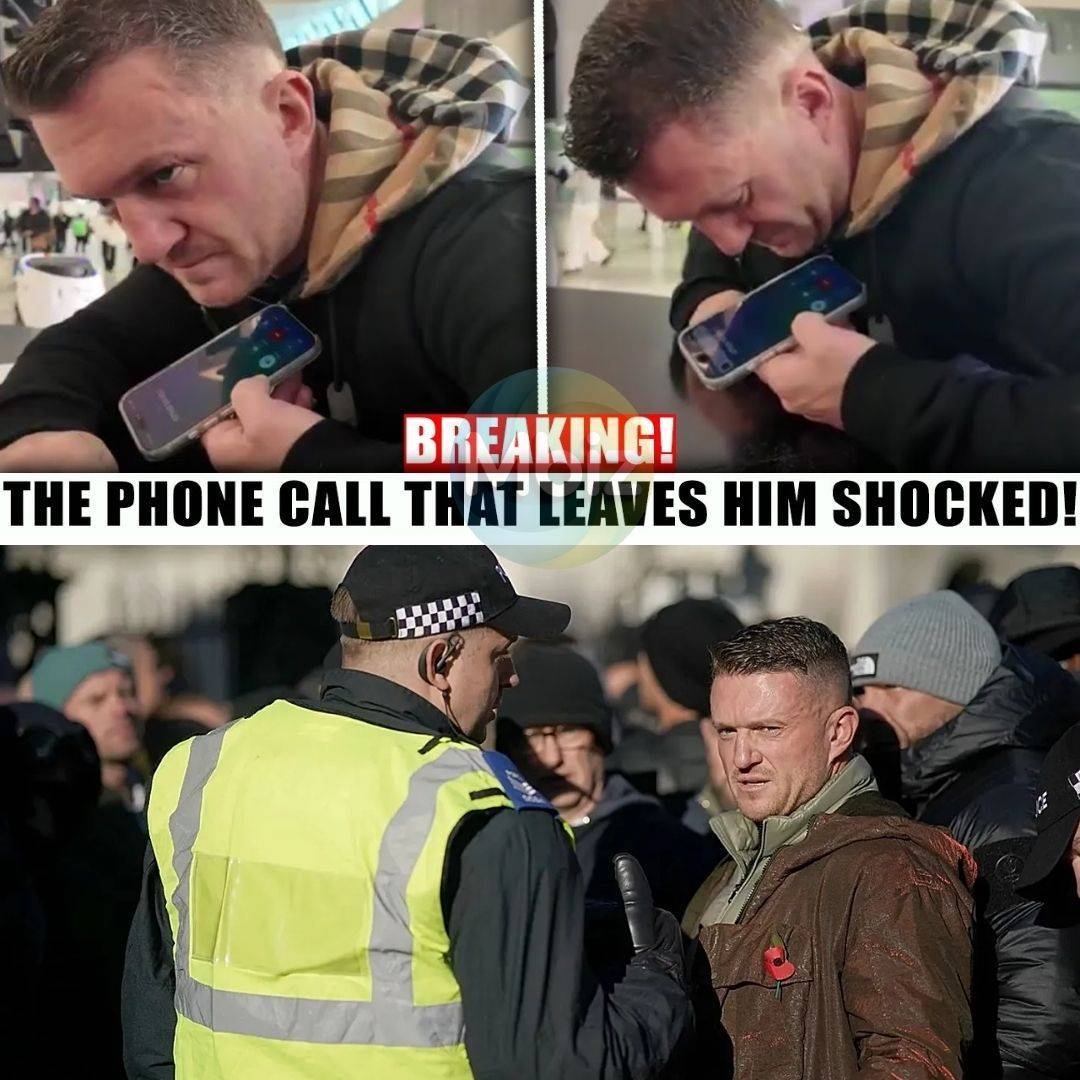
Tommy Robinson has been abruptly confronted by a High Court enforcement officer demanding repayment of over £100,000 linked to a contempt of court ruling, exposing a staggering financial and legal crisis for the controversial figure. The intense exchange reveals Robinson’s claims of bankruptcy and homelessness amid relentless court actions pursuing enforcement.
 In a recorded conversation that has just emerged, an enforcement officer from DCBL High Court Enforcement unexpectedly contacts Robinson, who is also known as Steven Lennon, about a writ of control issued to recover court-ordered costs totaling £103,000. The officer explains that this is separate from Robinson’s previous bankruptcy tied to the Jamal Hijazi case, signaling fresh legal jeopardy.
Robinson openly admits to the bankruptcy declared after previous legal battles but insists this new enforcement is unjust. He stresses his lack of assets, claiming he sleeps on sofas and is effectively homeless. The officer requests official proof of bankruptcy and residency, underscoring the strict procedural nature of enforcement actions.
The discussion reveals Robinson no longer resides in the UK, holding Spanish residency, yet lacks verifiable proof of his current address due to safety concerns. This highlights a complex clash between Robinson’s claims of personal vulnerability and the unyielding demands of the legal system.
The writ of control concerns outstanding costs from a contempt of court case where Robinson played a film related to Jamal Hijazi. This key detail underscores that the legal debt stems from multiple, layered court orders beyond his earlier bankruptcy arrangements.
The officer explains possibilities for a payment plan, but Robinson questions the feasibility, estimating the sum could take decades to repay with monthly installments. She clarifies that any arrangement depends on court acceptance, not enforcement discretion, signaling limited options for relief.
 Robinson’s assertions of having no assets contrast sharply with the enforcement officer’s mandate to seize available property, illustrating the tension between his narrative of hardship and the inflexible court apparatus. Enforcement efforts have included visits to his parents’ addresses, though Robinson denies living there.
Throughout the exchange, Robinson frames the ongoing enforcement as harassment by “the system,” suggesting a targeted campaign against him despite prior legal resolutions. For his supporters, this fuels a narrative of persecution; critics see it as an inevitable outcome of repeated court clashes.
The officer’s firm, methodical approach highlights the cold bureaucracy of legal enforcement, indifferent to personal circumstance and solely focused on executing court orders. Robinson’s attempt to recharacterize the situation as unjust collides head-on with this reality.
This latest confrontation sheds light on the relentless pressure Robinson faces, 𝒄𝒂𝓊𝓰𝒉𝓉 in the crossfire of two intersecting legal battles: bankruptcy proceedings and contempt of court sanctions. The financial stakes and legal complexities continue to mount with no clear resolution in sight.
Robinson’s acknowledgment of sleeping on sofas and living under the radar raises grave questions about his current stability and how such conditions impact legal accountability. The lack of formal residency documentation compounds enforcement challenges as officers grapple with locating assets.

The officer’s request for evidence to validate Robinson’s bankruptcy and non-residency status is procedural but critical. Without clear proof, enforcement will continue, potentially escalating seizure efforts, further tightening the noose on Robinson’s finances and freedom of movement.
As the dialogue unfolds, it becomes evident that Robinson’s legal troubles are far from over. The contempt of court case related to a filmed publication has triggered a fresh round of costly penalties, amplifying the financial burden he faces beyond previous bankruptcies.
Robinson’s candid admission about the limits of his payment capacity indicates a looming impasse: inability to pay, inflexible court orders, and enforcement actions proceeding apace. This confrontation starkly exposes the intersection of legal rigor and personal hardship.
This explosive interaction provides an unprecedented window into how the UK legal system pursues recalcitrant debtors with high court writs, demanding compliance regardless of prior bankruptcies or personal circumstances, signifying the relentless nature of legal debt recovery.
 The piece also highlights the contrast between Robinson’s public persona and his private predicament, illustrating a man 𝒄𝒂𝓊𝓰𝒉𝓉 in legal turmoil whose personal instability clashes with the unyielding court mandates demanding rigorous enforcement.
Supporters of Robinson will likely rally around his depiction as a victim of the system, while detractors see this as evidence of the inevitable consequences of defiance against judicial authority. This development adds a new dimension to Robinson’s contentious public saga.
The officer’s closing remarks affirm that until Robinson provides adequate proof or makes payments, enforcement will continue unabated. This sets the stage for ongoing legal complications and further action to recoup over £100,000 in costs tied to the contempt ruling.
With no quick resolution, Robinson faces mounting legal and financial pressures, painting a dramatic picture of a high-profile figure ensnared in the tightening grip of the UK’s judicial enforcement mechanisms, struggling to navigate a complex web of debt and compliance obligations.
This breaking development marks a significant escalation in Robinson’s legal battles, offering a stark reminder of the potentially devastating consequences of court judgments and enforcement writs for individuals operating at the edges of legal compliance.
As further details emerge and enforcement efforts continue, the public will watch closely how Robinson manages this crisis, balancing claims of victimization against the hard realities of legal accountability and financial restitution demanded by the courts.