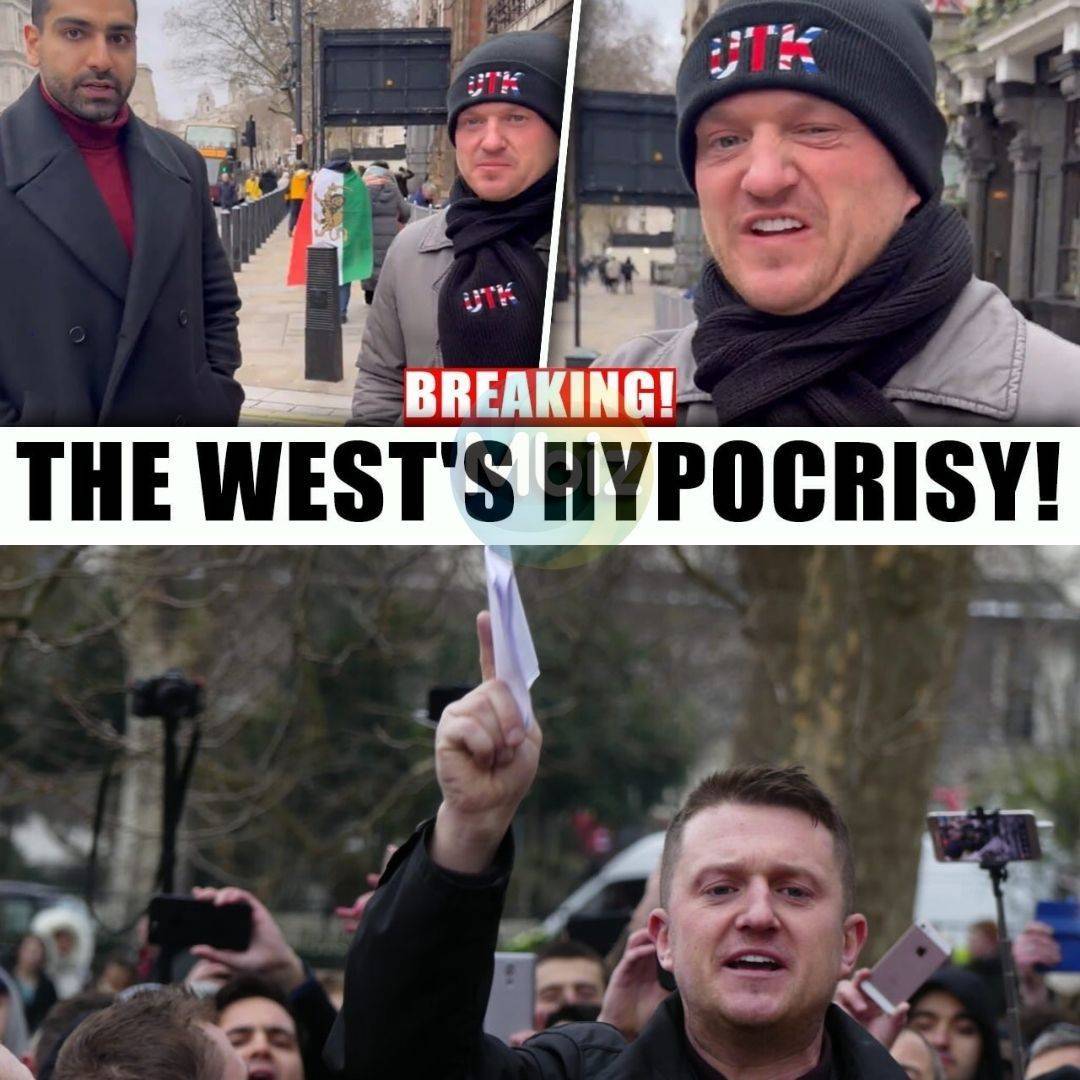
Tommy Robinson has issued a searing indictment of the West’s silence on Iran’s brutal crackdown, accusing Western governments and media of abandoning the Iranian people amid escalating violence. In an explosive statement, he condemned political and media complicity, called for military strikes, and urged decisive action against Tehran’s regime before it’s too late.
 Robinson, long known for his hardline views, declared himself the rare Western voice boldly standing with oppressed Iranians facing ruthless repression under the Islamic Republic. Launching a fierce critique, he blasted the BBC and other major outlets for failing to highlight Iran’s suffering even as protests fill the streets with cries for freedom and justice.
“This silence is shameful,” Robinson insisted, underscoring Western politicians’ reluctance to confront the regime head-on. He charged them with prioritizing political convenience and appeasing pro-regime blocs over defending fundamental human rights. “If millions of Iranians lived here, things would be different—but they don’t, and we sit idle.”
Highlighting the duplicity of Western leaders’ vocal support for Palestinians yet mute response to Iranians enduring executions and atrocities, Robinson accused global influencers and celebrities of cowardice and double standards. “Where are the voices condemning the killing of Iranian women? Where is the outrage against the Islamic regime’s terror?” he demanded.
Robinson didn’t spare British politicians either, condemning them for ignoring the plight of Iranian civilians while enabling Islamist extremism under the guise of political correctness. He cited the grim legacy of silence that allowed abuses to fester unchecked, including domestic tragedies tied to political hesitancy regarding Muslim communities in the UK.
 Turning sharply to foreign policy, he called for strategic airstrikes against the Islamic Revolutionary Guard Corps to cripple Iran’s terror network, framing it as essential not only for Iran’s freedom but for the security of the West and global stability. His urgency reflected mounting frustration with diplomatic paralysis and inaction from Western capitals.
Robinson praised Israel’s recent air operations targeting Iranian positions, suggesting these military efforts have debilitated Tehran’s power like never before. He urged former U.S. President Donald Trump and current Western leaders to seize this critical moment to dismantle the regime, framing it as a fight for civilization itself against state-sponsored terrorism.
“We cannot allow the Islamic Republic to destabilize the Middle East — and by extension, the West — any longer,” he warned. Robinson’s call to action sharply contrasts with the ongoing hesitance among American and British officials, signaling a potential pivot toward a more assertive Western posture.
The conversation illuminated deep frustrations not only with Tehran but with the West’s muted response to one of the world’s most volatile crises. Robinson highlighted how internet shutdowns and violent crackdowns have obscured the true scale of suffering, complicating international efforts but not excusing complacency.

Robinson also dismissed fears of full-scale military deployment on Iranian soil, advocating instead for targeted strikes to empower Iranians to overthrow their oppressors themselves. His stance reflected lessons learned from protracted conflicts in Iraq and Afghanistan, emphasizing precision and support over prolonged occupation.
Experts monitoring the situation echoed concerns that despite previous protests, this moment carries a unique potential to topple the regime. Economic collapse combined with relentless popular resistance and regional pressures paint a picture of a regime stretched thin, vulnerable now more than ever to internal collapse and external intervention.
Calls for Western intervention come as the world watches closely whether diplomatic silence will break or escalate into concrete action. The strategic alliance of opposition forces and allied Western interests could herald a turning point in this decades-long struggle against Islamic authoritarianism in Iran.
 As tensions rise, the international community faces a stark choice: continue its silence and complicit passivity or stand decisively with freedom and human rights. Robinson’s unfiltered critique and urgent warnings demand immediate reflection and response from policymakers and media alike.
The coming days may prove pivotal, with Donald Trump’s past signals of willingness to intervene rekindling hopes for decisive Western pressure. Observers await announcements of possible coordinated strikes or sanctions aimed at crippling the Revolutionary Guard and forcing Tehran’s hand, underscoring high global stakes.
The Iranian people’s plight is no longer a distant story, Robinson emphasized — it is a frontline battle for human dignity, global security, and the ideological future of the Middle East and the West. His rallying cry leaves little room for neutrality or delay amid the unfolding human tragedy.
In this moment of crisis, Robinson’s stark warnings serve both as a wake-up call and a call to arms: the West’s failure to act risks enabling the continued reign of terror and global instability. The time to speak, to intervene, and to side with freedom is now, before irreversible damage is done.