Tamtego wieczoru Quantum Innovations świętowało największy sukces w swojej historii.
Najdroższy hotel w Warszawie.
Sala wypełniona po brzegi.
Ponad dwa tysiące pracowników.
Inwestorzy.
Partnerzy biznesowi.
Media.
Na ogromnym ekranie za sceną wyświetlały się liczby, które miały udowodnić światu jedno:
Kamil Majewski odniósł sukces.
Przychody podwojone.
Nowe kontrakty zagraniczne.
Ekspansja na kolejne rynki.
Wszyscy patrzyli na młodego prezesa, który w wieku trzydziestu dwóch lat stworzył firmę wartą miliony.
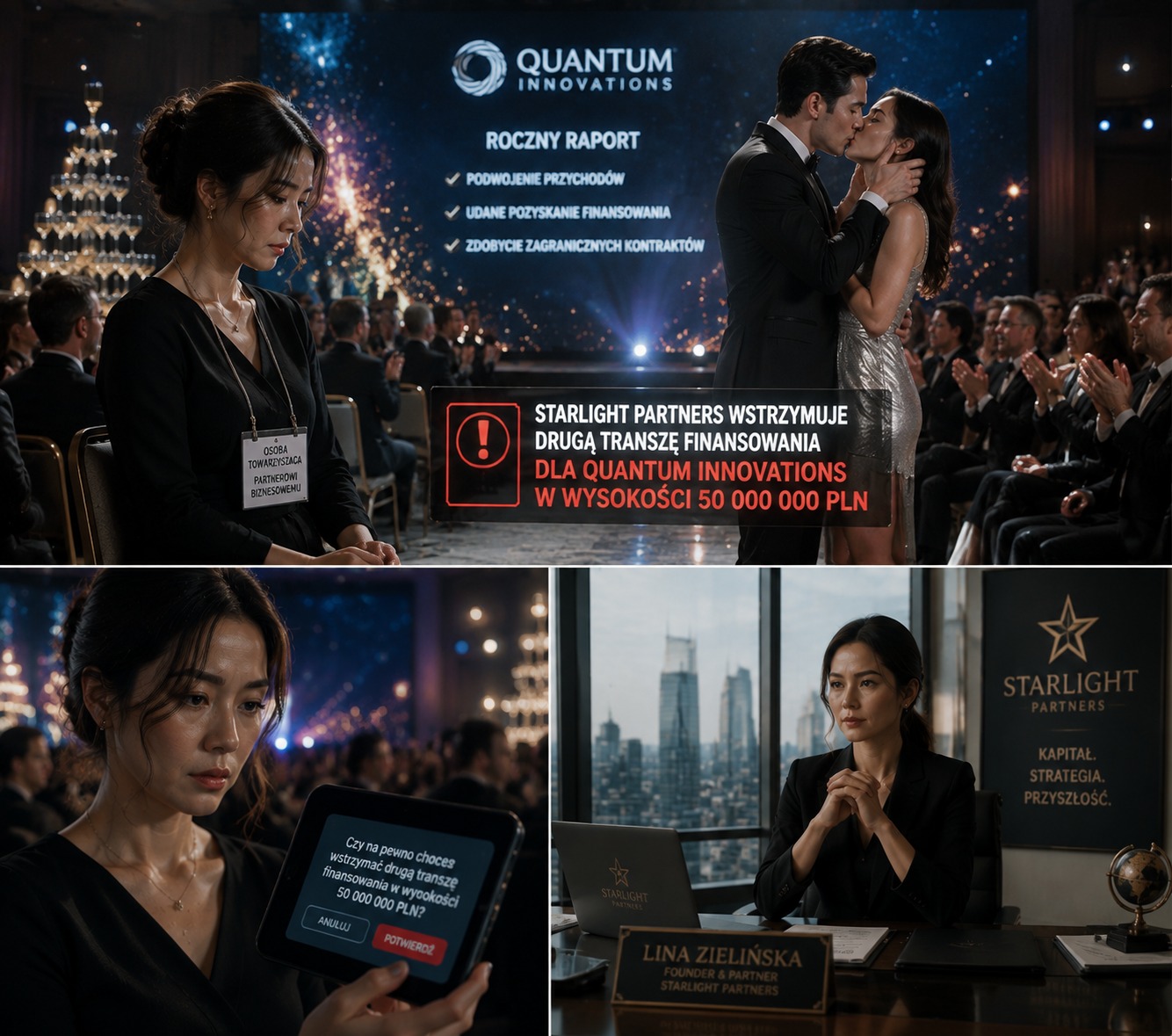
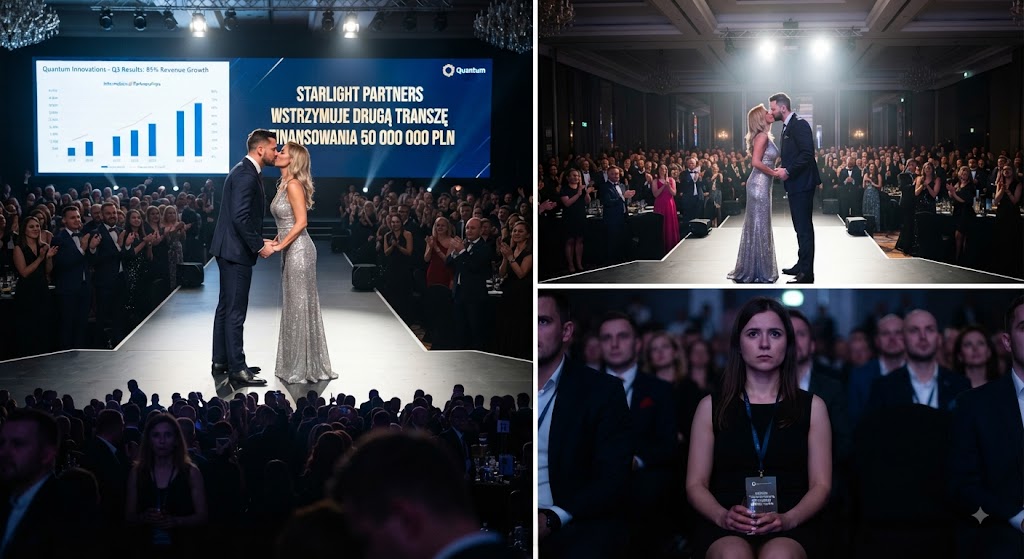
Nikt nie patrzył na kobietę siedzącą w ostatnim rzędzie.
Na mnie.
Miałam na sobie prostą czarną sukienkę.
Żadnych drogich dodatków.
Żadnego miejsca przy głównym stole.
Na identyfikatorze widniał napis:
„Osoba towarzysząca partnerowi biznesowemu”.
Zaśmiałam się cicho, kiedy go zobaczyłam.
Jak ironiczne.
Byłam żoną człowieka stojącego właśnie na scenie.
A oficjalnie byłam nikim.
Kamil i ja byliśmy małżeństwem od trzech lat.
Tylko nikt o tym nie wiedział.
Nawet większość jego pracowników.
Akt ślubu leżał zamknięty w sejfie w jego gabinecie.
Na początku wierzyłam w jego wyjaśnienia.
— Lina, firma dopiero się rozwija.
— Media będą szukać sensacji.
— Muszę chronić ciebie.
Tak mówił.
Trzymał mnie wtedy za rękę.
Patrzył mi w oczy.
A ja mu wierzyłam.
Później zrozumiałam prawdę.
Nie bał się, że media mnie znajdą.
Bał się, że ludzie zobaczą mnie obok niego.
Nie byłam kobietą z wyższych sfer.
Nie znałam wszystkich zasad świata biznesu.
Nie lubiłam kamer.
Nie chodziłam na każde przyjęcie.
Nie pasowałam do obrazu idealnej żony prezesa.
Ale moje pieniądze pasowały idealnie.
Trzy lata wcześniej Quantum Innovations było o krok od upadku.
Firma miała problemy z płynnością.
Banki nie chciały udzielić kredytu.
Partnerzy wycofywali się.
Kamil siedział wtedy w małym wynajmowanym mieszkaniu i patrzył na rachunki.
Pamiętam tamten wieczór.
Siedziałam obok niego.
— Nie wiem, czy dam radę.
Powiedział cicho.
Następnego dnia sprzedałam udziały w mojej poprzedniej firmie.
Pięćdziesiąt milionów złotych.
Przekazałam je przez Starlight Partners.
Nie chciałam stanowiska.
Nie chciałam nazwiska na ścianie.
Nie chciałam kontroli.
Chciałam tylko pomóc człowiekowi, którego kochałam.
Kamil wtedy ścisnął moją dłoń.
— Lina.
— Kiedy firma stanie na nogi, wszystkim o tobie powiem.
— Obiecuję.
Czekałam trzy lata.
Do tego wieczoru.
Prowadzący wszedł na scenę z uśmiechem.
— Panie prezesie, czas na niespodziankę.
Publiczność zaczęła klaskać.
Na ekranie pojawiła się karta.
„Pięciominutowe wyznanie miłości żonie”.
Sala wybuchła śmiechem.
— Prezes ma żonę?
— Przecież wszyscy myśleli, że jest singlem!
Słuchałam tych słów.
Serce zaczęło bić szybciej.
To był moment.
Po trzech latach.
Może w końcu.
Może teraz.
Kamil stał na scenie.
Światło padało na jego twarz.
Miał na sobie garnitur, który rano sama mu przygotowałam.
Spinki do mankietów były prezentem ode mnie.
Przez sekundę patrzył przed siebie.
Czekałam.
Choćby jeden ruch.
Jedno spojrzenie.
Jedno moje imię.
Ale on odwrócił głowę.
W stronę kulis.
Tam stała Ewa.
Jego sekretarka.
Miała srebrną suknię.
Wyglądała idealnie.
Kamil uśmiechnął się.
— No cóż.
— Skoro los tak chciał…
Wziął mikrofon.
— Wyznajmy sobie miłość.
Sala oszalała.
Podszedł do Ewy.
Wziął ją za rękę.
Poprowadził na środek sceny.
A ja siedziałam nieruchomo.
Jak ktoś, kto ogląda własne życie z zewnątrz.
— Dziękuję ci za te trzy lata.
Powiedział Kamil.
— Byłaś przy mnie, kiedy budowałem wszystko od podstaw.
Ewa miała łzy w oczach.
Publiczność była zachwycona.
Ktoś krzyknął:
— Pocałunek!
Kamil nie zaprzeczył.
Ewa stanęła na palcach.
I pocałowała go.
Dwa tysiące ludzi biło brawo.
A ja poczułam ciszę.
Tak ogromną, że nie słyszałam już niczego.
Ani muzyki.
Ani oklasków.
Ani głosu prowadzącego.
Tylko własne myśli.
Przez trzy lata byłam jego żoną w ukryciu.
Przez trzy lata wierzyłam, że pewnego dnia wybierze mnie publicznie.
A kiedy dostał pięć minut, żeby powiedzieć światu prawdę…
wybrał kłamstwo.
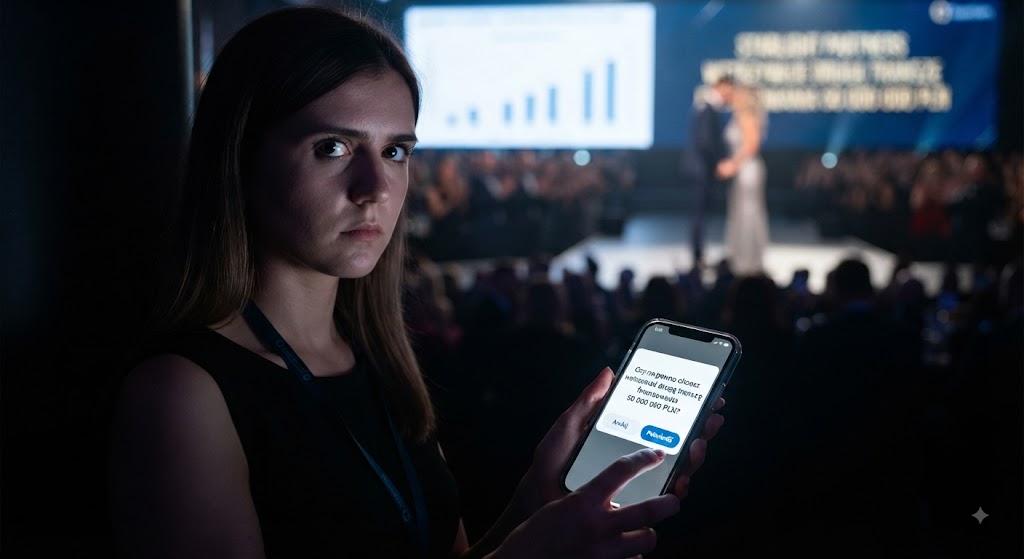
Wyjęłam telefon.
Otworzyłam panel Starlight Partners.
Druga transza finansowania.
50 milionów złotych.
Pieniądze, na które Quantum czekało.
Pieniądze, które miały rozpocząć zagraniczną ekspansję.
Kilka godzin wcześniej Kamil napisał:
„Lina, nie opóźniaj przelewu. Dzisiaj ogłaszamy sukces.”
Odpisałam:
„Dobrze.”
Przez trzy lata zawsze odpowiadałam:
Dobrze.
Dobrze, kiedy jego matka mnie krytykowała.
Dobrze, kiedy Ewa pisała do niego późno w nocy.

Dobrze, kiedy musiałam siedzieć z boku.
Dobrze, kiedy prosił mnie o cierpliwość.
Ale tym razem napisałam coś innego.
Kliknęłam:
„Wstrzymaj finansowanie.”
System poprosił o potwierdzenie.
„Czy na pewno chcesz uruchomić klauzulę ryzyka kredytowego?”
Spojrzałam na scenę.
Na mojego męża.
Na kobietę, którą właśnie publicznie wybrał.
I nacisnęłam:
TAK.
Kilka sekund później ogromny ekran za sceną zamigotał.
Raporty finansowe zniknęły.
Zamiast nich pojawił się jeden komunikat.
„Starlight Partners wstrzymuje drugą transzę finansowania Quantum Innovations w wysokości 50 milionów PLN.”
Powód:
Naruszenie klauzuli kluczowego ryzyka kredytowego.
Sala zamarła.
Muzyka ucichła.
Uśmiechy zniknęły.
Kamil odsunął się od Ewy.
Spojrzał na ekran.
Jego twarz powoli traciła kolor.
— Kto to zrobił?
Zapytał.
Nikt nie odpowiedział.
Bo odpowiedź siedziała kilka metrów od niego.
Wstałam.
Wzięłam torebkę.
I ruszyłam w stronę wyjścia.
Dopiero wtedy mnie zobaczył.
Jego oczy rozszerzyły się.
— Lina Zielińska…
Po raz pierwszy od trzech lat wypowiedział moje imię publicznie.
Ale było już za późno.
Wybiegł za mną.
Dogonił mnie przy windzie.
— Lina, poczekaj.
Nie zatrzymałam się.
— To nie tak, jak myślisz.
Uśmiechnęłam się gorzko.
— Naprawdę?
Odwróciłam się.
— Przed chwilą przed dwoma tysiącami ludzi powiedziałeś, że inna kobieta była przy tobie przez trzy lata.
— A ja gdzie byłam?
Milczał.
Wyjęłam obrączkę.
Zdjęłam ją.
Położyłam mu w dłoni.
— Teraz już wszyscy wiedzą.
Jego ręka zadrżała.
— Lina…
— Na scenie czeka twoja żona.
Spojrzałam w stronę sali.
— Idź do niej.
Następnego dnia rozpoczęłam procedurę rozwodową.
Nie dlatego, że straciłam cierpliwość.
Dlatego, że odzyskałam siebie.
Przez trzy lata Kamil korzystał z mojej miłości.
Z mojego kapitału.
Z mojego wsparcia.
Ale jednocześnie bał się przyznać światu, że istnieję.
Po raz pierwszy od dawna nie chciałam być wybrana.
Chciałam sama siebie wybrać.
Kiedy patrzę dziś wstecz, wiem jedno.
Największym błędem Kamila nie było to, że pocałował Ewę.
Największym błędem było to, że uwierzył, iż kobieta, którą można ukrywać przez trzy lata, nadal będzie czekać w cieniu.
Nie wiedział, że cień też ma siłę.
A kiedy wychodzi na światło…
potrafi zmienić całą grę.