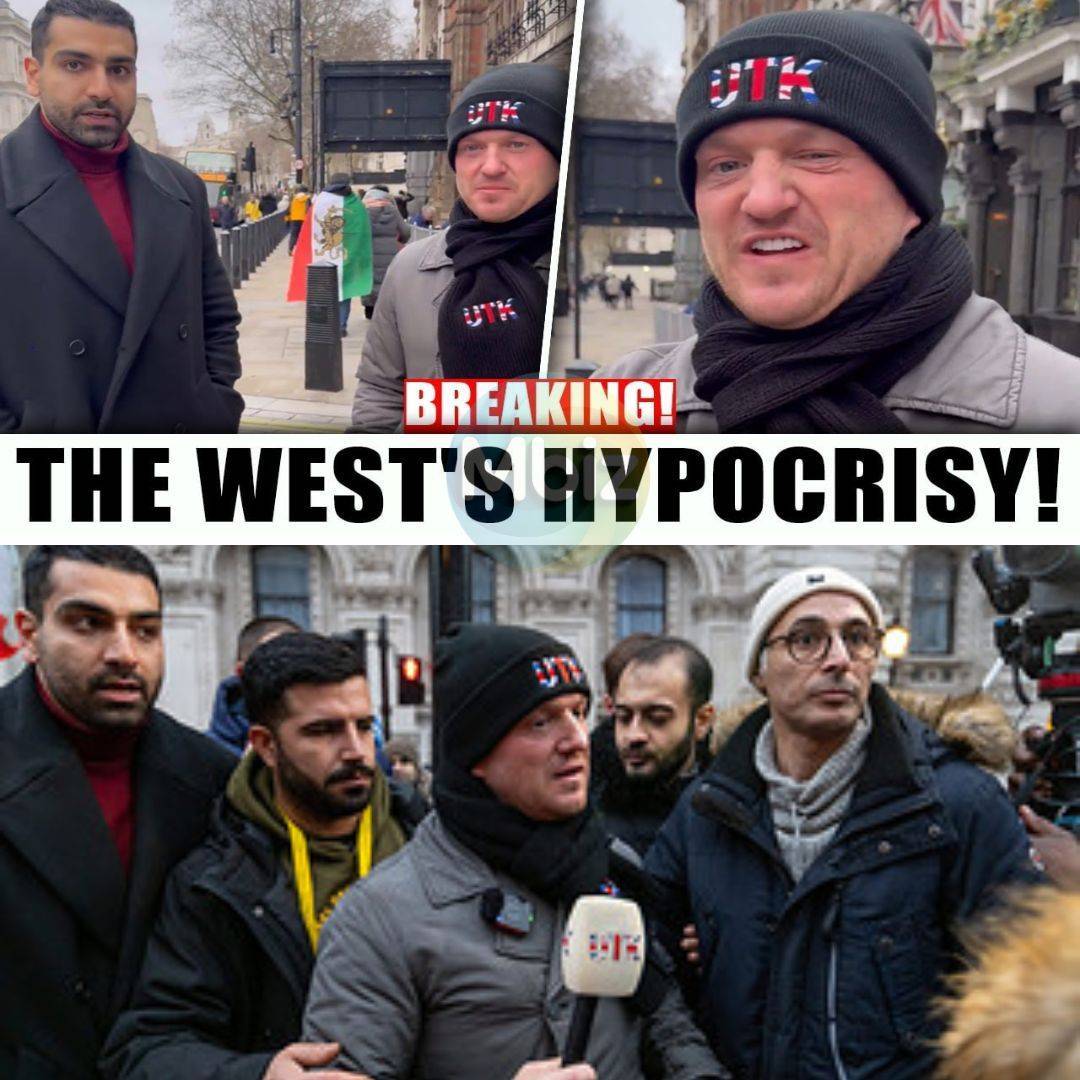
Tommy Robinson has unleashed a blistering critique of Western complacency over Iran’s brutal regime, accusing the BBC, politicians, and celebrities of silence amid escalating atrocities. Calling for urgent military strikes against Iran’s Islamic Revolutionary Guard Corps, Robinson warns the West’s inaction risks empowering global terrorism and crushing Iranian freedom fighters.
 Robinson, notorious for his incendiary rhetoric, slammed mainstream media outlets like the BBC for their conspicuous silence on Iran’s harsh crackdown. He highlighted a stark double standard: while Western media and politicians vocally support Palestine, they remain mute on the suffering and deaths inflicted by the Iranian regime. This failure, he argued, reflects political expediency and cowardice.
“The BBC are silent because they played a part in supporting the Ayatollah’s rise,” Robinson declared, charging Western establishments with complicity in enabling Iran’s oppressive Islamic regime. Ignoring Iranian suffering, he insisted, exposes a dangerous willingness to sacrifice human rights for geopolitical convenience and voter appeasement.
Robinson’s fury extended to the British government, accusing politicians of prioritizing electoral interests over justice. He claimed millions of UK Muslims sympathize with Tehran’s regime, prompting politicians to dodge advocacy for Iranian dissidents. According to Robinson, this cowardice mirrors past failures, including the betrayal of British daughters to avoid upsetting “that moment.”
The interview spotlighted the devastating human cost of Western silence: Iranian women killed and men butchered by forces loyal to Tehran’s Islamist regime. Robinson fumed that Western leaders sacrifice Iranian lives for fleeting political gains and refuse to champion the uprising against nearly five decades of Islamic tyranny.
Pressed on Western intervention, Robinson called for decisive strikes targeting Iran’s Revolutionary Guard Corps (IRGC). He argued that curbing the IRGC will dismantle the Iranian regime’s ability to fund terrorism worldwide. “If the Ayatollah regime falls, the world benefits,” Robinson stated, framing the struggle as one between freedom and fascism.
 Although wary of another ground war, Robinson urged limited air strikes to weaken Iran’s destabilizing influence across the Middle East. He praised Israel’s recent obliteration of Iranian military assets and urged former US President Donald Trump to escalate military actions, emphasizing this as a rare moment of Iranian vulnerability.
Robinson’s comments come amid a backdrop of widespread Iranian protests following renewed internet blackouts and lethal crackdowns. Human rights organizations report hundreds—possibly thousands—dead, though governments and media remain largely silent. Robinson lamented that without internet access, it is impossible to gauge the full scope of Iran’s rebellion.
Robinson lambasted Western politicians for their absences, contrasting their vocal support for other global causes with their indifference to Iranians fighting for liberty. He dismissed Marxist stances that fail to recognize who oppresses whom in Iran, urging leaders to stand unequivocally on the side of the oppressed Iranian masses.
The conversation underscored the geopolitical stakes: Iran’s regime, a notorious state sponsor of terrorism, directly threatens Western and global security. Robinson linked Iran’s backers to groups like Hamas and Hezbollah, warning that their aggression destabilizes the entire Middle East and fuels extremist violence worldwide.
Robinson also addressed the American and British reluctance to intervene militarily. He attributed this hesitance to Trump-era “America First” policies and British war fatigue after conflicts in Iraq and Afghanistan. Nevertheless, Robinson insisted strategic strikes, not boots on the ground, represent the best method to topple the Islamic regime without repeating past military mistakes.

Highlighting Israel’s effective air campaigns, Robinson praised their role in weakening Iran’s military infrastructure. He called on Trump and Washington to seize this precarious moment to deliver a fatal blow to Tehran’s regime before it regains strength or further destabilizes the region.
The interview revealed an urgent call to action for Western governments and citizens alike. Robinson demanded an end to political silence and apathy, branding Western inaction as betrayal. He vowed to continue raising the Iranian flag in defiance, exposing the brutal realities ignored by mainstream voices.
Despite doubts about the regime’s immediate collapse, Robinson emphasized the current economic and political crisis in Iran creates a rare opportunity. The deepening unrest, crippled economy, and dwindling regime control make this moment ripe for decisive Western intervention and potential regime change.
Experts note that previous large-scale Iranian protests failed to topple the regime, but Robinson contends this uprising presents a different scenario. He stressed that lifting internet restrictions is crucial for transparency and global awareness. Without open communications, understanding the scale and momentum of protests remains limited.
 Robinson’s outspoken stance resonates amid increasing pressure on Western leaders to move beyond rhetoric. His framing of Iran’s crisis as a battle between freedom and Islamic supremacism demands urgent reconsideration of foreign policies that have long avoided confrontation with Tehran’s brutal regime.
The broader geopolitical implications extend beyond the Middle East, touching on Western domestic security and global anti-terrorism efforts. Robinson warned that allowing Iran’s regime to persist unchallenged endangers lives worldwide, fueling extremist groups that threaten peace and stability internationally.
Robinson’s vehement denunciations of political elites, mainstream media, and celebrity activists expose a stark divide between public rhetoric and governmental action. He accused them of abandoning Iranian citizens to tyranny while posing as champions of human rights—a call many now find difficult to ignore.
The interview closed with an impassioned appeal for Western governments to prioritize moral integrity and global security over political convenience. Robinson called on allies to unite in dismantling the Islamic regime through strategic strikes and support for Iran’s courageous protesters risking everything for freedom.
As Iran’s crisis deepens and international silence becomes harder to justify, Tommy Robinson’s incendiary remarks demand immediate attention. The West’s failure to act may embolden terrorism and condemn thousands to continued suffering, making this a pivotal moment for decisive leadership and global accountability.