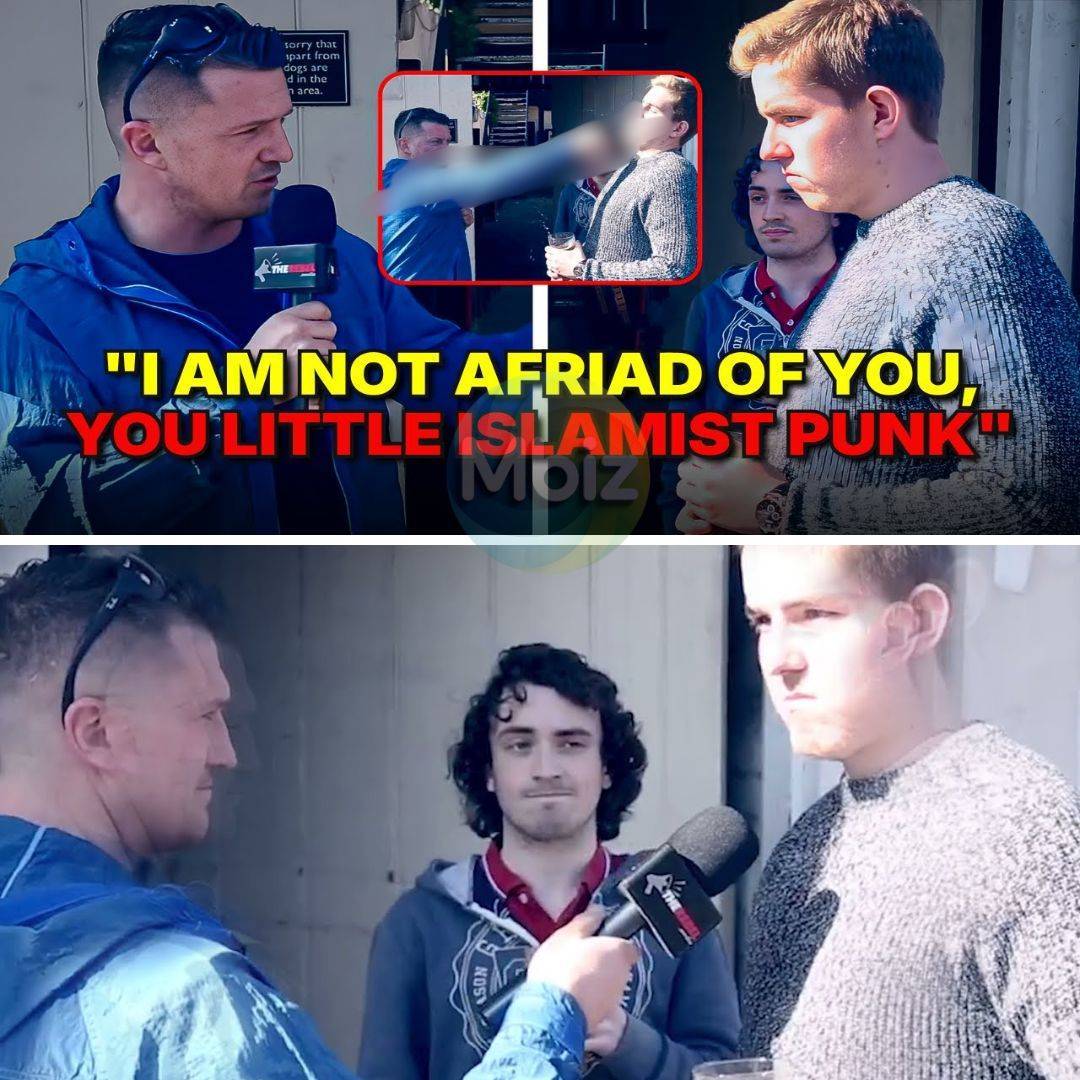
Tommy Robinson, the controversial activist, has tracked down a Twitter user who publicly incited violence against him with calls to murder. In a swift and confrontational encounter, Robinson revealed the identity of the young man responsible for the threat, exposing alarming social media dangers and the failure of law enforcement to act decisively on such incitements.
 In a video that has rapidly gained attention, Robinson described receiving a tweet that urged someone to “please, someone just murder Tommy Robinson.” The tweet was swiftly deleted after Robinson messaged the sender, but not before he launched a meticulous digital investigation, unearthing the user’s personal information, including his school and whereabouts within minutes.
Robinson expressed outrage at the rampant violence threats he and his family face online, criticizing authorities for perceived inaction. He pointed out a stark double standard, claiming that threats involving race or religion often provoke police response, yet similar threats against him go ignored, exposing a chilling gap in justice and protection.
Determined to confront the source directly, Robinson visited the young man’s university, filming an intense exchange. The young man admitted his tweet was a “stupid thing,” expressing disagreement with Robinson’s views, particularly his criticisms of Islam and his association with the English Defence League. Robinson probed the motivations behind the hostile message during their face-to-face interaction.
The tense conversation revealed a clash of perspectives rooted deeply in divergent experiences. The young man criticized Robinson for allegedly stirring hatred against Muslims, while Robinson recounted his own brutal background, including family members victimized by violent gangs and personal connections lost to terrorism, illustrating the origins of his contentious activism.
 Robinson challenged the student’s understanding of Islam and the complexities underlying his stance, highlighting the dangers of uninformed hostility wrapped in social media venom. The young man requested the meeting proceed privately, without cameras, but Robinson insisted on transparency, underscoring the public accountability dimension in incidents like this.
This encounter underscores the volatile intersection of social media, free speech, and real-world consequences. Robinson’s rapid identification of online threats and direct confrontations expose the new battleground where virtual hate breeds actual fear, raising urgent questions about responsibility, legality, and societal divisions.
The incident also reveals deeper divisions in British society, with Robinson portraying himself as a victim of systemic bias and cultural misunderstanding. He condemned the disparity in police responses to threats based on racial or religious contexts, suggesting a bias that leaves working-class white citizens vulnerable in a landscape of escalating online 𝓪𝓫𝓾𝓼𝓮.
Robinson’s narrative confronts a growing digital culture where extremist rhetoric and violent threats can swirl unchecked, often finding fertile grounds among disaffected youth disconnected from complex realities. His encounter with the student highlights the urgent need for education and dialogue to confront prejudice and prevent hate from metastasizing into violence.

Despite the severity of the threats against him, Robinson expressed reluctance to see the young man prosecuted, framing the incident as a wake-up call rather than a legal battle. His willingness to engage rather than escalate underscores the importance of addressing root causes of hate speech beyond punitive measures.
The video ends with Robinson reflecting on the stark contrast between his harsh upbringing in multicultural environments affected by gang violence and terrorism, and the privileged, homogeneous background of the young man who threatened him. This contrast provides insight into the cultural and ideological divides fueling UK’s contemporary social conflicts.
Law enforcement’s apparent inaction, as accused by Robinson, spotlights the difficulties officials face handling online threats that border free speech limits. It raises urgent calls for clearer protocols and balanced responses in a digital age where incitement can turn deadly swiftly and unexpectedly.
 This case marks a sobering example of the risks public figures face amid an increasingly toxic online environment, and it serves as a stark reminder of the power social media holds in amplifying conflict. Robinson’s approach to confronting the threat directly punctuates an urgent message: online provocations can no longer be ignored or dismissed lightly.
Robinson’s actions demonstrate a rising trend of public figures taking investigations into their own hands, responding to online aggression with physical confrontations. This phenomenon highlights broader societal challenges in coping with polarized views and the erosion of civil discourse in the digital sphere.
The callous incitement on Twitter and the rapid escalation to a face-to-face encounter signal a critical moment in discussions around social media responsibility, free speech boundaries, and community protections. This case may fuel debates on how to effectively combat online hate without suppressing legitimate political expression.
As this story continues to unfold, it compels lawmakers, social platforms, and society alike to confront the urgent need for stronger safeguards against online threats. The balance between protecting individuals and preserving open dialogue is increasingly fragile in today’s fractious media landscape.
Tommy Robinson’s confrontation with his Twitter assailant not only sheds light on his personal experiences with hostility but also magnifies pressing concerns about the broader implications of unchecked online vitriol, pushing urgent conversations on accountability and the future of digital interactions to the forefront.