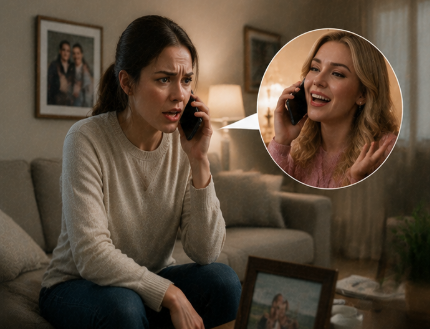
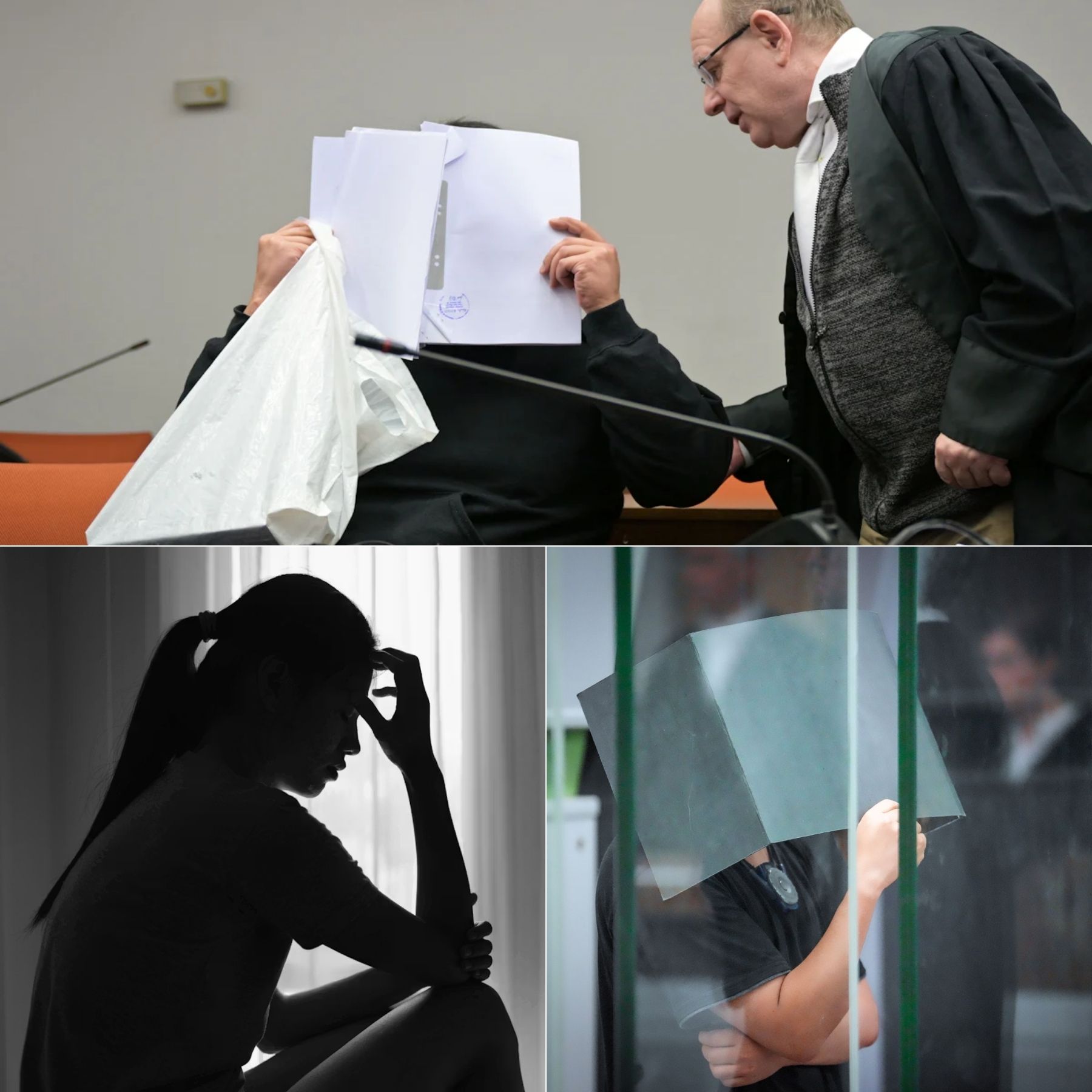
The judge looked up from the case file, blinked, and stared at me like he’d just seen a ghost. Then he adjusted his glasses and read my name again. “Wait a minute,” Judge Reynolds said slowly. “These charges are against you, Mr.

Whitmore? ”
I couldn’t help the smile tugging at my mouth. “That would be me, Your Honor. ”
My ex-wife Miranda rolled her eyes so hard I thought she’d sprain something.
She sat at the plaintiff’s table in a power suit that cost more than my first car, her hair perfectly highlighted like she was posing for a magazine cover. Next to her sat Trent, her gym-instructor boyfriend with the IQ of a protein shake, tugging at a collar that was clearly too tight. He kept flexing his jaw like it made him look intimidating. It didn’t.
I’d been waiting three years for this moment. To understand why this courtroom showdown was so sweet, you need to know the whole story. Three months earlier, my grandfather Henry Whitmore died at eighty-seven. He was a retired Superior Court judge and a real estate mogul who owned half of Center City Philadelphia.
He was also the only person in my life who ever told me the truth, no matter how much it stung. “Son,” he used to say, “keep receipts on everyone who betrays you. Not for revenge. For clarity.
”
I kept every single one. When I was twelve and my parents split, Grandpa took me in. He made sure I did my homework, taught me chess, and showed me what it meant to be a decent person. Every Sunday for twenty years, I went to his house for dinner.
We’d play chess—he beat me seventy percent of the time—and we’d talk about everything from politics to the Phillies’ eternal failures. He was my best friend. Miranda never understood that. She was too busy being impressed with herself to care about anyone else.
She walked into my life seven years ago when I was still trying to make a computer repair business work. She smiled, called me “grounded” and “humble,” and I was twenty-seven and dumb enough to believe her. We got married after six months. Grandpa pulled me aside before the ceremony.
“Are you absolutely sure about this? ” he asked quietly. “I love her,” I said. He looked at me for a long moment.
“Love is important. But pay attention to how someone treats people who can’t do anything for them. That tells you who they really are. ”
I didn’t listen.
The first year of marriage was fine, mostly because I was too oblivious to notice the cracks. Miranda had expensive tastes—designer purses, monthly spa appointments, a skincare routine that needed its own cabinet. I paid for all of it while she posted Instagram stories about “building her empire. ” Empire, right.
She was building it on my credit cards. Every Sunday, I’d ask her to come to Grandpa’s. Every Sunday, she had an excuse. Headache.
Work thing. Friend crisis. Too tired. After the tenth refusal, Grandpa looked at me over his reading glasses.
“When someone shows you who they are,” he said, “believe them the first time. You’re on showing number ten. ”
I made excuses for her. I told him she was just stressed.
He shrugged and went back to his newspaper, but I saw the look in his eye. He knew. Year three was when Trent showed up. Miranda suddenly needed to join the fanciest gym in Philadelphia, the kind with eucalyptus towels and cucumber water.
She’d never voluntarily woken up before nine in her life, but suddenly she was going to six a. m. sessions with this “amazing trainer” named Trent. Trent said this.
Trent recommended that. Trent thought she should try hot yoga. I’m not an idiot. I mean, I was a bit of an idiot, but even I noticed the signs.
New lingerie I never saw. Her face glowing whenever she looked at her phone. The way she’d smile at texts and then delete them. Then one morning, I woke up to a sticky note on the bathroom mirror.
“Marcus, you’re a good man, but I need passion. I’m moving out while you’re at work. I hope you find happiness. —M.
”
Five years of marriage, summarized in four sentences on a yellow square of paper. No conversation. No apology. Just a sticky note and the credit card debt she left behind.
I called Grandpa, didn’t even say hello. “She left. ”
“I’m sorry, son,” he said. “Come over.
Bring whatever you need. ”
I stayed with him for two months while I rebuilt my life. He never said “I told you so. ” He just let me heal and repeated the same advice over and over.
“Don’t chase people who run toward stupidity. ”
Then three months ago, Grandpa died peacefully in his sleep. The funeral was a who’s who of Philadelphia. Senators, judges, CEOs, enough lawyers to staff every firm in the state.
I stood in my one decent suit, shaking hands with people who spoke of him like a legend. Miranda wasn’t there. She was probably on a beach somewhere with Trent, posting about living her truth. She’d never even met Grandpa, not once in five years of marriage.
That was a choice—her choice. And Grandpa knew it. After the funeral, I sat in his lawyer’s office, expecting to inherit his chess set and maybe his watch collection. Instead, Bernie Castellano slid a folder across his desk.
“Congratulations, Mr. Whitmore,” he said. “You now own everything. ”
I blinked.
“I’m sorry, what? ”
“The house, the properties, the investment portfolio. Your grandfather left it all to you. Approximately thirty million dollars.
”
For ten seconds, I couldn’t speak. Thirty million dollars. Me, the guy who’d been eating cereal for dinner twice a week. The maintenance engineer his wife had left with a sticky note.
He handed me a letter in Grandpa’s distinctive handwriting. My hands shook as I read it. “Marcus, if you’re reading this, I’m dead. Don’t be sad.
Eighty-seven is a damn good run. You earned this inheritance not by being born into the family, but by having backbone. You showed up every Sunday for twenty years. You called me every Wednesday night.
You sat with me in the hospital during that pneumonia scare. You never once asked about my will. You came because you cared. Everyone else in this family saw me as a bank account with a pulse.
You saw me as Henry. That’s worth more than all the money I ever made. ”
I set the letter down because my vision had gone blurry. I absolutely was not crying in front of Bernie Castellano.
That was an allergic reaction to the leather chairs. So there I was, thirty days into being secretly rich. I didn’t tell anyone. I kept living in my studio apartment with the water stain on the ceiling that looked like Abraham Lincoln.
I kept driving my Honda with the duct-taped mirror. Old habits die hard, and besides, I couldn’t process that I could afford name-brand cereal. Then one evening, my lawyer Lucas called. His tone made me stop chewing immediately.
“I got served this morning with a lawsuit against you. ”
“What? Who’s suing me? ”
“Your ex-wife.
She’s claiming you manipulated your grandfather, isolated him from his family, and exploited an elderly man to get his money. ”
I started laughing. Hysterically, borderline unhinged laughter that made my neighbor bang on the wall. Miranda, who never met my grandfather.
Who refused to attend a single Sunday dinner. Who couldn’t bother to send a sympathy card when he died. She was suing me for isolating him from his family? “Trent is involved,” Lucas added.
“He’s listed as co-plaintiff. They’re engaged now. ”
“You’re telling me the guy who thinks his car is a type of car is filing a lawsuit about estate law? ”
“That appears to be the strategy.
”
I pinched the bridge of my nose. “How did she even find out about the money? ”
“Public records. The will went through probate.
Anyone can look it up. ”
She’d left me when I had nothing. Now that I had everything, she wanted back in. And Grandpa had prepared me for exactly this.
I walked to my closet and pulled out a box I’d kept since the divorce. Three years’ worth of receipts, text messages, calendar entries. Every excuse Miranda made. Every canceled dinner.
Every social media post showing her partying when she claimed to be too overwhelmed to meet my family. “Keep receipts on everyone who betrays you. ”
I kept every single one. The morning of the hearing, I walked into courtroom 3B in the same suit I’d worn to Grandpa’s funeral.
Miranda rolled her eyes at me like I was the punchline to a joke. Trent sat next to her, looking like he’d borrowed a suit from his older brother’s bar mitzvah. Their lawyer, Richard Pike, was mid-fifties with a spray tan two shades too orange. Judge Reynolds looked up from the file, blinked twice, and stared at me like his brain was rebooting.
“The charges here are against you? ” he said. “That would be me, Your Honor. ”
Pike gave his opening statement like he was delivering the Gettysburg Address.
He talked about how Miranda had been “victimized” by my scheme. He claimed I’d isolated Grandpa from his family and manipulated him into leaving me everything. “What family? ” I whispered to Lucas.
“Your grandfather’s own son moved to Arizona,” Lucas said. “Calls once a year on Christmas. The guy’s brother died in 1998. There’s nobody left but you.
”
Then it was Miranda’s turn to testify. She put on the performance of a lifetime, eyes welling up on command, voice trembling as she described how she’d “tried so hard” to be part of my family but I’d kept her away. “Whenever I suggested visiting his grandfather,” she said, “Marcus had an excuse. He made me feel like I wasn’t welcome.
”
A single tear rolled down her cheek. Oscar-worthy. Lucas got up for cross-examination and calmly pulled out a folder. “Miss Coleman, you testified that you wanted to visit Mr.
Whitmore, but my client prevented you. Is that correct? ”
“Yes. ”
“Interesting.
Because here are text messages between you and my client from September 10th, six years ago. He invited you to dinner at his grandfather’s house. You responded, ‘Can’t babe, getting my hair done. Tell him rain check.
’”
Miranda shifted in her seat. “I was busy that day. ”
“October 3rd, same year. ‘Grandpa’s birthday dinner this Sunday.
’ Your response: ‘Birthday dinners are so boring. Can we just send a card? ’”
Lucas went through invitation after invitation. Fifty-three Sunday dinners over five years.
Seven holidays. A hospital visit when Grandpa had pneumonia. Miranda attended three dinners total, two of which were mandatory holidays. “And here’s my personal favorite,” Lucas said.
He held up a screenshot of a text exchange. “April 12th, two years ago. My client invited you to the hospital because his grandfather had pneumonia. The doctors weren’t sure he’d make it through the night.
Your response: ‘That’s really sad, but I can’t handle hospital vibes right now. Send him my love. ’”
The courtroom went silent. The stenographer had stopped typing.
Even Trent looked uncomfortable. “That same night,” Lucas continued, “you posted this photo to Instagram. ‘Date night with my king. ’ Featuring you and Mr.
Davis at an expensive steakhouse. ”
“I can explain—” Miranda started. “We’re not done,” Lucas said smoothly. He pulled out more evidence.
Screenshots from a backup Instagram account she’d used, username fitqueen_adventures. Forty-seven followers, including her friend Chloe, who had been very cooperative with the legal process. Photo after photo. Miranda and Trent kissing in the gym parking lot, eight months before the divorce.
Miranda and Trent at a hotel, six months before. Miranda and Trent on a beach, clearly a couple. “So let me ask you again, Miss Coleman,” Lucas said quietly. “When did your romantic relationship with Mr.
Davis begin? ”
She couldn’t speak. Her mouth opened and closed like a fish. Lucas kept going.
He produced text messages between Miranda and Grandpa, showing how she’d reached out to him directly, six different times, always asking for money. Always a new business venture. And each time Grandpa politely declined, she stopped responding. He invited her to lunch three times.
She never replied. Pike stood up, waving his hands. “Objection! This is character assassination!
”
“It’s extremely relevant,” Lucas shot back. “The plaintiff claims she was excluded from the family. I’m proving she actively chose not to participate, for years. You can’t claim someone isolated you from a relationship you never wanted in the first place.
”
Miranda was crying real tears now, mascara running down her face. But I didn’t feel sorry for her. Not even a little bit. “So just to summarize,” Lucas said, turning to face her.
“You never wanted a relationship with Mr. Whitmore. You declined every invitation. You were cheating on my client for at least a year before the divorce.
You only contacted Mr. Whitmore when you wanted money. And now you’re suing for a share of an inheritance from a man you couldn’t be bothered to visit even once when he was dying. ”
Miranda was sobbing.
“It’s not fair that Marcus gets everything! ”
Judge Reynolds looked at her with an expression that could freeze nitrogen. “Life isn’t fair, Miss Coleman,” he said coldly. “But the law is.
And the law says you have no claim to this estate. ”
Then it was my turn to testify. I walked to the stand, placed my hand on the Bible, and swore the oath. The same oath Miranda had sworn before lying repeatedly.
The difference was, I meant it. Lucas asked me about my relationship with Grandpa. I told the truth about Sunday dinners and chess games and the man who raised me when my parents couldn’t. “Did you invite Miss Coleman to these dinners?
” Lucas asked. “Every single time for five years. After the first year, Grandpa stopped asking if she was coming. He just set two places at the table instead of three.
”
“Did you ever discuss his wealth with her? ”
“Never in the way she described. I knew he had money. It wasn’t a secret.
But I never sat around calculating what I might inherit. That’s disgusting. I spent time with him because I loved him. ”
“When did you learn about the extent of his estate?
”
“At the reading of his will. I thought I was getting his chess set and maybe his watch. When the lawyer told me thirty million, I asked him to repeat it three times. I couldn’t process it.
”
“And how did you react? ”
“I laughed. Because three months earlier, Miranda had left me thinking I was a broke maintenance worker. She left me for a guy with abs and no ambition.
Then Grandpa left me everything, and I realized the universe has a sense of humor. ”
Lucas walked to his table and picked up a folder I recognized. “Mr. Whitmore, did your grandfather leave any instructions regarding his estate?
”
“He left a letter. His lawyer gave it to me after the funeral. ”
“Can you read it for the court? ”
I pulled out the letter I’d carried in my jacket pocket for three months.
My hands shook as I unfolded it. “My grandfather wrote: ‘You earned this inheritance not by being born into the family, not by showing up at the end with flowers and fake tears. You earned it by having backbone. You showed up every Sunday for twenty years.
You sat with me in the hospital. You never once asked about my money. You came because you cared. Everyone else in this family saw me as a bank account with a pulse.
You saw me as Henry. ’”
The courtroom was completely silent. I looked up and saw the stenographer had tears in her eyes. “That’s the kind of man my grandfather was,” I said quietly.
“He left me his money because I loved him. Because I showed up. When he was sick and dying, I was holding his hand—not posting Instagram stories about living my best life. ”
I looked directly at Miranda.
She was crying again. “She had five years to know him,” I said. “Five years to come to Sunday dinner. She chose not to.
And now she’s mad that she can’t cash in on a relationship she never wanted in the first place. That’s not how inheritance works. That’s not how family works. ”
Judge Reynolds called a recess, and when we returned, he was ready.
“I knew Henry Whitmore,” he said. “We served on the bench together. The idea that anyone could manipulate him into doing anything he didn’t want to do is laughable. He was one of the sharpest men I’ve ever met.
”
He turned to the plaintiffs’ table. “Miss Coleman, you committed perjury multiple times on this stand. Your case is dismissed with prejudice, and you will be responsible for paying Mr. Whitmore’s legal fees.
”
Miranda looked like she’d been punched in the gut. Trent looked like he was finally reconsidering his life choices. Pike looked like he wanted to be anywhere else on earth. Three weeks later, Mrs.
Henderson, Grandpa’s elderly neighbor, showed up at my door with a weathered envelope. “Henry gave this to me years ago,” she said softly. “Told me to give it to you when the time was right. I think now’s the time.
”
Inside were letters Grandpa had written but never sent. One of them made me stop breathing. “Marcus, if she ever tries to come back, remember forgiveness doesn’t mean stupidity. You can forgive someone and still keep them out of your life.
”
Another one read: “Love is showing up. You did. She didn’t. That’s all that matters.
”
I framed that letter and hung it above my desk. I moved out of the studio apartment, started a law firm, and named it Whitmore & Wit. Grandpa would have loved that. Five years later, I’d remarried.
Her name was Sarah, a high school English teacher who drove a sensible Toyota and thought manifesting abundance was something you did by working hard and being a decent person. We had a small wedding, a dumb but loyal dog named Chester, and a life built on something real. Then the mayor’s office called. They were building a new courthouse and wanted to name it after Grandpa.
The Henry Whitmore Justice Center. They asked me to speak at the dedication. “My grandfather taught me two fundamental things,” I said to the crowd of judges, lawyers, and politicians. “Always tell the truth, even when it’s inconvenient, because lies have a way of catching up to you.
And never date anyone who hashtags ‘boss babe’ unironically. ”
The laughter was genuine. Sarah shook her head, smiling. “He taught me that character isn’t what you do when people are watching,” I continued.
“It’s what you do when no one’s looking. He taught me that showing up matters. That consistency matters. That loving people isn’t about grand gestures or social media posts.
It’s about being there week after week, year after year. ”
I looked up at his portrait, and I swear those painted eyes were twinkling. “Five years ago, I watched someone try to claim they deserved a piece of his legacy without ever earning it. They thought family was about biology, or legal entitlement.
But Grandpa knew better. Family is about showing up. It’s about choice. ”
After the ceremony, I stood alone in front of his portrait.
Sarah had taken Chester for a walk, giving me space. “We won, Grandpa,” I whispered. “They tried their best, but your plan worked. You taught me to keep receipts.
And boy, did I keep them. ”
I could almost hear his laugh. That dry chuckle he’d do when something amused him. “I’m doing good,” I said softly.
“The firm’s helping people. I married someone who actually shows up. I hope you’d be proud. ”
The portrait didn’t answer.
But I knew. I walked out into the afternoon sunshine, where Sarah was waiting with Chester pulling on his leash, trying to chase a pigeon. She smiled at me with that look that said she understood everything without me having to explain. And we headed home together.
Behind me, carved in stone above the courthouse entrance, Grandpa’s name would remind everyone who entered that justice isn’t just about laws and verdicts. It’s about truth. It’s about showing up. It’s about choosing every single day to be a person of integrity, even when it would be easier not to.
Love shows up. Greed shows out. And sometimes karma wears a robe and a gavel.
Grandpa would have loved that.