“What do you think you’re doing? You’re fired. We don’t need a lazy pig. ”
The voice on the phone was my father-in-law’s, Richard Hartwell, CEO of Hartwell Industries.

I was in Paris, sitting on a terrace overlooking the Seine, taking my first approved vacation in six years. I laughed and hung up before he could finish his sentence. I raised my glass and toasted the man sitting next to me. He was older, maybe early sixties, with silver hair and the calm of someone who’d never had to check a price tag.
His suit probably cost more than my monthly salary. “You look like a man who just remembered he’s allowed to breathe,” he said. “Something like that. ”
“First time in Paris?
”
“First time anywhere in six years. ”
He raised an eyebrow. “Let me guess. Corporate?
”
“Family business. Same script, different cast. ”
When he introduced himself as James Morrison, CEO of Apex Consolidated, my blood ran cold. Apex was Hartwell Industries’ largest competitor.
The man Richard had spent years trying to outbid and outmaneuver was sitting right next to me, listening to my life fall apart. “Your father-in-law has impressive lung capacity,” James said. “Tell me something. In your professional opinion, what’s Hartwell’s biggest vulnerability right now?
”
I should have said nothing. But Richard had just set fire to his end of the loyalty contract. “They’re overextended on the Bergman contract,” I heard myself say. “Promised delivery schedules they can’t meet.
The margins are razor-thin. If there’s any delay, they’ll breach and face penalties that wipe out the entire profit. ”
James nodded slowly. “Interesting.
”
My phone buzzed. Vanessa, my wife. Then a text: “Call me now. ”
“Your wife?
” James asked. “My soon-to-be ex, I’m guessing. ”
My phone buzzed twice more. I turned it face down.
James slid a business card across the table. “I’m talking about an offer. Apex is opening a new division. We need a CFO who knows the landscape.
Someone who isn’t afraid to take a vacation when they’ve earned it. ”
“I can’t just…”
“You’re unemployed as of approximately four minutes ago,” he said. “You’re allowed to be employed again. ”
I stayed the full two weeks of my vacation.
I visited the Louvre. I walked along the Seine every evening. James was staying at the same hotel, and we talked about finance and family businesses. He never pressured me about the job.
But before I left, he handed me a folder. “Some reading material for the flight,” he said. “And maybe some information about Hartwell Industries that you might find enlightening. ”
I read it on the plane.
Every page made the picture clearer and uglier. Hartwell wasn’t just struggling—it was hemorrhaging. And someone had been cooking the books to hide it. Conservative estimates I’d calculated were being presented to the board as guaranteed outcomes.
My careful hedging had been stripped away. Then I found the section about life insurance policies. Every executive had a key man policy. What wasn’t standard was the size of mine: $15 million, increased from $2 million just eight months ago, right after I’d saved the company $4 million in annual costs.
Richard was the sole beneficiary on behalf of the company. There was a clause about suicide exclusions being waived after the first two years. My policy was in year six. I thought about the increasingly dangerous site visits Richard had sent me on.
The chemical storage facility at midnight. The dizzy spell last month that sent me to the ER. The coffee at the office that had started tasting bitter. Maybe I was being paranoid.
Or maybe six years of gaslighting had trained me not to trust my own instincts. The landing was smooth. The drive to the house in West Hartford took forty minutes. There were three cars in the driveway: Vanessa’s Mercedes, Richard’s Escalade, Susan’s Lexus.
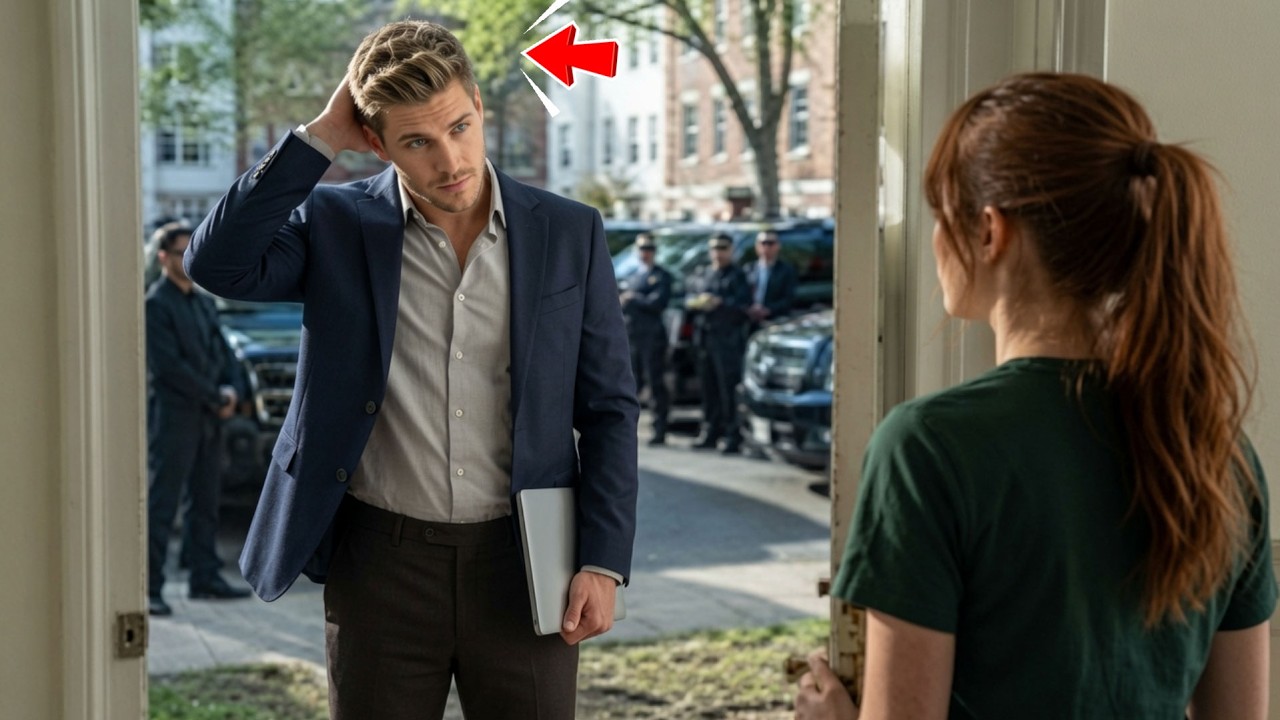
A welcoming committee. The door opened before I reached it. Vanessa’s eyes were cold. “You have a lot of nerve showing up here.
”
“I live here. ”
“Not anymore, you don’t. ”
Richard was in the wingback chair like a king holding court. Susan sat on the sofa with her spine straight and her pearls perfect.
Both looked at me like I was a stain on their expensive carpet. “Welcome home,” Richard said. “How was Paris? Did you enjoy your little tantrum?
”
“It wasn’t a tantrum. It was a vacation. One you approved. ”
“I approved a weekend, not a European sabbatical.
”
The conversation went in circles until Richard gestured to the coffee table, where a stack of documents waited with bright orange tabs. “You’re going to sign these papers. ”
“What papers? ”
“Separation papers from the company and from Vanessa.
We’re making this clean. ”
I flipped through them. Non-disclosure agreement. Non-compete clause.
Divorce papers already filled out, with Vanessa petitioning on grounds of abandonment and mental cruelty. “And if I don’t sign? ”
“Then you get nothing,” Vanessa said. “No severance.
And we’ll make sure no one in this industry ever hires you. ”
I thought about the folder in my laptop bag. About James Morrison’s offer. About the $15 million policy with my name on it.
“I need to think about it. ”
“There’s nothing to think about,” Richard snapped. “Sign the papers today. ”
“No.
”
The word hung in the air like smoke. Susan’s voice was measured and cold. “Don’t be foolish. You came from nothing.
We gave you everything. ”
“I worked sixty-hour weeks for six years,” I said. “I saved the company millions. I asked for one vacation, and you fired me for taking it.
But sure. Fair. ”
“You abandoned your post,” Richard said. “I took an approved vacation.
” I picked up the divorce papers. “I’ll think about it. ”
“You have seventy-two hours. After that, the offer is withdrawn.
”
I looked at Vanessa. “When did you stop being on my side? ”
“When you stopped being useful,” she said. At least she was honest.
I walked out of that house and didn’t look back. In my car, I pulled out my phone and dialed the number on James Morrison’s card. “I need to know something,” I said. “That job offer—is it real?
Not a pity hire, not a favor. ”
“It’s real. How soon can you get to New York? ”
“Tomorrow.
”
“Welcome to Apex,” he said, and hung up. I signed all the papers the next week. I took the $50,000 severance. I started at Apex as CFO of their new Manufacturing Division, making $285,000 base plus bonuses.
Double what Hartwell had paid me. Four weeks of paid vacation that I was actually expected to take. And I started reading. Everything I could find on Hartwell.
Public records, industry reports, bond offering documents. My team and I built a comprehensive analysis of where Apex could compete effectively. Three weeks into my tenure, a fraud investigator from the SEC showed up at my office. “Mr.
Chen, I’m here regarding a complaint filed against you alleging securities fraud and theft of proprietary information. Filed by Richard Hartwell. ”
He showed me emails—supposedly sent from my old Hartwell account to James Morrison—attaching confidential projections and client lists. “I didn’t send these,” I said.
“Someone accessed my account. This is fabricated. ”
“Can you prove that? ”
My lawyer, Katherine Reeves, brought in a digital forensics expert.
Meanwhile, I called the one person I trusted in the Hartwell family: Emily, Vanessa’s younger sister. “Those emails are fake,” she said. “Dad had them created. I recorded the conversation with his IT guy.
I have it. ”
She risked everything to give me that thumb drive. By the time the forensics expert confirmed the metadata proved the emails were backdated and fabricated, the SEC had already figured it out on their own. Richard Hartwell hadn’t just tried to frame me—he’d filed false statements to a federal agency.
He was charged with conspiracy to commit fraud, obstruction of justice, and filing false statements to the SEC. I watched the news footage of Richard being walked out of Hartwell Industries headquarters in handcuffs. The analyst said he could face fifteen to twenty years. Vanessa sent me a letter.
She apologized for all of it. “I knew about the emails,” she wrote. “I didn’t stop him. I stayed silent because that’s what Hartwells do.
You were right to leave. ”
I read it three times, looking for sarcasm. I found only honesty. Three months after Richard’s arrest, Hartwell Industries filed for Chapter 11 bankruptcy.
James called me. “Their aerospace division is going to be part of the asset sale,” he said. “I want it. ”
I put together the acquisition analysis.
The aerospace division was profitable. The rest of the company was a dumpster fire. James presented it to the board, and we submitted a bid: $38 million for the aerospace division, with employment guarantees for all existing staff. The deal closed on March 15th.
Richard’s trial lasted three weeks. I didn’t attend. I followed it through news reports and Katherine’s daily updates. The verdict came on a Friday in late June.
Guilty on all counts. I was at a rooftop bar with James when the news broke. He raised his glass. “To justice.
”
“To new beginnings,” I countered. My phone buzzed. A text from Emily. “Saw the verdict.
How are you feeling? ”
“Free,” I typed back. And I meant it. That night, I stood in my apartment—which was officially mine now, no longer temporary—and looked at the life I’d built.
Photos on the wall from a hiking trip with my team. Books I’d actually had time to read. A calendar with vacation time blocked out for August. On my desk sat two objects.
The pen I’d used to sign away my old life. And the business card James had given me in Paris, now framed. My phone rang. Douglas Brennan, the SEC investigator.
“Mr. Chen, the whistleblower reward program. You and Ms. Hartwell are entitled to a percentage of the penalties assessed.
It should be substantial. ”
After he hung up, I laughed. Really laughed. The way I had on that Paris terrace.
Richard had tried to destroy me with $15 million in life insurance. Instead, I’d helped destroy him—and gotten paid for it. I raised my glass to the empty apartment. “To karma,” I said.
“And to never settling for less than I deserve. ”
The city glittered below, full of possibility. And I was finally ready to claim it.