Investigators exhumed the remains of an elderly Arizona rancher named John Miller in 2005, hoping that modern DNA science could finally settle a question that had haunted Old West history for more than a century: whether Billy the Kid actually died in 1881 or secretly lived out his life under another identity. . The John Miller case begins with the event most historians accept as the death of Billy the Kid, july 14, 1881, Lincoln County lawman Pat Garrett arrived at Fort Sumner, New Mexico territory, looking for the young outlaw who had escaped from the Lincoln County courthouse less than three months earlier, killing two deputies during the breakout, Garrett had already captured Billy once, and after that jailbreak, finding him again became a top priority. .
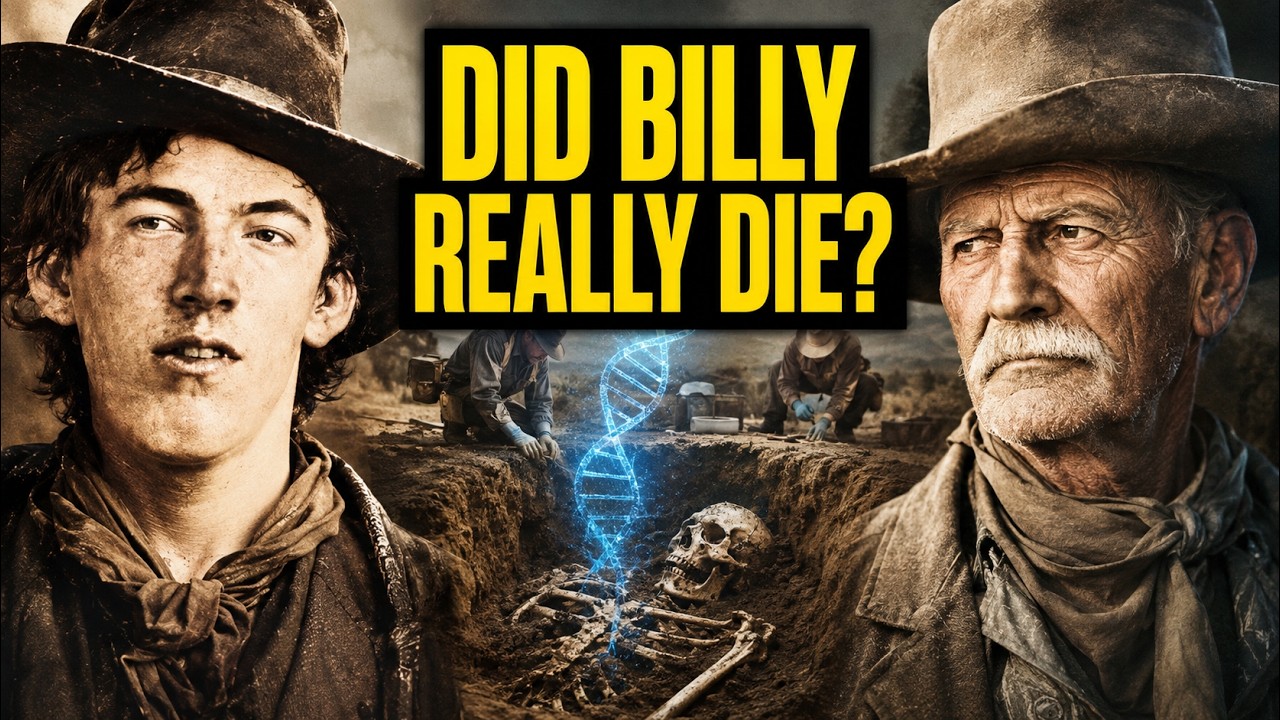
That night, Garrett went to the home of Pete Maxwell, a man who knew Billy, according to Garrett’s own account, he entered Maxwell’s dark bedroom and began questioning him, Billy unexpectedly came through the door, noticed someone else was present, and asked in Spanish, who is it? Garrett recognized the voice and fired, striking Billy in the chest and killing him, a coroner’s jury later identified the dead man as William H. Bonnie, the name Billy commonly used, and ruled the shooting justified while Garrett performed his duties as sheriff, Billy was buried in the local Fort Sumner cemetery, and newspapers across the region reported his death, for decades, that was the accepted historical record, but unsettling details left room for doubt, there is no authenticated photograph of Billy’s body, the original grave markers were disrupted by flooding over the years, and no modern death certificate, fingerprint record, or autopsy material ever existed, survival stories began circulating within a generation, most claimants went nowhere, but two became especially famous, brushy Bill Roberts in Texas, and a New Mexico rancher named John Miller, the Miller case was different from typical Old West impostor tales, Miller lived most of his life quietly as a rancher and horseman in western New Mexico, especially around the remote Rama and Zuni country, he was married to a woman named Isidora, and the couple raised an adopted Navajo son named Max, local residents remembered him as a capable, hospitable rancher, not as a fugitive hiding from the law, the Billy connection became widely known mainly through stories told by people who knew him, rather than through any public claim by Miller himself, supporters point toa central narrative, only weeks after Billy was reported dead, a man later identified as John Miller appeared in Las Vegas, New Mexico territory, reportedly weak and recovering from a serious chest wound, and carrying a gun at his side, he then headed west with his new wife, eventually building a life far from the territory where Billy had been hunted, later acquaintances said Miller privately admitted he was actually William Bonnie, according to people who knew him, he sometimes talked about being Billy when drinking, then backed away from the statement later, and he reportedly knew extraordinarily detailed stories about the Lincoln County War, no public confession exists that investigators can examine line by line, instead, people who knew him became the witnesses for what they said he privately revealed, visual comparisons also made the theory attractive, photographs of the older Miller appeared to some viewers to bear facial similarities with Billy, whose best known authenticated image shows a thin young man with a narrow face and prominent front teeth, scars and Miller’s skills with horses and firearms were also emphasized, but none of these traits could prove identity decades later, more basic questions also remained unresolved, records attributed to Miller give inconsistent information about his age and birthplace, some documents place his birth near Billy’s expected year of 1859, while others list him as being born years earlier, even a relatively small age gap of several years would create a significant problem for the claim, supporters answer that a fugitive using an assumed identity would have every reason to give false information, skeptics note that every conflicting record then becomes explained away as deliberate deception, making the theory difficult or impossible to test, the case attracted serious attention when author Helen Ary published her book Whatever Happened to Billy the Kid in the early 1990s, Arie gathered stories from families in the Rama area whose older relatives had known Miller, preserved memories that otherwise might have disappeared, and transformed an obscure regional story into a serious part of the Billy the Kid survival debate, for investigators, Miller presented an unusual opportunity, he was buried in a known cemetery, and a DNA test might determine whether he could have been Billy, by the early 2000s, Lincoln County Sheriff Tom Sullivan and former lawman Steve Sedwalt, later mayor of Capitan, reopened the case, developing it into Lincoln County Sheriff’s Department case 203274, their plan involved recovering DNA from Miller’s remains and comparing it with a trustworthy reference sample from Billy himself, investigators also located a wooden workbench that was said to have held Billy’s body after Garrett shot him, blood reportedly remained in the wood, forensic scientist Dr, Henry Lee became involved, and DNA was reportedly recovered from stains on the bench, but historical DNA testing requires more than extracting genetic material from an old object, the bench was not a sealed crime scene, people could have touched it, cleaned it, or used it over more than a century, biological material from other individuals could have reached the wood, and even if a stain was definitely human blood, that would not prove it belonged to Billy, the chain of custody was therefore crucial, investigators needed to establish where the bench had been, why it was the right bench, and why a particular biological sample should be attributed to William Bonnie, without that foundation, a match would simply create another question, on Mayo 19, 2005, the investigation moved from documents to an actual grave, a team entered the Arizona Pioneers home cemetery in Prescott to exume Miller’s remains, forensic anthropologist Dr, Laura Fuljaniti and DNA specialist Dr, Rick Staub of Orchid Cellmark were involved, but the excavation immediately became more complicated than expected, Miller’s grave was unmarked, adjacent plots were also difficult to identify precisely, decades underground had deteriorated the coffins, and the team found remains from two individuals, the second man was believed to be William Hudsmith, a cattleman buried nearby around the same period, investigators first had to determine which skeleton was actually Miller, the skeleton showed evidence of an injury around the hip, consistent with reports that John Miller had suffered a serious hip injury after a fall late in life, the other skeleton attracted attention because damage was observed around the shoulder blade, which some investigators connected with stories of Miller’s gunshot wounds, but Fuljaniti reportedly said she could not determine that the scapula damage had actually been caused by a bullet, the DNA situation added another layer of difficulty, obtaining useful DNA from the skeleton identified through the hip injury was difficult, while a usable sample was recovered from the other set of remains, samples were taken with that uncertainty in mind, the exhumation also generated a separate dispute over legal permission, authorities had authorized opening Miller’s grave, but questions were raised about removing samples and about the disturbance of Hudsmith’s remains, a complaint was investigated, but prosecutors decided not to pursue criminal charges, stating that those involved appeared to believe they had permission from officials responsible for the facility, by that point, the case had gained another layer of uncertainty, for a DNA comparison to be meaningful, investigators still needed a confirmed biological reference from Billy or a close maternal relative, they did not obtain a universally accepted reference profile from Catherine Antrum, Billy’s mother, whose grave in Silver City was also considered, without that reference, even a perfect genetic profile from John Miller could not prove his true identity, it could only prove who John Miller was, later reporting, including an examination by the Washington Post in 2015, described the genetic comparison as unable to provide a useful resolution of the identity question, no publicly validated genetic result has ever established that John Miller and Billy the Kid were the same man, years later, the Arizona Pioneers home still recognizes John Miller as one of its notable historical residents, describing him with the qualification, possibly Billy the Kid, that wording reflects exactly where the case stands, there is a real John Miller who lived in New Mexico and Arizona, worked as a rancher, entered the Arizona Pioneers home, and died in 1937, there are real witnesses and later published accounts connecting him with the Billy identity, but no authenticated contemporary document exists in which Miller proves he was Henry McCarty or William H, Bonnie, the accepted 1881 record also remains substantial, Pat Garrett identified the man he shot as Billy, Fort Sumner residents saw the body, a coroner’s jury identified William H, Bonnie and ruled the shooting justified, Billy was publicly buried the following day, and contemporary newspapers reported his death, the DNA investigation did not overturn that record, the surviving public record therefore contains DNA testing connected to John Miller, but no verified DNA test identifying John Miller as Billy the Kid, the old grave in Prescott produced scientific data, legal disputes and more documents, but not the simple answer some had hoped for,