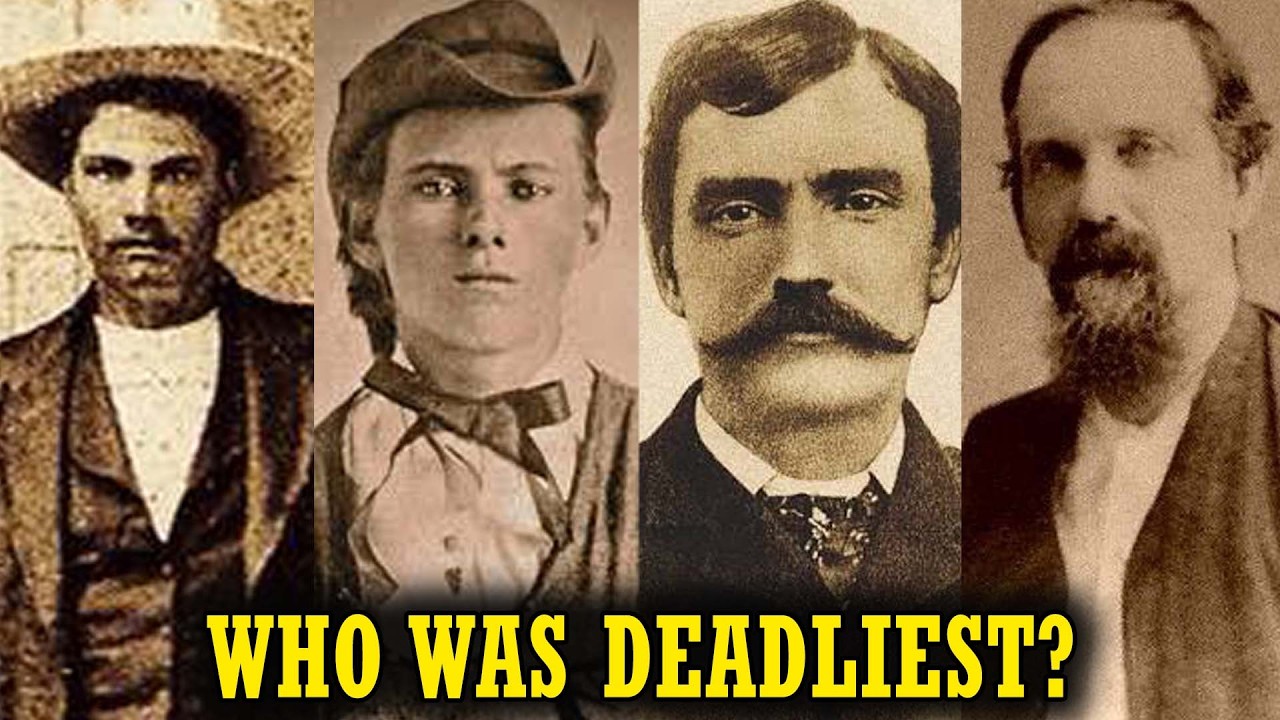
The line separating the frontier’s most feared gunmen from the myths Hollywood built around them is far harder to draw than most believe. Some men earned terrifying reputations through verified killings, while others were made famous by sensational newspapers, dime novels, and stories that grew with every retelling. Ranking the ten most notorious gunmen of the Old West based on their documented actions, rather than their on-screen body counts, produces a surprising list—and the top spot may not belong to the name most expect. Tom Horn represents the threat of the open range, a man who operated from a distance rather than through face-to-face confrontation.
Born in Missouri in 1860, Horn built his reputation on tracking and scouting rather than showmanship. He worked as a civilian scout for the army, participating in the campaign to locate Apache leader Geronimo in the Sierra Madre. He later worked for the Pinkerton National Detective Agency before becoming embroiled in the Wyoming cattle range wars of the 1890s. Organized cattlemen, frustrated by slow courts and stolen livestock, allegedly paid Horn to deal with suspected rustlers, though the exact terms of any arrangement remain disputed.
Horn preferred a Winchester 1894 lever-action rifle in . 30-30 caliber, a round that produced little visible smoke and made it difficult to locate the shooter. Historians disagree sharply on how many killings can be reliably attributed to him, with estimates ranging from fewer than ten to unproven popular claims near fifty. The deaths of Matt Rash and Isom Dart in 1900 were long attributed to him, though neither case was definitively solved.
Horn’s fate was sealed by the July 1901 killing of 14-year-old Willie Nickell, the son of a rancher involved in ongoing land disputes. Public outrage was immediate. Deputy U. S.
Marshal Joe LeFors built his case partly on a conversation with Horn in a Cheyenne saloon, where a hidden stenographer recorded statements later used at trial. Historians continue to debate the reliability of that evidence. Horn was convicted and executed in Cheyenne on November 20, 1903, one day before his 43rd birthday. Ben Thompson embodied the sudden, high-stakes danger of frontier gambling halls rather than the calculated distance of the open range.
Born in England in 1843, he immigrated to Texas and became one of the era’s most prominent professional gamblers. He served as a cavalryman in the Confederate army during the Civil War and later worked as a mercenary in Mexico supporting Emperor Maximilian’s forces. Returning to Texas, he gained a reputation for exceptional speed and control with a short-barreled revolver, sometimes carrying his guns in modified coat pockets for unusually quick reactions. Historical records attribute roughly six to ten serious confrontations to him, though contemporary rumors often inflated that number.
In 1873 in Ellsworth, Kansas, a chaotic dispute led to the fatal wounding of popular local sheriff Chauncey Whitney, reportedly by a shot from Thompson’s rifle. Whether the shooting was accidental or intentional remains a genuine historical dispute. Despite this turbulent history, citizens of Austin elected Thompson as city marshal in 1881, hoping his reputation would curb local lawlessness. During his tenure, crime rates reportedly fell.
Thompson’s relationship with alcohol undermined his stability, and tensions with Jack Harris, a San Antonio variety theater owner, escalated until Harris was shot dead in 1882. Thompson was acquitted on self-defense grounds, but Harris’s associates viewed him as a threat that could not be ignored. On the night of March 11, 1884, Thompson returned to the theater with fellow gunman King Fisher. Both men died in a coordinated ambush, shot from a concealed position.
Clay Allison was a far more unpredictable figure. Born in Tennessee in 1840, he was known for a striking duality: charming, articulate, and genuinely likable in social settings, yet prone to volatile outbursts, especially when drinking. He served as a cavalryman under General Nathan Bedford Forrest during the Civil War and reportedly suffered a head wound during that period, which some biographers speculated may have affected his later temperament, though this has never been conclusively proven. Known as the “Noble Outlaw,” he combined loyalty and generosity toward friends with sudden, disproportionate reactions when provoked.
His most documented confrontation occurred in January 1874 at a crowded establishment in Clifton, New Mexico, where fellow gunman Chunk Colbert sought a confrontation. According to the most common historical account, Colbert attempted to draw his weapon from under the table but fumbled, giving Allison the chance to fire first. Colbert did not survive. When later asked why he had shared a meal with a man intending to harm him, Allison reportedly gave a humorous, ambiguous reply about not sending a man to his death on an empty stomach, though the quote comes from indirect accounts.
Historians have documented Allison’s direct involvement in at least several serious confrontations, with some estimates suggesting more. Wyatt Earp reportedly named him as one of the few men he would prefer to avoid facing. Allison’s death was not connected to any gunfight. On July 3, 1887, near Pecos, Texas, he fell from a supply wagon he was driving, and the wagon wheel caused a fatal injury to his neck.
King Fisher dominated the border region along the Rio Grande in the 1870s. Born in Texas in 1853, he cultivated a flamboyant image: tailored coats with gold embroidery, bright sashes, elaborate boots, and a pair of silver-plated, engraved revolvers with ivory grips. Behind that striking appearance, Fisher built genuine regional influence. By his early twenties, he had established a large ranch operation in Dimmit County and gathered a following that some accounts place near 100 men.
Historians describe him as running an organized cattle smuggling operation across the border, though many specific details come from contemporary rumor as much as documented records. A famous story claims he posted a sign at a crossroads reading: “This is King Fisher’s road, take the other one,” though the sign’s origin and accuracy are difficult to independently confirm. Fisher’s reputation included numerous serious confrontations, with attributed body counts varying wildly between sources due to the informal record-keeping of the region. Like Ben Thompson, Fisher eventually moved from outlaw reputation to official law enforcement, serving as temporary sheriff of Uvalde County in 1881.
His story intersected fatally with Thompson’s on the night of March 11, 1884, when he accompanied Thompson to the San Antonio variety theater. Both men were killed in the ambush. Fisher was approximately 30 years old. Jesse James’s story was shaped by the aftermath of the Civil War.
Born in Missouri in 1847, he joined Confederate guerrilla units led by William Quantrill and “Bloody Bill” Anderson as a teenager. These irregular units carried out unconventional warfare, including the controversial and well-documented 1864 Centralia incident, in which surrendering Union soldiers were killed. Some accounts place the young Jesse James at the scene, though his exact role remains debated. After the war, James joined with his brother Frank and the Younger brothers to form the James-Younger Gang, applying guerrilla tactics to bank, train, and stagecoach robberies across the Midwest.
Contemporary newspapers portrayed him in strikingly different ways, sometimes as a folk hero resisting Reconstruction-era institutions and other times as a dangerous criminal. Modern historians generally view the Robin Hood portrayal as largely myth, noting that James’s activities caused real harm to ordinary people, including bank and railroad employees. During an 1869 robbery in Gallatin, Missouri, a cashier named Captain John Sheets was killed. Some historical accounts suggest James may have mistaken him for a Union officer connected to Anderson’s death, though this interpretation is not universally accepted.
James reacted violently toward anyone he suspected of disloyalty or cooperation with authorities. When the Pinkerton agency began pursuing him, tensions escalated on both sides. Pinkerton agent John W. Whicher was killed while investigating the gang.
For nearly 15 years, James evaded capture, surviving the disastrous 1876 raid on Northfield, Minnesota, which effectively ended his original gang. A large bounty reportedly made him increasingly paranoid, even toward those closest to him. On April 3, 1882, in St. Joseph, Missouri, James was killed by Robert Ford, a newer gang member seeking the reward offered by Missouri’s governor.
Wyatt Earp is most associated with Tombstone, Arizona, in the early 1880s. Born in Illinois in 1848, he served as a lawman in Kansas cattle towns such as Wichita and Dodge City before moving to Tombstone. Contemporary and later accounts often describe him as remarkably calm and controlled, in contrast to more volatile figures of the era. He is sometimes credited with popularizing “buffaloing,” the practice of using a revolver barrel to physically subdue a troublemaker rather than resorting to gunfire, a tactic meant to defuse confrontations.
The event most tied to Earp’s legacy is the October 1881 gunfight near the O. K. Corral in Tombstone, extensively covered by the Tombstone Epitaph. The brief, famous confrontation involved the Earp brothers, Doc Holliday, and members of the Clanton and McLaury families.
Virgil and Morgan Earp, as well as Holliday, were wounded, while Frank and Tom McLaury died. Wyatt Earp is described as the only participant to emerge without injury. Historians continue to debate who fired first and whether the shooting was justified. The aftermath proved more significant.
In the following months, Virgil Earp was seriously wounded in a separate attack, and his younger brother Morgan was killed while playing billiards, an act widely attributed to associates of the Cowboy faction involved in the earlier gunfight. With local authorities unable or unwilling to pursue the case effectively, Earp assembled an informal group and began what became known as the Earp vendetta ride, pursuing those responsible outside formal legal procedures. Several confrontations occurred during this period, including with cowboy “Curly Bill” Brocius at Iron Springs, though some historians question whether Brocius was even present due to conflicting contemporary reports. Earp’s later memories of the ride, recorded decades afterward, are treated with caution by historians.
Earp lived a long life afterward, eventually settling in Los Angeles, where he died in 1929 at age 80. His lasting reputation rests not on a single verified body count but on the image of composure under pressure, an image shaped heavily by later films, books, and his own mythmaking in his final years. Doc Holliday embodied a different kind of intensity, shaped by personal circumstances rather than temperament. Born John Henry Holliday in Georgia in 1851, he trained and practiced as a dentist.
In his early twenties, he was diagnosed with tuberculosis, a serious and often fatal disease at the time. Seeking a drier climate believed to ease symptoms, he moved west and gradually became known more for card playing than dentistry. Due to his illness, contemporaries and later biographers often described him as possessing an unusual fatalistic outlook, which some believed made him more willing to remain calm in tense situations. He was not generally known as someone who sought confrontations, though he was known not to back down when conflicts arose.
Historical accounts describe him as skilled with the Colt Lightning double-action revolver, which allowed faster repeated firing than older single-action models. He also carried a knife, consistent with common frontier practice. Historians generally place his direct involvement in serious confrontations at between six and eight incidents over his lifetime, though exact numbers are difficult to verify. His most documented involvement came alongside Wyatt Earp at the O.
K. Corral in 1881. Contemporary accounts describe him carrying a shotgun during the confrontation, and most historical reconstructions credit him with a pivotal role in the outcome involving Tom McLaury. Holliday was reportedly grazed during the exchange but remained able to fight throughout.
During the subsequent Earp vendetta ride, Holliday remained a close ally of Wyatt Earp, including during the pursuit and confrontation of Florentino Cruz, an episode documented through later, sometimes conflicting accounts. Bat Masterson, in his later writings about frontier figures, described Holliday in uncomfortable terms, calling him physically weak but extremely courageous, though Masterson’s articles were written long after the events. Holliday did not die in a sudden confrontation. On November 8, 1887, at age 36, he died in a hotel bed in Glenwood Springs, Colorado, from complications of the tuberculosis he had lived with for over a decade.
Billy the Kid, born Henry McCarty and later known as William H. Bonney, became a central figure in New Mexico Territory during the late 1870s. Orphaned in his teens, he spent his youth moving between mining camps in Arizona and New Mexico. Contemporary descriptions note his slender build, and those who knew him often mentioned his friendly, sociable personality, especially within the local Hispanic communities where he spent considerable time.
This contrast between his youthful, likable demeanor and his later reputation is part of what made his story enduring. Billy was closely connected to the Lincoln County War of 1878, a violent conflict rooted in competing commercial and political interests. He joined a faction known as the Regulators. Historians generally agree he showed remarkable composure and physical agility during the conflict despite his youth and slight build.
Contemporary newspapers, including the Las Vegas Gazette and the Santa Fe New Mexican, inflated his legend, at one point claiming a number of confrontations that most modern historians consider significantly exaggerated. Historian Robert Utley and others have concluded that the most accurate estimate of his direct involvement in serious incidents ranges between four and nine, depending on which cases are considered fully documented. Billy was known to prefer lighter, faster-handling revolvers suited to his speed and agility, unlike the heavier weapons favored by older gunmen of the era. His most famous escape came in April 1881 after being captured and sentenced by Sheriff Pat Garrett.
While awaiting execution in Lincoln, New Mexico, Billy escaped custody in an incident that remains among the most retold of the era. Accounts describe him overcoming a guard and seizing a weapon, killing two guards, James Bell and Bob Olinger, during his flight. The sequence was largely reconstructed through later accounts, and some details remain disputed. His freedom was short-lived.
On the night of July 14, 1881, Sheriff Garrett located him at Fort Sumner. In the confrontation that followed, Garrett shot the 21-year-old in a dark room, reportedly before Billy could identify him. John Wesley Hardin represents one of the most documented and controversial reputations of the era. Born in Texas in 1853, the son of a Methodist preacher, Hardin came of age during the turbulent Civil War and Reconstruction years.
According to his later memoir, his first serious confrontation occurred in his mid-teens, though this account, like most of his life story, comes primarily from Hardin himself. Unlike many frontier figures who downplayed their reputations, Hardin was remarkably candid about his history, claiming responsibility for a very large number of confrontations. Historian Leon Metz, after extensive research into court records, concluded that the most historically accurate figure is in the low to high twenties. That remains unusually high for the era, though far below Hardin’s exaggerated claims.
Contemporary newspapers portrayed him as exceptionally volatile and dangerous. Some accounts describe him using a distinctive method of hiding weapons in sewn pockets inside his coat, allowing him to draw a revolver quickly across his body, though details like these often come from later accounts. In 1874, he was involved in the killing of Deputy Sheriff Charles Webb in Comanche County, an incident that prompted Texas authorities to pursue him seriously. He was finally captured in Florida in 1877 after an extensive search.
Hardin spent about 17 years imprisoned in Huntsville Penitentiary, where he reportedly studied law. After his release, he moved to El Paso and briefly practiced law, though contemporary accounts suggest he continued struggling with gambling and personal disputes. On the night of August 19, 1895, Hardin was killed in the Acme Saloon in El Paso by John Selman, a local lawman with whom Hardin had reportedly been feuding. The shooting occurred without warning and from behind.
Wild Bill Hickok is a foundational name in Western mythology. Born James Butler Hickok in Illinois in 1837, he possessed a striking appearance according to most contemporary accounts: tall, with distinctive long hair and a memorable presence that made him natural material for the era’s growing popular press. He favored an elegant, somewhat theatrical style of dress. Hickok served the Union cause during the Civil War in scouting and intelligence roles, an experience generally believed to have refined his later composure in tense situations.
Rather than the newer cartridge revolvers that became common later, Hickok reportedly preferred a pair of Colt 1851 Navy revolvers throughout his career, carried in a distinctive manner that allowed a particularly fast draw. Publications like Harper’s New Monthly and frontier newspapers helped establish Hickok as one of the first widely recognized celebrities of the frontier era, though historians note that much of this early coverage greatly exaggerated his exploits. One reasonably documented confrontation is the July 1865 shootout in Springfield, Missouri, with a man named Davis Tutt, generally considered one of the earliest documented quick-draw duels in Western history. As marshal of Kansas cattle towns including Hays City and Abilene, Hickok built a reputation for keeping order, partly through the deterrent effect of his public image.
Historians estimate his direct involvement in a small number of serious confrontations during his law enforcement career, typically around half a dozen, a modest figure compared to the inflated numbers attributed to him by sensationalist journalism. By the mid-1870s, his eyesight was reportedly deteriorating, possibly from glaucoma, and he had largely withdrawn from active law enforcement, spending his final years primarily gambling. He eventually settled for a time in the Deadwood mining camp in Dakota Territory. On August 2, 1876, while playing cards in a Deadwood saloon, Hickok was killed by Jack McCall, who approached from behind in a surprise attack.
Hickok was reportedly holding two pairs, aces and eights, a hand later known in popular culture as the “dead man’s hand. ” His enduring legacy rests not on a specific record of confrontations but on his role as the early template for the frontier gunfighter in the American popular imagination, an image shaped by sensationalist journalism in his lifetime as much as by verified facts. What becomes clear across these ten figures is that “deadliest” meant something different for each of them: calculation, composure, desperation, or simply the stories told about them after the fact. The surprising truth about the Old West is how much of its legend was shaped not only by what actually happened, but by who lived to tell about it, and how newspapers, dime novels, and later Hollywood reshaped the truth into something larger than life.
The line between fact and folklore remains endlessly fascinating to untangle.