One of the Wild West’s most feared lawmen, a man credited with taming one of the rowdiest towns in Texas, met his end not in a blaze of glory but in a moment of hesitation. On a darkened street outside a Fort Worth saloon, that single pause proved fatal, cutting down a figure whose legacy remains fiercely debated to this day. Timothy Isaiah Courtright, better known as “Long-Haired Jim” Courtright, was born in 1848 in Sangamon County, Illinois. After serving briefly in the Union Army, he drifted west and eventually landed in Fort Worth, Texas, a booming cow town with a reputation for lawlessness that earned it the nickname “Hell’s Half-Acre.
”
In the late 1870s, Courtright was appointed city marshal of Fort Worth. His tall frame, flowing hair, and piercing eyes made him a striking presence. More importantly, his speed with a gun and willingness to use it brought a semblance of order to the chaotic streets. During his tenure, crime dropped significantly, and he often patrolled alone, daring anyone to challenge his authority.
But Courtright was a complicated figure. After leaving the marshal’s office, he reinvented himself as a private security consultant, offering protection to saloon and gambling hall owners. Those who refused his services often found themselves harassed or threatened, leading to rumors that his protection operation was little more than extortion. Among those who refused to pay was Luke Short, a sharp-dressed gambler and gunman who owned the White Elephant Saloon.
Short had his own formidable reputation and was not the type to be intimidated. His refusal to pay Courtright’s fees set the stage for a deadly confrontation. On the night of February 8, 1887, Courtright approached Short outside the White Elephant Saloon, apparently under the pretense of a peaceful conversation. Accounts differ on who drew first, but witnesses agree on a crucial detail: Courtright hesitated.
In the world of gunslingers, a moment’s pause can be fatal. Short fired first, striking Courtright in the thumb and severing his trigger finger. Unable to return fire, Courtright staggered as Short fired again and again. Courtright collapsed onto the dirt street and died where he fell.
The gunfight lasted only seconds, but it sent shockwaves through Fort Worth. Courtright’s death marked the end of an era. The man who had once tamed the wildest town in Texas was killed by a man who refused to be intimidated. His funeral drew a large crowd of admirers, fellow lawmen, gamblers, and skeptics, all debating his complicated legacy.
Some mourned him as a protector of order who brought civility to chaos. Others saw him as a thug who used his badge as a license to bully and extort. Both sides agreed on one thing: Courtright was no ordinary man. He was buried in Oakwood Cemetery in Fort Worth, the city he once ruled with the authority of a sheriff and the swagger of a gunfighter.
Another controversial figure of the era was Tom Horn, a man whose name remains synonymous with the blurred line between justice and murder. Born in 1860 in Missouri, Horn ran away from home as a teenager and drifted west, building a reputation as a skilled tracker and interpreter. He served as a scout for the U. S.
Army during the Apache Wars and later worked for the Pinkerton Detective Agency, hunting rustlers and outlaws across the West. Horn’s methods were whispered to be less than legal and far from gentle. Eventually, he was hired by powerful cattle barons in Wyoming and Colorado as a “range detective,” a euphemism for a hired gun whose job was to protect ranchers’ property through intimidation or violence. Horn was suspected of involvement in several killings, but his skill in the saddle and his ability to vanish into the hills kept him from facing consequences for years.
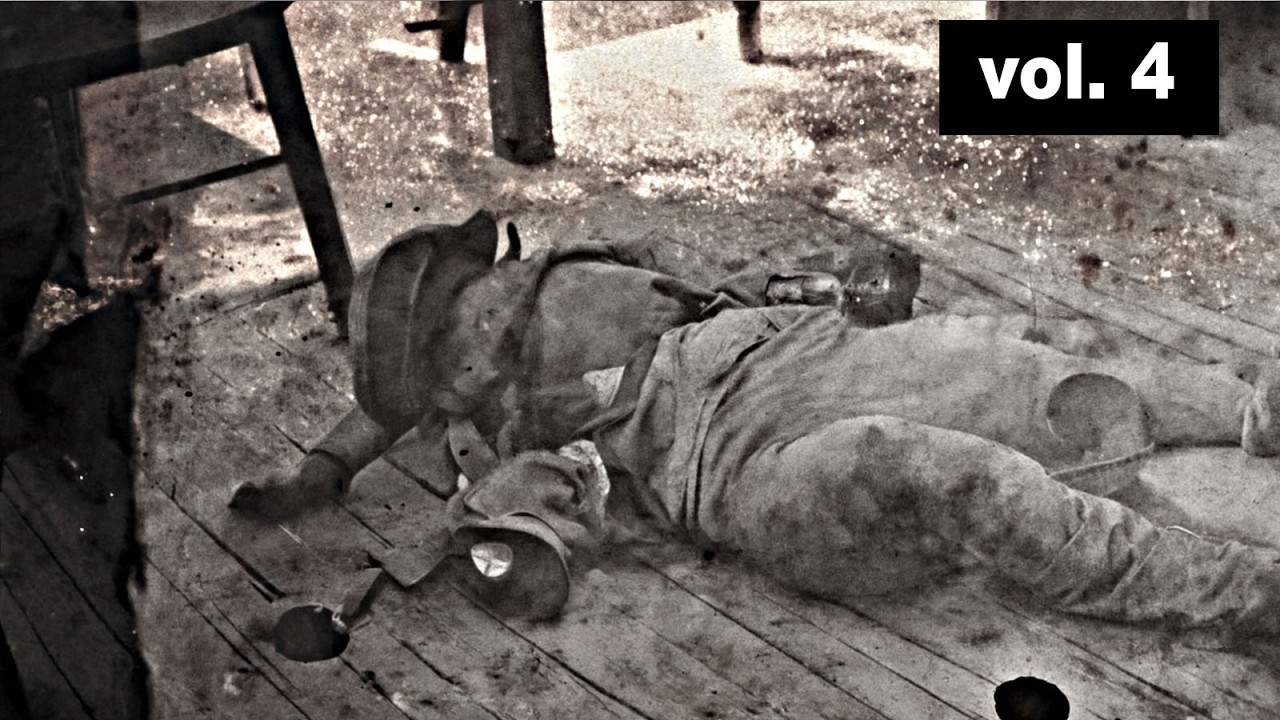
His downfall came in 1901, when he was implicated in the murder of 14-year-old Willie Nickell, the son of a sheep rancher embroiled in a land dispute with Horn’s employers. The evidence was thin, but lawmen lured Horn into a trap. While sitting drunk and unguarded on a porch, Horn allegedly confessed to a local lawman posing as a friend, saying he mistook the boy for his father and shot him from a distance with a rifle. That statement, along with circumstantial evidence, became the cornerstone of the prosecution’s case.
Horn’s trial became a national spectacle. Some saw him as a ruthless killer finally caught; others believed he was being railroaded by powerful enemies. Despite inconsistencies in the case and growing public doubt, Horn was convicted of murder and sentenced to hang. His execution was set for November 20, 1903, in Cheyenne, Wyoming.
Horn spent his final days in the Laramie County Jail, remaining defiant, calm, and composed. On the morning of his execution, dressed neatly in a dark suit, he walked to the scaffold with a cigarette between his lips. The hanging was performed using an automatic trap mechanism, a device Horn himself had once praised for its efficiency. He dropped without a word.
For decades after, doubts persisted about Horn’s guilt. Some claimed he was framed; others insisted justice was finally served. His story has inspired books, films, and endless debate among historians. Whether seen as a cold-blooded assassin or a scapegoat of the cattle wars, Tom Horn remains one of the Wild West’s most enduring and controversial characters.
Not all legends died by rope or gunfire. Robert Clay Allison, known as one of the most colorful and deadly figures of the frontier, met a surprisingly mundane end. Born in 1840 in Wartrace, Tennessee, Allison developed a violent streak early on. A head injury as a child was said to leave him with unpredictable fits of rage.
During the Civil War, Allison enlisted with the Confederate cavalry but was discharged for what was recorded as a “partially insane” condition. After the war, he headed west to Texas and New Mexico Territory, drifting into the booming cattle country, where the law was often more suggestion than statute. Allison developed a reputation not just for violence but for a peculiar sort of frontier justice. He didn’t kill casually, but when he did, it was usually for what he saw as a reason.
He once killed a man in a duel, only to later carry the man’s body to his widow in a coffin, offering an apology and condolences. One of his most famous acts was the lynching of notorious outlaw Charles Kennedy near Cimarron, New Mexico. Kennedy was suspected of murdering travelers who passed his isolated mountain inn. When local law hesitated, Allison led a mob that stormed the jail, dragged Kennedy out, and hanged him from a telegraph pole.
According to lore, Allison then decapitated the corpse and placed the head on a pole outside a saloon as a warning. Despite his violent episodes, Allison was regarded by some as a gentleman killer. He was known to wear a tailored suit, carry himself with courtly manners, and even pause before a duel to say a prayer. Yet he was not above drunk rages, and he famously once rode nude through the streets of Mobeetie, Texas, wearing only his gun belt in a fit of drunken revelry.
Incredibly, for all his notoriety, Allison didn’t die in a blaze of gunfire or on the scaffold. In 1887, while hauling supplies near his ranch in Pecos, Texas, he fell from his loaded wagon and was crushed beneath the wheels. He was just 47 years old. The manner of his death, mundane and accidental, seemed oddly unfitting for a man whose life had been anything but ordinary.
Allison was buried in Pecos, where his grave marker famously reads: “He never killed a man that did not need killing. ” Whether written by an admirer or an ironist, the epitaph perfectly captures the myth of Clay Allison—half hero, half menace, all Wild West.