The legend of the Texas Rangers as fearless frontier lawmen has long overshadowed the true, far more complicated history of the institution. Since its informal beginnings in the early 19th century, the organization has been central to the development of Texas, but it has also been marked by controversy, prejudice, and documented abuses of authority. The story begins before Texas was part of the United States. In 1821, the region was still under Mexican control, and American settlers were being drawn into the area by the promise of land.
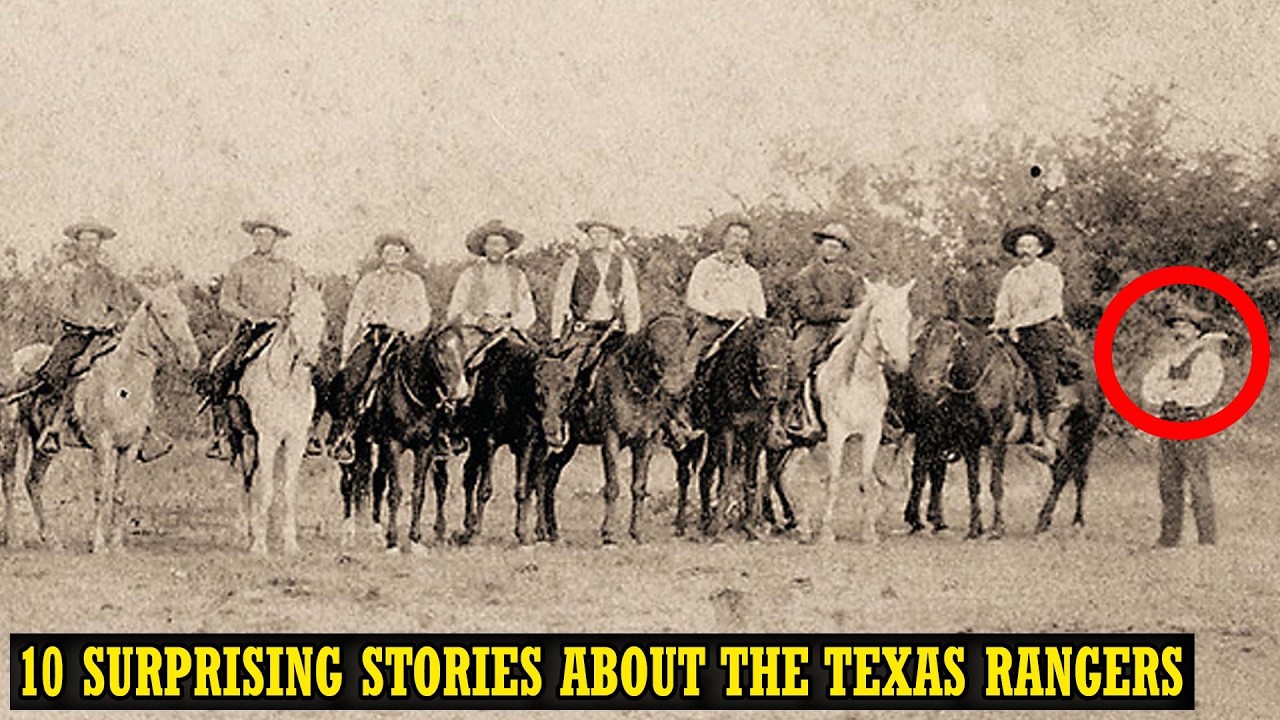
Stephen F. Austin, an influential colonizer, secured a contract to bring families into Texas that year. As settlements grew, tensions over land claims and legal traditions created friction, prompting Austin to organize small, locally controlled armed patrols to maintain order. These informal groups laid the groundwork for what would become the Texas Rangers.
One of the first settlers in Austin’s colony was John Jackson Tumlinson, a North Carolina native who served as a magistrate near present-day Columbus. In late 1823, while traveling to San Antonio for discussions on regional security, Tumlinson was killed under circumstances that reflected the era’s deep instability. His remains were never recovered. His death strengthened Austin’s resolve to formalize the Ranger force.
Tumlinson’s son, Peter F. Tumlinson, later served as a Ranger captain for decades, helping transform the unit into a more permanent institution. During the Mexican-American War (1846–1848), Ranger companies served alongside U. S.
forces but maintained their own clothing, weapons, and command structures. Senior commanders like Winfield Scott and Zachary Taylor publicly praised their effectiveness in irregular warfare. Mexican soldiers and civilians, however, developed a fearsome reputation for the Rangers, sometimes calling them “Los Diablos Tejanos. ” Historical records also describe incidents of civilian harm and reprisals, particularly in occupied areas like Monterrey, which stained the Rangers’ legacy and raised concerns about accountability.
Before the war, the Rangers’ primary mission had been frontier conflicts involving indigenous nations. In 1838, Republic of Texas President Mirabeau B. Lamar urged the legislature to authorize a formal frontier force. Within days, Secretary of War Thomas J.
Rusk approved the deployment of several Ranger companies. Over the following decades, they were involved in numerous frontier engagements. In 1858, Ranger Commander John Salmon “Rip” Ford led an expedition into the southern plains against Comanche groups, a campaign described as highly one-sided. Modern scholarship views this period as deeply complex, tied to policies of territorial expansion and displacement.
The Rangers also played a key role in ending the criminal career of Sam Bass, one of the most infamous outlaws of the 1870s. After a $60,000 train robbery near Big Springs in 1877, Bass fled to Texas but resumed his criminal activities, drawing the attention of the Rangers. On July 21, 1878, in Round Rock, Bass attempted to rob a local business. Law enforcement arrived before he could escape, and Bass was injured during the encounter.
Rangers tracked him to a location some distance away, where he died from his injuries shortly afterward. The episode reinforced the Rangers’ reputation as a persistent force but also illustrated how quickly outlaw careers often ended. When Texas seceded from the Union in early 1861, Ranger units were initially instructed to remain on the Mexican border rather than join Confederate forces. That changed within months.
Later in 1861, a frontier regiment of roughly a thousand Rangers was organized and redirected toward service against Union forces. By mid-1862, they were spending more time confronting Union troops than addressing frontier concerns. In late 1863, they were formally integrated into the Confederate Army. One notable unit was the Eighth Texas Cavalry, known as Terry’s Texas Rangers, commanded by Benjamin Franklin Terry, which became respected for its discipline.
After the war, surviving members returned to frontier duties. One of the most troubling episodes in Ranger history occurred in 1918 along the Texas-Mexico border. In January, Ranger Captain James Monroe Fox led a detachment to the small community of Porvenir in Presidio County. Unproven accusations had circulated that residents were providing information to criminal groups and were involved in an attack on a nearby ranch.
Fox and his men entered the settlement at night. They initially reported being fired upon and responding in self-defense, resulting in the deaths of 15 alleged attackers. Subsequent state investigations revealed that the men killed were not armed combatants but local farmers with no verified connection to the alleged incidents. Evidence showed they had been disarmed and taken into custody before being killed.
Ranger leadership rejected Fox’s explanations, his company was dissolved, five Rangers were dismissed, and three others resigned. The incident, now known as the Porvenir massacre, prompted public outrage and led to reforms limiting Ranger power. Another controversial episode occurred in 1956 in the town of Mansfield. Two years after the Supreme Court ruled segregation in public schools unconstitutional in Brown v.
Board of Education, a large group of white residents gathered at Mansfield High School to prevent Black students from enrolling. Governor Allan Shivers deployed the Texas Rangers, but not to ensure desegregation proceeded safely. Shivers characterized civil rights advocates, including the local NAACP, as instigators of unrest and instructed the Rangers to arrest anyone deemed a threat to public order. In practice, Black students attempting to register were treated as potential sources of unrest.
No Black students were permitted to attend the school that year, and Rangers monitored individuals distributing pro-desegregation materials. Later accounts concluded the Rangers’ role functioned primarily to preserve segregation. The Rangers also had moments of high-level achievement. In 1909, a rare diplomatic summit between President William Howard Taft and Mexican President Porfirio Díaz took place in El Paso and Ciudad Juárez, the first-ever meeting between a sitting U.
S. president and a Mexican president. Security was extensive, with thousands of troops deployed and a full company of Texas Rangers stationed in El Paso. Hours before the leaders were to meet, Ranger C.
R. Moore noticed a man in the crowd concealing an object that did not match his appearance. Upon closer inspection, Moore discovered a concealed firearm and that the individual intended to target President Díaz. The suspect was taken into custody, and the summit concluded without incident, highlighting the value of careful observation over force.
The Porvenir incident ultimately fueled demands for accountability. In 1919, José Tomás Canales, the only Mexican-American serving in the Texas legislature at the time, called for an official inquiry into Ranger conduct. He introduced formal misconduct charges against 19 Rangers and proposed a bill to sharply reduce their funding and downsize the force. The bill failed due to the Rangers’ popularity, but the investigation moved forward.
Legislative hearings uncovered patterns of misconduct, leading to the dissolution of a controversial auxiliary force known as the Loyalty Rangers and several other companies. Testimony suggested that between 1914 and 1919, thousands of Hispanic civilians, citizens of both the U. S. and Mexico, had lost their lives during operations involving Rangers and affiliated groups.
Historians continue to debate exact figures, but the scale of the loss shocked lawmakers. The investigation marked a turning point, imposing clearer chains of command, stricter discipline, and increased state supervision, helping transform the Rangers into a more professional institution. These episodes reveal an institution forged in uncertainty, capable of vigilance and international impact, yet also marked by actions that demanded reform and accountability.
Together, they show how the Rangers evolved alongside Texas itself, reflecting the ambitions, conflicts, and moral reckonings of the American Old West.