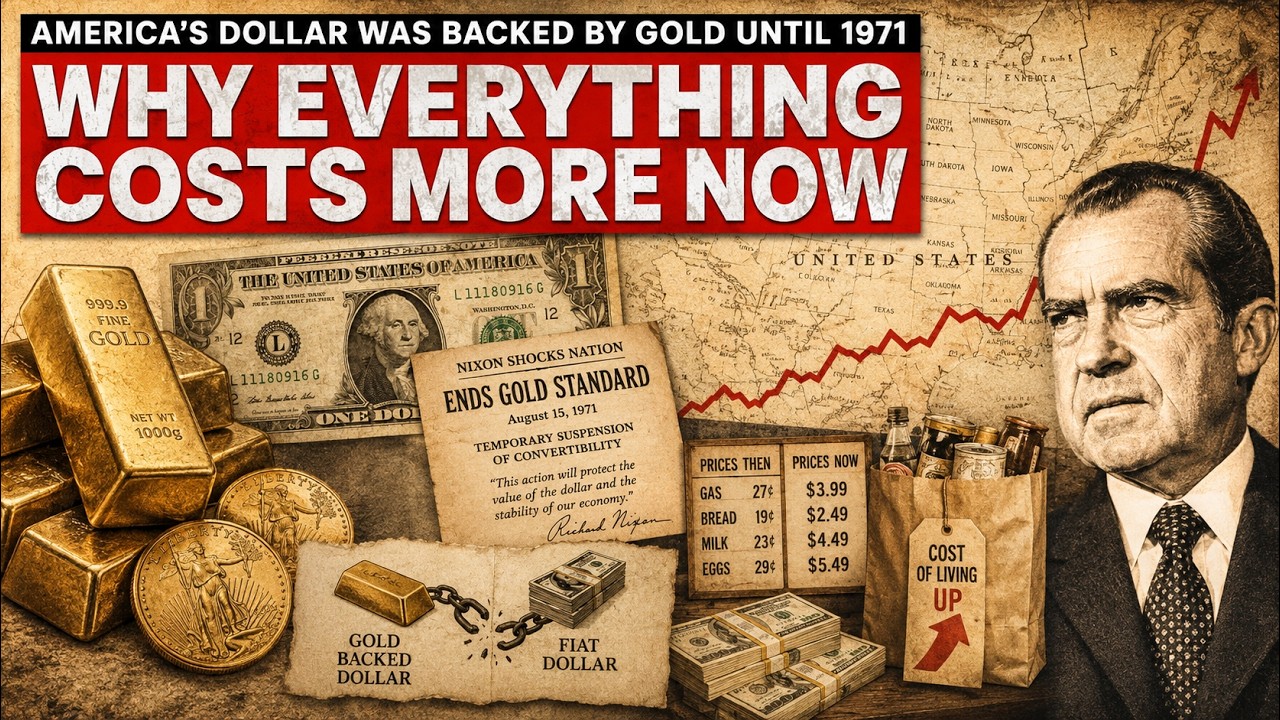
On Sunday night, August 15, 1971, Richard Nixon went on television and broke a promise America had made to the world.
He called what he was doing temporary.
It never came back.
Until that night, foreign governments holding U.S. dollars had something extraordinary behind them.
Gold.
Under the postwar monetary system, dollars held by foreign monetary authorities could ultimately be presented to the United States for gold at the official price of $35 an ounce.
That promise stood beneath much of the international financial order.
Then Nixon closed the window.
No vote by the American public.
No new Bretton Woods conference.
No agreement from every country whose monetary system depended on the dollar.
One presidential announcement—
and the rules changed.
But the most alarming part was not what Nixon said.
It was why he had been forced to say it.
Because by the summer of 1971, foreign governments held enormous quantities of dollars—
and America’s gold stock had been falling for years.
The world was beginning to ask a question Washington desperately did not want asked:
If everybody demanded the gold they had been promised—
could America actually deliver it?

The answer was becoming dangerous.
And just before Nixon’s announcement, pressure on the dollar intensified.
Confidence was cracking.
Foreign governments were moving.
Washington feared a run.
Inside the administration, officials knew the gold window could not remain open indefinitely under those conditions.
So on a secret weekend at Camp David, Nixon gathered his senior economic advisers.
They went in with a monetary system that had helped govern the postwar world.
They came out preparing to dismantle one of its central promises.
And what happened next would change the meaning of money for generations.
But to understand why America reached that moment—
you have to understand why the world trusted the dollar in the first place.
Go back twenty-seven years.
July 1944.
Europe was still burning.
Allied armies had landed in Normandy only weeks earlier.
The Second World War was not over, but political leaders were already preparing for the peace.
They remembered what had happened after the previous war.
Currency instability.
Competitive devaluations.
Trade barriers.
Financial crisis.
Depression.
Political extremism.
They did not want to repeat it.
So representatives from forty-four Allied nations traveled to the mountains of New Hampshire.
Bretton Woods.
Hundreds of delegates entered the Mount Washington Hotel with an extraordinary assignment:
Design the monetary architecture of the postwar world.
What emerged placed the United States at its center.
Other participating currencies would maintain fixed relationships to the dollar.
And the dollar would be linked to gold.
Official price:
$35 per ounce.
This did not mean an ordinary American could necessarily walk into a bank with $35 and demand an ounce of Treasury gold.
The crucial convertibility operated internationally between monetary authorities.
But for foreign governments, the promise mattered enormously.
Hold dollars—
and behind those dollars stood America’s gold.
And America had a staggering amount of it.
After World War II, the United States possessed the largest official gold stock in the world.
Its industrial position was equally extraordinary.
Europe had been devastated.
Japan had been devastated.
American factories had expanded enormously during the war.
American territory had escaped the physical destruction suffered across much of Europe and Asia.
The dollar was sitting on top of the strongest industrial economy in the capitalist world.
So countries trusted it.
And because they trusted it—
they accumulated it.
That was both the system’s greatest strength—
and the seed of its eventual crisis.
The world needed dollars.
International trade was expanding.
Central banks needed reserves.
Countries needed dollars to maintain exchange rates and settle transactions.
So dollars had to flow outside the United States.
America spent abroad.
Imported goods.
Financed military commitments.
Invested overseas.
Provided aid.
Dollars accumulated in foreign hands.
At first, that was exactly what the system needed.
Then economists noticed the trap.
One of them was Robert Triffin.
His warning became known as the Triffin dilemma.
The problem was almost impossible to solve.
If America prevented dollars from flowing abroad in order to protect confidence in its gold reserves—
the world might suffer from a shortage of the reserve currency it needed.
But if America continued supplying dollars to the world—
foreign dollar claims could eventually grow much larger relative to the American gold available at the official price.
Then somebody would look at the numbers and ask:
What happens if we cash out first?
Once that question spreads—
a monetary promise can become a bank run between nations.
And by the 1960s, the warning was no longer theoretical.
American overseas spending remained heavy.
Military commitments stretched across the world.
The Vietnam War intensified.
Lyndon Johnson simultaneously pursued his Great Society programs at home.
Inflationary pressure increased.
More dollars accumulated overseas.
And across the Atlantic—
one government became particularly uncomfortable.
France.
Charles de Gaulle believed the dollar-centered system gave the United States an extraordinary advantage.
America could finance international commitments using a currency the rest of the world needed to hold.
French finance minister Valéry Giscard d’Estaing famously described the dollar’s reserve role as an “exorbitant privilege.”
Then France began turning criticism into action.
It converted dollar holdings into gold and repatriated gold reserves.
The symbolism was devastating.
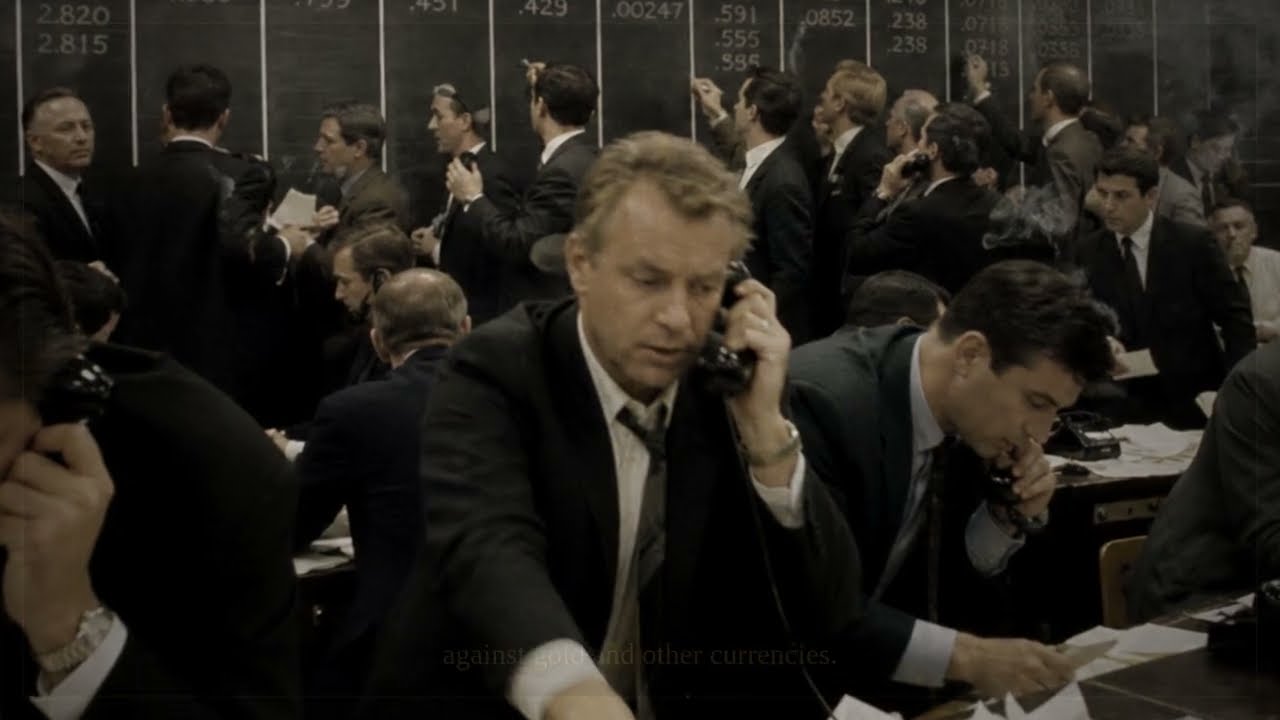
France was effectively saying:
We would rather hold the metal.
Other governments were watching.
And that is the danger of any confidence-based system.
One withdrawal can be manageable.
A rush for the exit is different.
Washington attempted to defend the official gold price through international cooperation.
The London Gold Pool brought several central banks together to help stabilize the gold market.
When private demand pushed the market price upward, gold could be sold into the market.
But maintaining $35 became increasingly difficult.
Gold was leaving official reserves.
Speculative pressure grew.
France withdrew from the pool.
Then March 1968 brought another crisis.
Heavy demand for gold overwhelmed the existing arrangement.
The London Gold Pool collapsed.
A two-tier system emerged:
Official monetary transactions would continue around the official price—
while private gold could trade at market prices.
That should have been a warning visible from space.
The official system was saying gold was worth one price.
The market was increasingly saying something else.
Bretton Woods had not yet died.
But it was bleeding.
And America’s gold stock kept falling.
At its postwar peak, the United States had held more than twenty thousand metric tons of monetary gold.
By 1971, the stock was dramatically smaller.
Meanwhile, dollar liabilities held abroad had grown.
That meant the credibility of convertibility rested increasingly on one assumption:
Not everyone would demand gold simultaneously.
Then came 1971.
Pressure intensified.
Several European currencies came under strain against the dollar-centered system.
Speculators expected a dollar adjustment.
Foreign central banks accumulated still more dollars while defending exchange rates.
And Washington faced the nightmare Bretton Woods had always contained:
The promise could survive only while people believed they did not need to use it.
Once enough governments asked for gold—
the act of honoring the promise could destroy America’s remaining reserves.
Something had to break.
The dollar.
The gold price.
The exchange-rate system.
Or convertibility itself.
Nixon chose the last one.
Friday, August 13.
Camp David.
Fifteen senior advisers gathered with the president.
Treasury Secretary John Connally.
Federal Reserve Chairman Arthur Burns.
Paul Volcker, then a senior Treasury official.
Others responsible for the economic machinery of the United States.
The meeting was secret.
Markets were closed for the weekend.
That gave them roughly two days.
They debated.
Devaluation was possible.
Capital controls were possible.
A rescue of the existing system was possible in theory.
But Connally favored aggressive action.
The United States would stop exchanging dollars for gold.
Not gradually.
Not after another international conference.
Immediately.
And the gold decision would be only one part of the package.
Nixon’s administration was also facing domestic inflation and unemployment.
So the president prepared an economic shock.
Sunday evening arrived.
Television programming was interrupted.
Nixon appeared before the country.
Most Americans watching him were not currency traders.
They were families.
Workers.
Business owners.
People worried about prices and jobs.
Nixon framed his program as a defense of American prosperity.
He announced a ninety-day freeze on wages and prices.
A temporary import surcharge.
Tax measures.
Then came the sentence that changed the international monetary system.
He instructed Treasury Secretary Connally to suspend temporarily the convertibility of the dollar into gold or other reserve assets.
Temporarily.
That word is crucial.
Because the old gold window never reopened.
The immediate political presentation was clever.
Nixon did not tell Americans:
Tonight I am dismantling Bretton Woods.
He presented the move as protection.
Protection from speculators.
Protection for the dollar.
Protection for American jobs.
And domestically, the package was initially popular.
But abroad—
governments understood what had just happened.
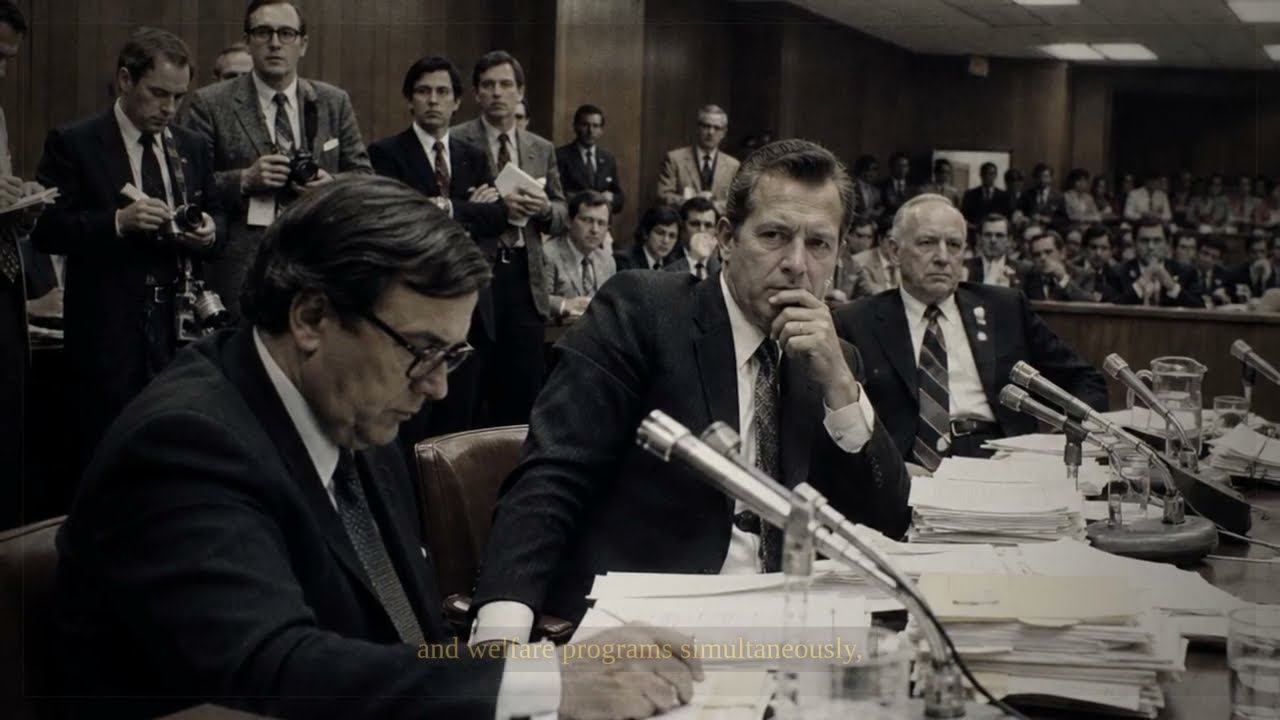
They had accumulated dollars under a system in which the United States had promised official convertibility.
Now the issuer of the reserve currency had changed the terms.
Connally later summarized the American position with a line that became legendary:
“The dollar is our currency, but it’s your problem.”
Whether delivered in exactly the dramatic context often retold or not, the phrase captured the reality brutally well.
America issued the reserve currency.
The rest of the world had built reserves around it.
And now America had changed the rules.
Attempts were made to save the fixed-rate system.
December 1971.
Smithsonian Agreement.
Currencies were realigned.
The official gold price was raised.
Exchange-rate bands widened.
For a moment—
the system appeared patched together.
It did not last.
Speculative pressure returned.
By 1973, the major currencies were moving toward floating exchange rates.
The Bretton Woods monetary order, as originally designed, was effectively over.
And this is where the story is often oversimplified.
People say:
Before 1971, the dollar was backed by gold.
After 1971, it was backed by nothing.
That is dramatic.
But incomplete.
After Bretton Woods, the dollar remained backed by the taxing capacity, institutions, productive economy and credit of the United States government.
Its value depended on confidence—
but so had much of the old system.
What disappeared was a specific external promise:
Foreign official dollar claims could no longer be converted into American gold at a fixed statutory price.
That distinction matters.
Because what changed after 1971 was not that money suddenly became imaginary.
What changed was the constraint.
The Federal Reserve and the federal government no longer had to maintain gold convertibility as the ultimate limit around monetary policy.
That gave policymakers far more flexibility.
And far more responsibility.
Then came the 1970s.
Inflation accelerated.
But this is where causality becomes complicated.
It is tempting to draw one straight line:
Nixon closes gold window.
Prices explode.
Therefore closing the gold window caused everything.
History was messier.
Inflationary pressure was already building before August 1971.
Vietnam spending mattered.
Domestic fiscal policy mattered.
Federal Reserve policy mattered.
Productivity and wage dynamics mattered.
Then came enormous external shocks.
October 1973.
War erupted in the Middle East.
Arab oil exporters imposed an embargo against the United States and several other countries.
Oil prices surged.
Gasoline lines appeared.
Energy costs hit transportation.
Manufacturing.
Heating.
Food.
Almost everything.
The American economy entered the nightmare called stagflation.
High inflation.
Weak growth.
High unemployment.
Then another oil shock arrived later in the decade.
By 1980, U.S. inflation had reached levels that terrified households and policymakers.
Gold, freed from its old official $35 anchor in private markets, rose dramatically.
Interest rates eventually moved into extraordinary territory as Federal Reserve Chairman Paul Volcker attacked inflation with brutally tight monetary policy.
So did Nixon’s decision matter?
Absolutely.
It ended the old international monetary constraint and completed a historic transition toward the modern fiat-dollar system.
Did it single-handedly create every price increase that followed?
No.
And understanding that actually makes the story more interesting.
Because the real transformation was not:
Gold disappeared—
therefore everything became expensive.
It was:
The rules governing how the United States could respond to economic crises changed permanently.
Under a convertible system, aggressive monetary expansion can create pressure on reserves.
If confidence collapses—
gold leaves.
Eventually the government must tighten policy, devalue, suspend convertibility or abandon the system.
After 1971, that particular constraint disappeared.
The Federal Reserve gained far greater freedom to respond to recessions and financial panics through monetary expansion.
That freedom would become enormously important.
Each crisis was different.
But policymakers could respond in ways that would have been much harder under a strict gold-convertibility regime.
Lower rates.
Emergency lending.
Large-scale asset purchases.
Liquidity creation.
That flexibility can prevent financial collapse.
It can also create new risks.
Asset bubbles.
Excessive leverage.
Moral hazard.
Inflation if demand outstrips productive capacity.
The system did not eliminate discipline.
It changed where discipline came from.
Under Bretton Woods—
gold reserves could impose it.
Under fiat money—
credibility, inflation expectations, interest rates, bond markets, institutional constraints and ultimately public confidence impose it.
And confidence is a strange form of backing.
You cannot put it inside Fort Knox.
But if it disappears—
the consequences can be just as real.
There is another part of the post-1971 story that deserves attention.
Oil.
After the 1973 energy crisis, the United States deepened financial and strategic relationships with Saudi Arabia.
Treasury officials worked to encourage oil revenues to be recycled into American financial assets, including Treasury securities.
Oil was overwhelmingly priced internationally in dollars.
This reinforced global demand for dollar reserves.
The term “petrodollar” became shorthand for this system.
But the popular version of the story often goes too far.
There was no simple moment when gold was removed and replaced by a secret contract saying every barrel of oil on Earth must forever be sold exclusively in dollars.
The reality was broader.
American financial markets were enormous.
The dollar was already the world’s dominant reserve and trading currency.
Oil exporters accumulated dollars because their exports were priced in them.
Those dollars then flowed back into American and international financial markets.
That recycling strengthened the dollar-centered system.
But oil was one pillar—
not magical new gold.
The more important fact was that the dollar survived the end of gold convertibility.
And not merely survived.
It remained dominant.
That tells us something crucial.
Foreign governments had not been holding dollars only because of gold.
They held them because the United States sat at the center of global trade, finance and security.
American Treasury markets became extraordinarily deep and liquid.
Dollar-denominated contracts spread everywhere.
International debts were written in dollars.
Commodities were priced in dollars.
Central banks held dollars.
Banks borrowed dollars.
Companies invoiced in dollars.
The system developed network effects.
Everyone used dollars partly because everyone else used dollars.
That is much harder to replace than a gold promise.
Meanwhile, inside the United States, something very visible was happening.
Prices kept rising.
Take a dollar from 1971.
Keep it in a drawer.
Bring it into the present.
It still says one dollar.
The paper did not shrink.
The number did not change.
But what it buys did.
That is the part people experience emotionally.
House.
Car.
Bread.
Gasoline.
College.
Medical care.
The numbers become larger.
And because nominal wages also rise, people can miss what is actually happening.
A worker earning $10,000 per year in the early 1970s looks poor by today’s nominal standards.
But today’s worker also pays today’s prices.
So the meaningful question is not:
How many dollars do you earn?
It is:
What can those dollars buy?
Since 1971, the Consumer Price Index has risen many times over.
A dollar from that era had far greater purchasing power than a dollar today.
That is not controversial.
It is what persistent inflation means.
But another popular claim requires more care:
That wages simply stopped rising after 1971.
The answer depends heavily on which workers, which wage measure, which benefits and which inflation index you examine.
Real compensation did rise over the following decades.
But gains were uneven.
Income inequality widened.
Housing, health care and education costs placed extraordinary pressure on many households.
The economic experience of a median family cannot be explained by monetary policy alone.
Globalization mattered.
Technology mattered.
Union decline mattered.
Tax policy mattered.
Housing restrictions mattered.
Demographics mattered.
Productivity mattered.
Changes in household structure mattered.
Financialization mattered.
So 1971 should not be treated as a magic date that explains every modern economic frustration.
But it remains a genuine dividing line in monetary history.
Before that August night—
America had an international obligation to exchange official foreign dollar holdings for gold at a fixed price.
After it—
it did not.
And once that external constraint vanished, the scale of dollar creation over subsequent decades became possible in a very different institutional environment.
Look at the money supply.
It expanded enormously.
So did nominal GDP.
So did population.
So did financial activity.
So did credit.
The raw increase alone does not prove money creation caused every increase in consumer prices.
But over long periods, money and credit conditions matter enormously to inflation and asset values.
Then came 2008.
The American financial system nearly collapsed.
Housing prices fell.
Major financial institutions failed or approached failure.
Credit markets froze.
The Federal Reserve responded with policies once considered extraordinary.
Interest rates moved toward zero.
Emergency facilities expanded.
Then quantitative easing.
The central bank created reserves and purchased large quantities of securities.
The goal was not simply to “print money” and hand it to consumers.
It was to stabilize financial markets, lower longer-term borrowing costs and prevent a deflationary collapse.
Critics warned the policy would debase the dollar.
Inflation remained relatively subdued for years.
Then 2020 arrived.
And this time the response was larger and faster.
The pandemic shut down enormous parts of the economy.
Congress authorized massive fiscal support.
The Federal Reserve slashed rates and expanded its balance sheet.
Households received direct payments.
Businesses received support.
Financial markets were stabilized.
Money measures surged.
Then supply chains collided with recovering demand.
Factories struggled.
Shipping costs exploded.
Energy markets shifted.
Labor markets tightened.
Fiscal stimulus remained powerful.
Inflation surged to levels America had not experienced in decades.
Again—
one side blamed money creation.
Another emphasized supply shocks.
Another emphasized fiscal policy.
Another corporate pricing.
Another energy.
The reality involved several forces interacting simultaneously.
But the episode demonstrated the central tradeoff of fiat money with extraordinary clarity.
Modern governments can respond to crisis with financial power Bretton Woods policymakers could scarcely have imagined.
That power can prevent collapse.
But it is not free.
Someone eventually bears the consequences of policy mistakes.
Through taxes.
Interest rates.
Asset losses.
Unemployment.
Or inflation.
And inflation is politically unique because it does not arrive like an ordinary tax bill.
There is no envelope saying:
Congress has voted to reduce the purchasing power of your savings by four percent this year.
Prices simply change.
Milk.
Rent.
Insurance.
Restaurant bill.
Car repair.
The number on your bank account can remain exactly the same—
while the amount of life it can purchase falls.
That is why inflation feels almost invisible until suddenly it does not.
And why savers fear it.
If you hold cash earning less than inflation—
your purchasing power erodes.
Asset owners may be better positioned because real estate, businesses, equities and other assets can appreciate over long periods.
But even that relationship is not automatic.
Assets crash.
Companies fail.
Housing markets decline.
Borrowers can be destroyed by rising interest rates.
There is no universal rule saying fiat money always rewards every borrower and punishes every saver.
But persistent inflation does create a strong incentive not to treat idle cash as a perfect long-term store of value.
That is one of the deepest cultural changes in the postwar financial world.
Saving once meant:
Accumulate dollars.
Modern personal finance increasingly means:
Accumulate assets.
Stocks.
Bonds.
Retirement funds.
Real estate.
Businesses.
Investments designed to outrun inflation.
That shift changed American behavior.
And it interacted with another enormous trend.
Debt.
Federal debt.
Corporate debt.
Mortgage debt.
Consumer debt.
Student debt.
Nominal debt levels exploded after 1971.
Again, gold’s disappearance is not the sole cause.
The economy became vastly larger.
Financial markets deepened.
Credit products expanded.
Government responsibilities grew.
Wars occurred.
Recessions occurred.
Tax policies changed.
Interest rates fell dramatically after the early 1980s.
But a fiat monetary system is unquestionably more compatible with large, flexible credit creation than a rigid gold-convertibility regime.
And that flexibility is exactly why modern governments do not want to go back.
A gold standard sounds beautifully simple when inflation is high.
Tie money to something scarce.
Remove discretion.
Force discipline.
But discipline cuts both ways.
During a financial panic, the economy may desperately need liquidity.
Under a rigid monetary constraint—
supplying it can become difficult.
Historically, gold-standard systems experienced their own crises, banking panics, deflation and painful adjustments.
The Great Depression helped destroy political support for gold constraints precisely because governments found themselves choosing between defending convertibility and defending domestic economies.
So the argument is not:
Gold was perfect.
Fiat is corrupt.
Or:
Gold was primitive.
Fiat solved everything.
The real argument is about which danger you fear more.
Too much discretion—
or too little flexibility.
Gold restrains policymakers.
But it can restrain them during emergencies.
Fiat gives policymakers flexibility.
But it requires them to know when to stop.
And human beings are historically much better at opening the emergency valve—
than deciding when to close it.
That is why August 15, 1971 still matters.
Not because every expensive house or grocery bill can be traced directly to Nixon.
Not because America suddenly discovered inflation that night.
And not because the dollar became worthless.
It didn’t.
The dollar became something different.
A currency whose value no longer depended on a promise to exchange it for a fixed quantity of gold.
Its anchor became institutional.
Economic.
Political.
Psychological.
Trust the Federal Reserve.
Trust the Treasury.
Trust American productive capacity.
Trust the government to tax.
Trust the political system not to destroy the currency.
Trust other people to continue accepting dollars tomorrow.
And for more than half a century—
that trust has largely held.
The dollar remains at the center of the global financial system.
But the $35 gold promise is gone.
Which makes the final image of this story almost absurd.
Imagine placing two objects on a table in 1971.
Thirty-five dollars.
One ounce of gold.
Under the official Bretton Woods promise, those values were supposed to be connected.
Then Nixon appeared on television.
The connection broke.
The dollars remained dollars.
The gold remained gold.
But from that moment forward—
the market would decide how many dollars the metal was worth.
And over the following decades, that number moved far beyond thirty-five.
So when people say:
“Gold went up”—
they are describing one side of the equation.
The other side is:
The number of dollars required to buy the same ounce of gold increased enormously.
That does not prove gold should govern modern money.
But it gives us a physical image of what changed.
Before August 15—
the United States promised a fixed conversion rate to foreign monetary authorities.
After August 15—
it promised nothing of the kind.
Nixon called the suspension temporary.
More than half a century later—
the window is still closed.
And perhaps the strangest part is how ordinary the new world now feels.
Floating currencies.
Central-bank balance sheets measured in trillions.
Massive government bond markets.
Quantitative easing.
Two-percent inflation targets.
Digital dollars moving between banks.
None of this feels revolutionary anymore.
But it all exists on the other side of that Sunday night.
A president looked into a television camera—
told the world America was defending its currency—
and suspended one promise.
The world never returned to the monetary system that existed before he spoke.
Your dollar still says one dollar.
It always will.
The only thing the number cannot tell you—
is what that dollar will buy tomorrow.