The Japanese military had a closely guarded secret after the Battle of Midway, and the people most likely to expose it were the very men who survived the battle. To protect their carefully constructed narrative of victory, the military devised a cruel plan to ensure those survivors never told the true story. They would be sent back into combat across the Pacific, where most of them would die before ever revealing the truth. But the secret of Midway was far bigger than a few survivors, and it was rooted in a battle that helped change the course of World War II.
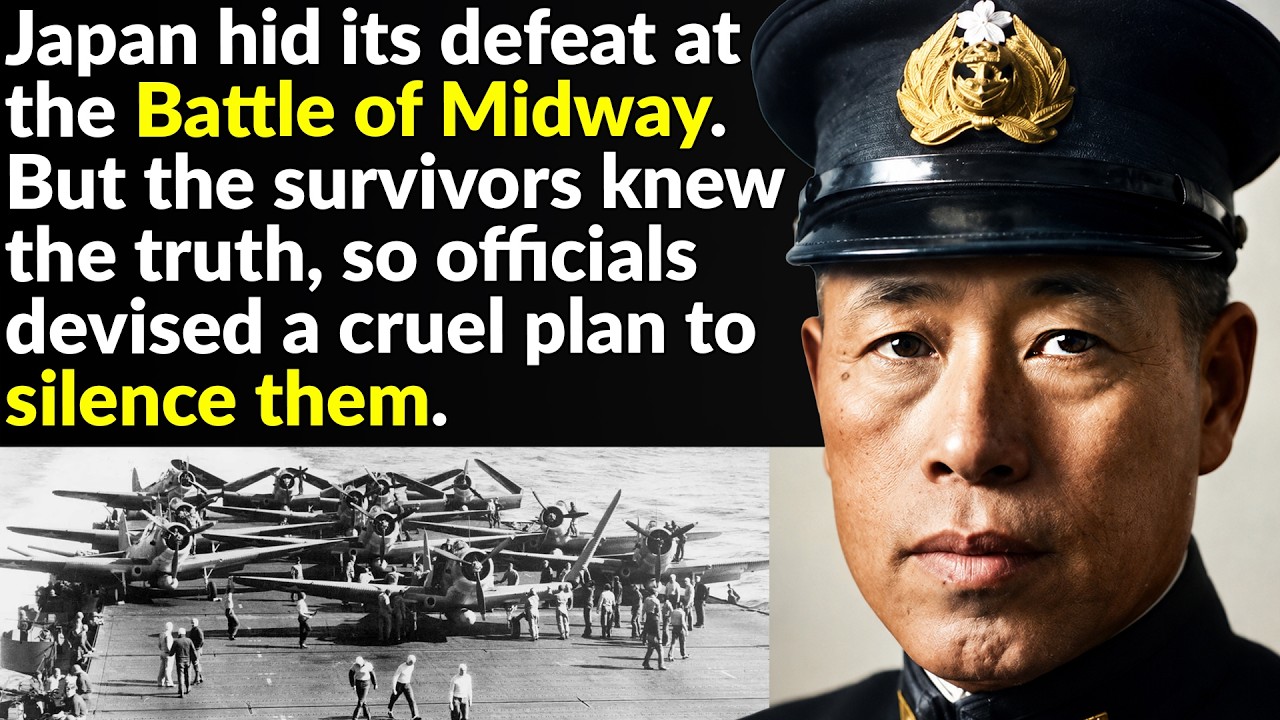
While the Japanese attack on Pearl Harbor remains well known, the Battle of Midway, fought just six months later in June 1942, was a pivotal confrontation that saw the United States fight back in the volatile Pacific theater and seek revenge for the earlier attack on its naval base in Hawaii. The Midway Atoll, a cluster of islands covering just six point two square kilometers,, had been claimed for the United States by Captain N. C. Brooks all the way back in 1859, but America had little use for it initially„ „That changed when air travel became common, as Midway, named for its approximate position halfway between North America and Asia, suddenly became strategically valuable„ In 1940, the U.
S. Navy began building submarine and air bases, radio facilities, and a power plant there„ The construction activity did not go unnoticed by Japan„ Just 12 hours after their attack on Pearl Harbor on December 7th, 1941, Japanese forces also struck the hangar and power plant on Midway„ By 1942, Japan was expanding its war across the Pacific, targeting British Hong Kong, the Philippines, Singapore, British Malaysia, and the Dutch East Indies„ In April 1942, American forces hit Tokyo and other Japanese cities„ The Japanese recognized that the United States was a formidable enemy whose presence in the Pacific directly threatened Japan’s defenses„ They briefly considered striking Pearl Harbor again, but instead developed a different strategy„ Japanese Admiral Isoroku Yamamoto set his sights on Midway„ Though the atoll held little intrinsic value for Japan, Yamamoto knew the tiny islands were crucial for American submarines to refuel„ He wanted to move quickly„ He had already overseen the destruction of the USS Yorktown’s predecessor, or at least believed he had, during the Battle of the Coral Sea„ Yamamoto thought the Americans only had the USS Enterprise and the USS Hornet available for defense„ This assessment suggested the U. S. was vulnerable„ But Yamamoto didn’t know something vital: American repair crews had worked around the clock to make the Yorktown seaworthy again in just 72 hours„ The United States was not nearly as vulnerable as Yamamoto believed„ Furthermore, because of American losses in the region, Yamamoto assumed morale was low, but he badly underestimated American determination„ His forces were ready to fight„ Yamamoto’s strategy was to lure American carriers toward Midway using a relatively small show of force under Chuichi Nagumo„ Meanwhile, he planned to have additional fighting power several hundred miles behind Nagumo’s first wave„ But Yamamoto hadn’t counted on American code breakers„ They noticed Japanese communications referring to a location codenamed AF„ They suspected it meant Midway but were unsure„ To confirm, they sent an unencrypted message saying that Midway’s water purification system was broken„ The Japanese soon relayed that same information, replacing the location name with the code AF„ That confirmed for American intelligence that AF was indeed Midway„ This proved to be critical information„ The U.
S. now had a strong sense of what to expect at Midway„ and Yamamoto had no idea his plan had been compromised„ Admiral Chester Nimitz positioned three carriers—the Enterprise, the Hornet, and the Yorktown—to a northeast position off Midway„ By June 4th, the U. S. Navy had assembled a substantial defense: four squadrons of seaplanes totaling31 aircraft, six Grumman TBF Avengers, 64 additional planes from the Marine Corps, and 122 more from the U.
S. Army Air Forces„ The Americans were far better prepared than Japan could have imagined„ At 4:30 a. m. on June 4th, Nagumo launch his attack„ Major Floyd B.
Parks led the American intercept, but quickly suffered heavy losses„ After the encounter, only two American planes remained flyable„ Yet American anti-aircraft fire proved lethal, destroying three Japanese aircraft and severely damaging others„ Then came a crucial Japanese tactical error„ Nagumo had to decide between finishing rearming or attacking immediately„ He hesitated, and many historians believe that delay was fatal„ Suddenly the Americans gained a massive advantage, as the Enterprise, Hornet, and Yorktown all stood ready in the battle area„ The American plan called for two squadrons to make direct hits on three Japanese carriers„ But they soon made a devastating mistake of their own„ Due to a miscommunication, both American squadrons attacked the same Japanese carrier, the Kaga„ It suffered a double strike killing the captain and many senior officers„ The Kaga was eliminated, but the other Japanese carriers escaped initial damage„ Lieutenant Richard Halsey Best noticed the error just in time, as he and his wingmen had not yet fully committed to their dives„ They made a stunning split-second change of course and focused their attack on another Japanese vessel, the Akagi„ They only managed one direct hit, but it was lethal„ The explosion struck armed and fueled aircraft on the upper hangar deck, igniting a massive fire„ One man aboard described bodies everywhere„ The Akagi was destroyed, but one Japanese carrier still remained for the Americans to deal with„ Lieutenant Max Leslie took off from the Yorktown in a VB3 with the mission to take down the Soryu„ His three hits ignited fuel and triggered huge explosions that turned into a powerful inferno„ With that, all three Japanese carriers were ablaze„ Eventually the blaze became unstoppable, forcing Nagumo to abandon the Akagi in shame„ At that point, Japan’s only remaining carrier was the Hiryu, which still had the power to hurt the Americans„ The Hiryu struck the Yorktown, severely damaging it„ Once again, Japan believed it had crippled the Yorktown, but American crews repaired the ship quickly„ The repairs were so effective that the Japanese, seeing the Yorktown again, thought they were facing a different carrier„ They struck it a second time, this time causing severe damage„ Japanese forces celebrated that they had destroyed two American carriers„ but they were mistaken„ That celebration gave them a false sense of being nearly victorious„ Late on June 4th, a scout plane from the Yorktown made a crucial discovery: it found the position of Japan’s last remaining carrier, the Hiryu„ With that information, the USS Enterprise launched an attack„ By day’s end, the Hiryu was in flames and eventually sank„ But the Battle of Midway was not over„ Just after 2:00 a. m. on June 5th, Commander John Murphy, aboard the submarine Tambor west of Midway, spotted several ships approaching„ He could not immediately determine whether they were friendly or enemy vessels„ That confusion would prove costly for America„ Commander Robert English received Murphy’s report and became enraged, because the report did not identify the ships as Japanese„ But they were Japanese—sent by Yamamoto to attack Midway„ Then something unexpected happened: the Japanese cruisers Mogami and Mikuma accidentally collided with each other„ That left them vulnerable, sitting ducks inland the water„ Murphy realized the approaching ships were Japanese and took his submarine down, both to hide and to launch an offensive strike„ His ambush failed, though, and he slipped away without scoring any hits„ The two slow-moving cruisers remained highly exposed, but no American vessel was close enough to take advantage„ Murphy eventually returned to port and faced serious consequences„ His first mistake was sending that vague, unclear report„ His second was failing to press his attack more aggressively„ These were an easy target, and he had inflicted no damage„ As punishment, Murphy was demoted„ To deal with the damaged cruisers, the Americans launched strikes from Midway and from their carriers„ They sank the Mikuma and heavily damaged the Mogami„ They also seriously damaged two other destroyers„ Captain Richard E. Fleming was killed in that offensive and later received a posthumous Medal of Honor„ There was little time to mourn, though,as the battle continued„ The USS Hamman, towing the heavily damaged Yorktown, was struck by a Japanese torpedo„ The ship broke apart and began to sink„ Making matters worse, the Hamman’s own depth charges exploded„ Eighty men lost their lives„ Though the Yorktown had always made remarkable recoveries before, this time repair seemed impossible„ Remaining crew members abandoned ship„ At around 7:00 a.
m. ,the Yorktown rolled over and sank to the ocean floor„ It was gone„ In the days that followed, the U. S. sent more forces against the Japanese, launching fighters from both the sea and Midway„ Facing this lethal combined force, Japan had to slowly retreat„ It became clear that America had won the Battle of Midway„ But the victory came with grim costs„ On the American side, the Yorktown and the Hammann were lost„ The battle claimed 307 American lives, including Major General Clarence L.
Tinker, commander of the 7th Air Force„ The Japanese toll was far more devastating„ They lost 3,057 men, including two captains who went down with their ships„ They also lost carriers and countless aircraft„ Even though America clearly came out on top, news in Japan told a different story„ Japanese authorities announced a great victory„ The brutal truth of the defeat remained hidden„ Only Emperor Hirohito and his highest-ranking officials knew what really happened„ But keeping the secret became harder once Midway casualties began arriving at hospitals in Japan„ To maintain the deception, officials kept the Midway wounded isolated from other patients„ The survivors also had to be silenced„ They were sent to other Pacific battlefronts, where most died in combat„ Some of Midway’s truth, however, lay beneath the ocean„ The waters around Midway are extremely deep, making it difficult to locate the sunken vessels„ In 1998, oceanographer Robert Ballard, working with American and Japanese veterans, located the wreck of the Yorktown„ Photographs showed the ship remarkably intact„ Ballard, however, could not find any remains of the Japanese carriers„ Many historians regard Midway as one of the most significant turning points in World War II„ It marked the first major naval victory for the Allies against the Japanese„ Historians continue to speculate about what might have happened had Japan won at Midway„ Japan had plans that possibly included occupying Fiji and Samoa, and launching offensives against Australia and Alaska„ Had Midway ended differently, the world might have becomea very different place„