The Soviet patrol knew he was somewhere in front of them.
They just couldn’t see him.
Nothing moved.
Only snow.
White trees.
White ground.
White sky.
Then one soldier dropped.
No muzzle flash.
No obvious gunshot position.
The others froze.
Someone shouted.
Another man turned toward the tree line.
Then a second shot cracked through the winter air.
Another soldier went down.
Now panic spread through the patrol.
Because somewhere in that frozen landscape was a Finnish marksman the Soviet troops had begun to fear more than artillery.
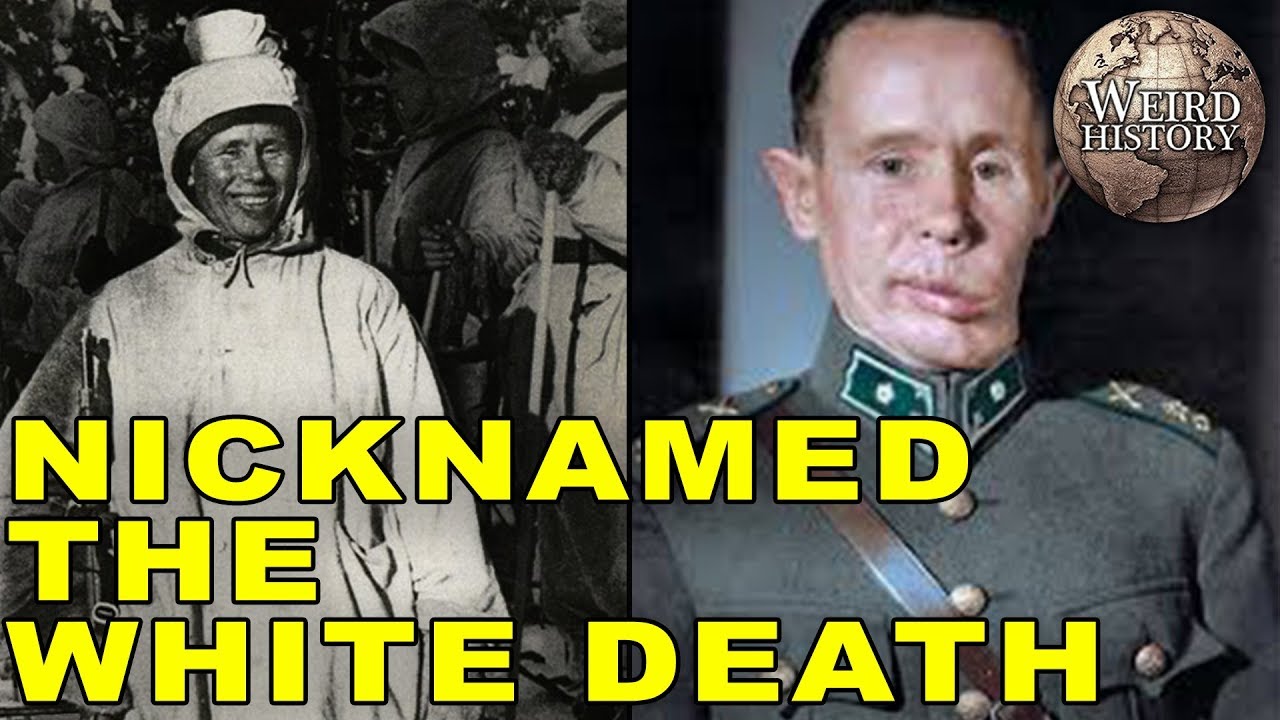
They called him—
the White Death.
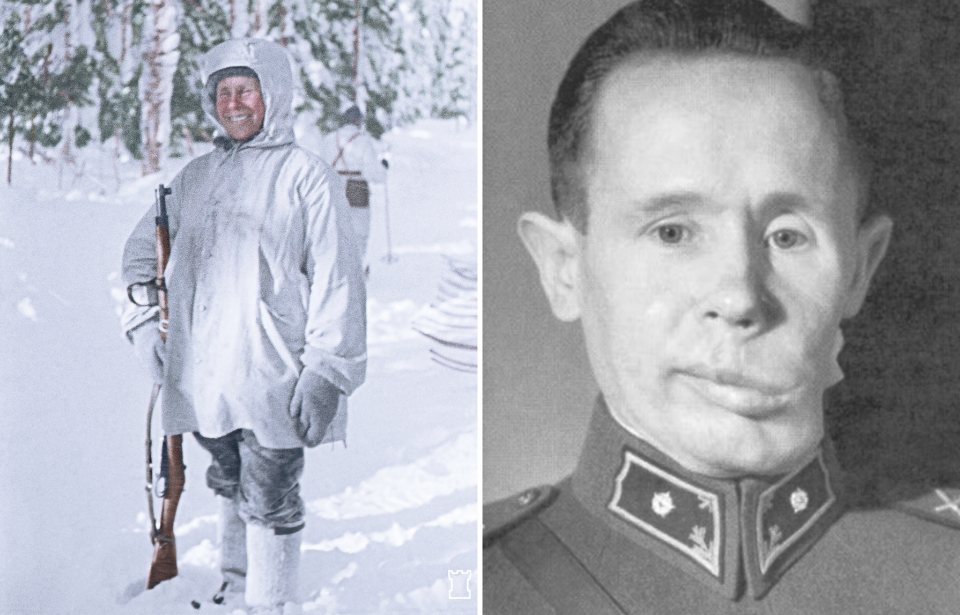
His real name was Simo Häyhä.
And according to Finnish wartime records and later accounts, he would become one of the most successful snipers ever documented.
More than five hundred enemy soldiers were credited to him during a war that lasted barely three months.
No elaborate sniper tower.
No modern thermal optics.
No laser rangefinder.
And most famously—
no telescopic sight.
Häyhä preferred iron sights.
He was barely over five feet tall.
He buried himself in the snow.
Kept his profile low.
Packed snow around his firing position.
And sometimes placed snow in his mouth so his breath would not rise in a visible cloud.
The Soviets sent artillery after him.
Then counter-snipers.
They still could not stop him.
Until one day—
a bullet struck him directly in the face.
The men who found him reportedly believed part of his jaw had been destroyed.
But even that did not kill him.
And when Häyhä finally regained full consciousness—
the Winter War was effectively over.
That is the legend.
But what makes the story more extraordinary is that only months earlier, Simo Häyhä had not been a professional soldier.
He had been a farmer.
A hunter.
A quiet man living near the Finnish-Soviet border.
Then November 1939 arrived.
And his country was invaded.
Europe was already at war.
Germany had invaded Poland in September.
Britain and France had declared war.
The continent was sliding toward catastrophe.
Then the Soviet Union turned north.
Finland had been independent for only a little more than two decades.
The Soviet leadership wanted territorial concessions near Leningrad and strategic adjustments along the border.
Negotiations failed.
On November 30, 1939—
Soviet forces invaded.
On paper, the matchup looked absurd.
The Soviet Union had an enormous army.
Thousands of tanks.
Aircraft.
Artillery.
Far more men.
Finland was a small country with a population of only a few million.
Foreign observers expected the war to be short.
Maybe days.
Maybe weeks.
Then winter arrived.
And the Finns knew winter better.
Temperatures plunged.
Forests narrowed movement.
Deep snow swallowed roads.
Soviet columns became trapped along predictable routes.
Finnish troops moved through terrain they had known their entire lives.
And among them was Simo Häyhä.
He was thirty-four years old.
Not a teenager.
Not a career officer.
A farmer from the rural municipality of Rautjärvi.
He had completed Finland’s compulsory military service years earlier.
Afterward, he joined the Civil Guard reserves and returned to civilian life.
Farming.
Hunting.
Shooting competitions.
That last detail matters.
Because Häyhä’s ability did not appear magically when war began.
He had spent years building it.
Competitive marksmanship was popular in Finland.
Häyhä participated regularly.
His home reportedly contained shooting trophies.
He practiced until loading, aiming and firing became instinctive.
Some accounts credit him with astonishing speed and accuracy during competitions.
His rifle was not a mysterious custom weapon.
He was deeply familiar with the standard Finnish bolt-action rifle he carried.
That familiarity became enormously important once temperatures fell far below freezing.
Because extreme cold punishes machinery.
Oil thickens.
Metal behaves differently.
Weapons malfunction.
Fingers lose sensation.
Breathing becomes painful.
The smallest mistake becomes expensive.
Häyhä knew his rifle.
He knew the cold.
And he knew how animals behave when they are afraid.
Years of hunting had taught him patience.
Do not move unnecessarily.
Do not reveal yourself.
Wait.
Let the target make the mistake.
On the battlefield at Kollaa—
those habits became lethal.
Kollaa became one of the legendary defensive sectors of the Winter War.
Finnish forces were badly outnumbered.
One famous exchange from the battle entered Finnish military memory.
When a commander was asked whether Kollaa would hold—
the reply became:
“Kollaa will hold, unless we are told to run.”
Häyhä served in this environment.
Forest.
Snow.
Extreme cold.
Repeated Soviet attacks.
The battlefield rewarded exactly the kind of marksman he had become.
He did not need to move constantly.
He could prepare a position.
Compress the snow.
Reduce movement.
Study the terrain.
Then wait.
The Soviet uniform initially created another problem for the attackers.
Many troops entered winter operations without camouflage suited to the Finnish landscape.
Green or dark uniforms against snow could make soldiers painfully visible.
Finnish troops, by contrast, used white camouflage far more effectively.
To an approaching Soviet patrol—
the landscape might appear empty.
To Häyhä—
the patrol could stand out against it.
Then there was the scope.
Most people imagine a legendary sniper looking through magnified optics.
Häyhä often did the opposite.
He preferred iron sights.
Partly because he was already extremely skilled with them.
But there were tactical advantages.
A scope could force the shooter to raise his head higher.
Higher head—
larger target.
Optical equipment could also suffer in brutal cold.
And reflected light from glass could potentially betray a position.
Häyhä kept himself low.
Close to the rifle.
Close to the snow.
He made himself part of the landscape.
Before firing, he could pack snow around the muzzle area.
The goal was simple.
Reduce the chance that loose snow would explode upward when the weapon fired and reveal his position.
Then he waited.
A Soviet soldier enters the sight picture.
Häyhä does not necessarily aim for a dramatic head shot.
Center mass is larger.
More reliable.
The rifle fires.
Then stillness again.
That rhythm—
wait, fire, disappear—
became psychologically devastating.
Because soldiers could fight an enemy they could see.
They could charge a machine-gun position.
Shell a bunker.
Attack a trench.
But what do you do against one man hidden somewhere inside miles of white forest?
You begin imagining him everywhere.
Every mound of snow.
Every dark tree.
Every movement.
That is when a sniper becomes more than a battlefield threat.
He becomes a story.
And Häyhä’s story spread.
The Soviets reportedly began referring to him as Belaya Smert—
White Death.
The nickname became part of his legend.
Finnish soldiers had another name for him.
The Magic Shooter.
Less terrifying.
More admiring.
And as Häyhä’s score increased—
the legend grew faster.
Exact numbers remain disputed.
That is important.
Some accounts credit him with approximately 500 confirmed rifle kills.
Others cite totals above 500.
Some popular versions claim more than 540.
Additional claims say he also killed large numbers of Soviet troops with a submachine gun.
Those higher totals are much harder to verify precisely.
But the central fact does not depend on the exact number.
Häyhä was extraordinarily effective.
And he achieved his record during an extremely short war.
The Winter War lasted from November 30, 1939 to March 13, 1940.
Roughly one hundred days.
That means even conservative counts imply a pace that is almost difficult to comprehend.
Several successful engagements.
Day after day.
In freezing conditions.
Under artillery.
Against an enemy actively trying to find him.
Some stories credit Häyhä with extraordinary single-day totals.
Whether every later figure can be verified is another question.
But Finnish commanders clearly recognized his performance.
His reputation spread.
And eventually—
it reached the Soviet side in the worst possible way.
They began hunting him.
Once a sniper becomes notorious, the battlefield changes.
He is no longer merely searching for targets.
Targets are searching for him.
Soviet forces reportedly attempted to eliminate Häyhä with counter-snipers.
That means another trained marksman enters the forest—
with one purpose.
Find him.
Now imagine that duel.
Two men.
Neither wants to move.
Neither wants to expose glass.
Neither wants to fire first unless the shot is certain.
Minutes pass.
Maybe hours.
Wind through trees.
Snow falling.
A tiny movement—
and someone dies.
Accounts surrounding Häyhä credit him with defeating Soviet snipers sent against him.
When snipers failed—
artillery was used against areas where he was believed to be operating.
That tells you what his reputation had become.
Artillery.
Against one man.
But even artillery could not guarantee anything in dense terrain.
Shells explode.
Snow and earth rise.
Fragments tear through trees.
Then silence.
And perhaps somewhere beneath the snow—
Häyhä is still alive.
Eventually, however, no amount of skill can eliminate chance.
March 6, 1940.
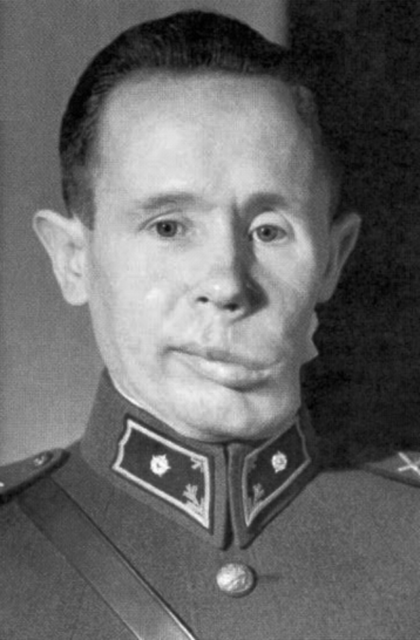
Häyhä was fighting Soviet troops when an explosive rifle bullet struck his face.
The impact was catastrophic.
His jaw was severely damaged.
Part of his cheek was destroyed.
Blood covered his face.
Fellow soldiers later described the injury in horrifying terms.
He was evacuated unconscious.
For the man who had survived months of countersnipers and artillery—
the war appeared to have finally caught him.
Doctors performed extensive treatment.
Reconstructing the damage would require multiple procedures over time.
And Häyhä remained unconscious for days.
Then—
March 13.
The Winter War ended.
Finland and the Soviet Union signed the Moscow Peace Treaty.
Finland ceded territory.
But remained independent.
And around the time the fighting ended—
Simo Häyhä woke up.
He had survived.
The White Death had almost been killed—
but not quite.
His face would never look the same.
Photographs from later years show the permanent damage.
But Häyhä’s war was over.
And this is where his story takes a turn completely opposite from the legend.
He did not spend the rest of his life trying to remain a warrior.
He went home.
The Finnish government recognized his service.
He received decorations.
His wartime rank advanced dramatically.
But the man behind the myth remained remarkably private.
He returned to rural life.
Hunting.
Dogs.
Farming.
Later, the government provided him with a farm.
He became involved in dog breeding.
Continued hunting.
By many accounts, he became particularly accomplished in moose hunting.
People occasionally asked him the obvious question.
How did you become such a good shooter?
Häyhä’s answer was famously simple.
Practice.
That may be the most revealing thing he ever said.
Not destiny.
Not supernatural eyesight.
Not hatred.
Practice.
Years of it.
Quiet repetition before anyone knew his name.
The War transformed that private skill into something historically extraordinary.
But Häyhä himself never seems to have romanticized what happened.
When asked about the enormous number of Soviet soldiers credited to him, he reportedly framed it as duty.
He did what he had been told to do—
as well as he could.
That answer matters because later generations turned Simo Häyhä into something almost mythological.
White Death.
Invisible sniper.
Hundreds of kills.
No scope.
Snow in his mouth.
Face destroyed.
Still survives.
The story sounds engineered for legend.
But behind it was a quiet Finnish farmer living through an invasion of his country.
The larger Winter War was similarly complicated.
Finland’s resistance shocked the world.
Soviet forces suffered extremely heavy casualties.
Poor leadership and preparation contributed to early Soviet failures.
Stalin’s purges had devastated the Red Army officer corps in the preceding years.
Finnish tactics exploited terrain brilliantly.
The Soviets eventually adapted.
They concentrated artillery.
Improved command.
Applied overwhelming force.
Finland could not match Soviet manpower indefinitely.
So the war ended with painful territorial concessions.
Finland survived as an independent state—
but paid heavily.
Häyhä became one human symbol of that resistance.
A five-foot-three farmer against one of the largest armies on Earth.
And perhaps that is why his story became so powerful.
Not simply the number.
The contrast.
Small man.
Huge army.
Old-fashioned rifle.
Modern war machine.
One winter.
One impossible reputation.
But the detail that Soviet soldiers feared most may have been the simplest.
They often never saw him.
Think about that final time.
A Soviet soldier moving through the snow.
He has heard the stories.
The sniper.
The White Death.
Maybe the stories have exaggerated his numbers.
Maybe half of them are rumors.
That does not matter anymore.
He believes the man is out there.
So he scans the trees.
Nothing.
Looks toward a snowbank.
Nothing.
His breath is visible.
Häyhä’s is not.
The soldier grips his rifle tighter.
Then something moves.
He turns.
Too late.
That fear may be the true measure of Häyhä’s effectiveness.
Because a sniper does more than remove individual soldiers from a battlefield.
He changes how everyone else behaves.
Movement slows.
Heads stay down.
Patrols become nervous.
Officers hesitate.
Time is lost.
Attention is diverted.
One hidden rifle begins occupying the minds of hundreds of men.
And eventually, the Soviets tried artillery and specialized marksmen just to remove that one threat.
Then one bullet finally found him.
It shattered his jaw.
Destroyed part of his face.
Put him into unconsciousness.
And still—
he survived another sixty-two years.
Simo Häyhä died in 2002.
He was ninety-six.
The young farmer who walked into the snow in 1939 lived long enough to see a world of satellites, computers, precision-guided weapons and digital warfare.
But none of that technology changed what made him so dangerous in the first place.
Patience.
Terrain.
Concealment.
A rifle he understood completely.
And thousands upon thousands of hours of practice before the war ever began.
That is what the nickname hides.
The White Death sounds supernatural.
Simo Häyhä was not.
He was something far more unsettling.
He was human.
And he had practiced until missing became the unusual part.