PARIS, Aug. 25, 1944 — The man who surrendered Paris to the Allies this afternoon, General Dietrich von Choltitz, will go down in history as the German commander who defied Adolf Hitler’s order to reduce the City of Light to rubble. But a secret recording, made four days after his surrender and now obtained by this news organization, reveals a far darker truth about the man the world is calling the “Savior of Paris.”
In the recording, made on August 29, 1944, in a room at Trent Park, a British intelligence facility outside London, von Choltitz is heard telling a fellow captured German general that the most difficult task he ever carried out was not a military engagement, but the liquidation of the Jews. He described the operation as having been executed “down to the last detail,” a chilling admission that contradicts the carefully constructed narrative of a man who claimed to have disobeyed the Führer out of humanitarian concern.
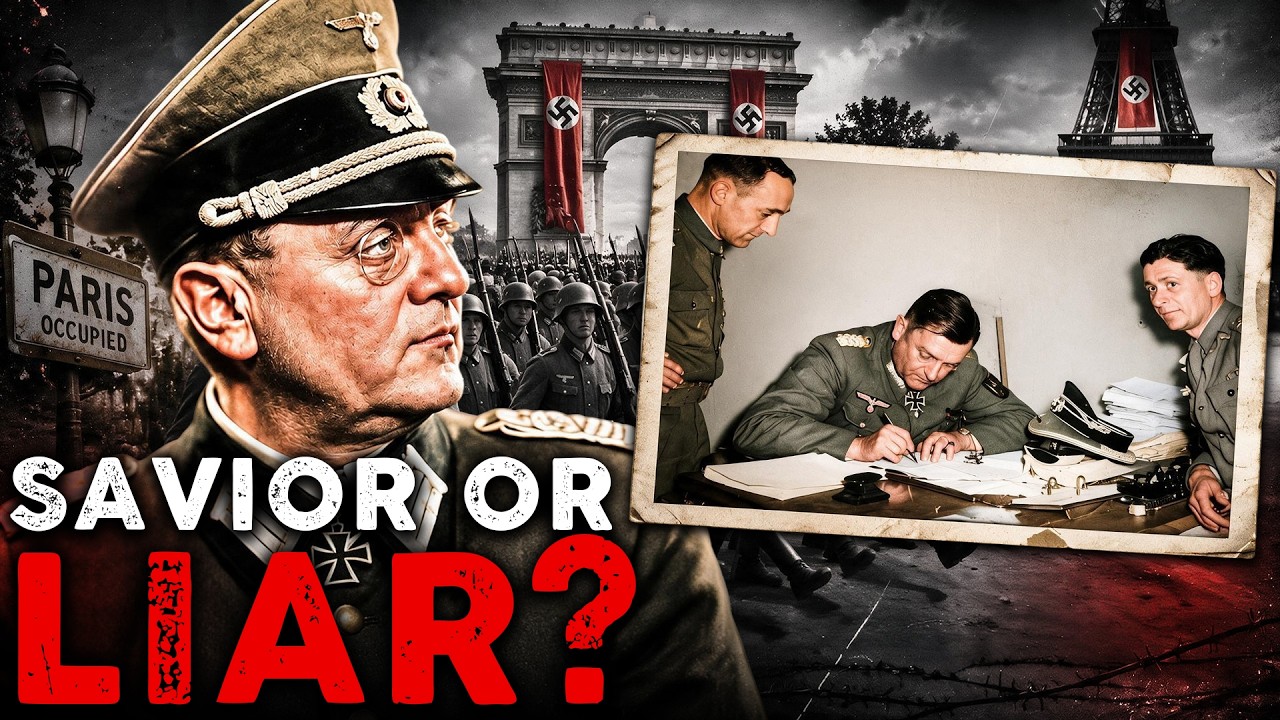 The recording, captured by British intelligence officers who had wired the mansion where high-ranking German prisoners were held, does not merely implicate von Choltitz in war crimes. It fundamentally undermines the story that has already begun to circulate in the Allied press: that von Choltitz, a career soldier, chose to preserve Paris out of a love for Western civilization. Instead, the evidence suggests that his failure to destroy the city was a matter of military pragmatism, not moral principle.
Von Choltitz, 49, was appointed military governor of Greater Paris on August 7, 1944, on the recommendation of General Wilhelm Burgdorf, chief of the army personnel office. Burgdorf’s case was simple: no order had ever been too harsh for von Choltitz to carry out. The general’s record in the East supported that assessment.
In 1941, his infantry regiment was operating in the Crimea in tandem with Einsatzgruppe D, an SS death squad responsible for the murder of nearly 100,000 Jews, Roma, and suspected partisans.
His own army commander, Field Marshal Erich von Manstein, had issued orders that September stating that no officer under his command was to take part in the shootings, because the killing was “the dirty work of the SS.” But the army’s role was far from passive. Von Choltitz’s men sealed off districts so escape was impossible, provided the trucks used to transport Jewish civilians to execution sites, and rode as escorts to the killing fields.
At Evpatoria, Feodosia, and later at Sevastopol, where the city fell in July 1942, thousands of Jews were murdered. Von Choltitz’s regiment was present at each location.
In the Trent Park recording, von Choltitz does not merely acknowledge the killings. He describes the psychological toll on his men, recounting how he told a Nazi official that his soldiers could not stand the shooting of Jews. The official’s response, according to von Choltitz, was that Hitler wanted a daily report showing at least a thousand Jews killed each day.
The general then claimed that 36,000 Jews had been shot at Sevastopol alone—a figure that Holocaust historians have since established is more than eight times the documented number of 4,200. Where von Choltitz derived his inflated count remains unknown, but the admission of participation is unambiguous.
“The worst task I ever carried out,” von Choltitz says on the recording, “was the liquidation of the Jews. I carried it out down to the last detail.”
The recording was made just days after von Choltitz signed the surrender of Paris at the police prefecture on August 25. He had been flown to England and interned at Trent Park, a country house in north London where captured German generals were held. The British had fitted the building with hidden microphones, and every word spoken by the prisoners was transcribed in an adjacent room.
The generals, unaware they were being monitored, spoke freely among themselves, believing their conversations were private.
What the British intelligence officers heard in those first days after von Choltitz’s arrival was a man actively constructing his own legend. Within days of the liberation of Paris, von Choltitz launched into a long and dramatic story about his noble efforts to save the civilian population. He claimed to have told Hitler to his face that he did not have the supplies to hold the city.
He described hiding the keys to the cellars of the Louvre to prevent an SS party from seizing the Bayeux Tapestry. He portrayed himself as a man caught between a madman’s orders and his own conscience.
 But the recording obtained by this news organization tells a different story. It reveals that von Choltitz’s decision not to destroy Paris was not born of defiance, but of incapacity. He did not refuse Hitler’s orders.
He reported that he could not carry them out. The distinction is critical, and it is one that von Choltitz himself acknowledged in a 1954 interview with an East Berlin newspaper, when he admitted that humanitarian reasons had not stopped him. He lacked the means.
It was a practical objection, not a moral one.
The sequence of events leading to the liberation of Paris supports this assessment. When von Choltitz arrived at the Hotel Meurice on August 9, he found a garrison of 17,000 men, many of them clerks and orderlies who had never fought. The armor left to him consisted of captured French vehicles and outdated pre-war models.
The city was dark, near starving, and hostile. The German occupation was collapsing, and the men under his command were already loading trucks to leave.
On August 14, Field Marshal Günther von Kluge, commander of all German forces in the West, ordered von Choltitz to prepare the city’s waterworks, gas works, and electricity plants for destruction. The order that followed went further: all but a few of the 65 bridges in and around Paris were to be prepared for demolition, with none to be blown without von Kluge’s personal authorization. The German High Command sent a specialist team to Paris, and hundreds of naval torpedoes were stored in a railway tunnel outside the city.
But von Kluge was dead by August 19, having swallowed cyanide while traveling back to Germany after being summoned by Hitler. The field marshal had known about the July 20 assassination plot against Hitler and had said nothing. His missing hours during an Allied air attack on August 15 were interpreted by Berlin as secret contact with the Americans.
He chose suicide over arrest.
His successor, Field Marshal Walter Model, was ordered to continue fighting in and around Paris regardless of the city’s destruction. But Model had already told Hitler’s headquarters that Paris could not be held with the men available. When General Alfred Jodl, chief of the Wehrmacht operations staff, asked Model directly whether the Seine crossings had been blown, Model answered that the vast number of bridges made it impossible to destroy them all.
Von Choltitz, when asked the same question, gave the same answer. Neither man refused. Both said it could not be done.
On August 23, an encrypted signal reached von Choltitz from Berlin. He was ordered to use the strongest possible measures against the uprising, to demolish whole city blocks as the Germans were doing in Warsaw, to publicly execute resistance leaders, and to prepare the Seine bridges for demolition. If the city could not be held, Paris was to be turned into a field of ruins.
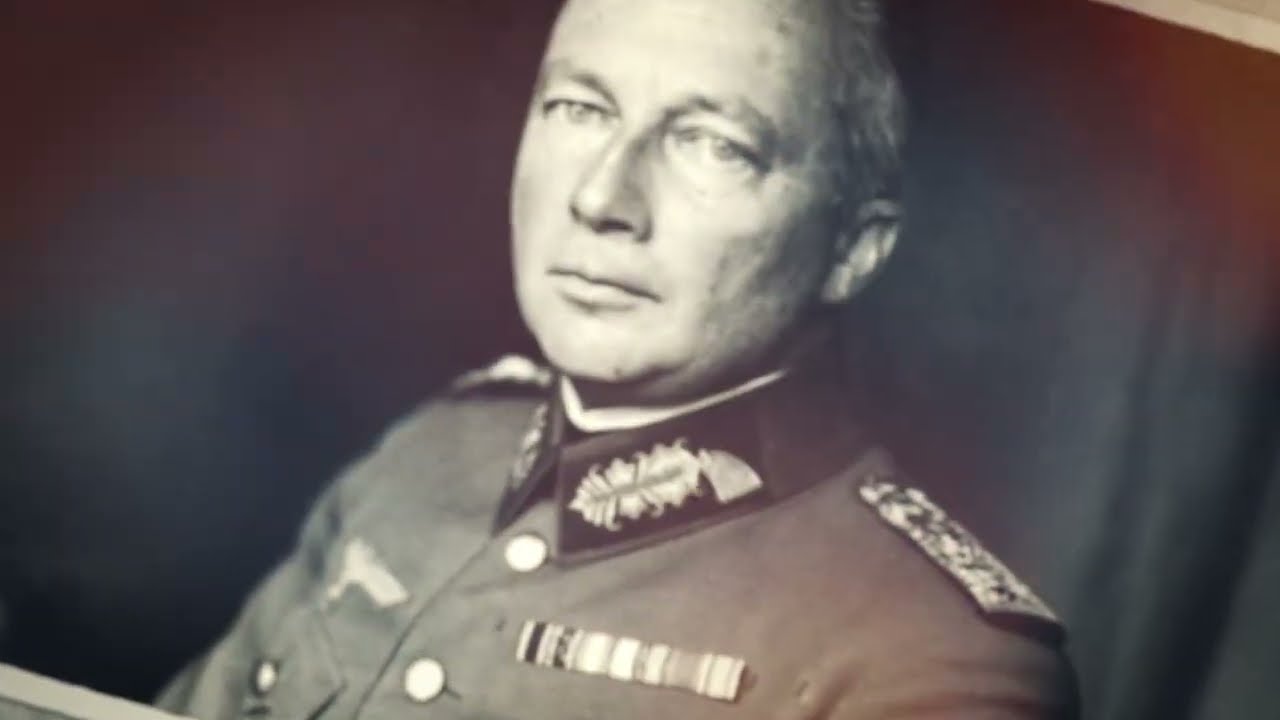 Von Choltitz kept the signal from his staff, showing it only to one trusted aide. Then he telephoned Hans Speidel, an old friend serving as Model’s chief of staff, and thanked him for his “beautiful order.” Refusing outright was a shooting offense, so von Choltitz did not refuse.
Instead, he set out how he would obey in terms that grew less believable the longer he spoke. Explosives would be placed in Notre Dame, in the dome of the Invalides, in the Chamber of Deputies. The Eiffel Tower would be brought down across the road to stop enemy tanks.
By the time he reached the tower, Speidel understood that none of it was serious.
The bridges were never blown. The demolition order was never given. Von Choltitz spent August 24 telling his staff to fight to the last man, while knowing that the only reinforcement coming was a division cobbled together from units retreating from Normandy.
That night, he sent word to Model that he had ordered the bridges in eastern Paris destroyed. They were still standing in the morning. No evidence survives that von Choltitz ever issued the order.
On the morning of August 25, the French sent an ultimatum to the Hotel Meurice through the Swedish Consul General, Raoul Nordling. Von Choltitz sent word back that he would not accept it, because honor required that he be taken prisoner before he could surrender. Then he sat down to lunch with his staff and waited.
The French came at half past one, and an hour later, they were inside the hotel. Von Choltitz surrendered immediately, asking only that he and his men be treated as soldiers rather than handed over to the resistance. The French agreed.
He was driven to the police prefecture and made to sit while the surrender was read to him. Cease-fire, raise the white flag, lay down arms, hand over all remaining supplies. Von Choltitz signed, and Paris was liberated after four years and two months of German occupation.
The story of the “Savior of Paris” began almost immediately. Within days of the liberation, von Choltitz was telling his interrogators in London about his noble efforts to save the civilian population. He claimed to have saved the city from destruction at the hands of the communists.
He told them Hitler had ordered him to defend the city at all costs and to round up resistance members and shoot them, and that he had refused.
But the recording obtained by this news organization exposes the lie at the heart of that narrative. Von Choltitz did not refuse. He could not.
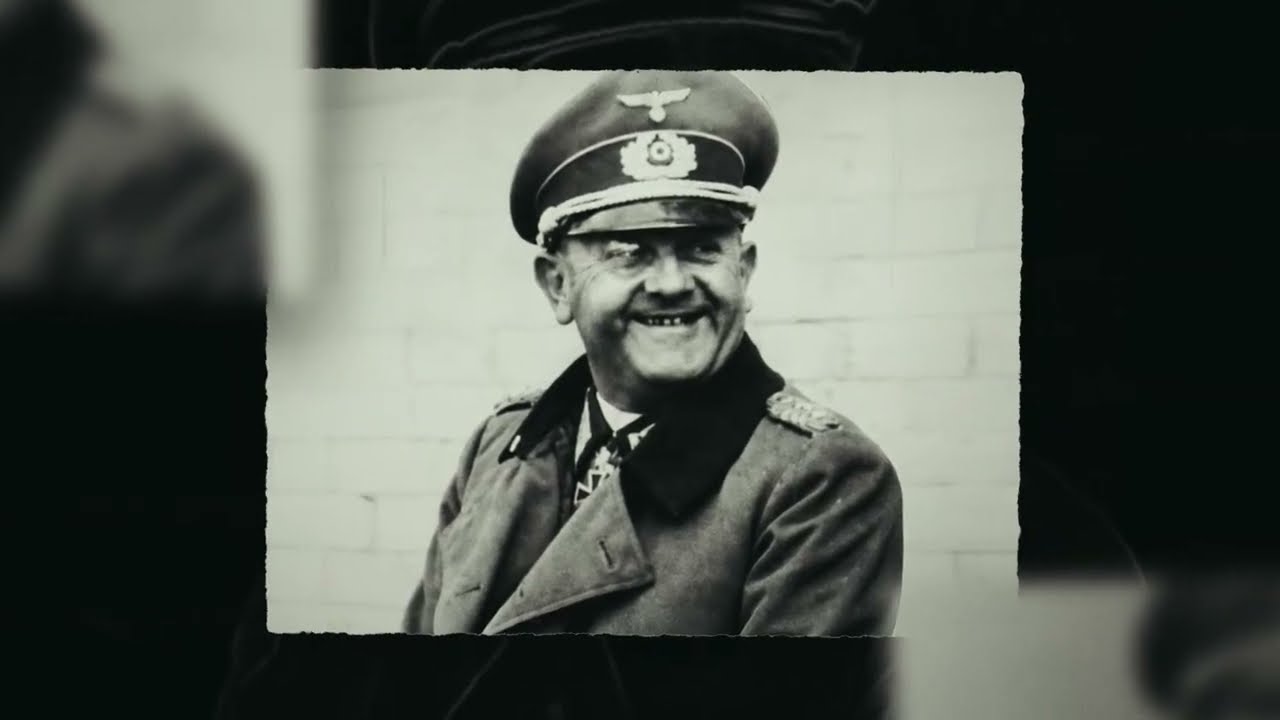 The man remembered for disobeying Hitler had just described obeying him in committing mass murder. He had been chosen for Paris because he never questioned an order. The fact that Paris still stands is not a testament to his courage, but to his incapacity.
The British ruled in 1945 that the Trent Park recordings could not be used in war crimes trials, because the bugging operation was still in service and its existence would be 𝓮𝔁𝓹𝓸𝓼𝓮𝓭. Army lawyers protested that war criminals would escape the consequences of what they had voluntarily said. They were right.
No general held at Trent Park stood trial for anything he admitted there. Von Choltitz passed into American custody and was released in 1947.
Two years later, he began publishing his own account of how he had saved Paris. In 1949, Le Figaro ran a series of articles under the title “Why I did not destroy Paris in 1944.” Two books followed in Germany.
He called the first “Brennt Paris?” — “Is Paris Burning?” — after a question Hitler was said to have sent by telegram as the city fell.
Von Choltitz admitted he had only heard about that telegram later, and it probably never existed. But the phrase traveled anyway. It became the title of a best-selling book in 1965, and of the film made from it a year later.
In print, his explanation never changed. He claimed he had wanted to preserve the city. He never once wrote that he could not have destroyed it.
When an East Berlin newspaper put it to him in 1954 that he had lacked the means, he did not dispute it. When the same paper asked whether humanitarian reasons had stopped him, he said they had not.
Von Choltitz died on November 5, 1966, four days short of his 72nd birthday, in the year the film “Is Paris Burning?” hit cinemas. The private recordings from his internment at Trent Park were not released until 1996.
By the time the two accounts could be compared, he had been dead for 30 years.
The man who “saved” Paris was a man who had carried out the liquidation of the Jews “down to the last detail.” The man who defied Hitler was a man who had never questioned an order. The story he told the world was a fabrication, and the truth was locked away for three decades.
Paris still stands, but the man credited with saving it was not its savior. He was its would-be destroyer, stopped not by conscience, but by circumstance.