The silence that descended on the LBJ Ranch in the hours after Lyndon Baines Johnson’s death was not just the stillness of a Texas winter morning; it was a carefully manufactured quiet, a final administrative seal on a life crowded with public triumph and private complexity.
As the nation mourned the 36th president, who succumbed to a massive cardiac arrest at age 64 on January 22, 1973, a far less visible calculation was already underway in the corridors of power and memory.
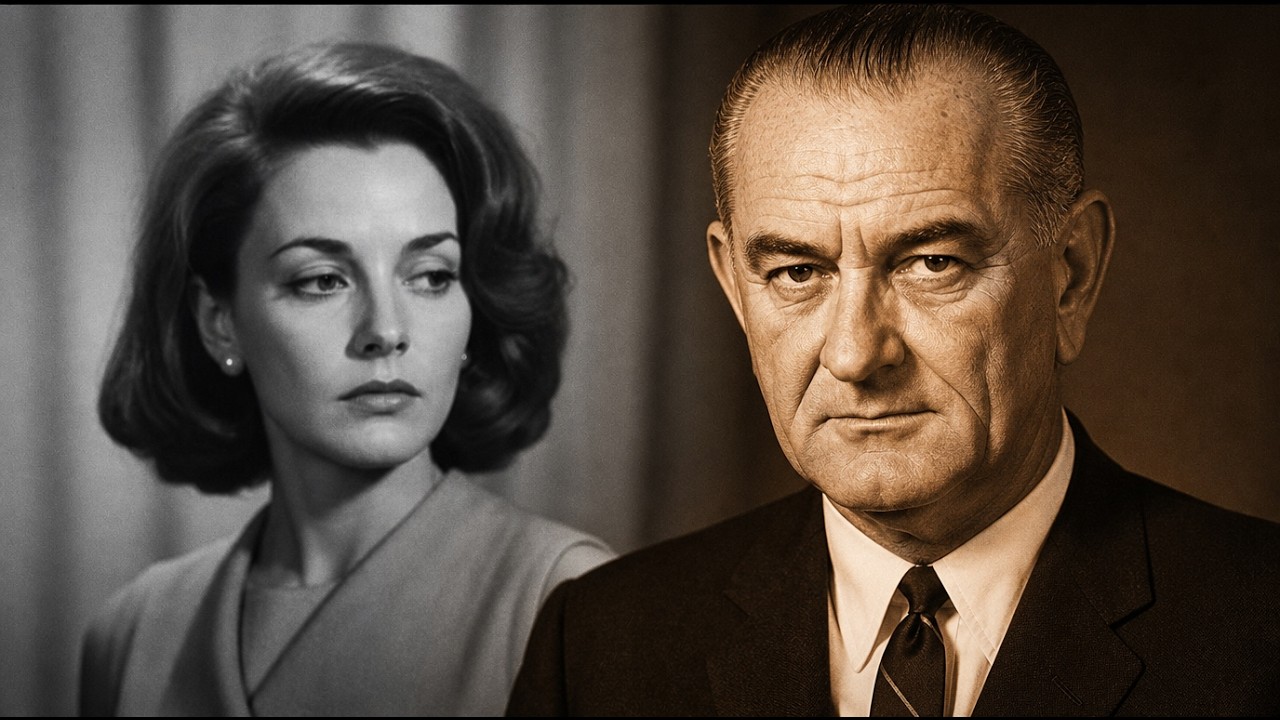 His final message to his wife, delivered as his health failed, was a mixture of cold pragmatism and gallows humor: he told Lady Bird she would soon be “the prettiest and richest widow in the state of Texas.” He did not, and would not, mention the others.
He left behind a triangulation of legacies—one enshrined in the official record, one suppressed, and one preserved in a hidden archive of recorded words—that would play out over the next three decades in a courtroom, a press conference, and a garden of native wildflowers.
The Johnson family’s initial calculus was that the official biography would hold. The marriage to Claudia Alta “Lady Bird” Taylor was a political bedrock, a partnership of formidable financial and strategic strength. They calculated that the private arrangements, the shadow relationships that ran parallel to the construction of the Great Society and the disaster of Vietnam, could remain dispersed and denied.
They underestimated the patience of a single mother in Dallas who had been waiting since 1948, and they underestimated the meticulous judgment of a biographer in New York.
They also underestimated the woman who was Lady Bird. The calculation of the family was that she would function as the keeper of the flame. They did not realize she intended to build an entire fire.
The first crack in the facade appeared in 1982 with the publication of Robert Caro’s “The Path to Power.” It was a monumental work of history that eviscerated the myth of a singular valley upbringing, and, crucially, it named the first of the principal figures in Johnson’s romantic life: Alice Glass.
The portrait Caro painted was of a woman of immense presence. Born in 1911 in Llano, Texas, she possessed a magnetic beauty—described in the biography as capable of rearranging the very atmosphere of a room.
By the time she met the young Congressman Johnson in 1937, she was living at Longlea in Virginia as the mistress of newspaper magnate Charles Marsh, one of Johnson’s most strategic financial backers.
The 𝒶𝒻𝒻𝒶𝒾𝓇 that developed was intense. The record suggests Johnson, in the late 1930s and early 1940s, was captivated by Edwards, a woman he considered his intellectual equal. Exerts indicate he seriously contemplated divorcing Lady Bird to marry her.
But the ambition never faltered. Eventually, the political reality set that to assign occurred, and the relationship faded from the active ledger of his life, though the erasure was not clean.
Alice Glass survived the 𝒶𝒻𝒻𝒶𝒾𝓇 but did not survive the revelation of Johnson’s presidency intact. Witnessing the escalation of the Vietnam War in the mid-1960s dislodged her entire ideological framework. She saw Johnson’s decision-making as a supreme moral failure, compelling her to sever all bonds of association.
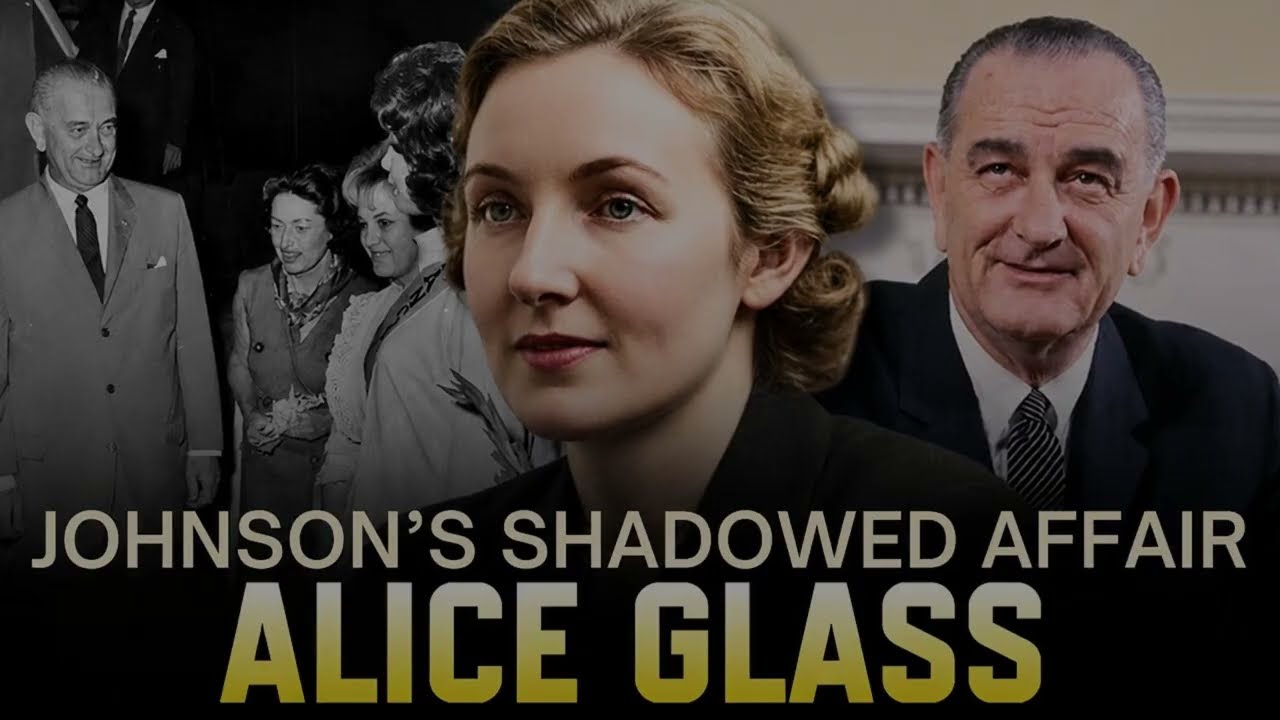 In a final, devastating act of agency, Glass destroyed the primary evidence of their relationship. She did not burn his letters to protect him; she burned them to protect herself from association with a man she deemed a monumental failure and a historical error.
She retreated to Texas, dying of cancer on December 9, 1976 in Marlin, Texas. She left behind a silent archive that was voluminous only in its absences. The identity of the “other” was reduced to a footnote in the public record, a fact she orchestrated with her dying hand.
By November 1982, long before historians ever dictated the final legal records of Caro’s second volume, the second woman broke the silence. She stood before the assembled media at the Dallas Press Club and, at the age of 57, announced that she was Lyndon Johnson’s mistress of 21 years.
Madeleine Brown was a media executive in Dallas, with a biography that contrasted sharply with such a southern intellectual. She had met Johnson in the maelstrom of his disputed 1948 Senate election. For the next two decades, she claimed, their relationship was maintained with a rigid regiment.
Johnson provided for her, she said, with a Cadillac every two years, a house in Oakland Cliff, and charge accounts, all funneled through a trusted attorney to avoid direct scrutiny. The central claim of that press conference, however, was the story of her son, Steven Mark Brown.
Born in December 1950, Steven was, per Madeleine’s affidavit, the child of Johnson. The family maintained a blank check of denial, and there was no legal confirmation of the pat recorder.
Facing a decade of silence, Madeleine Brown’s story took a tragic legal turn. In October 1987, her son Steven—who had grown up in Dallas largely estranged from the orbit of the presidency—filed a lawsuit against Claudia “Lady Bird” Johnson, claiming his rightful inheritance as a son.
The law suit, seeking $10 million, entered the Dallas County court system in Texas. It was a 𝒹𝓇𝒶𝓂𝒶 that threatened to tear the gauze of privacy from the White House and the founding block of the Johnson family fortune.
The case never reached its conclusion. Steven Brown was diagnosed with lymphatic cancer, and died on September 28, 1990. He was 39-years-old, a logistics manager for a telephone company in Dallas.
He died before witnessing a courtroom or standing before the Johnson family, leaving the claims of the Lawcast to disintegrate into the ether of legal failure.
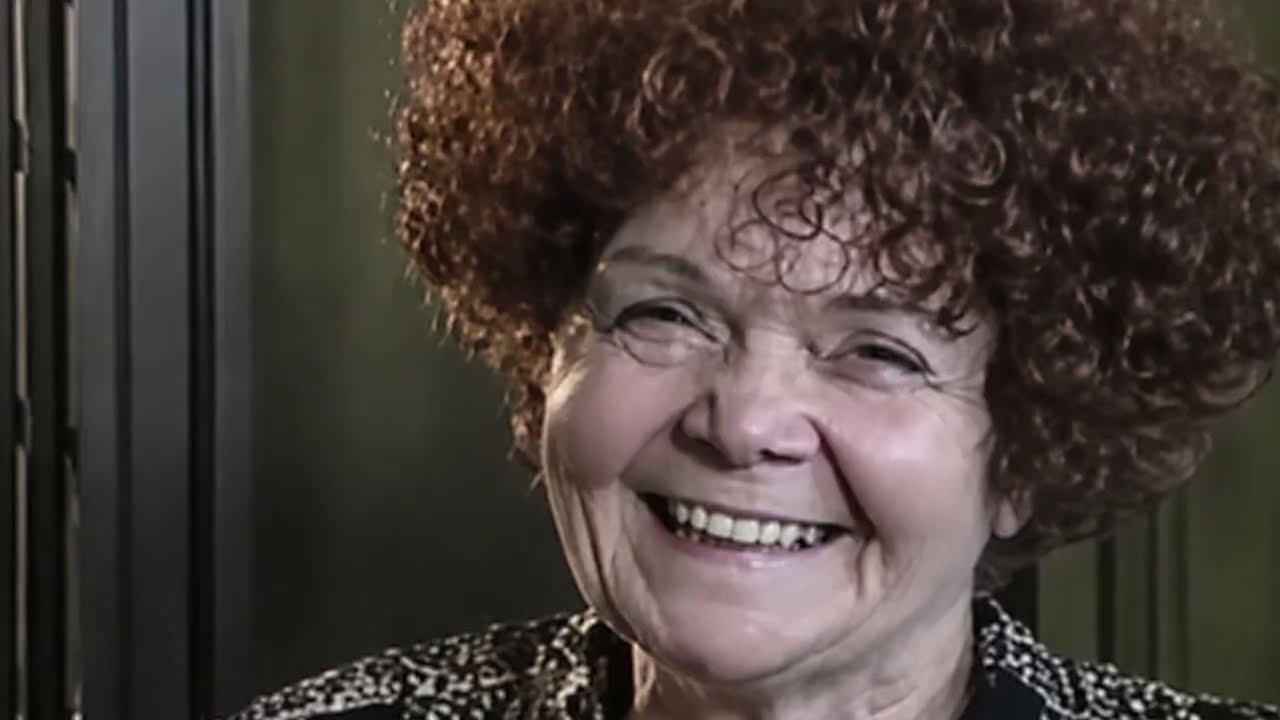
 Madeleine Brown continued in her assertion in the courtroom, and in a subsequent 1997 memoir, asserting that she had attended a party in the apartment of H. L. Hunt.
She claimed Johnson had shown a full knowledge of the 1963 assassination plot, a claim never confirmed by any the evidence.
She passed away in Dallas on June 22, 2002, a woman who had watched the man she loved rise to the highest office in the land, but who was denied legal purchase on his legacy. She died with nothing confirmed, having lost the fight to legitimize his own son passed.
The third, and ultimately most enduring, calculation was not met by a single prediction. It was authored by Lady Bird Johnson herself.
When she arrived at the hospital on the night of January 22, 1973, she had already been told he was gone. Her expression remained calmides but solemn, a serenity that his aide described as a deep reserve.
In a single sentence—an astonishing admission lodged within a deflection—she acknowledged his infidelities: “My husband loved people. He loved all people. Half the people in the world are women.
You can’t think I could have kept that away from me, do you?”
She never spoke of the other women in this regard, never issued a denial, never elaborated. That was her entire public bibliography on the subject.
Instead of defending the narrative, she ruthlessly began to build his own legacy. She had used her inheritance in 1937 to seed his campaign, but during the White House years she had constructed a parallel focus, driving the Highway Beautification Act through a Congress of men who considered it a frivolous flower.
Over the following 34 years, while Alice Glass was disappeared from memory and Madeleine Brown’s son died waiting for a name, Lady Bird pursued a third path.
 She publisheda a massive diary—a 800-page text drawn from a personal recording device that documented 1.75 million words.
She accepted positions of power within the University of Texas system, established her own identity as a national figure with the Presidential Medal of Freedom and a Congressional Gold Medal.
Most significantly, in 1982 she founded the National Wildflower Research Center. It was a legacy that created a structure for the wetlands of her own intelligence. The center, a research facility in Austin, attracted the world’s elite in horticulture.
It was an institutional monument to the idea of native preservation, a value system that stood in sickly opposition to the imperial Vietnam obsession of her husband. She didn’t just outlive everyone—she outlived the very definition of what it meant to be a political widow.
She died in July 2007, at the age of 94. She outlived LBJ by more than 30 years, outlived Alice’s fate by three decades, and outlived My Brown’s legal challenge.
The arbitrators—the historians—have often claimed that the primary source documents the Caro series will eventually reconcile the ontology of American power.
They have. The recorded record now includes the names of the mistresses and context of his affairs.
But the fabric of the last chapter was not written in the official record. It was written in the soil of the Texas hilltop.
The pathos of the three women’s fates—the annihilation of the record, the Sally of a legal claim, and the immense structures of nature—reveal the full measure of human survival in the shadow of a giant and flawed man.
Of the three, it was the widow who stood by him, the one who never once complained, who built the quietest corner of the state and ignored them all, that everyone was told had the arrangement, but she moved through the secrets to write her most unceremonious victory.
The tape of the Great Society was a B-Side. The A-side was the choice of silent witness who died wearing the crown of the Independent Woman.
She buried the past, and turned to the future of flowers.


