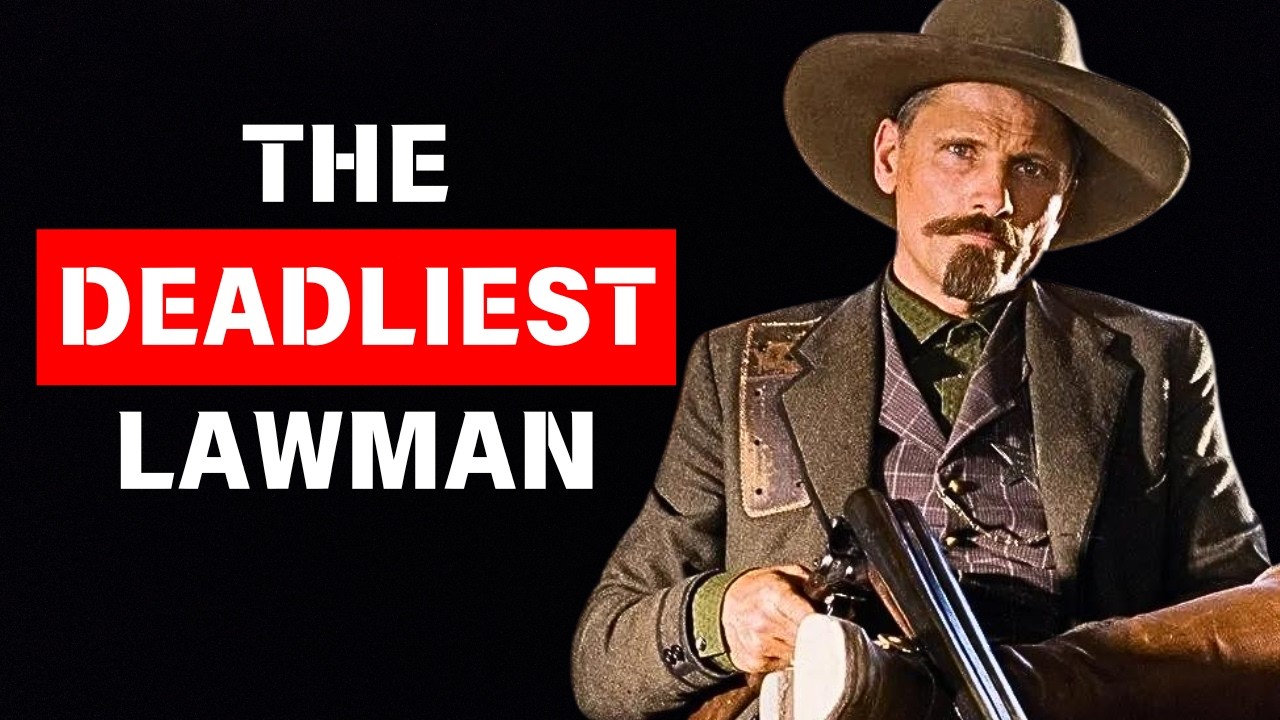
When Sheriff Harvey Whitehill hired a shy, soft-spoken newcomer named Dan Tucker as a deputy in Silver City, New Mexico, in 1877, residents saw little more than a slim young man with a mustache and modest clothes. What they got was one of the deadliest lawmen the Southwest would ever produce—a man whose body count rivaled John Wesley Hardin and Deacon Jim Miller, yet who faded into near-total obscurity. Tucker’s early life remains murky. Legend says he was born in Canada around 1849 and fled to New Mexico after a stabbing in Colorado, but little can be confirmed.
What is documented is that within months of pinning on his badge, Tucker established a pattern: he was quick to shoot and rarely showed hesitation when suspects resisted or tried to flee. His first verified killing came in August 1877 when he shot a man named Atanacio Bomo, who was escaping custody. A coroner’s inquest ruled the shooting justifiable. Weeks later, after two locals fought in a dance hall and one stabbed the other so severely his intestines spilled out, Tucker chased the fleeing attacker and dropped him with a single shot from about 50 yards in dim light.
The victim reportedly survived another 40 years after a doctor rinsed his guts and sewed him back up. Tucker’s reputation for deadly efficiency spread quickly. When officials in Texas organized a force to intervene in the El Paso Salt War in late 1877, they came to Grant County specifically to recruit him—and made him a captain. The conflict had erupted after a man named Charles Howard filed a claim on salt flats that local Hispanics had used freely for centuries, then demanded payment.
After Howard killed a political rival, tensions exploded into open warfare. A detachment of Texas Rangers was besieged and surrendered—the only time in history the Rangers laid down their arms—and Howard was executed by firing squad. When Sheriff Charles Kerber raised a group of volunteers to retaliate, Tucker joined alongside outlaw John Kinney and his gang. On December 22, the force killed several suspected insurgents in San Elizario.
There were also reports of Tucker’s men going on a killing spree in nearby villages before being stopped by a cavalry colonel. Texas Ranger Lieutenant John Tays later said the Silver City volunteers failed to exercise restraint, though his own Rangers faced accusations of looting, killing, and rape. No one was ever arrested for the atrocities, which claimed an estimated 20 to 30 lives. Tucker returned to Grant County and continued his work.
By April 1878 he had become both deputy sheriff and the first town marshal of Silver City, a seasonal job he held during the rowdy summer months. In December, a man named Caprio Rodriguez fired a bullet that passed through Tucker’s clothing without touching him. The record goes silent on Rodriguez’s fate. The following January, Tucker was sent to the booming mining town of Shakespeare, where he arrested two men: Sandy King, a suspected member of Arizona’s infamous Cowboy gang, and Bill Tattenbaum, a harmless Russian wannabe known as “Russian Bill.
” King had shot a shopkeeper’s finger off; Tattenbaum had stolen a horse. Later that night, a vigilance committee hauled both men out of jail, held a mock trial, and hanged them from a stage station’s rafters. Whether Tucker was present or part of the mob is unknown. Tucker presided over at least four legal executions, including the controversial double hanging of Louis Gaines, a Black man, and Charlie Williams, a White convicted murderer, in August 1880.
Townsfolk objected not to Williams’ execution but to his being hanged alongside a Black man. Both Tucker and Sheriff Whitehill received death threats, but the execution proceeded. After cleaning up Shakespeare, Tucker took on the railroad town of Deming, which one traveler described as so overrun with thieves that no man ventured out without a rifle. Within his first three days, Tucker killed three men and wounded two others.
Within weeks, he had jailed 13 members of the Cowboy gang, and local papers reported that “the most perfect order now prevails at Deming. ”
In September 1881, Tucker shot and killed a rioter named Charlie Hugo who resisted arrest. Days later, when outlaw Jake Bond and two companions galloped through town firing pistols and riding into hotels, Tucker confronted them with a sawed-off shotgun. When Bond refused to surrender, Tucker fired, hitting him with nine buckshot pellets.
Bond died instantly; his companions fled under a hail of bullets. Tucker’s own luck began to turn in October 1881. While arresting a drunken military officer, the man’s pistol went off, burning Tucker’s hands. Days later, in Benson, Arizona, a dispute with George Brown ended with Brown shooting Tucker in the leg and abdomen.
Tucker fired twice but missed. The local paper pronounced his wounds fatal—they weren’t, but they would cause him pain for the rest of his life. Nearly a year later, Tucker was involved in a killing that would test his standing. James Burns, a deputy from the mining camp of Pinale, rode into Silver City and went on a days-long drinking binge, brandishing his pistol and refusing to disarm.
Marshal Gladius Moore and a deputy both failed to bring him in. Finally, inside a saloon, Burns aimed his gun at Moore. Tucker shot him dead. The concussion from the gunfire reportedly blew out every lamp in the room.
Burns was immensely popular back in Pinale. Local prospectors published a resolution calling his death a “cowardly premeditated killing” and vowed to prosecute those responsible. Tucker, Moore, and another deputy were jailed in Central City—not Silver City, where they feared lynching—before being released on bond. Charges against Tucker were eventually dropped; Moore and the other deputy were acquitted.
To this day, suspicion lingers that Burns’ death was an orchestrated assassination, with Moore holding a personal vendetta. Despite the controversy, Tucker kept working as a deputy sheriff while also riding shotgun for Wells Fargo. His next brush with death came in December 1882 at a Deming brothel, where two women embraced him as a distraction while an assailant snatched his pistol. In the struggle, Tucker grabbed the gun and fired wildly, hitting one of the women.
The attacker wrestled the weapon away and shot Tucker in the shoulder. Americans attracted by the noise burst in and prevented him from being massacred. While Tucker recuperated, troublemakers posted a letter calling him a coward and claiming he was leaving town because he knew they planned to hang him. Tucker rose from his sickbed, confronted the men with his face drawn from pain but still wearing his habitual smile, and stood silently before them.
They immediately backed down, claiming they were only joking. Tucker spared them but banished them from town. His health never fully recovered. Historian Bob Alexander writes that Tucker’s overall condition deteriorated, and later reports imply he became alcoholic—though newspapers never listed drinking among his vices.
The injuries forced him to quit riding shotgun on jostling stagecoaches, though he continued guarding Wells Fargo valuables by train and occasionally still chased bandits, including participants in the Gage train robbery. By the mid-1880s, Tucker had diversified: he did cattle inspection work, opened a saloon and boarding house in Deming, served as a delegate to the Grant County Democratic Convention, and received an appointment as deputy U. S. Marshal.
He also moonlighted as a constable. While prospecting east of Deming, he and a partner were attacked by an Apache war party and took refuge in an old boxcar, holding the warriors off with only their revolvers. In 1885, Tucker may have married a woman named Maria, who identified herself as his wife on a special territorial census. In the fall of 1887, he made one of his final known arrests by jumping off a moving train to capture a horse thief walking alongside the tracks.
Shortly after, Tucker left New Mexico for California, and his trail goes completely cold. He returned briefly in 1892, reportedly grown so fleshy that friends hardly recognized him. Then he disappeared from the historical record entirely. The only clue to his end comes from a Silver City resident who claimed Tucker died about a year and a half later in a county hospital in San Bernardino.
That facility is now the Patton State Hospital, which in the 1890s was the Southern California State Asylum for the Insane and Inebriates. Some deceased patients were buried on site in unmarked graves, which historians say could explain why Tucker’s name appears in no cemetery records. One possible burial area is now covered by a golf course. Historians note that Tucker almost certainly committed killings that were never recorded, possibly in Colorado before he arrived in New Mexico.
Stories that he gunned down seven members of Curly Bill Brocius’s gang are dismissed by Tucker expert Bob Alexander as a figment of one biographer’s imagination—Brocius wasn’t even alive when the fight supposedly occurred. One famous tale claims Wyatt Earp and Doc Holliday gave Deming a wide berth on their way to Colorado after the Vendetta Ride, avoiding Tucker rather than risk a confrontation. It’s a story that can’t be verified, though the pair apparently did pass through Silver City under assumed names. As for whether Tucker ever crossed paths with Billy the Kid—who had been arrested by Tucker’s boss, Sheriff Whitehill, for stealing laundry in 1875—no record exists.
It’s unknown whether the two ever met, though they likely knew of each other’s reputations. Historian Leon Metz summed it up: “Tucker was a better lawman and more dangerous than such redoubtable high-profile figures as Wyatt Earp and Wild Bill Hickok, yet he is practically unheard of today, largely because he lacked the ability or the need to exploit himself. ”
Alexander’s final assessment is blunt: during the Salt War, Tucker failed in his executive ability to maintain discipline among his men, and no evidence places him personally participating in the atrocities. But his later career demonstrated a genuine commitment to lawfulness.
“Dan Tucker was the real deal,” Alexander writes. “The scales of justice are indisputably tilted in Tucker’s favor. ”