In the Old West, a saloon was governed by an unwritten set of rules, and breaking them could cost a man his life. These weren’t matters of fines or jail time; a single misstep could result in being shot before finishing a drink. The code of conduct was strict, and survival depended on knowing and respecting it, as bartenders, gamblers, and patrons alike understood the stakes. One of the most ironclad rules was to never sit with your back to the door.
This position left a patron blind to potential threats, and seasoned gunfighters knew the danger of an enemy entering unannounced. Wild Bill Hickok adhered to this rule throughout his life, surviving numerous shootouts and duels. However, on August 2, 1876, in a Deadwood saloon, the only open seat at a poker table had its back to the entrance. He hesitated and asked to switch seats, but no one would give theirs up.
He sat down anyway, and minutes later, Jack McCall entered from behind and shot him in the head. The hand Hickok was holding at the time, aces and eights, became infamous as the “dead man’s hand. ”
A man’s hat was also considered sacred. Picking up or even touching another man’s hat without permission was a grave insult comparable to a public slap, and there are documented cases of men being killed for it.
In a land without courthouses on every corner, a man’s reputation was his most valuable possession, and allowing disrespect to go unchallenged invited further aggression. Refusing a proffered round of whiskey was a direct affront. Declining a drink was tantamount to telling a man he wasn’t worth your company, an invitation to a fight. Records from towns like Dodge City suggest that turning down a drink caused more trouble than being caught cheating at poker.
The simple act of taking the glass was a silent agreement of mutual respect. Saloon patrons also operated under a strict code of silence regarding personal history. Asking a man where he came from or what his real name was could be a death sentence. Towns were filled with people fleeing their pasts—deserters, fugitives, and men who had abandoned their families—all starting over with new identities.
Bartenders poured whiskey without small talk because killers and preachers might sit side by side, and silence was the only deal that kept everyone alive. Accusing someone of cheating without immediate, irrefutable proof was a fatal mistake. The unwritten code granted the accused the right to respond with violence on the spot, and no one in the room would intervene. Men died not for being wrong, but for speaking before proving their claim.
In the West, the tongue could kill faster than a revolver. Spectators watching a card game were permitted, but standing behind a player to see his hand was a dangerous provocation. At popular Faro tables, the floor had markings showing where onlookers could stand, and stepping out of that area caused the game to halt. All eyes would turn to the intruder, who had only seconds to explain himself.
The horses tied outside a saloon were a silent indicator of the activity within. A horse left for hours signaled that its owner was deep in a game, a fight, or passed out. Some marshals used these animals as a kind of thermometer, checking the posts for the horses of known troublemakers. If they recognized one, they would enter the bar ready for trouble.
If two men started a fight, no one was to get involved. Stepping in meant taking a side, which was the same as painting a target on your back. The only person with the authority to intervene was the bartender, who was responsible for keeping order in his establishment. Everyone else minded their own business and ordered another drink.
Though the sheriff might appear to be in charge, the real power in many towns was the saloon owner. He controlled the flow of money, paid armed gunmen, and often financed the sheriff’s own campaign. Causing trouble in his establishment was a decision to fight the man who controlled who stayed and who disappeared from town. Contrary to movie portrayals, many towns like Dodge City and Tombstone banned guns within city limits.
Citizens were required to hand their revolvers to the sheriff upon entering town or leave them at the hotel. The famous gunfight at the O. K. Corral in 1881 began precisely because the Clanton brothers refused to surrender their weapons as the law required.
The rule existed, but its enforcement depended on who drew faster. In mining towns, gold dust was a common currency, weighed on a scale at the bar for every transaction. However, bartenders would purposely grease their fingers so a small amount of dust would stick to their hands during handling. While unnoticeable in a single transaction, this accumulated into a hefty profit over dozens of customers each night, a quiet theft occurring in front of everyone.
A bartender held more power than just serving drinks; he was the keeper of all information. He knew who owed money, who was armed, who had conflicts with whom, and who was lying about their identity. Offending him could result in being barred from the saloon, effectively cutting a person off from the town’s main hub for deals, news, and lodging. Many deadly confrontations did not start with words but with a gesture.
Touching the grip of one’s gun during an argument was taken as a clear statement of intent, prompting an instant reaction. Historians have found that most deadly saloon confrontations involved no verbal threat before the first shot; it was simply a hand moving the wrong way at the wrong time. The Civil War remained a fresh wound even fifteen years after its end. Union veterans and ex-Confederates drank side-by-side in Western saloons, not out of forgiveness, but because it was a place to start over.
A joke or a comment about a battle or a general could turn a quiet night into bloodshed. Smart bartenders changed the subject quickly, and some owners even posted rules banning war talk on the premises. Fire was a greater threat than any gunfighter in towns built of dry wood. Saloons employed doormen to ensure no open flames entered, forbidding torches and open oil lamps in favor of closed lanterns.
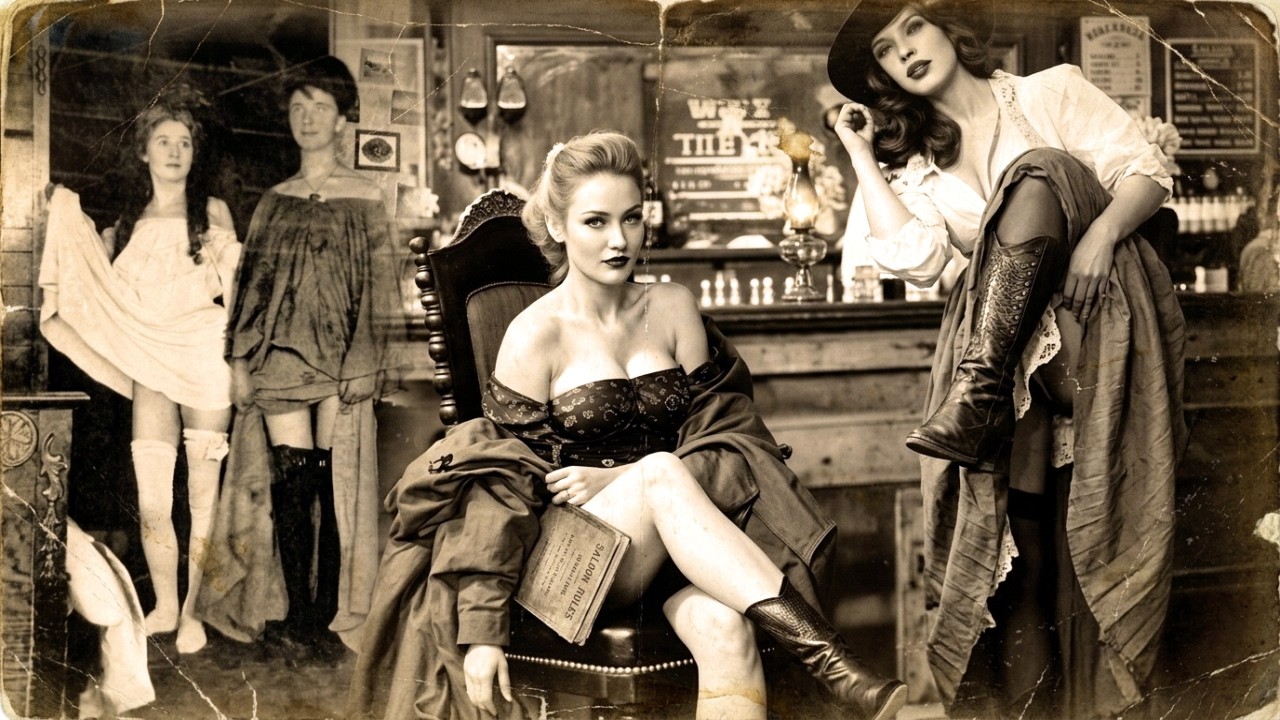
The fear was well-founded, as the Great Chicago Fire had shown the devastation possible, and a small-town saloon fire could wipe out an entire block in minutes. Women working in saloons as dancers, companions, and in back rooms were the center of the business. Because they brought money to the owner, they had real protection. Messing with one of them could bring a fast and forceful response.
More importantly, these women heard every conversation and drunk confession, giving them knowledge of debts, secrets, and plans that was worth as much as gold. The saloon was a democratic space where a preacher might sit next to a wanted killer. The rule that prevented nightly bloodshed was simple: mind your own business. Staring, interjecting, or jumping into a conversation uninvited were enough reason for someone to draw.
The ones who lasted were those who knew when to stay quiet and look at their own glass. Dar was not to run out of a saloon. Jumping up and rushing for the door was a signal of danger, prompting everyone to reach for their holsters and take cover. A panicked exit could get a man shot in the back before anyone understood he had simply remembered he left his horse untied.
Finally, skipping out on a debt was a potentially fatal gamble. With no bank or court system, the bar owner had to handle it himself. Men were followed, cornered, and even killed over debts worth mere pennies, not for the amount, but for the principle of a broken word.
The greatest danger of the Old West was not the famous shootouts, but failing to understand the unspoken rules of the saloon; survival depended on knowing them and paying the bill.