The killing of John Wesley Hardin in an El Paso saloon in 1895 has been debated for more than a century. One man swore it was cold-blooded murder. Another insisted it was self-defense. The central question has always been whether the most feared gunman in Texas ever saw his killer, or whether he was shot from behind without warning while rolling dice.
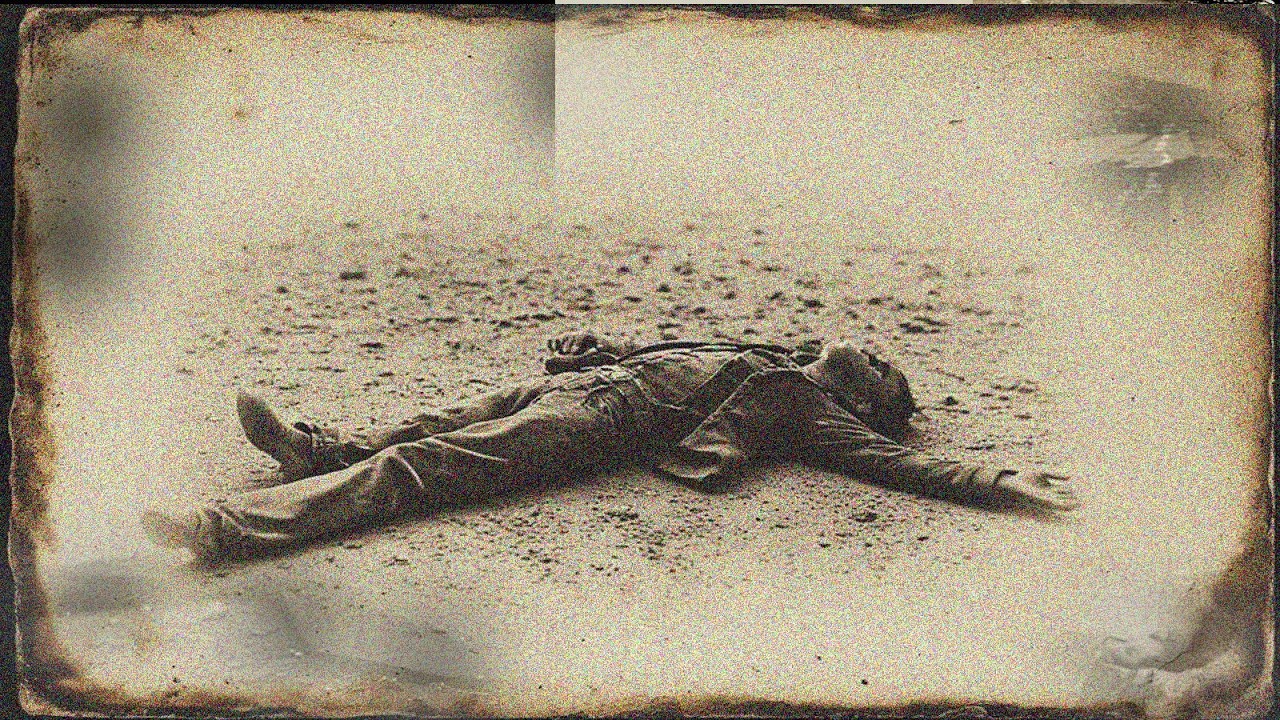
It was August 19, 1895, just after 11 p. m. The Acme Saloon on San Antonio Street was crowded with gamblers and drinkers. Hardin, once notorious across the West, was leaning over the bar, absorbed in a dice game.
His back was turned toward the entrance. Within moments, Constable John Selman fired a single shot into the back of Hardin’s head. Hardin slumped to the floor and died instantly. The most direct account held that Selman walked up behind Hardin, raised his pistol, and fired without a word.
This version spread quickly through El Paso that night and appeared in several newspapers by morning. To locals who had lived in fear of Hardin’s reputation, the story made sense. Hardin had killed many men, threatened others in El Paso, and made enemies in law enforcement. Many felt his death was rough justice, long overdue.
Another account told a different story. According to a gambler named Shorty Anderson, Hardin saw Selman’s reflection in the long saloon mirror as he approached. Hardin, Anderson said, began to turn and reach for his pistol, forcing Selman to fire before he himself could be shot. That description suggested not an ambush but a deadly contest measured in fractions of a second.
The strongest piece of evidence is the medical testimony given that night. Doctors who examined Hardin’s body reported that the fatal bullet entered the back of his head. A man turning to face his attacker should have been struck from the front or at least the side. A wound to the back of the skull makes the mirror-and-turn story much harder to believe.
Witnesses do not always agree, however. Under the pressure of violence, people often recall what they expect rather than what they saw. Anderson may have believed Hardin was turning, or he may have shaped his story later to protect Selman’s reputation. Early newspaper reports often rushed details or leaned toward the story readers wanted, which was that the feared Hardin finally met the fate he deserved.
Selman himself claimed self-defense. He told anyone who would listen that he feared Hardin, that the gunman had threatened him, and that he fired because he believed his life was at risk. That claim played well in front of jurors who knew Hardin’s bloody record. Yet Selman had reasons to shade the story.
He faced murder charges, and only a convincing story of fear could clear him. The Acme Saloon was a long, narrow room. The front door opened straight onto the main floor, with the bar running down one side and a large wall mirror mounted behind it. Tables for cards and dice were crowded on the other side.
Oil lamps lit the bar and mirror but left shadows in the corners. That mirror was no ordinary decoration. In Western saloons, a large mirror made the space look bigger and reflected anyone coming through the door. Witnesses said Hardin may have glimpsed Selman’s entry in this mirror.
Whether that reflection was clear or broken by glare is one of the most important questions in the case. Hardin stood at the bar a few feet from the door, leaning forward over the dice game. His right hand was free and his revolver rested in a holster at his hip. His back was angled toward the entrance.
He was not facing the door. He was not squared for a fight. He was in the stance of a man at ease. Selman entered through the front door and moved swiftly.
The distance from the door to where Hardin stood was only a handful of steps. Even at a normal pace, Selman could have crossed it in about two seconds. A brisk stride cut that time in half. The room offered a straight, unobstructed line to Hardin’s back.
Timing is critical. From Selman’s entry to his shot, no more than two or three seconds passed. Could Hardin have seen a reflection, processed the threat, turned his body, and reached for his revolver in that span? In theory, yes.
But a quarter turn of the body costs time. Drawing a revolver under stress costs more. Recognition of a moving figure in a smoky mirror adds its own delay. Hardin’s position against the bar also slowed his ability to pivot.
A gambler at a table could rise and turn freely, but a man boxed against a bar needed an extra instant to adjust. That extra instant can mean life or death when the other man has already raised his gun. Selman carried a Colt Single Action Army revolver, the classic handgun of the frontier. It was chambered in several calibers, but the .
45 Colt was the most common among lawmen and cowboys. Hardin carried a Smith & Wesson double-action revolver, likely chambered in . 44 or . 38 caliber.
The double-action design allowed a faster firing cycle, which suited a gunfighter who prided himself on speed. Hardin was known to practice daily, and friends claimed he could draw and fire in less than a second. The recovered bullet, often called the death scene bullet, has been studied for over a century. It weighed approximately 230 grains with a diameter close to .
45 inch. Those measurements point strongly toward the . 45 Colt round associated with Selman’s revolver. The bullet showed signs of flattening and deformation, meaning it struck hard bone before coming to rest.
That fits the doctor’s testimony that the shot entered the back of Hardin’s skull. The condition of the bullet argues against a ricochet. A bullet that bounces off glass or wood shows irregular flattening. This slug showed clean deformation from bone impact.
Nothing suggested a prior strike against another object. The bullet traveled directly from the pistol to Hardin’s skull. Doctors reported that the bullet entered near the base of the skull, shattered bone, and lodged within. Death was instantaneous.
Hardin was leaning slightly forward over the dice game, his head bent down. That posture exposed more of the back of his skull, making him more vulnerable to a shot from behind. The trajectory was almost straight. There was no evidence of an upward or downward angle, meaning Selman’s pistol was at roughly the same height as Hardin’s head.
This supports the idea that Selman stood directly behind him, close enough that no complex angle was involved. In recent years, new scholarship has reshaped the debate. A study by James P. Bailey and William A.
Spear, published in the Wild West History Association journal, examined the surviving physical evidence and reconstructed the interior of the Acme Saloon using period diagrams and eyewitness descriptions. Bailey and Spear confirmed that the bullet was approximately 230 grains and close to . 45 inch in diameter. A bullet of that size could only have been fired from a .
45 Colt. Hardin’s Smith & Wesson, likely chambered in . 38 or . 44, could not have fired it.
The study also showed that the bullet’s deformation was consistent with a direct strike on bone, not a ricochet. Their reconstruction of the saloon showed how short the distance was between Selman’s entry and Hardin’s position. From behind, Selman had a clear and unobstructed line of fire into the back of Hardin’s head. The mirror offered only a slim chance of reflection at the right angle.
Smoke, glare from oil lamps, and the angle of Hardin’s stance made it unlikely he ever saw Selman approach. Bailey and Spear concluded that the physical evidence overwhelmingly supports a rear entry wound consistent with Selman firing from behind at close range. They also emphasized a gap between the courtroom and the evidence. At Selman’s trial, the self-defense argument was built largely on Hardin’s reputation as a dangerous killer.
The law of the time cared more about reputation and public feeling than scientific proof. Modern reporting in El Paso has drawn on this research to remind readers that the myth of Hardin’s final duel was never supported by the evidence. Newspapers in 1895 shaped the story into whatever version sold best. Some printed the ambush version.
Others hinted at a duel. But all agreed the city was relieved to see Hardin gone. That relief, more than fact, drove public opinion. The physical record is now clear.
Hardin was shot from behind in the back of the head by a . 45 Colt round fired from Selman’s revolver. He did not fire his own pistol. He almost certainly never completed a turn toward his attacker.
His gun stayed holstered. What remains unsettled is Selman’s intent. Did he plan the killing as a cold ambush? Or did he fire in genuine fear when he saw the gunman shift at the bar?
Bailey and Spear acknowledged that motive cannot be drawn from the bullet itself. The state of Selman’s mind is forever beyond reach. The legend of Hardin still lingers, fueled by those who prefer to imagine him dying with his pistol half-drawn. But the evidence makes one conclusion unavoidable.
The Frontier’s most notorious killer did not meet his end in a fair draw. He was struck from behind while bent over a dice game, and the single shot that killed him came from a man he never saw.