
The gilded cage of Karinhall has finally crumbled, but the ghost of the woman who ruled its stolen splendor still haunts the corridors of justice. Emmy Göring, the self-proclaimed First Lady of the Third Reich, has died at eighty years of age in a Munich apartment so devoid of luxury it stands as a grotesque monument to her fall. She departed this world maintaining a fiction of innocence so profound that it forces a reckoning with a question the postwar world has never been able to answer: at what point does willful blindness become a capital crime against humanity?
Her life was a paradox wrapped in silk and stolen canvas. Born Emmy Sonnemann, she was a provincial stage actress of moderate acclaim, a woman who had spent decades chasing fleeting applause in regional theaters. Her marriage to Reichsmarschall Hermann Göring on April 10, 1935, was not a union of hearts but a state-sanctioned coronation.
 Adolf Hitler served as best man, fighter planes screamed overhead in a deafening display of aerial dominance, and thousands lined the Berlin streets to witness the ascension of a woman who had once auditioned for bit parts. Within months, the actress who had memorized other people’s lines was scripting the social dynamics of the Nazi elite, hosting dinners where the fate of nations was whispered over stolen wine.
The transformation was not merely social; it was deeply political. In December 1938, Emmy officially joined the Nazi Party, receiving a membership number that was suspiciously backdated to 1932, a bureaucratic sleight of hand that retroactively painted her as a true believer from the beginning. This was not the act of a naive bystander.
It was the calculated move of a woman securing her position within a murderous hierarchy. The paperwork was a shield, a preemptive defense against the accusation of opportunism, but it also served as a confession of ideological alignment that she would later deny with theatrical vigor.
The true evidence of her complicity, however, was not in her party card but in the walls of her home. Karinhall, named after Göring’s first wife, was a monument to plunder disguised as a hunting lodge. It sprawled across the forests northeast of Berlin, a sprawling estate where exotic animals roamed freely and servants catered to every whim.
At its heart lay a grand gallery stretching thirty-four meters, a space that would have made any museum curator weep with envy. It housed over 1,375 masterpieces, including works by Vermeer, Cranach, and Renoir. Not a single piece was purchased legitimately.
They were all stolen, ripped from the hands of Jewish families as they were marched toward deportation trains.
During the Nazi occupation, an estimated 600,000 paintings were seized from Jewish owners. The Jeu de Paume museum in Paris became a central warehouse for this looted art, a clearinghouse for genocide’s aesthetic spoils. Hermann Göring visited that warehouse over twenty times, personally selecting pieces for his private collection while the owners were being gassed in the East.
Emmy walked past these paintings daily. She entertained dignitaries beneath them, posed for photographs with the stolen evidence of mass murder hanging silently in the background. She did not just live with the art; she curated her life around it, using it as a backdrop for her social performances.
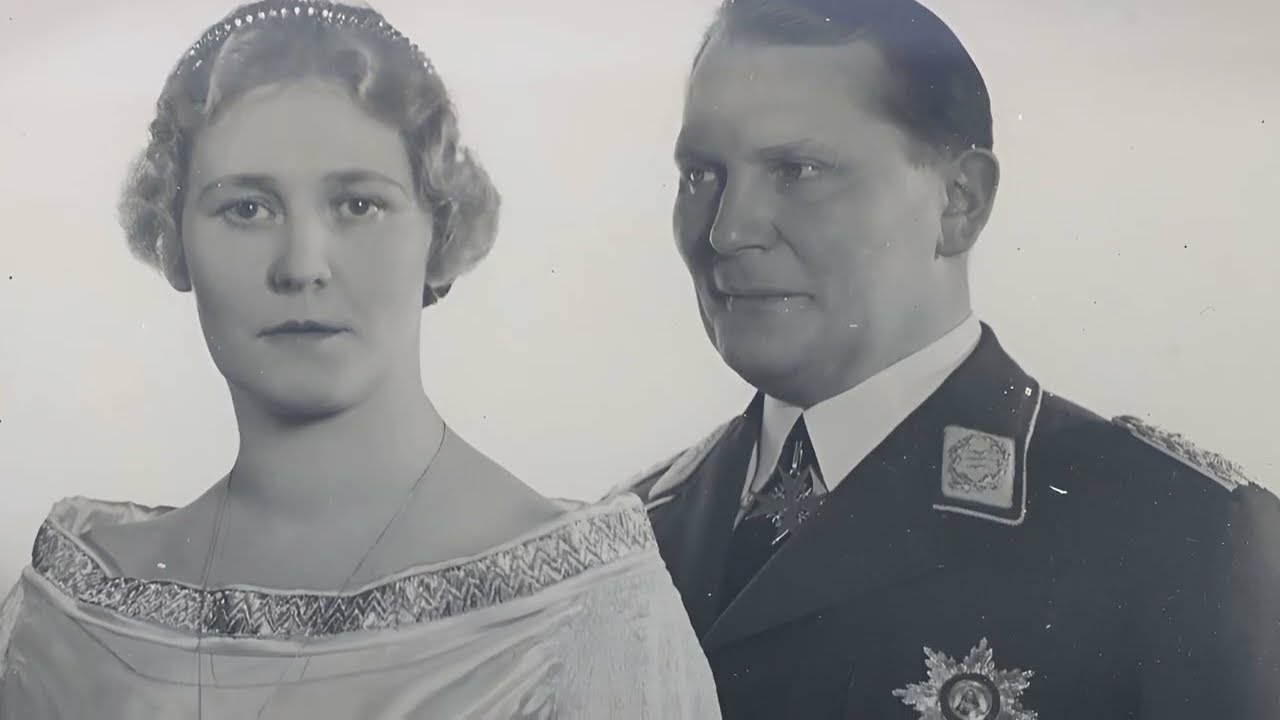
Her wardrobe was a second indictment, a textile trail of blood. Emmy owned more haute couture than any woman on the continent, a collection of gowns, furs, and jewels that defied the wartime rationing that starved the rest of Europe. Her dresses were sewn by enslaved seamstresses in concentration camps, women who worked under the lash to clothe the wife of their tormentor.
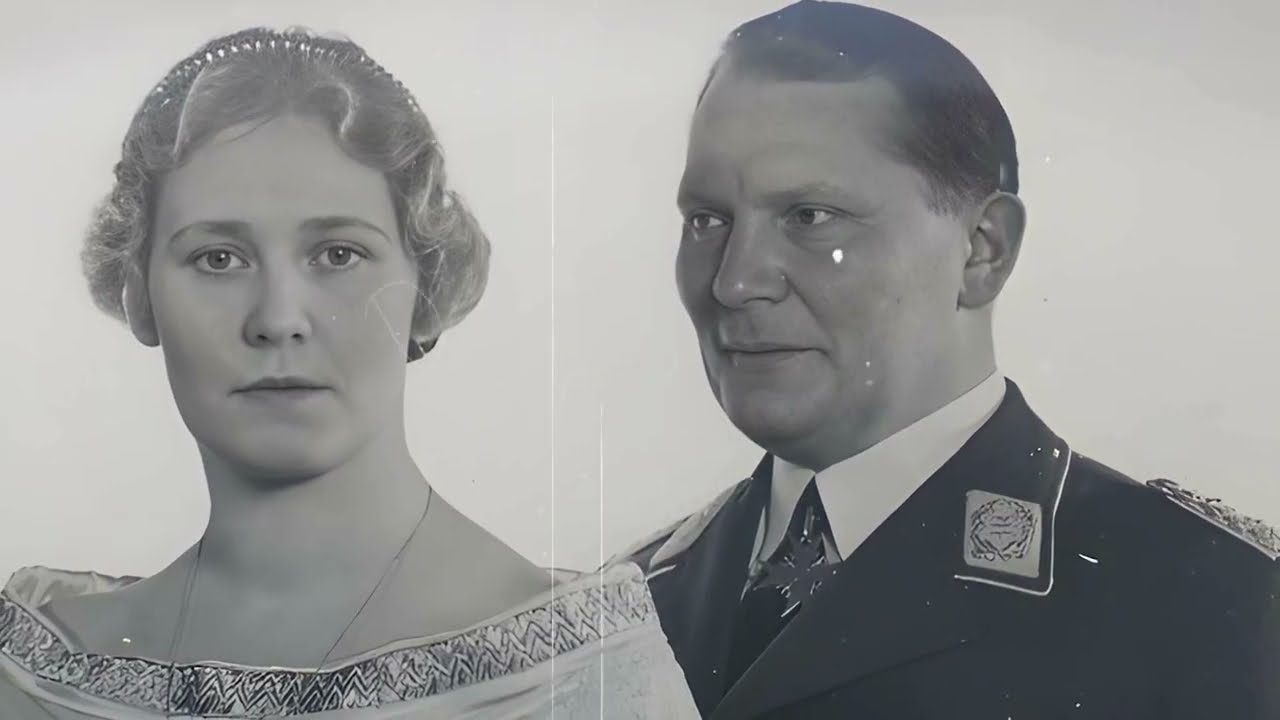 Her jewelry was stripped from the bodies of Jewish women before they were led to the gas chambers. Each diamond, each pearl, each strand of gold carried the weight of a stolen life. She draped herself in the spoils of murder, and when questioned, she claimed to have never asked where any of it came from.
The defense of ignorance is a fragile shield, but Emmy wielded it with the skill of a seasoned performer. She insisted she was merely a wife, a woman who accepted gifts without inquiry, a creature of domesticity who had no interest in the machinations of power. Yet her actions contradicted her words.
She was not a passive recipient; she was an active participant in the social machinery of the Reich. She wielded influence, demanded respect, and engaged in petty power struggles that revealed a keen understanding of the political landscape she claimed to ignore.
Her arrogance, in fact, led to her downfall within the regime. She openly despised Eva Braun, Hitler’s mistress, treating her with visible contempt and refusing to acknowledge her status. This was not the behavior of a naive woman; it was the calculated snobbery of a social climber who believed herself untouchable.
Hitler, enraged by the insult to his companion, banned Emmy from the Berghof, his Bavarian retreat. The woman who had once been the unofficial First Lady found herself exiled from the inner sanctum of power, a pariah in the very court she had sought to rule.
As the Third Reich collapsed in April 1945, the Görings’ world imploded. Hermann, sensing the end, sent a telegram to Hitler requesting permission to assume leadership. Hitler, seeing it as a betrayal, stripped him of all titles and issued a direct order to the SS: execute Hermann, Emmy, and their seven-year-old daughter, Edda.
The family that had lived as royalty was now marked for death by their own Führer. They waited in terror for the SS to arrive, but the chaos of the Soviet advance saved them. Allied forces captured them before the execution squad could complete its mission, trading a Nazi bullet for a prison cell.
Hermann Göring was tried at Nuremberg, convicted of crimes against humanity, and sentenced to death. On October 15, 1946, hours before his scheduled hanging, he bit down on a cyanide capsule and died, 𝒸𝒽𝑒𝒶𝓉𝒾𝓃𝑔 the gallows. Emmy was left to face her own reckoning.
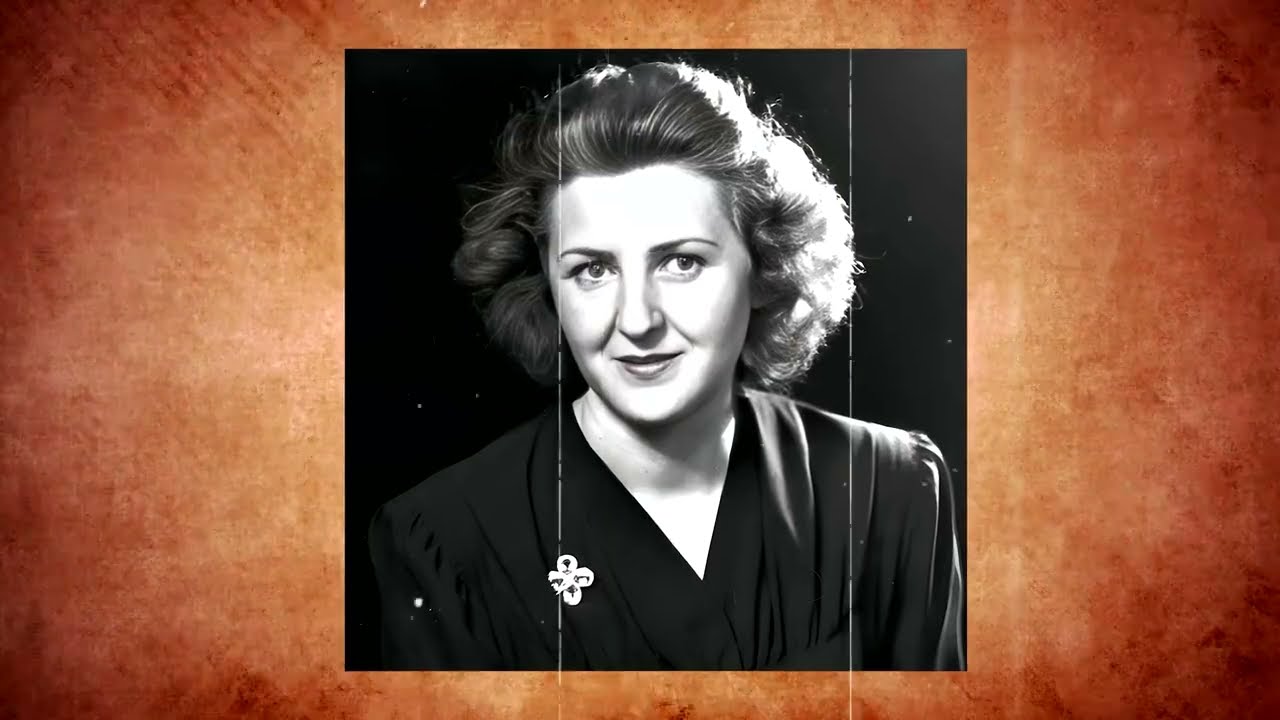 Her denazification trial in 1948 became a legal test case for the limits of complicity. The prosecution painted a picture of a woman who had lived at the heart of the beast, surrounded by evidence of systematic theft and murder. The stolen paintings, the plundered jewelry, the enslaved seamstresses—how could she claim ignorance while living in that house?
Her defense was a masterclass in victimhood. She was an actress, they argued, not a politician. She had no interest in ideology.
She was a wife and mother who simply lived the life her husband provided. The tribunal, struggling to fit her crimes into a legal framework designed for overt acts of violence, delivered a verdict that has haunted jurisprudence ever since. She was convicted as a Nazi activist, not a war criminal.
Her sentence: one year in a labor camp, which she had already served during her internment. Thirty percent of her assets were confiscated, and she was banned from the stage for five years. Then she walked free.
The verdict was a travesty to the families of the victims. She had worn the jewelry of murdered women, lived in a palace built on stolen art, and hosted dinners beneath paintings taken from people sent to death camps. Yet she served no additional time.
The legal system, designed to punish overt acts of brutality, had no mechanism to address the crime of living comfortably atop a mountain of corpses. The question that emerged from her trial remains unresolved today: when does living in denial become active participation? How much stolen wealth does it take to make someone complicit?
Emmy’s post-war life was a study in contrasts. The woman who had owned Europe’s largest wardrobe was reduced to two dresses. The mistress of Karinhall lived in a cramped apartment with no running water, no toilet, and no electricity.
She spent years fighting in German courts to recover fragments of her husband’s property, winning minor victories that returned a few pieces of jewelry, losing the battles for the paintings that had been returned to their rightful owners or absorbed into museum collections. She never accepted her fall. She wrote a memoir defending Hermann’s memory, posed for photographs in her shabby apartment, and maintained until her final breath that she had been persecuted unfairly.
 She died on June 8, 1973, in Munich, outliving her husband by nearly three decades. She never repented, never admitted wrongdoing, never acknowledged the blood that stained the silk of her gowns. Her daughter Edda, Hitler’s goddaughter, spent her life defending her father’s legacy, never marrying, never renouncing the family name.
She died in 2018, buried in an unmarked grave to prevent it from becoming a pilgrimage site for neo-Nazis. The family’s legacy is one of denial, a fortress of willful blindness that withstood the scrutiny of history.
Emmy Göring’s story is not merely a historical footnote; it is a mirror held up to the present. In an age of global inequality, where wealth is often built on the exploitation of the vulnerable, her life forces us to confront our own complicity. We walk through stores filled with goods produced under oppressive conditions.
We wear clothing sewn in sweatshops. We consume resources extracted through environmental destruction and human suffering. And we claim, like Emmy, that we do not know.
We do not ask. We accept the gift of our comfortable lives without questioning the provenance of the materials that make them possible.
The difference, of course, is scale. Emmy Göring lived in a palace filled with 1,375 stolen masterpieces while the owners were being murdered. She wore jewelry stripped from bodies while the donors were being gassed.
She hosted dinners beneath art confiscated from families as their children were loaded onto trains. The magnitude of her blindness is almost incomprehensible, yet it is precisely that incomprehensibility that makes her story so unsettling. It suggests that the human capacity for self-deception is virtually limitless, that we can convince ourselves of anything if the alternative is too painful to bear.
Maybe she truly did not know. Maybe the human mind is capable of such profound dissociation that it can erase the evidence of atrocity from its own living room. Or maybe she knew exactly what her life was built on and simply decided that stolen masterpieces looked better when you did not ask where they came from.
The verdict of history is still out, but the evidence is damning. She died claiming innocence, but the paintings on her walls, the jewels on her fingers, and the gowns on her back all screamed the truth. She was not a bystander to evil; she was its beneficiary, its curator, and its defender.
And in that, she was as guilty as any man who pulled the trigger.


