
The legend of Dangerous Dan Tucker has long been a whisper among historians of the American Southwest, a name that evokes a body count rivaling the most infamous gunmen of the era, yet a figure who remains shrouded in mystery. New details emerging from historical archives and a comprehensive biography by author Bob Alexander are shedding light on a man described as a “better law man and more dangerous” than the legendary Wyatt Earp or Wild Bill Hickok. Tucker’s story, which begins in the murky shadows of the mid-1870s, is one of extreme violence, questionable justice, and a final descent into obscurity that has left experts piecing together a life that was as deadly as it was enigmatic.
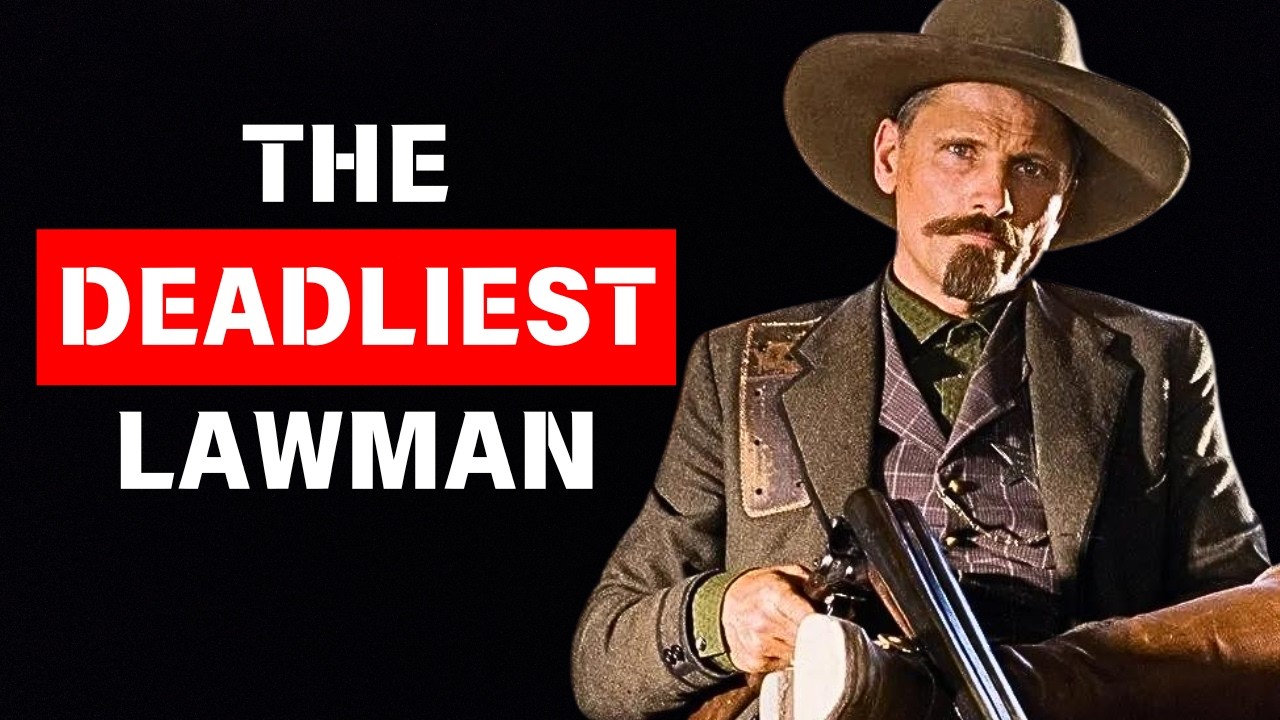
Arriving in the lawless boomtown of Silver City, New Mexico, around 1877, the then 28-year-old Tucker presented a deceptively unassuming figure. Described by citizens as a shy, soft-spoken, and slim-built young man with blue eyes and light brown hair, he often dressed in a dark sombrero and blue flannel shirt. However, Sheriff Harvey Whitehill saw beyond the quiet demeanor and hired the newcomer as a deputy, a decision that would forever alter the landscape of law enforcement in Grant County.
 The territory was a sprawling, wild expanse, and Whitehill needed men of grit to tame it. What he got in Tucker was a man whose willingness to use lethal force would quickly become his defining characteristic, setting a precedent that “fleeing from an officer was tantamount to an admission of guilt.”
The earliest accounts of Tucker’s tenure are marked by a chilling efficiency and a lack of witnesses. In June of 1877, he and a posse pursued four murder suspects who vowed not to be taken alive. In the ensuing battle, three were cut down, but the fourth, Bob Nelson, escaped.
While the posse returned to town to celebrate, Tucker remained on the trail, returning hours later leading Nelson’s riderless, bloodstained horse. Tucker claimed he could not locate the wounded man, yet Nelson’s body was later discovered just 300 yards from where the horse was found. This pattern of returning with riderless horses and terse explanations, such as the missing riders “couldn’t ride in any longer and were left behind,” only added to the deputy’s growing mystique and fear-inducing reputation.
Tucker’s first verified 𝓀𝒾𝓁𝓁 came in August 1877, when he shot and killed a man named Atao Bomo who was attempting to escape custody. The Grant County Herald justified the action, stating it was “in the discharge of his duties as the deputy sheriff.” This incident set the tone for his career.
Shortly after, he shot a drunken Buffalo Soldier in the arm for resisting arrest. Weeks later, he killed a man who had stabbed another in a dance hall, gutting him to the point his intestines were 𝓮𝔁𝓹𝓸𝓼𝓮𝓭. Eyewitnesses described Tucker drawing his six-shooter, holding it with both hands, and firing at a target 50 yards away in dim light, spinning the fleeing attacker like a top.
The stabbing victim survived after a doctor “scooped his guts up, rinsed them off and shoved them back in,” but the message was clear: Dan Tucker was not a man to be trifled with.
Perhaps the most controversial chapter of Tucker’s career, and one that threatens to redefine his legacy, is his involvement in the El Paso Salt War of 1877-78. When Texas officials organized a posse to quell the uprising over salt rights in San Elizario, they specifically recruited Tucker from Grant County and made him a captain. The conflict, which saw Hispanic locals fighting for access to communal salt deposits against Anglo claimants like Charles Howard, erupted into a bloody siege.
After a group of Texas Rangers uncharacteristically surrendered and Howard was executed by a firing squad, Tucker and his band of roughly 30 mercenaries, which included the outlaw John Kinney, descended upon the area. Reports indicate that Tucker’s men went on a killing spree in nearby villages, with estimates of the death toll ranging from 20 to 30 men. While there is no direct record of Tucker committing rape or murder against civilians, as the captain, he bore responsibility for the atrocities committed by his men, a failure that historian Bob Alexander notes “fell far short of the mark” in terms of leadership and discipline.
 Despite this dark episode, Tucker returned to New Mexico and continued his role as a lawman, becoming the first Town Marshal of Silver City. His methods remained brutally effective. In the town of Shakespeare, he arrested two men, Sandy King and Bill Tattenbaum, for minor offenses.
That very night, a vigilance committee dragged them from jail and hanged them from the rafters of a stage station. Tucker’s whereabouts during the lynching remain unknown. He also presided over the controversial double hanging of a Black man and a white man, which so outraged the citizens that both Tucker and Sheriff Whitehill received death threats.
The execution went forward anyway, a testament to Tucker’s defiance in the face of public opinion.
Tucker’s reputation for deadly force reached its zenith in the railroad town of Deming, which he was tasked with cleaning up in 1881. The town was so rough that a passerby noted “no man ventures any distance from the village without his Winchester rifle.” Within his first three days, Tucker killed three men and wounded two others.
He jailed 13 members of the “Cowboy gang” within weeks, and the local paper reported that “the most perfect order now prevails at Demming.” It was here that he famously used a double-barreled shotgun, reportedly a W. Richards imported from Belgium with barrels cut down to 19.
5 inches, to dispatch an outlaw named Jake Bond who had been riding his horse into hotels and firing off pistols. The Las Vegas Optic reported that Tucker fired without hesitation, landing nine buckshot in Bond’s body, killing him instantly.
The violence took a toll on Tucker’s own body. In October 1881, he was shot in the leg and abdomen by a man named George Brown in Benson, Arizona. The Tombstone Epitaph erroneously pronounced his wounds fatal, but Tucker survived, albeit with pain that would plague him for the rest of his life.
 A year later, he was involved in the killing of fellow lawman James Burns, a drunk and belligerent deputy who had been causing a disturbance in Silver City. When Burns drew his weapon on Marshal Gladius Moore, Tucker shot him dead. The killing sparked outrage, and for the first time in his career, Tucker was held to account.
He was jailed, along with Moore and another deputy, under threat of lynching. Though he was released on bond and charges were eventually dropped, suspicion remains that the shooting was an orchestrated assassination, and local papers began accusing Tucker of being “too free with his pistol.”
In December 1882, Tucker was brutally attacked in a Deming brothel. Two prostitutes embraced him as a distraction, allowing an assailant to grab his pistol. In the ensuing struggle, Tucker was shot twice, once in the shoulder.
He was saved from being massacred only when other Americans rushed in. The wounds were severe, and as he prepared to leave town for medical treatment, enemies mocked him as a coward, posting letters claiming he was fleeing from threats to hang him. In a scene straight out of a dime novel, Tucker rose from his sickbed, confronted the would-be toughs with his face drawn in pain, and banished them from town.
They immediately backed down, claiming they were only joking.
Tucker’s health never fully recovered. Historians note that his overall condition began to deteriorate, with some implying he became an alcoholic, though contemporary newspapers never attributed drinking as one of his vices. He was forced to quit his job riding shotgun for Wells Fargo due to the physical toll of the bouncing stagecoaches, though he continued to work for the company via railroad.
He also diversified his income, opening a saloon and boarding house in Deming, and was appointed as a Deputy U. S. Marshal.
 His final known arrest was a remarkable feat: while riding a train from El Paso, he spotted a wanted horse thief walking along the tracks, convinced the conductor to slow the train, hopped off, and nabbed his quarry.
By the late 1880s, Tucker’s trail goes cold. He left New Mexico for California in his early 40s, and his life there is completely unknown. A brief visit to Silver City in 1892 showed he had “grown so fleshy that his friends hardly knew him.”
The only hint of his fate comes from a resident who asserted Tucker died about a year and a half later in a county hospital in San Bernardino. This is somewhat corroborated by Sheriff Whitehill’s son, who stated, “He went out to San Bernardino and died I think.” The hospital in question was the Southern California State Asylum for the Insane and Inebriates, and historians believe Tucker may have been buried in an unmarked grave on the site, an area now covered by a golf course.
This would explain why his name does not appear in any cemetery archives.
The question of who Dan Tucker really was remains a subject of intense debate. Historian Leon Metz wrote that “Tucker was a better law man and more dangerous than such high-profile figures as Wyatt Earp and Wild Bill Hickok,” yet he is practically unheard of today because he lacked the ability or need to exploit himself. Unlike Earp or Hickok, who had literary champions to lionize them, Tucker slipped between the pages of history.
There are unsubstantiated stories, such as Doc Holliday and Wyatt Earp giving Deming a wide berth due to Tucker’s reputation, and a tale of him gunning down seven members of Curly Bill Brocius’s gang, which Alexander dismisses as a “figment of unbridled imagination.” What is certain is that Tucker almost certainly committed killings that have no record, and his career was marked by a “tendency to shoot first” that would have seen him imprisoned or hanged in a later era.
Bob Alexander’s biography concludes that while Tucker failed in his executive ability during the Salt War, his subsequent performance demonstrated a commitment to lawfulness. He was a “lone wolf, fiercely independent, self-reliant and dangerous,” who sought pleasure with hard drinkers and gamblers but whose primary vocation was enforcing the law. Whether he was a hero is a question left to the reader, but Alexander asserts that Tucker “added a much-needed stabilizing presence during a dangerous and wearisome test of New Mexico Territory’s resolve to carve civilization out of an untamed wilderness.”
In the final assessment, despite his flaws and the blood on his hands, Dan Tucker was, by all accounts, “the real deal.” His story, now brought back into the light, challenges the romanticized notions of the Old West and forces a reckoning with the brutal reality of frontier justice.


