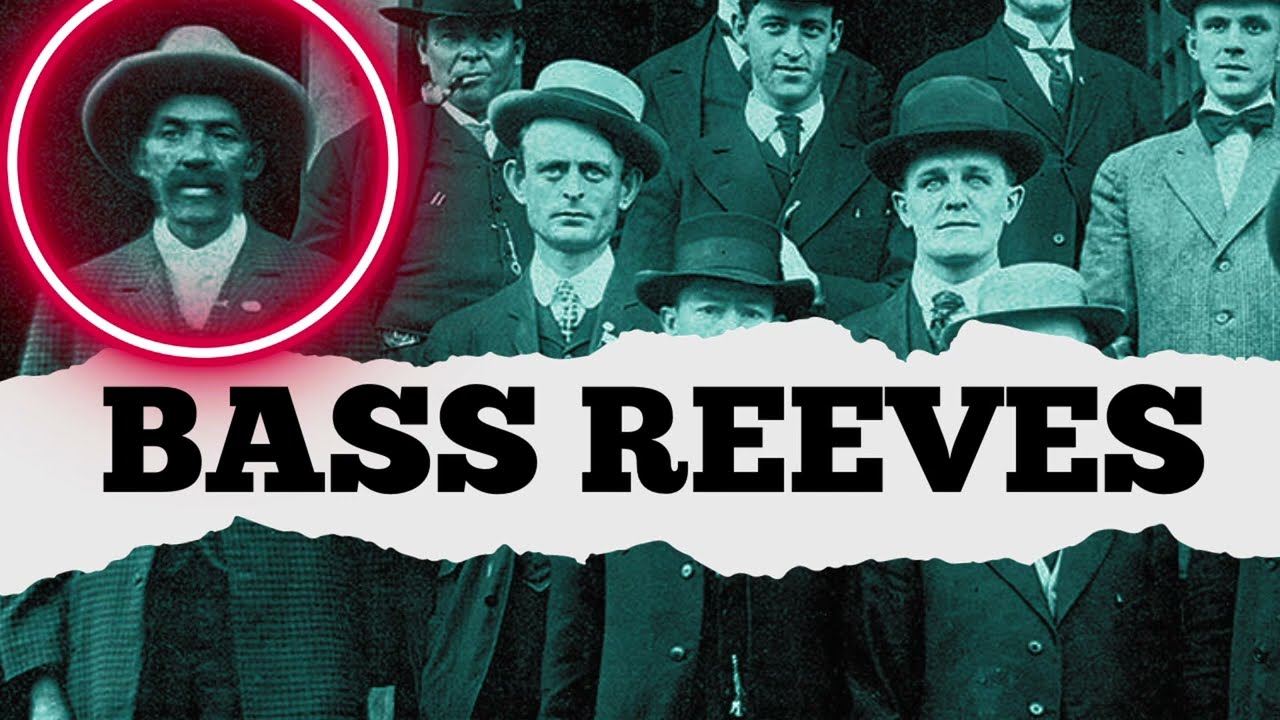
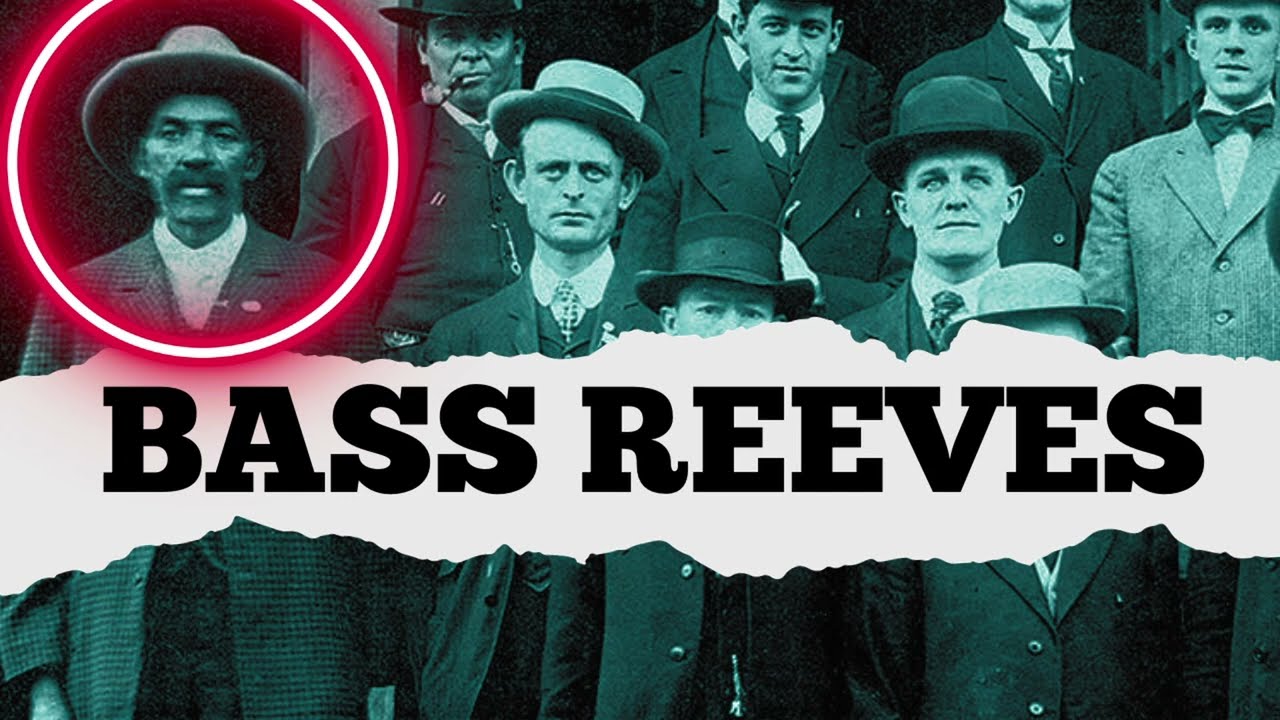
FORT SMITH, ARKANSAS — The true measure of a man is often found in the contradictions he embodies, and few figures in American history illustrate this more profoundly than Deputy U. S. Marshal Bass Reeves.
Born into the brutal chattel slavery of Arkansas, Reeves would rise to become the most prolific lawman of the Indian Territory, a man who rode for three decades under the iron fist of Judge Isaac Parker, dragging thousands of outlaws back to face justice in the courtroom known as “Hell on the Border.” Yet, for over a century, his name was relegated to the footnotes of history, a spectral presence overshadowed by the very white lawmen he out-worked and out-shot. But a comprehensive re-examination of court records, personal correspondence, and family lore reveals not just a great lawman, but a deeply complex man who navigated a world that simultaneously revered his badge and despised his skin color, ultimately forcing us to confront the legacy of the real American West—a place far more diverse and morally ambiguous than the silver screen ever suggested.
 The story of Bass Reeves is not merely a tale of gunfights and last-minute captures; it is a narrative steeped in the harsh realities of Reconstruction-era America. His journey from a runaway slave to a sworn federal officer is a testament to extraordinary willpower, but it is his later years that offer the most startling insights into his character. According to meticulous research and the accounts of his descendants, Reeves was not just a shooter; he was a strategist, a pragmatist, and a man acutely aware of his precarious position in a society that was increasingly turning its back on the promises of racial equality.
The recent documentary analysis of his life, drawing on archives and interviews, paints a picture of a man who used his wits just as often as his . 45 Colt revolver, employing disguises, psychological tactics, and a profound understanding of human nature to achieve what brute force alone often could not.
One of the most revealing chapters in this newly highlighted legacy involves the hunt for Ned Christie, a Cherokee statesman falsely accused of murdering a deputy marshal in 1887. While many accounts frame this as a simple manhunt, the deeper narrative reveals a grim reality of the era: a well-respected indigenous leader, targeted because of the lies of a criminal seeking to save his own skin, who was forced into a desperate war for survival. The records confirm that Reeves, alongside other deputies like Heck Thomas, was dispatched to bring Christie in, dead or alive.
Reports from the November 1890 edition of the Vanita Indian Chieftain explicitly credit Reeves with locating Christie’s fortress-like cabin and burning it to the ground in an attempt to flush him out. This act, while effective in depriving Christie of a defensive position, was not the culmination of the chase; Christie escaped the inferno, wounded, proving that even the legendary Reeves could be thwarted by sheer will. The episode underscores a brutal aspect of frontier justice—the system was often blind to the guilt or innocence of the accused, and officers like Reeves were the blunt instruments of that flawed machinery.
Despite the failed capture of Christie, the early 1890s solidified Reeves’ reputation as the most relentless manhunter in the territory. The documentary highlights a string of arrests that would make even the most hardened fictional heroes seem tame. In 1891, Reeves ran down the prolific outlaw Bob Doer, a man involved in cattle rustling, stagecoach robbery, and a litany of other crimes.
While family legend tells a tale of a dramatic nighttime gunfight during a thunderstorm where Reeves played dead in the mud before springing up to gun down Doer, the official court records show a different, yet equally impressive, outcome: Reeves brought Doer in alive, a feat far more dangerous and difficult than killing him. Then there was Green Leaf, a notorious fugitive on the run for eighteen years, a man so infamous that crowds gathered just to watch Reeves march him in shackles into Fort Smith. These were not just arrests; they were psychological victories that demonstrated to the diverse inhabitants of the Indian Territory that the law was absolute, regardless of who was wielding it.
However, the looming shadow of segregation began to alter the trajectory of Reeves’ career and personal demeanor. The documentary emphasizes the devastating impact of the Supreme Court’s decision in Plessy v. Ferguson in 1896.
This landmark ruling, which enshrined “separate but equal” into law, was a profound betrayal to a man who had risked his life for the federal government for years. According to interviews with the Reeves family, the decision broke something in the man. He felt the hot breath of the state denying his humanity despite his impeccable record of service.
Where he had once been vocal and confident, he became more reserved, standing at the back of crowds where he might have otherwise stood tall. He began to favor working in areas with larger Black and Native American populations, reportedly telling associates that arresting white men wasn’t “worth the trouble” anymore—a devastating admission of the shifting racial climate that signaled the end of the integrated frontier he had once policed.
The personal tragedies that accumulated in these later years also strip away any romanticized notion of his life. While Bass was away on duty, his children back in Fort Smith began to act out; two of his sons were sent to the Arkansas State Penitentiary in the summer of 1895, one for perjury and another for assault. His beloved first wife, Jennie, passed away from cancer in 1896, with records indicating that the relentless pursuit of criminals prevented Reeves from attending her funeral—a loss that must have weighed heavily on the aging lawman.
The documentary recounts the harrowing tale of his son Benjamin, who, in 1902, came home to find his wife with another man. Following his father’s blunt advice to “shoot the hell out of the man and whip the living God out of her,” Benjamin instead murdered his wife in a fit of rage. When Bass heard of it, he demanded the arrest warrant himself, stating, “It is my boy…
 give me the warrant and I’ll bring him in.” Two weeks later, he returned with his son in custody.
This act of arresting his own son has often been cited as the pinnacle of Reeves’ dedication to the law. The documentary offers a more nuanced interpretation, suggesting that Reeves’ decision was born not just of duty, but of a father’s desperate attempt to protect his child from the guaranteed violence of a white posse. In the 1890s, a Black man accused of murdering his wife would have been a prime target for a lynching.
By bringing Benjamin in himself, Reeves ensured his son would at least face a formal trial, and sure enough, Benjamin’s life sentence was commuted after eleven years. This perspective reframes the story not as a cold act of a robotic lawman, but as the calculated move of a man who understood the brutal racial politics of his time better than anyone. He knew that allowing a stranger to arrest his son would likely result in an “accident” on the trail; by securing the warrant himself, he was the only person he trusted to bring his son back alive.
Even into his late sixties, Reeves remained a formidable presence, though the nature of his work shifted. The documentary notes that by 1907, with the territory on the brink of statehood, Reeves was involved in a bizarre standoff with a group of self-proclaimed anarchists who called themselves the “United Socialist Club.” Led by a “Minister” named William Wright, who practiced voodoo and claimed his followers were exempt from U.
S. law, the group barricaded themselves in a house in Muskogee. A gunfight erupted that wounded two deputies.
The 69-year-old Reeves, though arriving late to the scene, still managed to get involved in the firefight, killing at least one of the anarchists. It was a far cry from the horse-mounted pursuits of his youth, yet it proved that his nerve and accuracy had not wavered with age. He continued to make arrests, including hauling in the very minister who had baptized him, for selling illegal whiskey, cementing his reputation for impartiality—or, perhaps, a lack of sentimentality that bordered on the ruthless.
When Oklahoma gained statehood in November 1907, the federal marshal service was downsized, and Reeves, for the first time in decades, was out of a job. Undeterred, he took a position on the Muskogee police force. A local paper described him as being over 70 years old, walking with a limp from a gunshot wound in his leg, yet still “as quick on the trigger as in the days when gunmen were in demand.”
The article noted that he had an assistant walk behind him carrying a sack of guns, a testament to his unyielding caution. He never turned his back to a crowd and never allowed anyone to approach him from behind without him first securing a wall. This was a man who had survived assassination attempts, including one in 1906 where he was fired upon while traveling in a wagon, and he had no intention of letting his guard down in the twilight of his career.
His health, however, was failing. Battling Bright’s disease, a painful kidney ailment that had also killed his former boss Judge Parker, Reeves was forced to hang up his badge for good on January 12, 1910, after an astonishing 32 years of service. He passed away soon after, leaving behind a legacy so immense that it threatened to burst the seams of the small town of Muskogee.
There is no marked grave for Bass Reeves; the location of his burial is lost to history, though researchers believe it is either in the old Agency Cemetery or a small plot west of town. The lack of a headstone stands in stark contrast to the magnificent bronze statue that now sits in Fort Smith, Arkansas, honoring the man who brought thousands of criminals to justice. It serves as a poignant metaphor for his life: a man of immense contribution, yet historically rendered invisible.
 The question of whether Reeves was the inspiration for the Lone Ranger has been a persistent source of debate. The documentary meticulously walks through the similarities: Reeves was a lawman who often worked with Native American scouts (akin to Tonto), he used disguises (the mask), and he was known to dispense silver dollars (the silver bullets). However, a deeper dive into the origins of the fictional character reveals that the creators, George W.
Trendle and Fran Striker, never mention Bass Reeves in any of their correspondence. They cite early Hollywood actor Tom Mix and the legend of Robin Hood as their primary sources of inspiration. This has led many historians to conclude that the connection is a myth, a wishful attempt to claim a pop culture icon for Black history.
Art Burton, the author of the definitive biography Black Gun, Silver Star, acknowledges this, stating he doesn’t believe the Lone Ranger myth is harmful, as it generates interest in Reeves, but admits it isn’t true.
Even without the Lone Ranger connection, Reeves’ actual record stands on its own as the stuff of legend. The documentary highlights his “letter trick,” a ruse he used to disarm two Texas murder suspects in 1904. Feigning illiteracy, he pulled out a letter he claimed was from his wife and asked the men to read it to him.
As they looked down at the paper, Reeves reached out and grabbed one by the throat while drawing his revolver with his other hand, forcing the second to surrender. There is also the account of the time he killed an outlaw named Ben Billy, documented not by a tall tale but by Reeves’ own letter to his marshal, requesting a warrant for Billy’s accomplice. He wrote matter-of-factly that the man “put up a fight,” forcing Reeves to shoot him.
These stories, verified by official court transcripts and testimonials from his posse men, paint a picture of a man who was a master of his trade, able to adapt to any situation with lethal efficiency.
One of the most sobering aspects of the documentary is the recounting of the racial double-standards that Reeves had to navigate. While he was celebrated by some, there was a growing resentment among white settlers who streamed into the territories following the Dawes Act. They were astonished to see a Black man enforcing federal law, often over white prisoners.
The sheer volume of his arrests—16 prisoners in August 1882, 13 in August 1883, 12 in February 1884, and a staggering 17 in October 1885—made him a target. Yet, he managed to avoid the deadly fate that befell many other Black men during this era, perhaps because his reputation was so formidable that few were willing to test him. His survival for over three decades in one of the most dangerous regions of the country is perhaps the greatest testament to his skill, not just with a gun, but with his ability to read people and assess danger.
His family life was fraught with tragedy, yet it also displayed the resilience that defined his career. He married Winnie Sumer, a Cherokee widow, in 1900, just months after the death of his first wife. He fathered a total of eleven children, many of whom died young; his 17-year-old daughter died of epilepsy in 1900, and his 14-year-old son, Bass Reeves Jr.
, died of pneumonia in 1901. Despite these losses, several of his children survived to carry on his name, and his great-nephew, Paul E. Brady, would go on to make history in 1972 as the first Black man appointed as a federal administrative law judge.
 Critically, it was Brady’s aunt, Lucenda Todd, who initiated the case that would become Brown v. Board of Education, the landmark Supreme Court decision that finally overturned Plessy v. Ferguson and signaled the end of legalized segregation—a decision that Bass Reeves, who felt so betrayed by the earlier ruling, would never live to see.
The legacy of Bass Reeves is one of immense contradiction. He was a Black man who wielded immense authority in a time of rampant racism, yet he did so with a lethal proficiency that commanded respect, or at least, caution. He was a father who arrested his own son to protect him from a more violent end, and a lawman who burned down a man’s home without remorse when that man was accused of murder.
He was a man who was born a slave, yet who carried the ultimate symbol of federal power—a badge and a gun—with the confidence of a king. The recent revival of interest in his story, sparked by documentaries and the new television miniseries Lawmen: Bass Reeves, is a welcome correction to the historical record. It forces us to acknowledge that the American West was not just a white man’s frontier, but a melting pot of races and cultures, where a former slave could become the most effective crime-fighter of his generation.
The legend of Bass Reeves is not diminished by the truth—it is amplified by it. The fact that he wasn’t the basis for the Lone Ranger doesn’t matter. I don’t need a fictional character to validate the story of a real man who survived a lightning strike, escaped slavery, and spent over thirty years hunting down the most dangerous criminals of the Victorian era without ever being fired.
His legacy serves as a powerful counter-narrative to the myth of the West, demonstrating that heroism can come from the most unlikely of places. Judge Parker, the infamous “Hanging Judge,” called him one of his best deputies. The residents of the Indian Territory, both Native and Black, learned to trust him.
And the outlaws learned to fear him. The fact that his story was suppressed for so long tells us more about the nation’s failure to confront its racial history than it does about Reeves’ actual accomplishments.
In the end, the search for the grave of Bass Reeves continues, a metaphor for the way his memory was lost and is now being painstakingly recovered. The lack of a headstone is a stark reminder that history is often written by the victors, and for a long time, the victors of the Western narrative were white men. But the archival evidence is irrefutable.
The court dockets at Fort Smith are filled with the names of prisoners brought in by Bass Reeves. The pay vouchers show his salary. The newspaper clippings of the time, read even then with a sense of wonder, describe his exploits.
He was a giant of a man, weighing over 200 pounds, standing over six feet tall, who could shoot a running rabbit at 100 yards. He was the real deal, and the recent attention is long overdue. The story of Bass Reeves is not just a great American story; it is a fundamental part of the American story, and it is a tragedy that it took so long for the world to listen.
His life is a testament to the idea that the law, at its best, is blind, and that justice can be served by the hands of a man who was once considered property himself.