
The frozen expanse of Greenland, a desolate and unforgiving territory of ice and rock, has long been the subject of strategic intrigue and whispered conspiracies. But a new examination of declassified documents, survivor testimonies, and wartime flight logs suggests that the final, desperate chapter of the Third Reich may have included a meticulously planned aerial exodus to this Arctic wilderness. According to evidence pieced together from the confessions of Nazi Minister of Armaments Albert Speer and the 2003 deathbed testimony of a former Luftwaffe captain, a plan was not only conceived but actively prepared to fly senior Nazi fugitives to Greenland’s eastern coast in the spring of 1945.
The revelation, which has reignited debate among historians, centers on the figure of Albert Speer, the architect turned armaments czar who controlled a vast slave labor empire that propped up the German war machine. As the Allied noose tightened in early 1945, Speer, a man of immense intellect and ruthless pragmatism, reportedly foresaw the inevitable collapse of the Reich. Facing the prospect of the gallows for his complicity in war crimes, he allegedly sought a temporary sanctuary where he could wait out the immediate post-war chaos, believing that a few months of obscurity would allow the world’s attention to shift and his crimes to fade from memory.
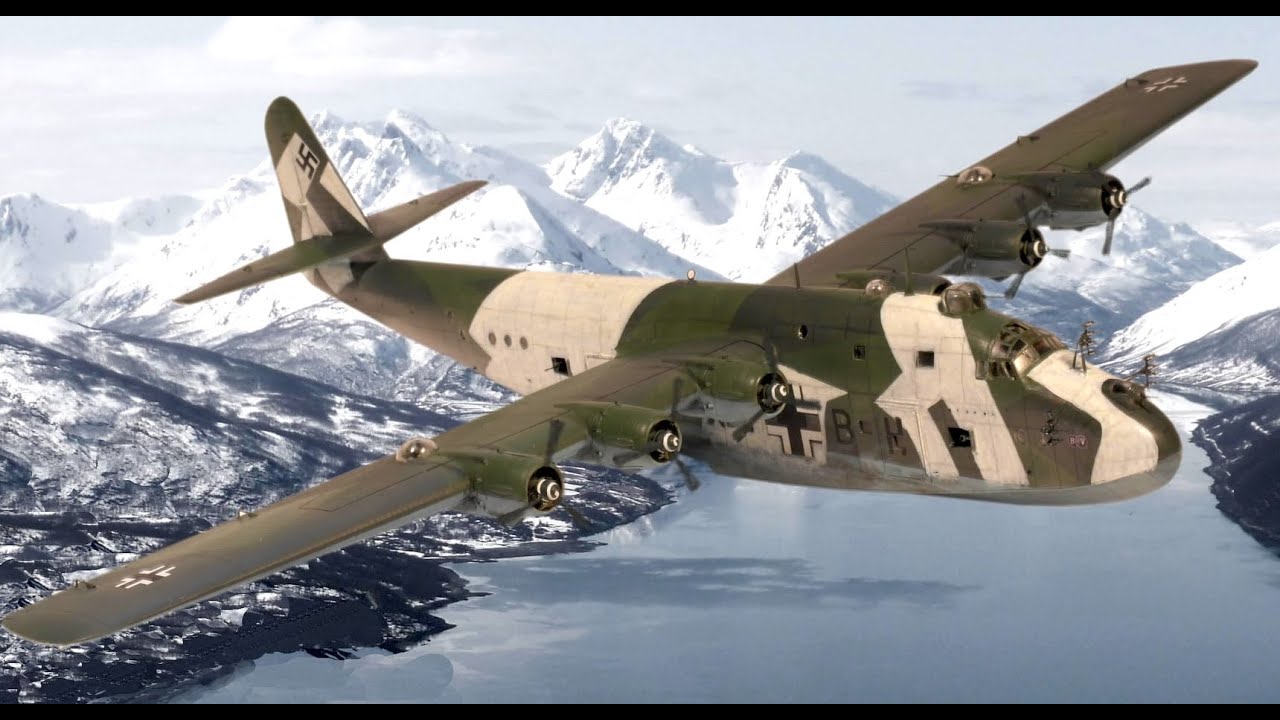 The plan, which appears to have been codenamed and operationalized in April 1945, involved the use of the Luftwaffe’s largest operational flying boats, the colossal Blohm & Voss BV 222. These six-engine giants, capable of landing on open water or frozen lakes, were the only aircraft in the German inventory with the range and capacity to make the non-stop flight from northern Germany to the remote fjords of Greenland. The logistical framework for this audacious escape was reportedly spearheaded by Oberst Siegfried Knemeyer, chief of Luftwaffe technical development, a man who worked closely with Speer on aircraft production and possessed the expertise to coordinate such a complex mission.
The key witness to this operation, former Luftwaffe Captain Ernst Kernig, a top navigator who was 93 years old when he broke his silence in 2003, provided startling details that corroborated Speer’s own private admissions. Speaking from his sheltered housing unit in Travemünde, Kernig described how he and other officers were tasked by their commander, Oberstleutnant Lenhof, to prepare two BV 222s for a mission to Greenland. Tons of equipment began to arrive at the seaplane base, including skis, tents, food supplies, sledges, rifles, and fishing gear—everything necessary for a large group to establish a summer camp and survive for six months without resupply.
This inventory matched Speer’s stated intention to use the Arctic summer to write his memoirs and collect his thoughts before returning to a defeated Germany.
The urgency of the plan was underscored by the chaotic final days of the Third Reich. On April 20, 1945, Speer attended Hitler’s 56th birthday celebration in the bomb-damaged Reich Chancellery in Berlin. He then traveled north to Hamburg, establishing a mobile headquarters with his ministry staff and bodyguard unit.
It was from this location that he allegedly gave the go-ahead for the Greenland mission. However, the operation was dealt a near-fatal blow on April 24, 1945, when Allied fighter-bombers from the Royal Canadian Air Force’s 439 Squadron attacked the seaplane base at Zadorf, near Plön, destroying one BV 222 and damaging another. The attack, which has been confirmed by wartime records, was a devastating setback for the escape plan.
 Despite this aerial bombardment, the effort was not abandoned. Kernig stated that a third, undamaged BV 222 was worked on at Travemünde to return it to a flying state, and fresh supplies were gathered to restock it for the Greenland mission. This frantic activity was driven by the knowledge that the end was imminent.
The documentary trail supporting this narrative includes an archive copy of a mission order addressed to Oberstleutnant Lenhof, commanding the seaplane base, which explicitly references the Greenland operation. This order, coupled with the physical evidence of the aircraft’s capabilities and the testimony of those involved, moves the story from the realm of fringe conspiracy into the sphere of credible historical inquiry.
The choice of Greenland was not arbitrary. Despite being Allied territory, with several US air bases established on the island, the Germans had maintained a significant military presence there for most of the war. They operated a network of weather stations along the eastern coast, which were vital for providing accurate meteorological data for military operations in Europe.
These stations, often isolated and vulnerable, were occasionally evacuated by air, proving that long-range flights to and from the Arctic were entirely feasible. In a previous incident, a Junkers Ju 290 had successfully landed on sea ice to rescue 26 stranded German personnel, and a BV 222 had flown over Greenland in July 1944 to drop spare parts to a weather station, unmolested by Allied forces. The Germans knew the terrain, the weather patterns, and the landing zones.
 Speer’s own account, given to historian Hugh Trevor-Roper, painted a picture of a man in denial about the scale of his crimes. He admitted to choosing Greenland for several reasons, including its remoteness and the fact that the prevailing weather systems moved from west to east, which he believed would aid in concealment. He claimed he intended to return to Germany in October 1945, when he assumed the war’s horrors would have been forgotten.
Trevor-Roper was reportedly incredulous at the naivety of the plan, questioning how such a camp could have remained hidden from the Allies. Yet, Speer’s persistence in this narrative, repeated to various military intelligence officials, suggests it was a genuine contingency he had explored.
The plan’s ultimate failure was sealed by a combination of Allied air power and the rapid disintegration of German command structures. On May 1, 1945, Grand Admiral Karl Dönitz informed Speer that Hitler was dead and that he had been appointed Reich President. The following day, Berlin surrendered.
On May 2, the commanding officer at Travemünde called his pilots and ground crew together, declared the war effectively over, issued discharge papers, and ordered them to disperse. The last remaining BV 222 was allegedly demolished with explosives to prevent its capture, eliminating any final chance for Speer to flee to the Arctic.
 Speer himself was arrested by British soldiers at Glücksburg Castle on May 23, 1945, along with the rest of the Dönitz government. He would later stand trial at Nuremberg, where he was sentenced to 20 years in prison for his role in the Nazi regime. The Greenland plan, if it was ever truly ready for execution, died in the rubble of the Third Reich.
The testimony of Captain Kernig, which surfaced nearly six decades later, provides a compelling postscript to the story. His credibility was supported by historians at the Imperial War Museum in London, who noted that his account aligned perfectly with Speer’s own statements and the documented movements of the BV 222 squadrons.
The question of whether the plan could have succeeded remains a matter of intense speculation. The BV 222 had a ferry range of over 6,000 kilometers, making the flight to Greenland feasible. The supplies gathered were sufficient for a prolonged stay.
However, the logistical challenges of establishing a hidden camp in a region patrolled by Allied aircraft, and the sheer improbability of a high-profile figure like Speer remaining undetected for months, suggest the plan was likely doomed from the start. It was, as one historian noted, a desperate gamble by a man who was running out of options. The evidence, however, is now too substantial to be dismissed as mere conspiracy theory.
The frozen north, it seems, was the last refuge of a dying empire’s most calculating mind.


