SIXTY MILES behind his own crumbling front lines, a two-star American general was living underground in a concrete bunker carved into a Tunisian ravine by combat engineers who should have been fortifying the pass they were about to lose. Lloyd Fredendall, fifty-nine years old, a career soldier picked personally by Army Chief of Staff George Marshall, had built himself a fortress of safety while his tank battalions were being hunted down in pieces across the rocky plateau east of Kasserine Pass. He issued orders in improvised code phrases—”move so that the elephant will be at the arse of the walrus”—that frontline officers could not decipher, and when his division commanders warned him against breaking up armored formations into small, unsupported task forces, he did it anyway.
The men who received those orders paid for them with their lives.
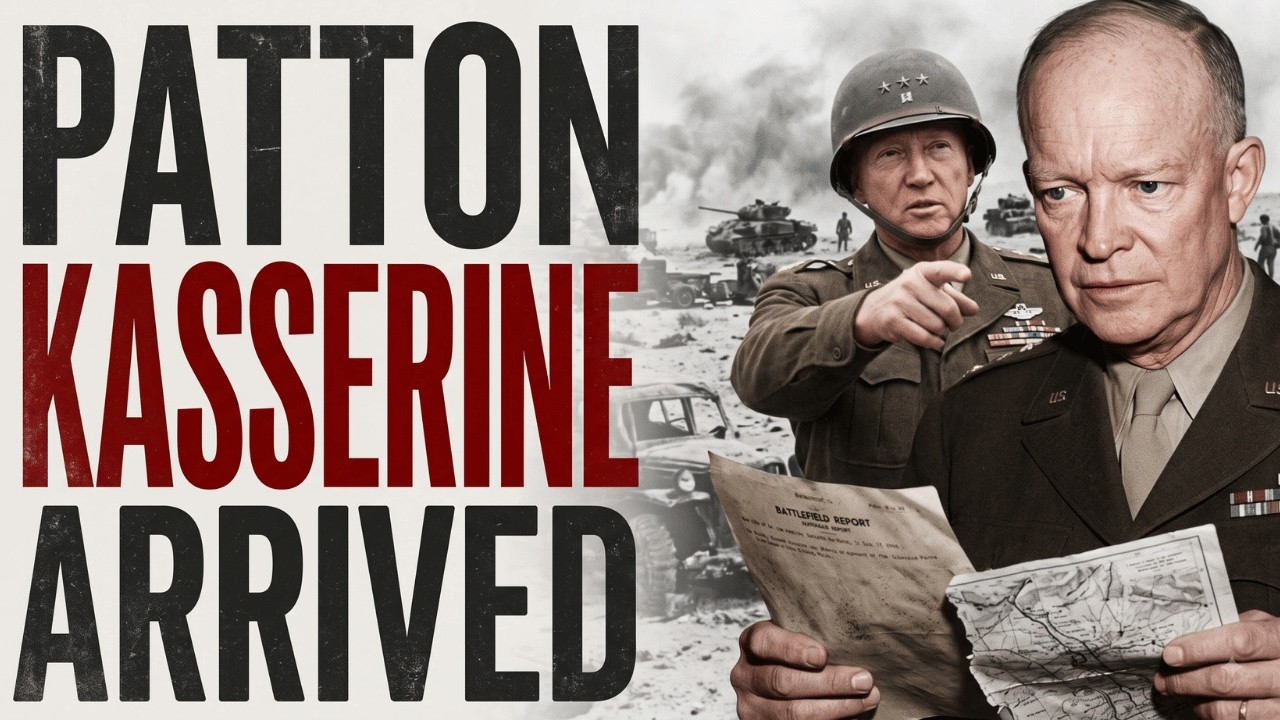 On February 14, 1943, Valentine’s Day, the German 10th Panzer Division came out of the morning haze through Faïd Pass in central Tunisia, and the reckoning began. A thirty-six-year-old American lieutenant colonel named John Knight Waters stood at the edge of a tank position on a rocky hill called Djebel Lessouda as the panzers rolled toward him. He was a West Point man, class of 1931, a Baltimore boy, a husband, and a father of two small sons.
By nightfall, he would be a prisoner of war, captured in the chaos of an overrun position. Fifteen hundred kilometers to the west, in his headquarters at Casablanca, Morocco, a fifty-seven-year-old major general named George Patton was enjoying the last quiet week of his war. He did not yet know that his son-in-law had just been overrun by German armor on a hill he could not have found on a map two months earlier.
Five days later, at a pass called Kasserine, six thousand American boys would become casualties, three thousand would be captured or missing, and one hundred eighty-three American tanks would be burning wrecks in the Tunisian desert.
It was the worst American army defeat in the European theater of the war, and it happened to a force that had been sent to North Africa just three months earlier with the confidence of a nation behind it. Operation Torch had put Allied troops on the beaches of Morocco and Algeria in November 1942, and it had gone well enough. Eisenhower, then a lieutenant general, had written to Marshall on November 12, 1942, in a letter that would come back to haunt him: “I bless the day you urged Fredendall upon me and cheerfully acknowledged that my earlier doubts of him were completely unfounded.”
Three months later, that sentence was a monument to misjudgment, and Eisenhower knew it. He was the Supreme Commander of Allied forces in North Africa, a fifty-two-year-old Kansas farm boy who had spent most of his career at a desk, and he was watching his army come apart.
The disaster at Kasserine was not a single battle but a cascade of failures. After the Germans rolled through Faïd Pass on January 30, 1943, and drove on Sidi Bou Zid on February 14, the American front collapsed in pieces. Fredendall, ensconced in his bunker at Speedy Valley, seventy miles behind the line, did not visit the front.
He barely spoke to his own division commanders. When Major General Orlando Ward of the 1st Armored Division tried to warn him that his tanks were being scattered into vulnerable detachments, Fredendall ignored him. The 1st Armored Division was systematically destroyed over three days, exactly as Ward had predicted.
On February 20, Eisenhower sent Major General Ernest Harmon, a forty-eight-year-old cavalryman with a gravel voice and a reputation for fighting, to take tactical command of the crisis. Harmon drove through the night to Speedy Valley, found Fredendall tired and drinking, took the signed authority he was offered, and went to the front. He held the line with British units at Thala and with American artillery that had marched over seven hundred miles from Algeria.
But when Harmon returned to Algiers to report to Eisenhower, he delivered a verdict that sealed Fredendall’s fate: “Not fit for command. No damn good. Should be relieved.”
Eisenhower asked Harmon to take command of II Corps himself. Harmon refused, on ethical grounds. He had written a critical assessment of Fredendall; taking his job on the strength of that criticism would look like careerism.
It would taint everything he did afterward. That refusal was one of the most consequential decisions of the war, because it cleared the path for George Patton. Marshall, meanwhile, had sent Omar Bradley to Tunisia as Eisenhower’s personal eyes and ears.
Bradley, fifty years old, a quiet Missourian and a West Point classmate of Eisenhower’s, toured the front lines in late February and early March. He spoke to every division commander in II Corps. He found a broken army and a broken command.
When he met Eisenhower at Tébessa in the first days of March, Eisenhower pulled him aside and asked for his assessment. Bradley did not soften it. “It’s pretty bad,” he said.
“I’ve talked to all the division commanders. To a man, they have lost confidence in Fredendall as the corps commander.”
The decision to fire Fredendall was not made under the immediate pressure of the battle. Kasserine was over by February 23, when Rommel, overextended and out of coordination with his northern partner, called off the attack. Eisenhower’s decision was made in cold calculation, in the quiet of his headquarters in Algiers, in the first week of March.
He had been promoted to four-star general on February 11, 1943, just three days before the German attack at Sidi Bou Zid. He had written to Marshall on March 3, in words that reveal the weight he was carrying: “The proud and the powerful are being humbled, and I trust that out of it all will come a first class fighting force.” He was writing about his own army, and he was writing about himself.
On March 5, Eisenhower flew to Tébessa and fired Lloyd Fredendall face to face. He framed it as a routine reassignment. He gave Fredendall his professional dignity.
He would allow him to be promoted to lieutenant general and sent home to command a training army. Fredendall would never hold combat command again, but he would go home a hero in the American press. Bradley was stunned.
Patton, when he found out, was enraged.
Patton was already on his way. On March 4, a dust-caked motorcycle courier flagged down George Patton’s Cadillac on the outskirts of Casablanca. The message was from Allied Force Headquarters: report immediately.
 Patton canceled his social engagements, including a dinner with the French colonial authorities he had been cultivating since the Casablanca landings, and he rode east. He drove fifteen hundred kilometers over three days, through the Algerian coast, through Constantine, to Algiers, and into the office of Dwight Eisenhower at the Villa Dar El Oued. What Eisenhower said to Patton in that private conversation has been reconstructed by historians from multiple sources: Harry Butcher’s diary, Eisenhower’s letters, Patton’s diary, Bradley’s later accounts, and Stephen Ambrose’s research.
Eisenhower told Patton three things. He told him to restore the morale of a broken corps. He told him to raise the image of American troops in the eyes of the British by winning a victory or two.
And he told him to take care of himself. Then Eisenhower said something more, something that Ambrose documented and that has become the closest thing we have to a direct quote from that meeting. Eisenhower told Patton that he did not have to prove his courage.
Eisenhower already knew what Patton was.
He had known Patton since 1919, when they had served together in the fledgling American tank corps at Fort Meade, when they had gone home to their wives at night and argued about the future of armored warfare over dinner. Eisenhower had watched Patton’s rise, his brilliance, his profanity, his vanity, his self-cultivated image as a warrior in ivory-handled revolvers and a polished helmet. Eisenhower knew the difference between the myth Patton had built and the man underneath.
He was telling Patton that the myth was unnecessary, that the man was enough. It was permission. It was trust.
Patton wrote in his diary that evening a single line: “Well, it is taking over rather a mess, but I will make a go of it.” On March 6, 1943, at ten in the morning, Patton arrived at Djebel Kouif, a dusty mining village north of Tébessa, in a command car with two stars painted on the door, sirens screaming, dust rising. Fredendall was still eating breakfast.
Bill Mauldin, the cartoonist, would later sketch the scene: chickens fleeing, Arabs staring, Patton standing erect in the command car like a Roman general entering a conquered capital. Patton’s diary entry for that first morning was generous: “Very nice, conducted himself well, very well.” But within a week, he had seen the reality.
On March 13, he wrote: “I cannot see what Fredendall did to justify his existence. Have never seen so little order or discipline.”
II Corps had eighty-eight thousand men. Four divisions: the 1st Infantry under Terry Allen, the 9th Infantry under Manton Eddy, the 34th Infantry under Charles Ryder, the 1st Armored under Orlando Ward, plus artillery, rangers, and tank destroyer battalions. Patton went to work on all of them.
He closed the officers’ mess at 7:30 in the morning. He issued a general order requiring every man in II Corps to wear his uniform to regulation at all times: steel helmets, neckties, leggings, in the desert, in the hundred-degree heat, on the way to the latrine. Fines were twenty-five dollars for enlisted men, half a month’s wages for a private, and higher for officers.
Staff officers complained it was pointless and insulting. Bradley, who had been quietly designated deputy corps commander, watched and understood. He later wrote in his memoir, A Soldier’s Story: “Each time a soldier nodded his necktie, threaded his leggings, and buckled on his heavy steel helmet, he was forcibly reminded that the pre-Kasserine days had ended and that a tough new era had begun.”
It was not about neckties. It was about identity. Patton was rebuilding an army by demanding, in every small physical ritual of its daily life, that its soldiers stop being men who had been defeated and start being men who had not been defeated yet.
On March 12, 1943, Patton was promoted to lieutenant general, three stars. He wrote in his diary that evening: “At that time I did not know there were full generals. Now I want and will get four stars.”
He was fifty-seven years old, and he could already see the arc of the war ahead of him. On March 17, II Corps launched its first offensive under Patton. The 1st Infantry Division moved on Gafsa.
Gafsa fell without a fight; the Germans had already withdrawn. Then 1st Infantry moved east toward El Guettar, toward the Gabès plain beyond it. On March 23, 1943, seventeen days after Patton had taken command of a broken corps at Djebel Kouif, the 10th Panzer Division—the same division that had captured John Waters at Sidi Bou Zid five weeks earlier—launched a counterattack on Terry Allen’s infantry in the El Guettar valley.
Allen had positioned his infantry in depth. His artillery was centrally controlled behind the line. The 601st Tank Destroyer Battalion was concealed in ambush positions along the valley floor.
When the panzers came down the valley, they came into a 𝓀𝒾𝓁𝓁 zone. American artillery broke the attack. American tank destroyers shattered its formations.
The 1st Infantry Division held. It was the first time in the entire European war that American ground forces had decisively defeated a German panzer attack in a set-piece battle. Eisenhower wrote from his headquarters in Algiers: “The Hun will soon learn to dislike that outfit.”
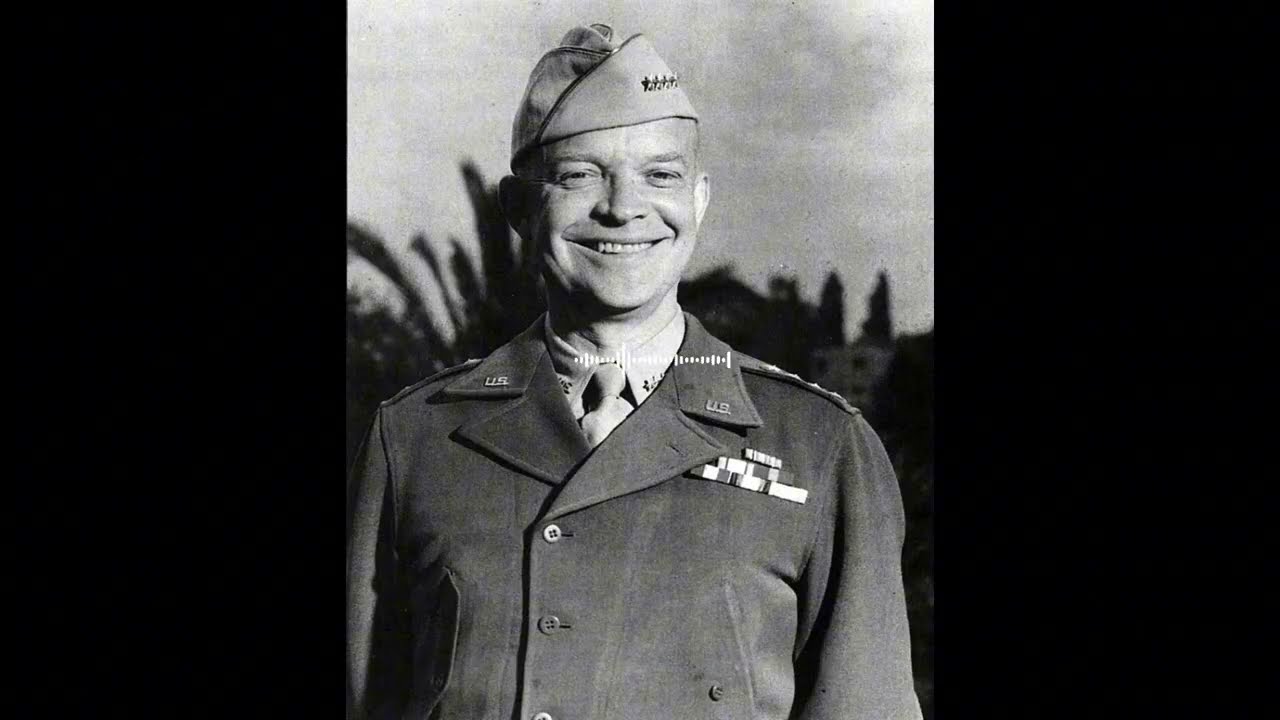 Patton wanted to exploit the victory. He wanted to push II Corps east through the mountains to the coastal plain, to cut off Rommel’s line of retreat in coordination with Montgomery’s Eighth Army coming up from Libya. Alexander said no.
The British field marshal, commander of the newly created 18th Army Group in charge of all ground forces in Tunisia, still did not trust American troops after Kasserine. He assigned Patton a limited flanking role and kept the main effort with Montgomery and with the British First Army. Patton wrote in his diary in early April, in words not meant for publication, that he had been made an errand boy of the British.
That anger was new, and it was permanent. Patton would carry it for the next twenty-two months, through Sicily, through Normandy, through the Bulge. Every argument he ever had with a British commander traced back to Harold Alexander at El Guettar in April 1943, when an American general won the first American victory over German armor and a British field marshal would not let him exploit it.
On April 15, 1943, Patton was ordered to hand over II Corps to Bradley and return to Morocco to plan the invasion of Sicily. Bradley took command. The Tunisian campaign continued without Patton.
On May 13, 1943, roughly two hundred fifty thousand German and Italian troops surrendered in Tunisia. It was a strategic disaster for the Axis, larger in prisoners than Stalingrad. Rommel was not there for the end.
He had been evacuated to Germany on March 9, sick and exhausted, by Hitler’s direct order. He never fought American troops again. Patton had come to Tunisia hoping to face him.
He never did. But the American army that had been broken at Kasserine had helped seal the fate of a quarter of a million enemy soldiers on the Tunisian peninsula. The distance from Sidi Bou Zid on February 14 to Tunis on May 7 was three months.
That is what Eisenhower’s decision on March 5 had bought.
The aftermath of Kasserine shaped the rest of the war, and the rest of the lives of the men involved. Lloyd Fredendall did not disappear into obscurity. In June 1943, three months after being fired for incompetence, he was promoted to lieutenant general by George Marshall and given command of the Second Army, a training command in the United States.
He was welcomed home as a hero. Marshall protected him because Marshall had picked him; to have disgraced Fredendall publicly would have been to admit that Marshall had chosen the wrong man. Eisenhower, in his silence about Fredendall in his 1948 memoir Crusade in Europe, went along with the protection.
The two most powerful American officers of the war protected each other’s judgment by protecting Lloyd Fredendall’s reputation. Fredendall never held combat command again. He retired in 1946.
He died in San Diego on October 4, 1963, at eighty, and was buried at Arlington National Cemetery. He remains one of the few three-star generals of World War II whose name is largely unknown.
Patton went on to Sicily, where he landed with the Seventh Army on July 10, 1943, and drove across the island in thirty-eight days, entering Messina ahead of the British Eighth Army. That race was a sequel to what Alexander had done to him at El Guettar. It was in Sicily that he slapped two soldiers in evacuation hospitals, and it was in November 1943 that Eisenhower saved his career when the 𝒔𝒄𝒂𝓃𝒹𝒶𝓁 broke in the American press.
Then came the Third Army in France, the breakout from Normandy, the drive across France, the relief of Bastogne, the crossing of the Rhine, the push into Germany, the advance to Czechoslovakia. Patton died on December 21, 1945, in Heidelberg, in a hospital room, from complications of a car accident twelve days earlier. He was sixty.
His diaries, published in 1974, revealed what he had actually thought of Eisenhower, of Bradley, of Montgomery, of the whole war. He had loathed Montgomery, resented Bradley, and criticized Eisenhower privately. He never wrote a public thank-you to Eisenhower for the decision on March 5, 1943, that had made his war possible.
That silence is the deepest irony of their relationship. Patton owed Eisenhower everything, and he spent most of the remaining thirty-three months of his life resenting him for it.
Eisenhower survived Tunisia and became Supreme Commander of the Allied Expeditionary Force for the invasion of Europe. On June 6, 1944, he commanded the largest amphibious operation in the history of warfare. In December 1944, on the day the Germans launched the Battle of the Bulge, he learned that Roosevelt had nominated him for the five-star rank of General of the Army.
On December 19, 1944, at a Verdun conference called to address the crisis, Eisenhower walked Patton to the door after the discussion and said, with that dry Midwestern humor that emerged under the highest pressure: “Funny thing, George, every time I get promoted, I get attacked.” He was talking about Kasserine. He was talking about the four stars he had received three days before the disaster at Sidi Bou Zid, and the five stars he had just received on the day the panzers came out of the fog in the Ardennes.
Patton answered without missing a beat: “And every time you get attacked, Ike, I have to bail you out.” Both men laughed, and both men knew it was not entirely a joke.
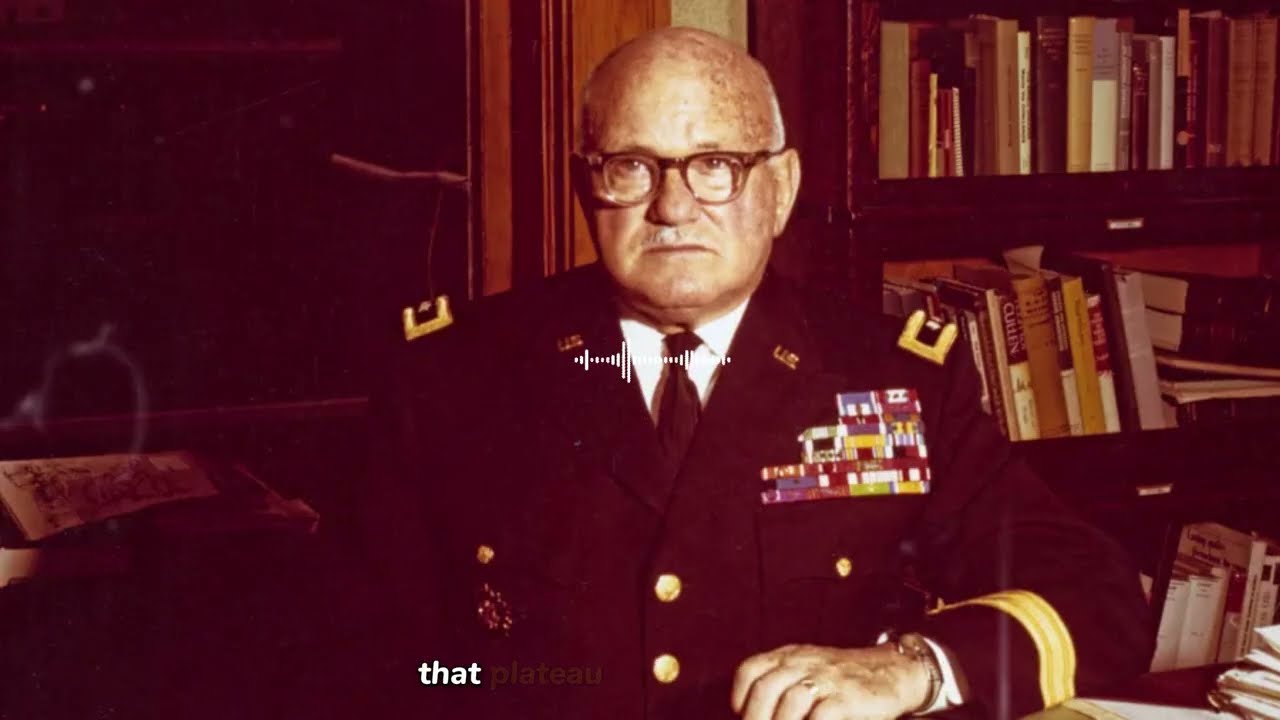 Eisenhower went on to serve two terms as President of the United States. He died on March 28, 1969, at Walter Reed General Hospital in Washington, of congestive heart failure, at the age of seventy-eight, and was buried in Abilene, Kansas. Bradley went from Tunisia to Sicily to Normandy to command of the 12th Army Group, and in August 1944 he commanded more American soldiers in combat than any American general has ever commanded.
He was the first Chairman of the Joint Chiefs of Staff, and in 1950 he was promoted to General of the Army, the only post-war promotion to that rank in American history. He died on April 8, 1981, at eighty-eight. Ernest Harmon returned to the 2nd Armored Division, later commanded the 1st Armored Division in Italy, commanded XXII Corps in the Ardennes, liberated Pilsen in Czechoslovakia in May 1945, retired as a major general, and died on November 13, 1979, in Vermont, at eighty-five.
Orlando Ward, the division commander who had warned Fredendall and watched his division destroyed, was relieved by Patton in early April 1943. He returned to combat command in the Pacific and died in 1972. Rommel never faced Patton on a battlefield.
Evacuated from Africa in March 1943, he commanded Army Group B in Normandy, was wounded by an Allied fighter attack on July 17, 1944, and was forced to take poison on October 14, 1944, implicated in the conspiracy against Hitler. He was fifty-two.
And John Knight Waters endured twenty-five months as a prisoner of war in a succession of German camps, in Poland, Silesia, and Bavaria. He wrote letters home when he could. His wife Beatrice, Patton’s oldest daughter, waited in Massachusetts with her two small sons.
On March 26, 1945, Patton, then commanding the Third Army in western Germany, ordered a raiding force of roughly three hundred men—sixteen Sherman tanks, twenty-eight half-tracks, and thirteen other vehicles—to drive fifty miles behind enemy lines to a prisoner of war camp near a town called Hammelburg. The camp was Oflag XIII-B. Patton claimed publicly that the purpose was to liberate American prisoners.
His superiors did not believe him. Bradley did not believe him. Eisenhower did not believe him.
What Patton actually wanted was to save John Waters. Task Force Baum reached Hammelburg on March 27. In the confusion of the raid, as Waters walked out of the camp gate under a white flag to negotiate the surrender of the German guard force, a German guard shot him.
Waters fell, seriously wounded. Task Force Baum broke through the perimeter and freed prisoners, but the drive back through fifty miles of enemy territory was catastrophic. Most of the men and vehicles were lost.
Roughly twenty of the original three hundred made it back to American lines. About a hundred were captured. About 130 are still officially missing in action.
It was one of the most costly small operations of the war. Waters survived his wound, was carried into a German field hospital, and on April 6, 1945, the 14th Armored Division liberated the camp. John Waters walked out alive, twenty-five months after being captured at Djebel Lessouda.
He stayed in the Army, commanded the 5th Army and the 4th Armored Division, rose to four-star general, commanded United States Army Pacific from 1964 to 1966, retired honored and quiet, and rarely spoke publicly about the raid Patton had launched to save him. He died on January 9, 1989, in Washington, at eighty-two. His wife Beatrice had died in 1952, at forty-one, of complications from a horseback riding accident.
She did not live to see her husband become a four-star general.
That is the human arc of the Kasserine story. And at the center of it, in a quiet office in Algiers on March 5, 1943, a supreme commander made a decision that changed everything. What Dwight Eisenhower said to George Patton has been argued about for eighty years, but the record is clear.
He told him to restore morale, to win a victory, to take care of himself, and that he did not need to prove his courage. Eisenhower already knew what Patton was. That sentence was enough.
Kasserine had broken a lot of things. It had broken the illusion that combat experience did not matter. It had broken Lloyd Fredendall’s career.
It had tested Eisenhower’s political survival. It had put John Waters in a prisoner of war camp. And it had given a fifty-seven-year-old two-star general in Casablanca, whose son-in-law had just been captured and who did not yet know it, the second chance he needed to become the George Patton that history remembers.
In the eleven weeks between the worst American defeat in North Africa and the surrender of a quarter of a million Axis soldiers in Tunisia, the distance from broken to victorious was covered by three men: a Kansas farm boy who accepted responsibility, a California aristocrat who demanded discipline, and a Missouri schoolteacher’s son who told the truth. Anyone can look it up.


