On September 4, 1939, just days after Germany invaded Poland, the city of Częstochowa became the scene of a mass atrocity that would later be known as Bloody Monday. German troops, reacting to gunfire that likely came from their own ranks, turned on Polish and Jewish civilians, executing hundreds in what investigators would later determine was an unjustified retaliation. Częstochowa, located only 30 kilometers from the Polish-German border, had a population of roughly 138,000 in the summer of 1939. As war loomed, many families fled deeper into the country, and on September 2, the Polish 7th Infantry Division withdrew from the city, with thousands of residents following the retreating troops.

By the time German forces approached, the city was largely deserted. German commanders had expected resistance and ordered the 42nd Regiment of the 46th Infantry Division to establish firm control immediately upon entering Częstochowa. When the unit marched in at dawn on September 3, they met no opposition, and reports described the population as calm. For nearly a full day, the city remained quiet.
That calm shattered on the afternoon of September 4, when sudden gunfire erupted in two sectors of the city. The first outbreak occurred in the courtyard of the Craft Industrial School, where German soldiers were stationed. The second took place on Straczacka Street, where troops of the 97th Infantry Regiment were escorting several hundred detained Polish civilians. Witness accounts described panic and confusion, with shots ringing out and no one able to determine their origin.
German soldiers, many of them inexperienced recruits, fired wildly, believing they were under attack from buildings or snipers in windows. Eight German soldiers were killed and 14 wounded, most likely by friendly fire. Despite this, German officers immediately blamed the city’s inhabitants, claiming partisans had launched an organized attack. A claim later investigations would prove false.
Searches of nearby homes found no weapons, and German personnel diaries recorded that no one could tell who was firing. The chief medical officer of the Fourth Army Corps stated he did not believe civilians had fired at German troops, and even Einsatzgruppe II, one of the Nazi mobile death squads, admitted in its own report that it was impossible to determine who had been shooting at whom. Retaliation was swift. Soldiers stormed homes, dragged civilians into streets, beat and threatened them, then forced thousands toward three assembly points: Magistrate Square, the New Market, and the square in front of the cathedral.
Terrified residents were ordered to lie face down for hours or stand with raised hands. Anyone who moved risked being shot. Men were separated and searched, and possession of a razor blade or pen knife was enough to justify immediate execution. Killings began at Magistrate Square, where civilians were lined up and shot at close range.
More executions took place in the town hall courtyard, and 48 bodies were later recovered from a single trench behind the municipal technical building. Similar killings occurred at the New Market, St. Zygmunt’s Church, the Brass Factory, and the military hospital. Witnesses recalled soldiers forcing Jewish civilians to jump over a trench while beating them and laughing.
Einsatzgruppe II claimed to have shot alleged partisans and snipers, though no evidence supported the accusations. Nearly 10,000 civilians were ultimately rounded up at Magistrate Square. Women and children were eventually released, while most men were taken under guard. The Zawodzie prison became overcrowded within hours, and detainees were moved to St.
Zygmunt’s Church and then to the cathedral. German soldiers repeatedly entered both buildings, firing warning shots over prisoners’ heads and threatening mass execution. Some victims were shot inside the cathedral, and conditions deteriorated as prisoners were not allowed to leave even to relieve themselves. German military reports initially claimed 99 people had been executed, a figure later proven false.
In early 1940, authorities ordered exhumations across the city, and investigators uncovered 227 bodies: 194 men, 25 women, and 8 children, including 205 Polish and 22 Jewish victims, 121 of whom were identified by name. Later examinations estimated the true death toll at between 300 and 500 civilians. Repression continued in the following days. On September 5, seven Polish men were executed near the airfield, and a strict curfew was imposed.
On September 8, after discovering remnants of Polish uniforms and rifles in a monastery building once used by Polish cavalry, German soldiers arrested two monks, the elderly father of one, three neighbors, and two laborers, all of whom were executed in a forest outside the city. On September 10, a large cleansing operation swept through Częstochowa, and nearly 700 civilians were transported to prisoner camps inside Germany. The men of the 46th Infantry Division did not remain in Częstochowa. They went on to fight in France in 1940, then in the invasion of Yugoslavia in 1941.
That summer, the division advanced into the Soviet Union, pushing through Ukraine and into Crimea. By early November 1941, the same soldiers who had carried out the shootings in Częstochowa took part in the German capture of the Black Sea port city of Feodosia. There, the violence they had unleashed in Poland met them again. On December 29, 1941, Soviet marine troops and regular infantry landed on Feodosia’s beaches and retook the city.
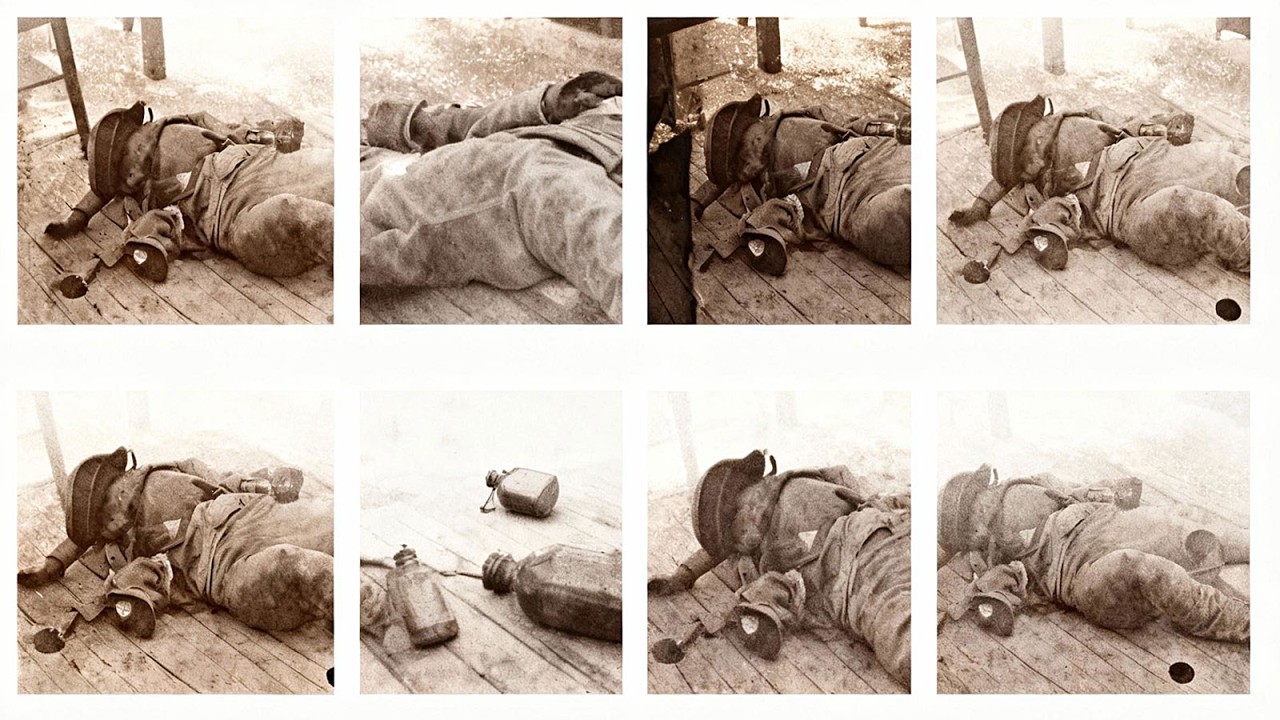
The next day, retreating German commanders left behind about 160 wounded soldiers from the 46th and 170th Infantry Divisions, many too injured to be moved, tended by a small number of German and Russian medical staff. What followed became one of the most brutal acts of revenge recorded on the Eastern Front. According to witnesses, including Russian medical personnel, Soviet troops entered the hospitals drunk, shot doctors and nurses, and turned on the wounded. Some soldiers were thrown from windows onto rocks below.
Others were dragged outside into the winter cold, mutilated, and doused with water until their bodies froze solid. Many were beaten to death where they lay. When German forces recaptured Feodosia on January 18, 1942, they discovered the evidence. Medical officers reported finding bodies stacked beneath thin layers of sand, many still wearing splints and plaster casts.
Other corpses lay frozen on the beach, and more than 100 bodies were found piled inside a ruined building in the nearby cemetery, many showing signs of severe mutilation. Only 12 wounded Germans survived, having managed to hide for days. Among the dead were many men of the 46th Infantry Division: the same unit that had carried out the killings in Częstochowa two years earlier.
In Feodosia, the cruelty they had once unleashed on civilians in Poland came back to them with equal force.