Nancy Wake, the woman the Gestapo would come to call the White Mouse, spent her final years in a quiet retirement home room in London, watching a curtain sway by the window. It was a far remove from the moonlit parachute drops, the mountain crossings, and the ambushes that made her one of the most decorated Allied servicewomen of World War II. Born in New Zealand and raised in Australia, Wake left home as a young woman seeking a wider life. She worked as a nurse and then as a journalist in Europe, developing sharp instincts that would later prove crucial.
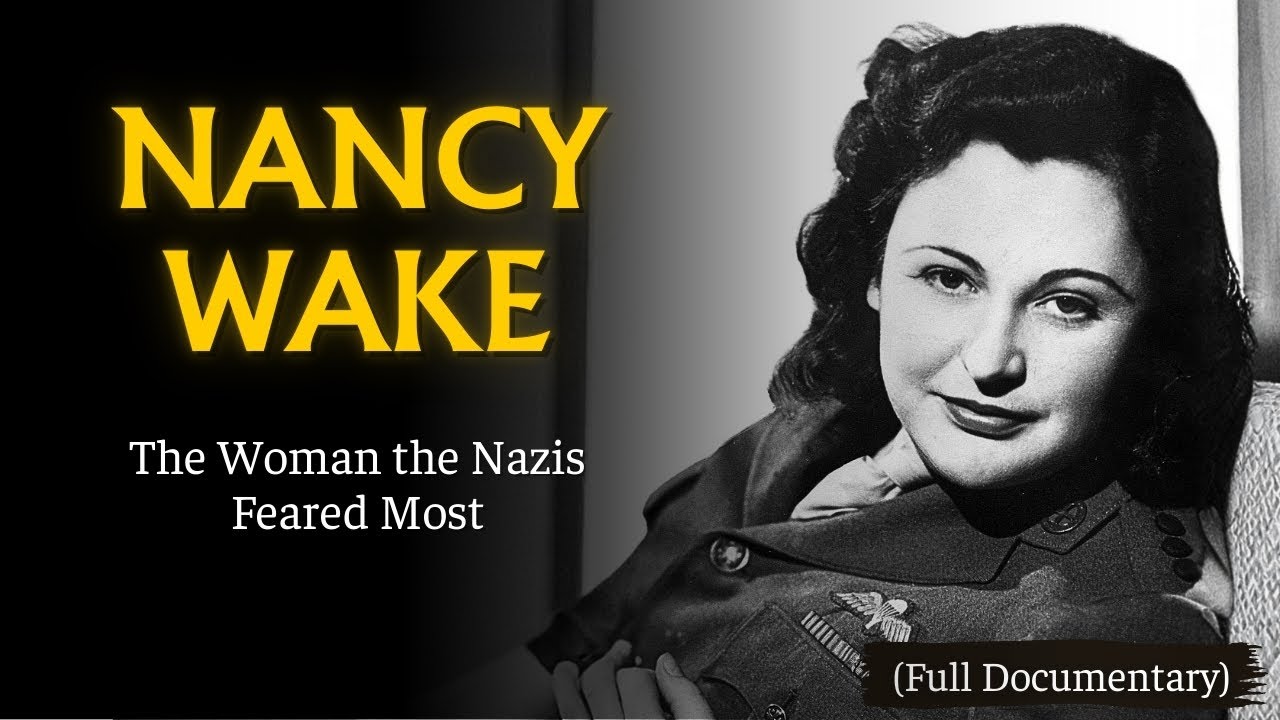
Her early years were marked by restlessness, shaped partly by her father’s departure from the family when she was young, an absence that forged in her a fierce independence. It was in Vienna that Wake witnessed something that altered her course. She saw men in uniform humiliating and pushing aside civilians in the street, an act of brutality that she later said changed her forever. The memory stayed with her, and when German occupation tightened its grip on France, she was already married to French industrialist Henri Fiocca and living in Marseille.
She did not remain a bystander. Wake began by delivering messages and documents under the guise of social calls, then moved on to helping refugees, airmen, and others marked by the occupiers escape. She became deeply embedded in resistance networks, known for her reliability, her calm under pressure, and her ability to charm or outwit officials. The Gestapo soon took notice, placing her on their wanted list and giving her the nickname that would follow her through history.
When her position became untenable, Wake crossed the Pyrenees into Spain on foot in winter, a grueling trek through snow and storm that pushed her to the edge of collapse. She reached Britain, where she joined the Special Operations Executive and underwent rigorous training in weapons, sabotage, wireless communication, and unarmed combat. She excelled, surprising instructors and peers alike. She was parachuted back into occupied France to serve as a liaison and leader with the Maquis, the resistance fighters operating in the rugged hills of central France.
Her arrival was initially met with skepticism by some fighters who doubted a woman could understand their brutal reality. She quickly proved them wrong, organizing supply distribution, coordinating attacks, and leading operations with a steady hand. She earned their respect through sheer competence and an unfailing willingness to share the same risks. Under her leadership, the Maquis carried out ambushes, destroyed rail lines, and disrupted German supply routes.
She oversaw sabotage missions that derailed trains and forced enemy forces to divert resources. She was known for her composure in the chaos of battle, once steadying her men when a German patrol passed dangerously close during a mission, then calmly resuming their work. She also endured the loss of fighters under her command, carrying the weight of those deaths quietly while pressing forward. When the war ended, Wake expected to return to Marseille and to her husband.
Instead, she learned that Henri had been arrested by the Gestapo shortly after her escape to Spain. He had refused to give them information about her or her network, had been tortured, and had been executed. She found an unopened letter from him in their home, addressed in his handwriting. When she finally read it, his words were gentle and loving, expressing pride in her courage and hope for their reunion.
The grief was devastating and lifelong. After the war, Wake drifted. She entered politics briefly in Australia but found the compromises and pettiness of political life unbearable. She remarried an RAF officer years later and lived in his homeland, but the loss of Henri remained a defining presence in her life.
She moved between countries, restless and often lonely, struggling to find purpose in a peace that felt strangely hollow after years of survival. Her legacy became a matter of debate. Some accounts inflated her exploits into near-myth, while others minimized her role. She clashed with certain resistance leaders during the war, which left lingering resentments.
France was slow to honor her fully, a delay she criticized with characteristic bluntness. She received medals and tributes, but she kept them often hidden in drawers, remarking once that she did the work, not the metal. In her later years, Wake lived modestly and faced financial difficulties. She maintained her sharp wit and refusal to soften her opinions, even as her health declined.
She resisted dependency for as long as possible, insisting on her independence. Visitors and journalists who came to see her found a woman who refused to romanticize the past, insisting that war was not a matter of tidy records and that those who were not there could not truly know. Nancy Wake died in London in 2011 at the age of 98. Her death prompted tributes across continents, with obituaries recounting her wartime courage and her nickname.
In the years since, her story has been told and retold, sometimes as a tale of daring espionage, sometimes as a feminist landmark, sometimes as a national point of pride for both Australia and New Zealand. Each version captures a part of her, but none fully contain her. What remains consistent across all accounts is the recognition of her unbroken will. Whether remembered as a hero, a rebel, or a difficult woman, she is remembered as someone who refused to stand idle in the face of cruelty.
She once said that she would do it all again if given the chance. The footsteps of her life have faded into mist, but the path she carved continues to echo in the stories told about her, and in the quiet courage of those who draw on her example.