The mathematics of war are written in the mud of the Italian peninsula, and in the spring of 1944, those calculations were being rewritten by a relentless, unglamorous American general who moved his infantry at speeds that shattered the German High Command’s most fundamental assumptions. While the world fixated on the theatrical bravado of George S. Patton and his ivory-handled revolvers, a quieter, more systematic force was dismantling the Wehrmacht’s defensive doctrine in Italy.
Field Marshal Albert Kesselring, a master of defensive warfare, stared at his maps in disbelief as his intelligence officers insisted the American 3rd Infantry Division was still ten miles away, even as American artillery shells began to fall on his own headquarters. The Anzio breakout had begun just 72 hours earlier, and the terrain was a quagmire of mud, craters, and determined resistance. According to every tactical manual, every standard march rate in the Wehrmacht’s doctrine, and every calculation of human physical endurance, American infantry could not possibly have covered that distance in three days.
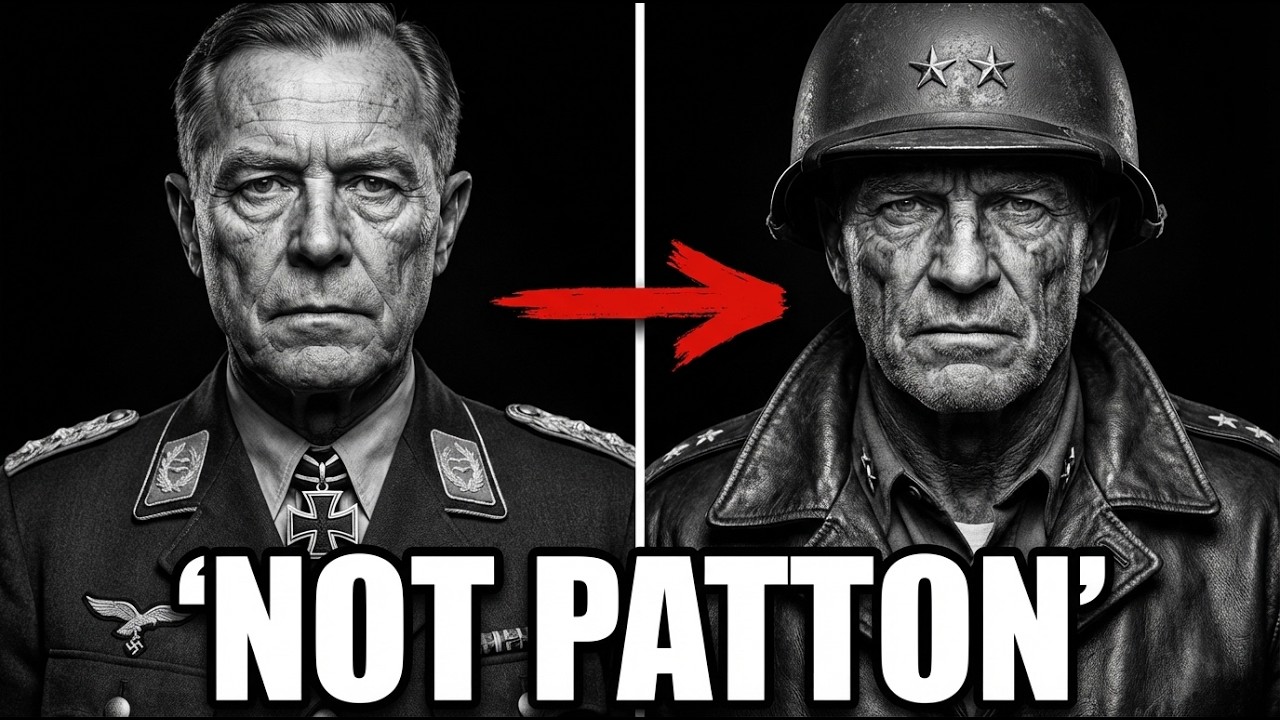 Yet they were there, their forward observers already calling in fire on positions that were supposed to be safely behind the front lines. Kesselring demanded an explanation from his staff, but they had none. They did not yet understand that they were not fighting a standard American general; they were fighting Lucian Truscott, a commander who had deleted the concept of a standard march rate from his operational vocabulary.
The German intelligence apparatus in Italy had spent months tracking the personalities and capabilities of the Allied commanders arrayed against them. They knew Patton intimately, his loud, aggressive, theatrical style was a gift to intelligence officers who could predict his movements through his press conferences and his highly publicized personal appearances. Patton wanted the Germans to know where he was, it was a form of psychological warfare that played on the fear of his armored columns.
The Germans had developed counter-tactics specifically designed for his style of warfare, concentrating anti-tank defenses, preparing killing zones, and letting his tanks attack into prepared positions. This strategy worked often enough to make Patton a known, if dangerous, quantity. But while the world’s attention was riveted on Patton’s showmanship, the Germans were looking at a stopwatch, and it was moving at twice the speed it should have been.
Lucian Truscott was not theatrical; he was systematic. He did not give speeches about blood and guts; he gave his men training standards that sounded insane and then enforced them until those standards became muscle memory. The result was the “Truscott trot,” a forced march rate of five miles per hour for the first hour and four miles per hour for every hour after that, all while carrying a full combat load, day or night, rain or shine.
The Allied standard march rate was two and a half miles per hour with scheduled rest breaks. Truscott’s men moved at double that pace, and they did not stop. When he first took command of the 3rd Infantry Division, his soldiers thought it was punishment.
When they fought in North Africa and Sicily, they understood it was preparation. When they broke out from Anzio in May 1944, the Germans understood it was a weapon they had no defense against.
German defensive doctrine was built on the immutable physics of the standard march rate. Defensive planning calculated how far an enemy force could advance in a given time period, and this calculation was the bedrock of the elastic defense strategy. If the enemy was ten miles away and the standard infantry march rate was two and a half miles per hour, German forces had four hours to prepare defensive positions before contact.
This calculation worked against British forces, and it worked against most American units. It was a mathematical certainty based on human physical limitations. Lucian Truscott did not just break that rate; he deleted it from the equation.
His infantry covered distances in timeframes that German planning staff refused to believe even after the reports were confirmed. They assumed the intelligence was wrong, that the Americans must be using trucks, or that there must be a mistake in the distance calculations. The alternative was accepting that American soldiers could simply walk faster than German defensive doctrine could accommodate, a concept so alien it threatened the very foundation of their planning.
The 3rd Infantry Division arrived in Italy in September 1943, and German intelligence noted their presence with standard threat assessments. They were another American infantry division, well-trained but inexperienced in European combat, with expected performance to be methodical advances, heavy reliance on artillery support, and vulnerability to aggressive counterattacks. Within two weeks, those assessments were being rewritten.
The 3rd Division was advancing at rates that suggested armor support, but intelligence confirmed they were pure leg infantry covering terrain at speeds that violated every assumption about human endurance. German commanders requested clarification, and the reports were accurate. The Americans were simply marching faster than any infantry unit the Germans had previously encountered.
The engineers in Berlin had calculated exactly how long a retreat should take, and the German elastic defense doctrine relied on trading space for time. The plan was to establish a defensive line, hold until pressure became overwhelming, and then execute a planned withdrawal to the next prepared position. The withdrawal timeline was calculated based on how fast pursuing enemy forces could advance.
 Standard infantry moved at two and a half miles per hour, and mechanized forces were faster but limited by fuel and terrain. These calculations had worked in North Africa and in Sicily. They were precise, mathematical, and reliable.
They had not accounted for the Truscott trot. When German forces executed planned withdrawals from positions in Italy, they arrived at their next defensive line to find American infantry already there. Not mechanized cavalry, not paratroopers, but regular infantry who had simply walked faster than the German retreat could run.
Field Marshal Kesselring was a professional soldier who had fought on multiple fronts and understood armored warfare, air power, and combined arms coordination. What he struggled to understand was how American infantry could consistently appear where his staff calculated they could not possibly be. The reports from subordinate commanders grew increasingly frustrated, noting that American forces were bypassing strong points not through clever maneuver but through simple speed.
German defenders would prepare positions to block an expected American advance, and by the time the positions were ready, American forces had already passed them and were attacking from the rear. The defensive timeline was collapsing because the Americans moved at a tempo that broke the mathematical models German planning relied on.
By the second day of the Anzio breakout, the German 14th Army was not just losing ground; they were losing their ability to establish coherent defensive lines. Kesselring ordered fallback positions prepared at specific locations calculated to be beyond American reach for another 48 hours, and American forces reached those positions in 24 hours. He ordered supply dumps relocated to safe distances behind the front, and American patrols appeared before the supplies could be moved.
The standard defensive doctrine of trading space for time required knowing how much time you had, and against Truscott’s forces, that calculation was impossible because his infantry did not move at standard rates. The German perspective on American generals was nuanced. They respected Eisenhower as an organizer, they feared Patton’s armored columns, and they studied Bradley’s methodical approach.
But when German field commanders wrote reports about the most dangerous American operational commander in Italy, they did not name any of those men. They named Lucian Truscott. Not because he was brilliant in the traditional sense, but because he had solved a problem that German doctrine considered solved: the problem of infantry speed.
Every army knew that infantry could only march so fast before exhaustion degraded combat effectiveness. Truscott had simply redefined what fast meant and trained his men until that new definition became sustainable. The comparison to Patton was inevitable and, from the German perspective, unfavorable to Patton.
Patton was a storm, violent, destructive, but ultimately predictable. You could see Patton coming, you could hear him coming, and you could prepare for him. Truscott was a flood, silent, relentless, appearing in places you thought were safe.
German commanders prepared for Patton’s theatrical armor charges by concentrating anti-tank defenses and accepting that the initial assault would be violent but could be contained. They had no preparation for Truscott’s infantry arriving at speeds that should not be possible and continuing to advance when German forces expected them to be consolidating positions.
Operation Diadem, launched in May 1944, was the Allied offensive to break the stalemate in Italy. Truscott commanded the VI Corps at Anzio, and his mission was to break out from the beachhead and drive toward Rome. German forces had contained Anzio for four months and were confident in their defensive positions.
 Kesselring calculated that even if the Americans broke through the initial defensive line, German forces would have time to execute planned withdrawals and establish new positions. The math was simple: distance between defensive lines, standard American advance rate, and time available for German forces to relocate. The calculations were based on solid tactical doctrine and two years of combat experience.
They were completely wrong. On May 23rd, the breakout began. The VI Corps smashed through German defensive positions with concentrated artillery and aggressive infantry assault.
German forces executed their planned withdrawal, falling back to prepared positions six miles behind the initial line, a standard doctrine. By the time they reached those positions, Truscott’s lead elements were already there. The German forces had withdrawn at standard march rate, but Truscott’s men had advanced at trot speed.
The defensive position was overrun before it could be fully manned. Kesselring ordered a second withdrawal to positions twelve miles back, surely the Americans could not maintain that pace. They could, and they did.
By May 26th, just three days into the offensive, the VI Corps had advanced forty miles. German defensive doctrine had no response to that rate of advance. Positions that were supposed to be safe were being attacked, supply lines that were calculated to be behind German lines were being cut, and headquarters that should have had days of warning were coming under artillery fire.
The 14th Army was disintegrating, not because it was being defeated in battle, but because it could not retreat faster than American infantry could advance. The fundamental assumption of elastic defense, that defenders could trade space for time by withdrawing faster than attackers could pursue, had failed against an enemy who simply walked faster.
The frantic German retreat became a case study in how operational tempo could shatter defensive doctrine. Kesselring issued orders for defensive stands at multiple positions, and each position was overrun before it could be properly established. He ordered supply dumps relocated, and they were captured before they could be moved.
He ordered communication centers repositioned to safe distances, and they were shelled before they could complete relocation. Every calculation of safe distance and available time was based on standard march rates. Truscott’s forces operated at double that standard.
The math did not work, the doctrine did not work, and the defensive plan collapsed under pressure from an enemy who simply refused to move at the speed German planners expected. Specific reports from Kesselring’s headquarters documented the tactical nightmare. One report noted that American infantry had covered thirty-two miles in forty-eight hours over difficult terrain while maintaining combat effectiveness.
The German staff officer who wrote the report added a note questioning whether the distance measurement was accurate because that rate of advance seemed impossible for leg infantry. Another report described American forces appearing in German rear areas before defensive positions could be established. The report’s conclusion was stark: standard defensive timing calculations do not apply against this American Corps, and all withdrawals should be planned assuming enemy advance at double standard rate.
On June 4th, 1944, Rome fell. The VI Corps entered the city ahead of other Allied forces despite having a longer distance to travel. Truscott had turned the advance into a race and won through simple, sustained speed.
 The liberation of Rome made headlines worldwide, and Eisenhower and other senior commanders received credit. Truscott was mentioned but not prominently. He did not seek publicity, he did not give dramatic speeches, and he had simply marched his men faster than anyone thought possible and broken the German defensive line through sustained operational tempo rather than tactical brilliance.
The results spoke for themselves, even if Truscott did not.
The final verdict came from Kesselring himself in post-war interviews and captured documents. When asked which Allied commander he considered most dangerous in Italy, he did not hesitate: Lucian Truscott. Not because of tactical innovation or strategic genius, but because Truscott had identified a single metric that German defensive doctrine relied on, the standard infantry march rate, and systematically exceeded it until German planning became useless.
Kesselring noted that against Patton, you could prepare defenses based on known armor capabilities and fuel logistics. Against Truscott, there was no preparation because his infantry moved at speeds that defensive doctrine said were unsustainable. They were sustainable.
Truscott had proven it through training and demonstrated it through results. The tragedy for historical memory is that loudness gets remembered while effectiveness gets footnoted. Patton’s theatrical personality made him famous, and his ivory-handled revolvers and profane speeches became iconic.
Truscott’s systematic destruction of German defensive doctrine through superior march rates became a tactical case study but not a cultural memory. The Germans knew better. They feared the storm they could see coming, but they had nightmares about the flood that simply appeared where it shouldn’t be possible.
Kesselring’s staff calculated defensive timelines based on physics and human endurance. Truscott had different calculations. And when the German math met the Truscott trot, German defensive doctrine broke.
The comparison wasn’t really between Truscott and Patton. It was between what theatrical aggression could achieve and what systematic excellence could accomplish. Patton won battles through shock and audacity.
Truscott won campaigns through sustained tempo that broke defensive mathematics. German generals prepared for Patton by concentrating forces and accepting heavy initial combat. They had no preparation for Truscott because preparation required time, and Truscott never gave them enough.
He didn’t just beat them; he outwalked them. Five miles per hour for the first hour, four miles per hour thereafter, full combat load, no exceptions. The Truscott trot wasn’t just training.
It was the weapon that convinced German field marshals that some American commanders were worse than Patton because at least you could see Patton coming. The legacy of this relentless pace is a stark reminder that in the brutal arithmetic of warfare, the ability to simply move faster than the enemy’s ability to react is often the most decisive weapon of all, a lesson that was learned in the blood-soaked hills of Italy and forever etched into the tactical doctrine of the armies that faced the silent, relentless flood of Lucian Truscott’s infantry.