A waiter stood against the wall of a Fifth Avenue ballroom just after midnight. In front of him, hundreds of America’s wealthiest citizens danced in costumes styled after dead kings and queens. He had been on his feet for 16 hours and earned $18 a month. From his station, he could see which married man had slipped upstairs with another man’s wife, which diamonds were fakes because the real ones had been quietly sold, and which fortunes were already gone.
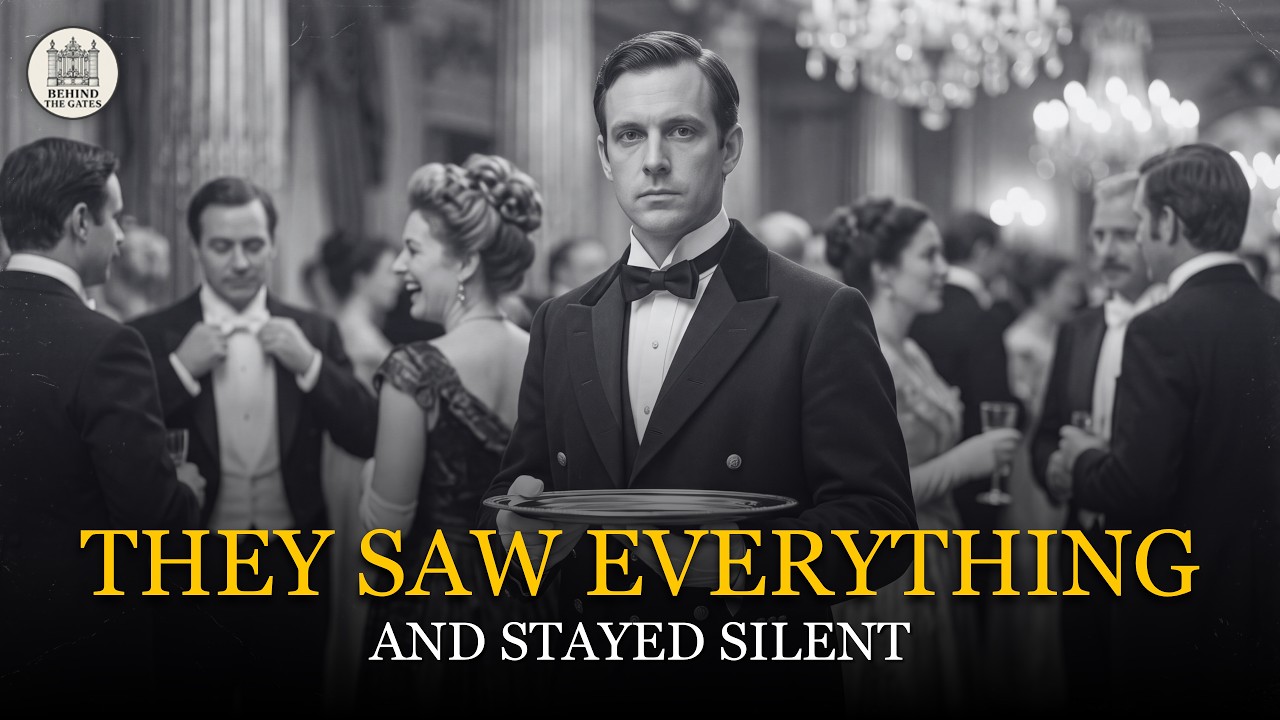
One sentence from him could have destroyed a dozen families by breakfast. He said nothing. He was hired to see nothing, and that silence was the most valuable thing money could buy. THE AGE OF INVISIBLE WORKERS
By1900, roughly 1.
2 million Americans worked in domestic service, making it the largest category of paid work for women in the country. In northeastern cities, most of this work fell to immigrant women, particularly the Irish, who crossed the ocean to live in other people’s basements. They lived where they worked and learned the first rule of the trade early: a good servant is one the family never has to think about. A lady’s maid dressed and undressed her mistress as many as five times a day, seeing the true color of her hair, the corset scars, and the letters hidden in jewelry cases.
A footman stood through dinners where fortunes were discussed, marriages arranged, and enemies ruined. A parlormaid carried away glasses and noted exactly how much had been drunk, by whom, and what was said when the drink took hold. These workers were not outside the private lives of the rich; they were inside them, closer than friends, trained to behave as if they had heard nothing at all. The great houses ran on a scale hard to imagine today.
A Fifth Avenue mansion or Newport cottage in season employed 20 or more full-time servants; the greatest estates ran far more. At The Elms, 16 indoor servants worked alongside more than25 grounds men. At The Breakers, 33 of the mansion’s roughly70 rooms were given over to staff. These were small institutions with hierarchies as strict as any army.
Wages told the real story. A cook might earn $100 a month; a lady’s maid, $25 to $40; a chambermaid, $18 to $25. The average woman in service earned about $168 fora full year of work, with meals anda bed counted as part of her pay. That same year, a single guest at a single ball might wear jewels worth $200,000 for one evening.
The distance between those two numbers was where the whole story lived. THE ARCHITECTURE OF HIDING
The great houses were built with two sets of stairs. One was wide, made of marble, curving beneath painted ceilings, for a woman in silk to descend slowly while everyone watched. The other was narrow, steep, hidden inside walls, for a woman in a gray dress to climb quickly with a coal scuttle while no one saw her at all.
The whole point of the architecture was to keep those two staircases from ever meeting. Invisibility was not accidental. It was engineered at great cost by architects. Hidden service corridors let staff move through the house without crossing the family’s path.
Concealed doors, papered to blend into walls, opened onto back passages. Dumbwaiters carried food up from basement kitchens so dishes seemed to appear by magic. Bell pulls connected to boards of labeled tabs downstairs, called annunciators, let the family summon a human being from anywhere without raising their voice orb crossing the floor. At The Elms, finished in1901, coal forthe furnaces did not arrive through any door a guest would ever see.
It came through an entire railway tunnel dug beneath the grounds, so delivery wagons could unload unseen. The rooftop terrace was walled so high workers could not be seen from below and could see nothing themselves. Even the servants’ drive was screened behind wisteria, so the comings and goings of40 working people left no mark on the beautiful surface of the place. At Marble House, the Vanderbilt cottage, the architect hid an entire servant floor behind the classical facade, making the house look like a perfect Greek temple.
So the symmetry guests admired was purchased by folding the workers into the building itself, like something the building was ashamed of. At Biltmore, the largest private house in America, 21 bedrooms for female servants filled the fourth floor while men slept in the basement. Servants’ rooms were about100 to120 square feet, furnished with an iron bed and little else, no rug, often with one bathroom shared among eight or10 people. The family slept in suites the size of modern houses; the people who made those suites livable slept stacked in the eaves behind doors guests never opened.
The hours were brutal. The standard history of American domestic service is titled 7 Days a Week, and the title is the argument. To live in was to be always available. A working day of14 to18 hours was ordinary.
At The Elms, a servant might get one afternoon and one evening off per week, not always the same day. A bell could ring at any hour and had to be answered before its echo faded. There was no true off-duty inside those houses. The house owned its workers’ time the way it owned the silver.
All of this architecture served one purpose deeper than convenience: sustaining the illusion that the house ran itself, that wealth naturally produced comfort. To keep that illusion, the labor had to disappear. Every trace of sweat and strain had to be pushed behind walls, underground, up into attics, out of frame. But the architects could hide servants from guests; they could not hide guests from servants.
The machine that made workers invisible also placed them at every keyhole. The rich had built, at enormous expense, an efficient system of surveillance and filled it with the poorest people in the city, trusting them never to say a word. THE LEASH OF THE REFERENCE LETTER
That trust was not built on affection. It was built on fear, organized around a single powerful object: the letter.
A character, or written reference from a former employer, was required for any respectable servant to find new work. Without one, a servant simply could not be hired. And the last employer was under no obligation to provide one. A good character opened the next door; a bad one, orb none at all, closed every door in the city at once.
Consider what that meant fora maid whohad watched her master strike his wife, ora footman who knew exactly whose child thesecond son really was, ora cook who had been sent out three times in a month to pawn the family jewels. All held knowledge that could destroy their households. All held it in silence, because the household controlled the one document standing between them and starvation. To speak meant dismissal without a character, which meant falling out of the trade entirely into the street.
The famous tight-lipped devotion of the “good old servant” was not loyalty. It was calculation. Every unspoken word was a bet that keeping quiet would keep the letter clean. The whole edifice of Gilded Age discretion rested on a threat so total it rarely had to be spoken aloud.
It was the first thing a servant learned and the last thing they forgot. THE 400
Above this hidden economy sat a world so closed most of America could only read about it. It had a number:400. The figure came from Ward McAllister, self-appointed master of ceremonies of New York society, who declared that only about400 people in the city truly mattered, only those at ease in a ballroom.
InFebruary1892, he gave the list to newspapers, and the phrase entered the language. The number matched the capacity of Caroline Astor’s ballroom,in her Fifth Avenue mansion, the very center of the story. To be inside that ballroom was the summit of American life. Everyone in this tale spent fortunes to belong to that number orb to rule it.
Yet every one of those glittering400 was attendedthat very night by people who could never be counted among them, as invisible to Ward McAllister asthe chairs. For every one name on the famous list, there were many more in the room holding trays, holding doors, watching the400 be the400. THE BRADLEY MARTIN BALL
OnFebruary10,1897,800 people dressed as royalty walked into a hotel remade as Versailles:thewaldorf at Fifth Avenue and33rd Street. The occasion was a costume ball given by Bradley Martin and his wife Cornelia.
The country was still deep in the depression following the panic of1893, with thousands of men out of work. Cornelia intended the night as a gift to a suffering city:by forcing guests to buy costumes made in New York on three weeks’ notice, she believed she would pump money into the pockets of the poor. The theme was the courts of Europe. Cornelia received guests as Mary, Queen of Scots, wearing a gown hung with jewels valued over$60,000.
Caroline Astor moved through the room carrying$200,000 in gems. So many women chose the same famous queens that the evening became a comedy of doubles, a scatter of Marie Antoinettes and Madame de Pompadours nodding to one another. Meanwhile, behind the walls, the machine worked. The ballroom had been remade into a replica of the Hall of Mirrors, with nearly5,000 roses and3,000 orchids.
Supper began at1:00 a. m. , a menu of some28 courses, washed down by roughly4,000 bottles of Moët & Chandon champagne—aboutfive bottles per guest. About100 waiters threaded through the crowd with trays held high.
Some15 dressing rooms were staffed with hairdressers and dressers so800 people could be repaired through the night. The arithmetic was never done by houses guests. A waiter of that era lived on wages measured in the low tens of dollars a month. The champagne he carried cost more than his whole crew would earn in years.
The jewels on one throat would have paid the annual wage of more than a thousand women in service. The waiter saw the jewels, and he knew his own wage. He carried both facts across the room on thesame tray. What did staff witness that night?
They saw the truth behind the fancy dress:which great personage had drunk too much by2a. m. , which husband and wife arrived together but spent the night apart, and with whom. They saw the strain beneath splendor, the men whose fortunes the papers still called vast but whose faces had the tightness of people doing sums in the dark.
The costume of a king is heavy when you know your creditors are circling, and the man refilling the glass knew it too, having heard the raised voices behind the study door. One figure almost certainly stood at the heart of that machine, though no document places him in that room that night:Oscar Tschirky, known as “Oscar of the Waldorf,” the legendary maître d’ who ran the hotel’s grand functions. He stands here as a likelihood, not a proof, a reminder that even famous staff slipped through the record while every guest is remembered. .
THE POLICE RAID AT SHERRY’S
The most scandalous dinner of the age was undone not by a guest, but by the people paid to serve it. It happened inDecember1896, at sherry’s restaurant, then at Fifth Avenue and37th Street. The host was Herbert Barnum Seeley, grandson of P. T.
Barnum, hosting a bachelor dinner forhis brother Clinton. About20 sons of good families gatheredbehind closed doors. There was a dinner of17 courses, a great deal of drink, and hired entertainment:dancers brought in to perform for the gentlemen. The most famous dancer would go down in history under a stage name not even hers alone:Little Egypt.
Her real name is usually given as Ashea Wabe, though even that is uncertain. W hat actually happened in that room became an obsession of an entire city, though legend has swallowed most of the truth. The famous tale—that Little Egypt was served nude inside a giant pie—is almost certainly false. Later testimony and historical research indicate she wore something:a costume of gauze, scandalous by1896 standards butnot total nakedness.
The gap between what happened and what was whispered is itself part of the story, because the whisper nearly destroyed them all. The dinner did not stay private. Word of what was planned reached police through the world of hired performers and their handlers, not through any guest. Sometime in that chain, a person who worked the edges of such parties talked.
Inthe small hours, police burst into the room, led by Captain“Whiskers” Chapman of the Tenderloin precinct. He had no warrant. He made no arrests, but the damage was done:the private room was private no longer. Hearings followed, with a parade of witnesses the elite had spenttheir lives keeping out of view.
Dancers testified; so did staff. When police first tried to understand what had happened, they questioned the waiters and servers who had carried the17 courses and stood against the wall. Roughly40 people were called. The courtroom filled with performers, restaurant staff, and mortified young gentlemen, and the newspapers printed every word.
The sons of the400 discovered that their servants could be put under oath. Sherry’s management did exactly what the system required:it defended the house, declared there had been no scandal on its premises, and closed ranks to protect its reputation for absolute discretion—the very thing that made it worth its enormous prices. Louis Sherry had begun life as a waiter himself, and grown rich by convincing society that dinner at his establishment was safer, finer, more private than at home. Then the scandal climbed higher:Police Commissioner Theodore Roosevelt, mid-crusade to clean upthe city, defended his captain’s right to have made the raid.
He was savaged in the press, painted as a Puritan meddler bursting in on innocent fun. For Seeley, the cost was personal:the scandal helped end his marriage. For Little Egypt, it made her famous, and she spent years performing a mocking version of the dinner that made her name. The deeper lesson belonged to everyone in starched collar and black coat.
Staff had been shown to hold real power:the power of the witness, the power to be called, sworn, and asked what they had seen. The families had always known servants saw everything. Now they knew a courtroom could ask. THE HORSEBACK DINNER
OnMarch28,1903, at sherry’s grand new building,36men dined on horseback inside a fourth-floor ballroom, and every plate was carried bya man on foot.
The host was C. K. G. Billings, a wealthy man with a passion for horses.
He brought horses to the party:Sherry’s carried36 horses up to the ballroom by elevator, dressed as a woodland scene. The guests, members of the Equestrian Club, sat in their saddles to eat, each with a small table fixed to his horse. Dinner ran14 courses while men remained mounted. Champagne was sipped through long rubber tubes from bottles packed in ice in saddlebags.
One waiter stood beside each rider, dressed as a grinning stable hand in scarlet coat and white breeches. One trained man in costume assigned entirely to the comfort of one man on a horse for the whole of a14-course dinner, fortyfeet above Fifth Avenue. The cost came to about$50,000,in1903, fora single dinner for36. Meanwhile, a housemaid earned$18 a month.
Picture the waiter in scarlet. He was costumed as set dressing for a rich man’s fantasy. He stands at the flank of a horse holding a tray, reaching up to serve a man who will not come down to the floor to eat. Above him, the guest laughs, drinking champagne through a tube.
The whole scene depends entirely and invisibly on the man in scarlet andthe35 others like him, the grooms, theelevator operators who carried horses up, the kitchen that produced14 courses for36 men sitting on livestock. Take away the staff, and the fantasy collapses instantly. And they saw, as always, more than guests meant to show. A man is not at his most dignified after14 courses anda saddlebag of champagne.
The waiters saw the drunkenness, the boasting, the slow slide into something looser and uglier. They saw which titan could not hold his drink,and which one grew cruel with it. They saw the whole performance of effortless superiority for exactly what it was:a performance put on for an audience that did not include the help, and therefore dropped carelessly in front of the help all night long. Behind the visible waiters stood a hidden company larger than the guest list.
Someone coaxed36 horses into an elevator and up four floors without a panic. Someone laid and later lifted the floor covering. Someone mucked out a room fortyfeet up, in silence, before dawn, so the next day’s guests would never guess what had stood there. Forone dinner, the labor of scores of unseen people was marshaled, choreographed, and erased.
The horseback dinner became a symbol of a class running out of sensible things to do with their money. But stripped of horses and rubber tubes, it exposed theordinary truth of the age:a great many working people, hired, costumed, rendered invisible, arranged around the comfort of a very few who did not see them, assuming the arrangement was the natural order of the world. THE COURT JESTER’S LOCKED DIARY
The man who staged such mad nights carried a secret larger than any he witnessed. Harry Lehr, born Henry Symes Lehr inBaltimore in1869, rose without a great fortune on wit, daring, and genius for the outrageous.
When he impersonated the Tsar of Russia at a ball, society called himKing Lehr. His partner in mischief was Marion“Mamie” Fish, wife of railroad president Stuyvesant Fish, famous for a tongue that could take the skin off a rival at10 paces. She was bored bylong, stiff dinners, so she threw short, fast, strange parties, turning Newport entertaining into vaudeville. Separating fact from invention around these two is hard, because they attracted legend.
The best-documented animal dinner was the dog dinner,and it belonged to Harry Lehr, not Mamie Fish. At the Newport cottage he rented with his wife, Lehr gave a dinner in honor of dogs;something like100 dogs were brought in fancy collars and served stewed liver, rice,and a fricassee of bones. The scandal that followed was mostly invented by newspapers, which falsely reported the dogs had been fed chicken and fine pâté while men went hungry. Public outrage followed the lie, not the truth.
The other famous tale—a dinner fora mysterious guest of honor calledPrince del Drago, revealed at the table to be a monkey in evening dress—should be told with open hands. It was reported in the press, attributed to both Fish and Lehr,and Lehr denied ever giving such a dinner. The date is uncertain, even the animal changes from telling to telling. It may be true; no one can now be sure.
What matters is the atmosphere it captures:a world so rich and bored it staged elaborate practical jokes on itself, hiring armies of staff to make them land. In1901, Lehr married Elizabeth Wharton Drexel, a wealthy Philadelphia widow. On their wedding night, by her own later account, hetold her the marriage would be nothing more than a public performance;in company, he would play the devoted husband to perfection,and she must expect nothing more. The marriage lasted28 years until his death.
By her telling, it was loveless, never truly a marriage at all. Her fortune paid for their life;his charm paid in the only currency he had. After Lehr died in1929, his widow read his locked diary,and in1935, she published parts in a memoir. It revealed that the court jester of the400 had been, all his life, a gay man in an age that would have destroyed him for it, hiding his truest self behind the mask of the clown.
The diary recorded that women were, in his own word, repulsive to him. The man who spent his life watching everyone else’s secrets carried the deepest secret in every room,and carried it so well that even the servants, those relentless witnesses, never saw it. It surfaced only because the one person truly inside his life, his wife, at last decided to tell. THE SILENCE BREAKS
The system held for decades on one condition:thatno one on the inside ever talked.
Then someone did. It cracked in specific cases when a servant or hired watcher was pulled into the machinery of the law and asked under oath to say what they had seen. Once courts learned they could open the door of the private house, the private house was never safe again. In1889, Robert Ray Hamilton, great-grandson of Alexander Hamilton, saw his life come apart because of people he had hired.
A baby nurse named Mary Ann Donnally was dismissed for drunkenness;in the confrontation that followed, Hamilton’s wife stabbed her. Donnally survived,and because she survived, she spoke. Her accusation drove a criminal case anda sensational newspaper exposure that tore open the family’s private life. A single dismissed nurse, angry and unafraid, had made the private life of a Hamilton into public property, simply by refusing at last to hold her tongue.
That was the pattern:private conduct of the rich proved in public by the testimony of servants and private detectives hired to shadow straying spouses. Divorce, still rare at the top of society, ran onthat fuel:to end a great marriage, you needed evidence;evidence meant witnesses;witnesses meant staff orb men paid to behave like staff. InMarch1895, Alva Vanderbilt divorced William Kissam Vanderbilt on grounds of adultery, a shock that ran through society like a crack through ice. Divorce at that height was almost unheard of, and here was a Vanderbilt ending her marriage in open court.
Evidence was routinely gathered by private detectives, and one persistent story held that the husband had even arranged for a woman to pose as his mistress so his wife could obtain her freedom. Alva’s settlement was reported to run past$10 million,and she kept Marble House, the marble palace with the servant floor hidden behind its facade. The private detective became a fixture, aprofessional witness for hire. For a fee, a man could watcha suspected lover, followa carriage, note which door opened and when.
The servant’s power of observation had become a service bought, sold,and carried into court. A subpoena could compel a servant to speak where a threat could not. The system had always depended on the permanent silence ofmore thana million people, most of them poor, many treated badly. A system depending on thatisa system living on borrowed time.
It only takes a few to talk. And in the courtrooms, a few had begunto. THE BILL NOBODY EXPECTED
Cornelia Bradley Martin threw her ball to help the poor,and the poor never forgave her. Byforcing guests to buy costumes in New York, she believed she was giving work to dressmakers, florists, cabmen.
W hat she had done was stage the single most vivid image of waste in a decade of suffering. Before the first guest arrived, the newspapers turned, running the numbers of the ball beside the numbers of the breadlines. Preachers aimed sermons straight at the Waldorf. One preacher told his congregation that the rich put next to nothingin the collection plate,and yet would spend thousands onMrs.
Bradley Martin’s ball. The exact ministers and words are harder to pin down than legend suggests,and honesty requires saying so, butthe mood is beyond doubt. The ball had become a scandal before it began,and the Bradley Martins held it anyway, behind windows nailed shut against bomb threats, guarded by police and private detectives disguised as guests and servants. Consider being staff that night, workinginside a building the whole city wanted to burn.
Threatening letters had arrived for days. Yet28 courses had to be carried,4,000 bottles poured,800 guests dressed, fed, cleared. All with the same flawless calm as any ordinary night. The staff moved through a fantasy of the French court barricaded against the American poor,knowing better than anyonein that room howthe poor lived.
Most had come from exactly that world. The waiter pouring champagne had family insome tenement being describedin sermons. He heard guests treatthe danger outside as a thrilling adventure,a delicious risk,a story for the next dinner. He heard them laugh.
He kept his face still,and carriedthe next tray,holding one more secret:the people serving the feast understood its obscenity far more clearlythan the people eating it. The night’s cost was argued over endlessly;the figure most often repeated was about$369,000,with some accounts pushing toward$400,000ifthere is guests’ own spending counted. These were newspaper estimates, not audited books,andthe family always felt the press inflated them. But the precise number never mattered.
The reported cost equated to roughly800 years ofan average servant’s pay,spentina single night in the depths ofadepression bypeople dressed asthe doomed royalty of France. The city then sent them a bill:. In the weeks after the ball, tax assessors doubledtherassessment onthe Bradley Martins’ property,and raised assessments of prominent guests aswell, in what looked like open punishment. The message:if you flaunthat kind of wealth duringa depression,the public authorities would takea larger shareoft.
The Bradley Martins did not fight it out. They fled. Stung by hostilityand higher taxes,thefamily left forEngland. Bradley Martin settled there permanently, keeping a London townhouse anda leased estateinthescottish Highlands, dyinginLondonin1913.
An American driven from his own country not by ruin, but by disapproval. THE ROOMS GO DARK
The James Hazen Hyde Ball was the most beautiful party of the age,andit endeda career within theyear. Held atSherry’s onJanuary31,1905,its theme wasthe France of Versailles and the Trianon. Sherry’s second floor was built out into the gardens of the Trianon,with real sod laid across the floor, orange trees brought in, statues placed among greenry,so about600 guests walked out of Fifth Avenue and into18th-century France.
It was said to have cost around$200,000. It was the horseback dinner refined into pure beauty. The trouble waswhere themoney came from. James Hazen Hyde wasan heirito and officerof the Equitable Life Assurance Society,one of the great insurance companies holdingthe savings of ordinary Americans.
When newspapers totaled upthe cost and set it beside his positionatthe Equitable,the public drewthe obvious line:it lookedas though small premiumsof working families hadpaidfor the orange trees. The scandal helped drive Hyde out of the company,eventually out of the country to France,and fed a wider investigation into the insurance industry thatreshaped it. History had handed the publica servant’s vantage. They learned to look at agreat party andaskaservant’s question:whose money isthis really,and what had to happen out of sight to put it onthese walls?
The eye that saw through the performance to thecost beneath had becomethe eye of the newspapers and their millionsof readers. There is bitter symmetry inhowit ended forLouis Sherry. He hadbegun life asawaiter,one more man inablack coat carryingother people’s dinners. He hadclimbed on thestrength ofasinglepromise:thatat his establishment,the secrets of the rich were safe.
Discretion wasthe product;the silence of his trained staff waswhat customers truly paidfor,more thanthe food,more thanthe flowers. Fornearly40 years thepromise held,through raids, scandals,and maddest nightsthe city could invent. Then prohibition took the wine,andthe public mood took therest,andthe whole model simply stopped making sense. Sherry’s closeditsdoorsin1919.
Delmonico’s,themost storied restaurant inAmerica,didnot long survive thesameblow. The machineryof the greatnight wounddown. The grand hotelsshaped byprohibitionintosomethingtamer. Withina single generation,theentire physical apparatusofGildedAgeentertainingwasdismantled,repurposed,ortorndown.
The stageswerestruck;thegreatestkitchens wentcold, andthevastcompany ofpeople whohadworkedthose stages—waiters,cooks,dresserswhomadethemagicandneveroncesharedinit—foundtheworkitself vanishingbeneaththem. Forworkers,itwas thebeginningoftheendofanentirewayofearningaliving. Thepartieshadbeencruel,thehourspunishing,thewagessmall,thesilenceenforced. Butthepartieshadalsobeenwork,steadyworkformorethanamillionpeople.
Astherooms wentdark,thequestionfortheservantswasnolongerwhattheyhadseen. Itwaswheretheywouldgo. THE GREAT DISPERSAL
Whenagreathousefinallyclosed,thefamilykeptthepaintings,andthestaffkeptaletter,andnothingelse. ThiswasthelastactoftheGildedAgehousehold,anditwastheleastphotographed.
Forcesdismantledthisworldlargeandimpersonaltogether. In1913,theUnitedStatesadoptedafederalincometax,craftingapermanentclaimfromthestateonthegreatprivatefortunes,exactlywhatthedoubledassessmentontheBradleyMartinsshadorsehadowed16yearsearlier. ThencametheFirstWorldWar,whichpullyoungmenandwomenoutofserviceandintofactoriesandarmiesandawiderworld. Theoldbargain—tradingawholewakinglifeforabedintheatticand$18amonth—suddenlyhadcompetitors.
Wageselsewherewererising;theworkwasfreer,thereyoungpeoplewhooncefilledtheservantfloorsbegansimplytogosomewhereelse. Themovementwasawayfrom“livingin”andtowardwhatwascalleddaywork,servantswhocameinthemorningandwenhomeatnight,livingtheirownlivesintheirownrooms,sellingthehouseholdonlytheirhours,nottheirentireexistence. Itwasaquietrevolution,drivenbytheworkersthemselves. Theemployingclass’sendlesscomplaint—theservantproblem—reacheditsclimaxintheyears,anditwasreallythesoundofapowerfinallyslipping.
Themansionthatrantheon4 0servantsfounditcouldnolongerfindthem,oraffordthem,orjustifythem. TheFifthAvenuepalaces,expensivebeyondreasontostaffandheatandmaintain,begantocomedown,replacedbyapartmentbuildings,thatnewformofcitylifethatneedednoservantfloor,noalty,notunnel,noarmyofmaids. TheNewportcottagespassedoutofthefamiliesthatbuiltthem. Onebyone,householdsbrokedown,contentssold,staffsdismissed.
Fortheworkers,thedismissalwasthecruelestpartofthewholelongstory. Alady’smaidmighthavespent20to30yearswithasinglefamily. Shehadkepteverysecret,heldthehousehold’sdignitytogetherwithherownsilence. Whenhet houseclosed,shewasletgowithacharacter,aletter,afewlinesaboutherhonestyandskill,andperhapsasmallsum.
Andthenshewasonherowninaworldthathadchangedaroundherwhileshestoodattheedgeofotherpeople’srooms. Thefamilykeptthepaintingsandthemarbleandthename. Theservantkepttheletter. Therewasnopensioninthatworld,norewardatanendforalifetimeoffaithfulsilence.
Thefortuneshehelpedguardpassedtotheheirs. Thesecretsshekeptsimplystayedkept,uselessnow,aburdenwithnobuyer. Sheleftwithacharacterinherhandandwhatever smallsum thefamilychose. Andshewasexpectedtobegratefulforboth.
Theworkforcethathadbeeninvisibledidnotvanish. Itdispersed,flowingoutoftheshrinkingmansionsandintothemoderneconomy,intoshopsandofficesandfactoriesandhomesofitsown,intocenturythatwouldnotdemandthatahumanbeingsdisappearfor1 8hoursaday. The immigrantdaughterswhocrossedanoceantoscrubthefloorsofthe400haddaughtersoftheirownwhowouldneverenterserviceatall. Inthatsense,storyhasakindofendingalmosthopeful.
The leashtoftheletterloosened,thehiddenstairsemptied. Thebellsfeltsilent. Butinsometingwaslost:thepeoplewholeftthosehousescarriedoutthedoortheonlycompleterecordofwhathadreallyhappenedinsidethem. Everysecrettheykept,everytruththeywitnessedandlockedawaybehindastillface,walkedoutwiththemintoordinarylifeandwasmostlyneverspoken.
Thefamilieshadspentafortunemakingsureofit. Andso,thefullesthistoryoftheGildedAge—theoneheldinthememoriesofmorethanamillionservants—wasneverwrittendown;itdispersedwiththemanddiedwiththem. Whatsurvivesisonlythesmallestfraction,keptinafewroomsandafewbravebooks. THE HIDDEN WORLD NOW
Today, the most popular tour atthe great Newport mansions is the one the original guests were neverallowedtotake.
Itis called the Servant Life Tour,andin houseslikeTheElms,itdrawscrowdswhogetoseetheworldbuiltbeunseen. Fordecades,fortuneswerespenttomakethelaborofthesehousesinvisible;tunnelsdug,floorshidden,drivesscreened. Andnow,acenturylater,itisexactlythathiddenmachinerythatvisitorspaytosee. Themarbleballroomsarestillbeautiful,whatdrawsthemodernvisitoristheshadowhousebehindthewalls.
Theinvisibilityhasbecometheexhibit. Walktheservantfloorandthenumbersbecomereal. Bedroomstiny,perhaps100squarefeet;bathroomssharedamongmany. Staffhadoneafternoonandoneeveningoffinaweek.
Coalcamethroughatunnel. 16indoorservantsandmorethan25outdoorworkerskeptthehouserunningforafamilythatuseditonlyinthesummerseason. Tourguidesnowsaythequietpartaloud,wages,daylength,youngworkers,often16and17,farfromhome,sleepingundertheeaves. Thepointoutthebellboard,explainthataringhadtobeansweredbeforeitsechofaded.
Thedescribetherulethata servantwho metafamily memberinacorridorwastostandstillandturntofacethewallsoasnottobeseen. Modernvisitors,whohaveneveroncebeenaskedtodisappearforanyone,findthatdetailhardertobearthansanynumber. “Turnandfacetothewall,becomfurnitureuntiltheypass. ”Thatwasthedailyconditionofthepeoplewhoknewthesefamiliesbest.
Thedeadcannotenforceasilence,sohetcoaltunneliswalked,andtheatticisshown,andthetruththatafortunewasspenttobury isexplainedgentlytoalineoftouristsonthehour,allseasonlong. Thepartyroomsaremostlygone. TheoriginalWaldorf,where800guestsoncedancedasroyaltyand100waiter scarriedVersaillesacrossthefloor,waspulleddown. InitsplacevrosetheEmpireStateBuilding,so thatthesiteofthemostfamousballoftheGildedAgeisnowthebaseofaskyscraper.
Sherry’sandDelmonico’sofgreatereralongclosed. Thestageswheretheageperformedhavebeenstruckalmostcompletely. Whiletheservantquartersofthesurvivingcottagesarelivinglypreservedandexplainedtovisitorsonthehour. Rhphysicalrecordhasbeenstrangelyinverted:grandroomsthewholeworldwasmeanttoadmirehavelargelyvanished,whilehiddenroomsthewoldwasneanttoseearethattachdrawthecrowdsandcarrythemeaningnow.
Itisasthoughhistoryquietlyagreedwiththeservantsalalonganddecidedthattheirworld,theonebehindthewall,washewoneworthkeeping. THE FEW WHO TOLD
Onlyhandfulofvoicesfrombelowstairseverreachedthepage,andeachonewasanactofquietdefiance. Servantworldproducedalmostnomemoirs,almostnodiaries. Butafewdidsurvive.
ThegreatestofthemcamefromtheverycenterofHarryLehr’sworld. Whenhecourjester diedin1929,hiswidow,ElizabethDrexelLehr,readhelockdiary,andin1935publishedamemoirbuiltaroundit. Indoingso,shebrokethedeepestsilenceoftheage,revealingthehiddentruthofthemanwhoentertainedthe400:shislovelessmarriage,hisprivatemisery,thegaymanconcealedbehindtheclown. She hadkeptitwhilehelived;toldittellingcouldnolongerharmhim.
In tellingit,shelefttheagetis most honest portraitof thegapbetweenpublicfaceandprivatetruth. Others hadgone looking forthat truthfromtheoutside. In1903,acollegeeducatedwomannamedLillianPettengillpublishedToilersoftheHome,therecordofnearly2yearsshespentworkingundercoversa domestic servant. She hadtakenthejobs,scrubbedthefloors,feltthehoursandisolationandthestrangeinvisibilityoftheworkfrominside,andthenwroteitdown.
Herbookisoneofonlydetailed,honestaccountsofwhatserviceactuallyfeltlike,forbyonewhocouldboththeworkanddescribeit. Andin1906,acollectionappearedcalledTheLifeStoriesofUndistinguishedAmericans,ordinarypeopletellingtheirownlives;amongthemthelifestoryofanIrishkook,setdownasshetoldit. Afewpages,animmigrantwoman’saccountoftheworkandhouseholdspassedthrough,butagenuineservantvoice. Alongside sitsMaryElizabethCarter’s1903manualonrunningamillionaire’shousehold,preserving,frominsidethemangementofthatworld,thewages,hierarchy,andsheermechaneryofkeepinggreat housesstaffed.
Why is therecordsoempty? Becausetheemptinessisitselfthevidence. Servantsdidnotkeepdiariesforthemostpart;theyhadneitherthenoritherschoolingnorthesafety. Amaidwhowrotedownwhatshe sawriskeverythingifthepageswerefound:herplace,hercharacter,herlivelihoodinasinglestroke.
Thehourscleftnoroomfora di;manyhadcomefromvillageswherewritingwasaluxury,andcrossedanoceanintoalifethatgavethemnoprivacyinwhichtoreflect. Andeventhosewhocouldhavewrittenoftenchosenot,becausethehabitofsilencedrilledintooveryearsdidnotswitchoffwhentheworkingdayended. Theyhadbeentrainedtoholdeverythingin,andmosthelditto theend. So,hefewaccountsthatsurvivearenotafairsampleofwhatwritten.
Theyaretherexceptionswhohadtheeducationorthedistanceorthenervetobreakasilencethatwholeclasswas taughttotreatasthefirstduty. Set these few sources side by side ,andsomething becomesclear. Theyareahandfulofpagesagainsta millionlives. Foreveryservantwholeftawrittentrace,thereweretensofthousandswholeftnoneatall,whocarriedtheirwholestoreofwitnessesecrets tothegraveinsilence,exactlyasthesystemtrainedthemto.
The recordwehaveisnottherecordofwhatservantsknew. Itisthe tiny leftover,fractionthatslippedpasttheleash. Therest,thevastdarkoceanofeverythingtheservantssawandnevertold,issimplygone. THE WALL THAT HELD IT ALL UP
Return to thatone waiteragainsttheballroomwallandunderstandatlast whathewasreallyholding.
Itispastmidnightagain. Dancersarestillturningintheirborrowcrowns. Champagneisstillflowing,4,000bottlesofit,carriedbyhisowntiredhands. Hehasbeenonhisfeetfor16hours.
Heearns$18amonth,andhecanseeeverything. Butnowthemeaninghaschanged,heisnotsimplyawitness. Heisawall. Thewhole shiningstructureoftheGildedAge—fortunes,marriages,reputations—restedonthesilenceofpeopleexactlylikehim,standingattheedgesofexactlytheseroomsallacrossthecountrynightafternight,holdingwhattheyknew.
Thehiddestairs,buriedtunnels,leashofthereferenceletterwereallbuiltforonepurpose:tomanageasingleunbearablefact. Wealththatlargecannotkeepitsownsecrets. Itmusthirethepoorestpeopleintheroomtokeep themso. The servant against the wall wasnot decoration.
Hewasload-bearing. Take him away,takeawayhissilence,andthewholegildedthingcomesdown. Itholdnotbecausetheservantswereloyal. Thatisthecomfortableliethefamiliestoldthemselves,anditwasnevertrue.
Itholdbecausetheywereafraid. O nelineandonelettercouldendthem,putthemoutofthetradeandintothestreet,andtheyknewiteveryhourofeveryday. Theirstillnesswasnotdevotion. Itwasthecalculationoftrappedpeoplebettingtheirsurvivalontheirownsilenceoverando ver for a lifetime.
Thegrandeur westilltour,themarbelandthegold,thefamousphotographsofmen diningonhorseback,survivesonlybecausethepeoplewhocouldhavetoldthetruthwerepaidandthreatenedintokeepingit. Thebeautywasteal. Sowasthecoercionthathelditup. Theywerethesamestructure.
Thereisafinalcruelinyinhowitwasremembered. Historykeptthe400. ItkeptthelistWardMcAllistergavethepapers,thenamesofthepeopleateaseintheballroom. Itkepthostessesandstunts, dogdinnersandmonkeyguests, jewelsandcostumesandthecostofthechampagne.
Anditforgot,almostentirely,thefarlargernumberwhomadethosenightspossibleandwatchedthemhappen. Waiters,maids,cooks,laundresses,morethanamillionpeoplewhheldheage’secret sin theirhands andcarriedthemoutthedoorinsilence,leftbarelyanameamongthem. Thepeoplewhoknewthemostwererememberedtheleast. Thatwasnotanaccident,either.
Itwasthelastandmostcompleteexpressionofthesamemachine. Eveninmemory,servantsweremadeinvisible. Therichboughtaflatteringmemory thesamewaytheyboughteverythingelse,withthe laborandthesilenceofpeople theyrefusedtosee. Thehistorycametous shapedbythose whopaidforit.
Whatwelostwasthetruerversion,oneheldby thosewhowerpaidtokeepquiet. So,thisiswhatthewaiterwasholdingagainstthewallpastmidnightallthoseyearsago. Notatray. The truth.
TherealandunglamoroustruthofthemostglamorousageinAmericanhistory. Thetruth thewholemagnificentsystemwasbuilt tobury. Hehelditbecausehehadto. Hehelditbecauseonelettercouldendhim.
Heheldit sowellthatitverynearlyhime. Andwithalltheotherslikehim,unspokenandunrecordedandlost. Theywerehiredtoseenothing. Theysaweverything.
Andthesilencetheykept,morethananyfortuneeeverdisplayedinanyballroom,wasthe truefoundationtheGildedAgewasbuilton.