
The desperate gamble began under the cover of darkness, a final, forlorn hope orchestrated by a dying regime. As the Red Army’s iron ring tightened around Berlin in the spring of 1945, a force of shattered divisions, old men, and boy soldiers was ordered to do the impossible. Their mission was not to conquer, but to rescue a Führer who had already chosen his own demise.
This was Operation Potsdam, the last German offensive of World War II, a brutal, chaotic, and ultimately futile attempt to alter the course of history in the final, apocalyptic days of the Third Reich.
 The strategic situation in late April 1945 was one of complete and utter collapse for the German Wehrmacht. The Soviet Union had launched its final, massive assault on the German capital on April 16th, a titanic struggle that saw the Red Army smash through the last significant defensive line on the Seelow Heights after three days of horrific, attritional warfare. The cost in Soviet lives and armor was staggering, but the path to Berlin was now open.
The shattered remnants of the German Ninth Army, tasked with holding the line, were being systematically encircled and destroyed in a massive pocket southeast of the city, their ability to influence the battle fading with every passing hour.
Inside the Führerbunker, deep beneath the shattered Reich Chancellery, Adolf Hitler refused to accept the reality of his situation. He had declared that he would remain in Berlin, and he now took personal, if delusional, charge of the city’s defense. His mind, however, was not solely on the fighting within the capital.
He desperately scanned the crumbling military map for any force that could break the Soviet encirclement and save him from his fate. His gaze fell upon the Twelfth Army, a formation still holding a defensive line along the Elbe River to the west, ostensibly to guard against an American advance. In a final, fantastical order, Hitler commanded this army to abandon its position, turn its back on the Western Allies, and attack eastward.
The order was delivered with the full weight of the German High Command. Field Marshal Wilhelm Keitel, Hitler’s most loyal and sycophantic military advisor, personally visited the headquarters of the Twelfth Army at Altmark, located some 37 miles east of Magdeburg. The meeting took place at midnight on April 22nd, 1945.
Keitel, his voice trembling with a mixture of desperation and misplaced zeal, confronted the army’s commander, General Walther Wenck. The Field Marshal’s orders were stark and unequivocal: “Liberate Berlin! Turn your available forces and link up with the Ninth Army.
Get the Führer out. Wenck, you’re the only one who can save Germany.”
General Wenck, a highly competent and clear-eyed officer, was not the man to blindly follow such a suicidal directive. He understood the military reality far better than his superiors in the bunker. His Twelfth Army was a shadow of its former self, a collection of under-strength divisions, hastily assembled training units, and exhausted veterans.
To attack directly into the heart of the Soviet juggernaut would be to invite total annihilation for no strategic gain. Wenck listened to Keitel’s dramatic pronouncement, gave him the assurances he so desperately wanted to hear, and then, once the Field Marshal had departed, convened a meeting with his Chief of Staff, Colonel Günther Reichhelm.
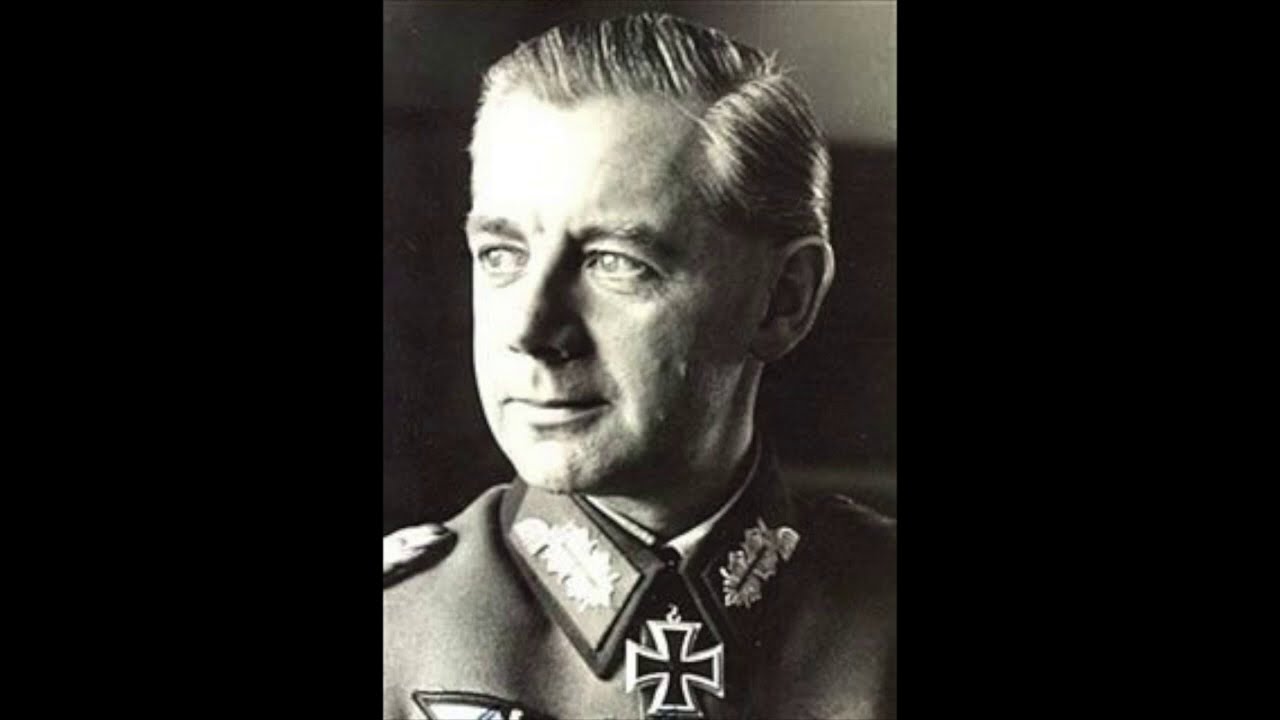 Wenck laid out his true plan, a brilliant and humane alternative to Hitler’s madness. “Relieving Berlin is a hopeless task,” he stated flatly, pointing to the map. The Twelfth Army was too weak.
However, they could still achieve a meaningful objective. Wenck’s strategy was to drive as close to Berlin as possible, but crucially, they would not give up their positions on the Elbe River. By keeping their flanks anchored on the river, they would maintain a vital channel of escape to the west.
“It would be nonsense to drive towards Berlin only to be encircled by the Russians,” he explained. Their real goal was to link up with the trapped Ninth Army and then, together, fight their way westward to surrender to the Americans, saving as many German soldiers and civilians as possible in the process.
A key part of this improvised rescue operation was a drive on the city of Potsdam, located just southwest of Berlin. The city’s garrison of 20,000 men was surrounded by Soviet forces but was still holding out. If the Twelfth Army could capture Potsdam, it might open a corridor to Berlin itself and provide a viable escape route for the defenders.
At the same time, the trapped Ninth Army would attempt to fight its way out of its pocket from the east, linking up with the Twelfth Army before both forces retreated west. This was the true objective of the last German offensive: not victory, but a mass exodus.
The main thrust of the attack was to be carried out by the Twentieth Corps of the Twelfth Army, under the command of Cavalry General Carl-Erik Koehler. For this final offensive, Koehler deployed three newly formed infantry divisions, each a perfect microcosm of the late-war German army. They were not the mighty, mechanized formations of 1941, but rather a patchwork of under-strength units, officer cadets, Luftwaffe ground personnel, and veterans of destroyed divisions, all scraped together in a desperate attempt to hold back the Soviet tide.
On the attack’s left flank was the Ulrich von Hutten Infantry Division, formed at Wittenberg on March 30th from the staffs of the destroyed 56th Infantry and 18th Panzer Grenadier Divisions. Its regiments were drawn from another broken formation, the 190th Infantry Division. Its armored support was minimal, consisting of a dozen or so Hetzer tank destroyers, along with a few new Waffenträger 88mm tank destroyers and eight-wheeled Sd.
Kfz. 234/3 heavy reconnaissance armored cars. The division was commanded by the experienced Generalleutnant Gerhard Engel, a holder of the Knight’s Cross with Oak Leaves.
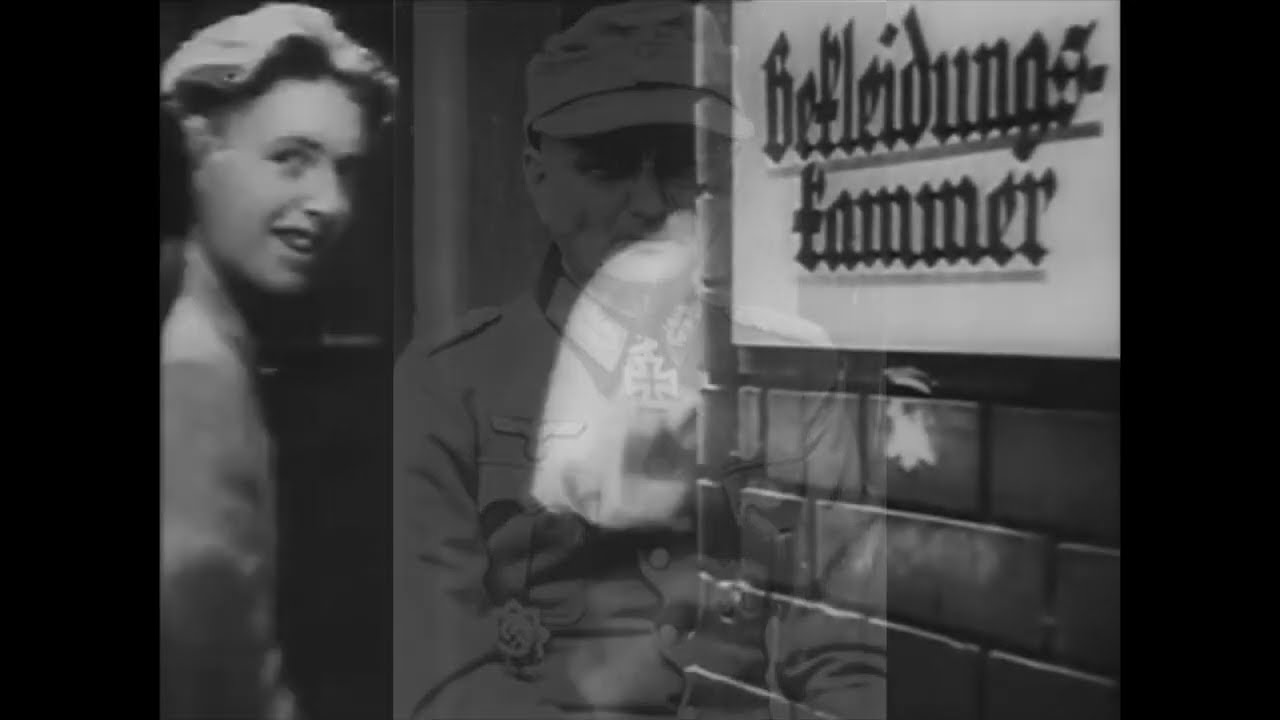 In the center of the attack was the Scharnhorst Infantry Division. This formation was a unique mix of about 80 officer cadets, trainee NCOs, and soldiers about to begin NCO courses in the Dessau area. The second tranche of its personnel were former Luftwaffe ground personnel and combat-hardened veterans from the shattered 167th and 340th Infantry Divisions.
It also had some Hetzers, a few StuG assault guns, and some mobile flak cannons. Its commander was Generalleutnant Heinrich Guts, another Knight’s Cross with Oak Leaves holder.
The offensive’s right flank was the responsibility of the Theodor Körner Infantry Division, formed on April 4th, 1945, at the Döberitz military training area. It was composed of combat-experienced survivors from the 215th Infantry Division and some 7,500 personnel from the Reichsarbeitsdienst (RAD), the Nazi Party’s paramilitary labor service. These RAD men had received some military training and had then completed eight weeks of basic infantry training with the army.
The division also included officer cadets from Döberitz, convalescents, and soldiers on leave who could not reach their original units. It was commanded by Generalleutnant Bruno Frankewitz.
The assaults would be supported by ample artillery fire, as Wenck had many supply barges packed with ammunition, supplies, and food stranded in his area. The offensive was launched on April 24th, 1945. The Theodor Körner Division, supported by what remained of the 243rd Assault Gun Brigade, launched an assault northeast out of the Niemegk area, preceded by a heavy artillery barrage.
Due to heavy refugee congestion on all the roads leading west, the largely infantry attack went cross-country. The Theodor Körner struck elements of the Soviet Fifth Guards Mechanized Corps, which was not expecting such a strong, even fanatical, assault. The division managed to reach the outskirts of Treuenbrietzen, 21 miles south of Potsdam, where furious fighting raged around the town.
The Germans briefly recaptured it before being pushed back on April 25th.
The center force, the Scharnhorst Division, launched its assault in the most spectacular part of the offensive, advancing on the Beelitz area. Behaving more like the German army of 1941 during Operation Barbarossa, the Scharnhorst caught the Soviet Sixth Guards Mechanized Corps on an 𝓮𝔁𝓹𝓸𝓼𝓮𝓭 flank and penetrated deep into the Soviet rear areas. They captured complete Red Army units, including tank repair depots and supply convoys, creating panic on the Soviet side.
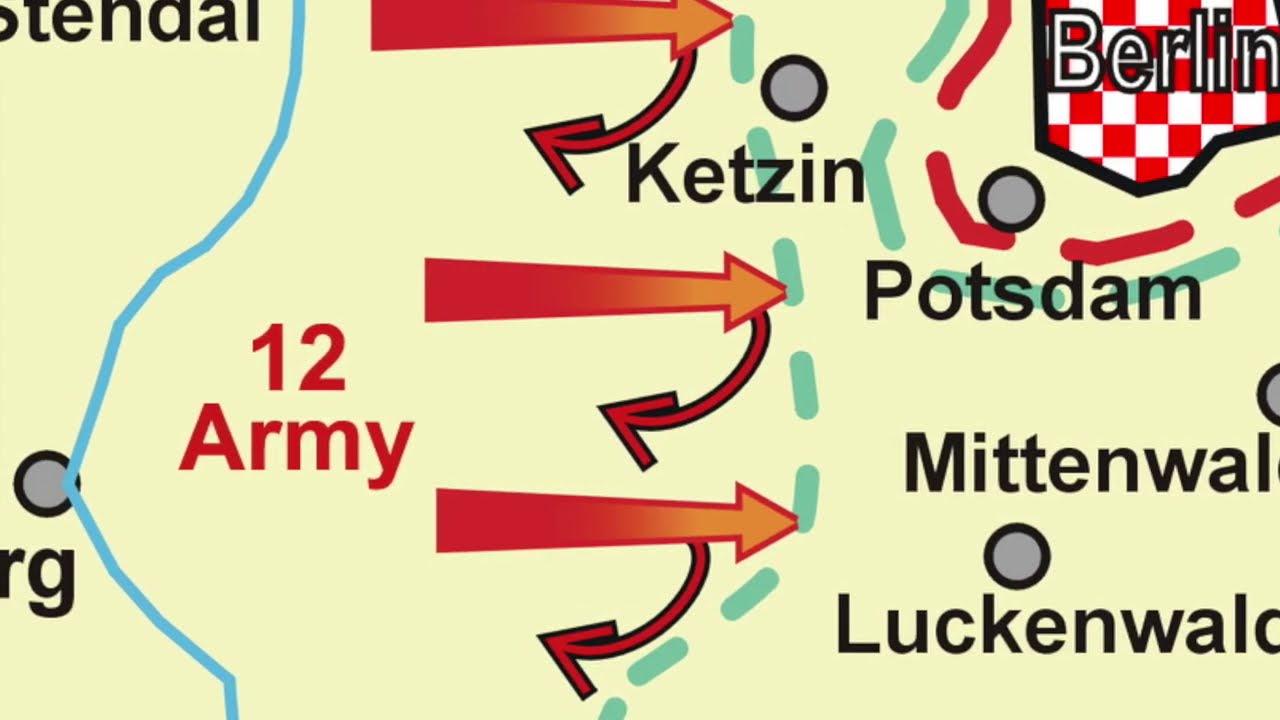 The division pushed forward an astounding 11 miles into the Soviet positions by late afternoon. Its reconnaissance element reached the health resort at Heilstätten Beelitz, only 15 miles from Berlin, and ejected the occupying Soviet troops.
The resort was being used as a huge field hospital and clinic, containing over 3,000 German wounded soldiers and huge numbers of evacuated sick children from Berlin. For three days, Soviet troops had occupied the resort, looting it and assaulting female staff. The Scharnhorst Division secured the vicinity, and plans were made to evacuate everyone west, 50 miles to the Elbe at Barby.
Another furious battle developed around Beelitz as the Soviets rushed in reinforcements to stop and then crush the German attack.
On the left flank, the Ulrich von Hutten Division advanced northeast of Belzig towards Potsdam, forcing the Soviets back some miles. But the German attacks could get no further. Heavy Soviet air support began to pound the three divisions, and heavy tank support broke the semi-encirclement of the town of Treuenbrietzen by the Theodor Körner Division.
Although the German Twentieth Corps was able to hold on to its positions for several days, the sheer weight of numbers of the Soviet opponent ensured that they could not break through to Potsdam or Berlin. At the same time, the encircled Ninth Army tried to fight its way towards the Twelfth Army, but its own breakout was a desperate, bloody 𝒶𝒻𝒻𝒶𝒾𝓇 that ultimately only succeeded in saving a fraction of its men.
General Wenck abandoned the operation on April 28th, 1945, two days before Hitler’s death in Berlin. He reported to the German High Command that his entire army was being forced back and that no further attack towards Berlin was possible. The remnants of the Twelfth Army retreated through the Halbe Forest and trudged west to surrender to the Americans at the Elbe River.
The last German offensive of World War II was over. It had not conquered territory or defeated an enemy, but in its own desperate way, it had achieved its true, unspoken objective: it had saved tens of thousands of German soldiers and civilians from the clutches of the Red Army, offering them a final, fleeting chance at survival in the ruins of their nation.


