The woman who built an empire of stolen horses and legal loopholes in Indian Territory met her end not in a hail of gunfire from a posse, but alone on a muddy road, felled by a shotgun blast delivered by an assailant who remains unidentified to this day.
Belle Starr, the legendary “Bandit Queen,” was just two days short of her 41st birthday when she was ambushed on February 3, 1889, near the Canadian River in what is now eastern Oklahoma. The murder, which has never been officially solved, ended the life of one of the most enigmatic figures of the American frontier—a woman who was less a gunslinging desperado and more a sophisticated criminal mastermind who understood that the real power in the territories lay not in the barrel of a pistol, but in the machinations of the courtroom.
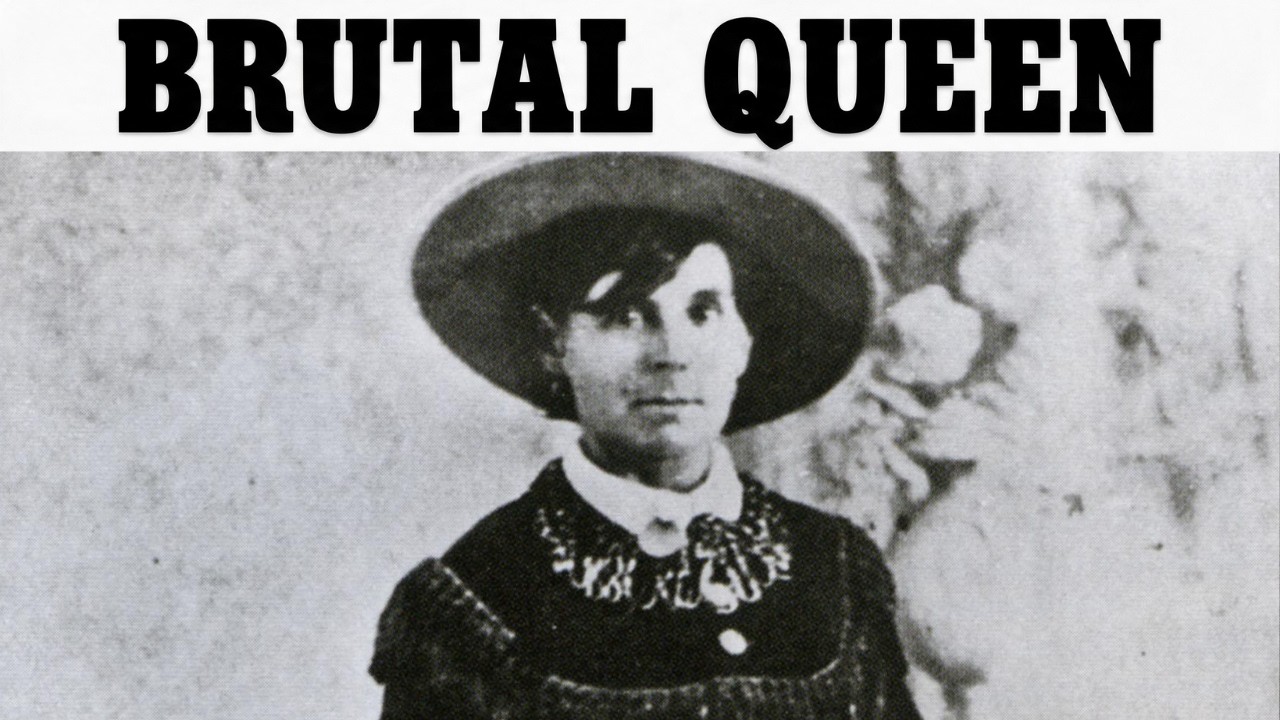 The victim’s journey to that fatal bend in the road began decades earlier, far from the outlaw haunts she would come to rule. She was born Myra Maybelle Shirley on February 5, 1848, on a prosperous farm near Carthage, Missouri. Her father, John Shirley, was a well-respected farmer and innkeeper, and her mother, Elizabeth, was a woman of some social standing.
Belle’s early life was one of relative privilege. She attended the Carthage Female Academy, a private institution her father helped found, where she studied Greek, Latin, and classical grammar, and distinguished herself as an accomplished pianist.
But the genteel world of her youth was shattered by the Civil War. Missouri, a border state, became a brutal cauldron of guerrilla warfare where neighbor turned against neighbor. Belle’s older brother, Bud, a scout for the Confederate irregular William Clarke Quantrill, was killed by Union troops in June 1864.
The same year, Union forces burned Carthage to the ground. The Shirley family, left with nothing, relocated to Scyene, Texas, a small settlement near Dallas. Belle was 16 years old, a classically educated teenager with a dead brother and a vanished home.
It was in Texas that the seeds of her future were sown. The Shirley farm became a refuge for former Confederate guerrillas, men who had ridden with Quantrill and were now wanted by federal authorities. The Younger brothers—Cole, Jim, and Bob—as well as Jesse and Frank James, were frequent visitors.
Belle was no mere spectator; she was a sharp observer, absorbing the skills and networks of men who lived outside the law. Her education in criminology was informal but thorough.
In 1866, she married Jim Reed, a former guerrilla she had known since her Carthage days. Their life was a nomadic, fugitive existence, as Reed was wanted for murder in Arkansas. They had two children: a daughter, Rosie Lee, nicknamed Pearl, born in 1868, and a son, James Edwin, called Eddie, born in 1871.
Reed drifted between outlaw gangs, including the James and Younger gangs, and established a connection with a Cherokee family named Starr, who were notorious for running whiskey and stealing cattle in Indian Territory.
The marriage was a turbulent cycle of crime and flight. Belle operated a livery stable in Dallas, which served as a clever front for selling the horses her husband stole. That life came to an abrupt end in August 1874, when Jim Reed was shot and killed by a deputy sheriff in Paris, Texas.
Belle, widowed at 26 with two small children, was adrift. She left her children with relatives and turned west, into the vast, legally ambiguous expanse of Indian Territory. It was there that she shed the name Myra and adopted the persona of Belle.
She connected with Tom Starr, a massively built Cherokee man with a fearsome reputation, and the connection proved transformative. Starr’s father, James, had been a Cherokee leader who signed the Treaty of New Echota in 1835, which ceded tribal lands and led to the Trail of Tears. The treaty split the Cherokee nation, leading to a bloody civil war.
Tom Starr had witnessed the murder of his father and brother by a rival faction and had reportedly killed over 20 men in revenge, earning him a price on his head from his own nation.
Starr offered Belle what no one else could: legitimacy in the territory under tribal law. Since a white person could only reside in the Cherokee Nation through marriage to a citizen, she married Starr’s son, Sam, in June 1880. She was 32; he was 23.
 The marriage was a legal instrument that granted Belle a home. They settled on tribal land at a bend in the Canadian River, roughly 70 miles southwest of Fort Smith, Arkansas. Belle named the place Younger’s Bend, and it was here that she built her empire.
It is a misconception that Bell Starr robbed stagecoaches or held up banks. Her power was more subtle and far more dangerous to the establishment. She organized.
She planned. She became the central hub for fencing stolen horses and cattle for every rustler and bootlegger operating along the Canadian River. When her associates were captured, she bribed the lawmen.
When bribery didn’t work, she hired the most expensive lawyers in Fort Smith. She was the operational center of the operation, the logistical brain that moved stolen goods and secured the release of the men who stole them. The cabin at Younger’s Bend became a safe house for fugitives, including the notorious Jesse James.
The primary antagonist to this arrangement was the United States government, represented by a single, formidable institution: the federal court of Judge Isaac C. Parker in Fort Smith, Arkansas. Parker, known as the “Hanging Judge,” had jurisdiction over 74,000 square miles of Indian Territory, a vast and often lawless region.
His court was the final arbiter, with virtually no appeal process. For the outlaws of the territory, the threat of Parker’s court was the only law that mattered.
Belle learned this courthouse intimately. She did not avoid it; she studied it. In 1882, she and Sam were charged with horse larceny and were found guilty in Parker’s court.
Parker, surprisingly lenient, sentenced them to short terms in Detroit. Belle was a model prisoner, teaching music to the warden’s children. Upon her release, Parker’s hope that she would reform was wasted.
The conviction had merely educated her in the courtroom’s procedures and weaknesses. She returned to Younger’s Bend and integrated this knowledge into her operations, standing trial twice more in 1886 and walking away acquitted both times.
Her legal acumen was not limited to her own defense. She hired attorneys for fellow outlaws and, in a stunning move, her lawyers went over Parker’s head to President Grover Cleveland, securing a full presidential pardon for her son, Eddie, after his horse theft conviction. Belle was beating the system using its own rules, in front of the one judge who had made it his mission to see her stopped.
While she was perfecting her legal maneuvers, her husband Sam’s criminal career was catching up with him. Wounded by Cherokee police and facing charges, he turned himself in to federal marshals. But he never made it to trial.
On December 17, 1886, at a Christmas party near Whitefield, Sam Starr got into a dispute with a rival, a US Deputy Indian Marshal named Frank West, who also happened to be his cousin. Both men drew their guns and killed each other simultaneously.
 Belle’s stable partnership was over. More critically, her claim to the land at Younger’s Bend, which depended on her status as a Cherokee citizen’s wife, was now in jeopardy. Her response was immediate and calculated.
She married Jim July, an adopted son of Tom Starr who was roughly 15 years younger than her. The marriage, from all accounts, was a legal instrument designed to secure her property, resembling more a mother-son relationship than a romantic one. It worked, and she kept her land.
The winter of 1889 brought a convergence of events that would prove fatal. In February, Belle’s new husband, Jim July, was indicted for horse theft and needed to surrender at Fort Smith. Belle accompanied him for a dozen miles before an argument broke out.
She told him she would not pay his bail or hire his lawyers. Jim July rode on alone, and Belle turned her horse, a mare named Venus, back toward Younger’s Bend.
On Saturday, February 2nd, Belle stopped at a neighbor’s house where she encountered Edgar A. Watson, a tenant farmer who had rented land from her the previous year. Belle had discovered that Watson was a fugitive wanted for murder in Florida.
The Cherokee Tribal Council had warned her that harboring fugitives would cost her the land. When she confronted Watson, threatening to expose him, he moved to a nearby farm but did not leave the area.
The next day, Sunday, February 3rd, 1889, Belle made a leisurely trip to a neighbor’s home, the Barnes place, to pick up a pone of sour cornbread. She stayed visiting until about 3:00 in the afternoon before mounting Venus to head home. The road she took passed close to the Watson farm.
As she turned a bend near a creek, a shotgun blast struck her in the back, knocking her from the saddle.
She tried to push herself up, but a second blast hit her in the face and shoulder, throwing her face down into the mud. A farmer, Milo Hoy, heard the shots and ran up the road. He found her alive but unable to speak.
At the cabin, her daughter Pearl saw the riderless horse galloping home with blood on the saddle and knew instantly what had happened. She ran down the trail. Belle Starr died in her daughter’s arms, refusing to or unable to name her killer.
There were no eyewitnesses. Boot tracks were found leading toward Watson’s cabin, and he was the obvious suspect. Belle’s husband, Jim July, placed him under citizen’s arrest and rode him to Fort Smith.
Watson sat in jail for two months, but Judge Parker did not believe the case was strong enough to hold him, and he was released. He was the only person ever formally charged.
 But other suspects existed. Belle’s son, Eddie, had been beaten with a bullwhip by his mother mere weeks before the killing for mistreating her horse. Jim July himself had quarreled with Belle the day before and would control Younger’s Bend without her.
A neighbor, Jim Middleton, had his own grudges. The historical record has never settled the question, and the murder remains officially unsolved today.
The aftermath was a brutal coda for those who survived her. Edgar Watson returned to Florida and settled in the remote Ten Thousand Islands. He hired transient workers who had the troubling habit of disappearing around payday, their bodies occasionally washing up in the local waterways.
In October 1910, a mob of armed townspeople confronted and shot him dead, never allowing him a trial for the dozens of suspected murders. He died as Belle had, shot down by citizens who had decided the law was inadequate.
Eddie Reed, Belle’s son, was convicted of horse theft just five months after his mother’s murder and sentenced to prison. Pearl sold her body in a brothel in Van Buren, Arkansas, to fund his legal defense and eventually secured a presidential pardon for him. After his release, Eddie became a deputy marshal at Fort Smith before being killed in a saloon fight in 1896 at age 25.
Pearl Starr moved to Fort Smith and opened her own brothel on “The Row,” advertising the establishment with a bright red star surrounded by lighted pearls, using her dead mother’s name as a brand. She amassed a small fortune before being forced out of the city in 1916, eventually dying in Arizona in 1925 under the name Rosa Reed.
Belle Starr was buried in the front yard of her cabin at Younger’s Bend, dressed in her favorite black velvet gown, anointed with turpentine and oil of cinnamon by her neighbors. The community that buried her was not celebrating an outlaw; they were mourning a neighbor, a woman who had lived among them in a territory where the nearest federal marshal was a two-day ride and the nearest judge hanged men for crimes no worse than those committed by the men wearing badges.
Judge Isaac Parker continued his work on the bench until 1896 when he died in office, exhausted by a caseload that gave him jurisdiction over 74,000 square miles and almost no resources to govern it. His system was not the absence of law, but the machinery of law stretched so thin it could barely function, and the spaces that machinery could not reach were filled by people like Belle Starr.
The legend of the “Bandit Queen” who rode with pistols blazing is a myth of dime novels. The record shows a more complex, interesting figure: a woman who organized a network of thieves, bribed federal marshals, hired better lawyers than the government could afford, and used the legal system more skillfully than most of the men who prosecuted her. Her crime was organization, and the territory’s crime was calling that arrangement governance.
Younger’s Bend still sits near the Canadian River in eastern Oklahoma. The original tombstone was chipped away by souvenir hunters over 120 years. A Tulsa surgeon named Ron Hood purchased the property in 2010 and rebuilt the grave from historic photographs.
Visitors today leave coins and flowers on the brick tomb. The epitaph, commissioned by her daughter Pearl and paid for with money earned in a bordello, reads: “Shed not for her the bitter tear, nor give the heart to vain regret. ‘Tis but the casket that lies here, the gem that filled it sparkles.”
Neither Belle nor her daughter rests under the name the world remembers. The mother is buried in the front yard of a cabin on the Canadian River, and the daughter is buried in Arizona under a stone that says Rosa Reed. The murder of Belle Starr on that muddy road in February 1889 remains a cold case, a final, unsolved mystery for a woman who spent her entire life manipulating systems of power that she was never supposed to understand.