Prince Harry lost his latest legal battle on May 2, 2025, when the Court of Appeal ruled that British authorities were lawfully entitled to strip him of automatic police protection during visits to the United Kingdom. The decision confirmed that his security will continue to be assessed on a case-by-case basis by a government committee, rather than guaranteed as a matter of royal birth. After the ruling, Harry sat for an emotional BBC interview in London. He said he could not imagine bringing his wife, Meghan, and their two children back to Britain safely under the current security arrangements.
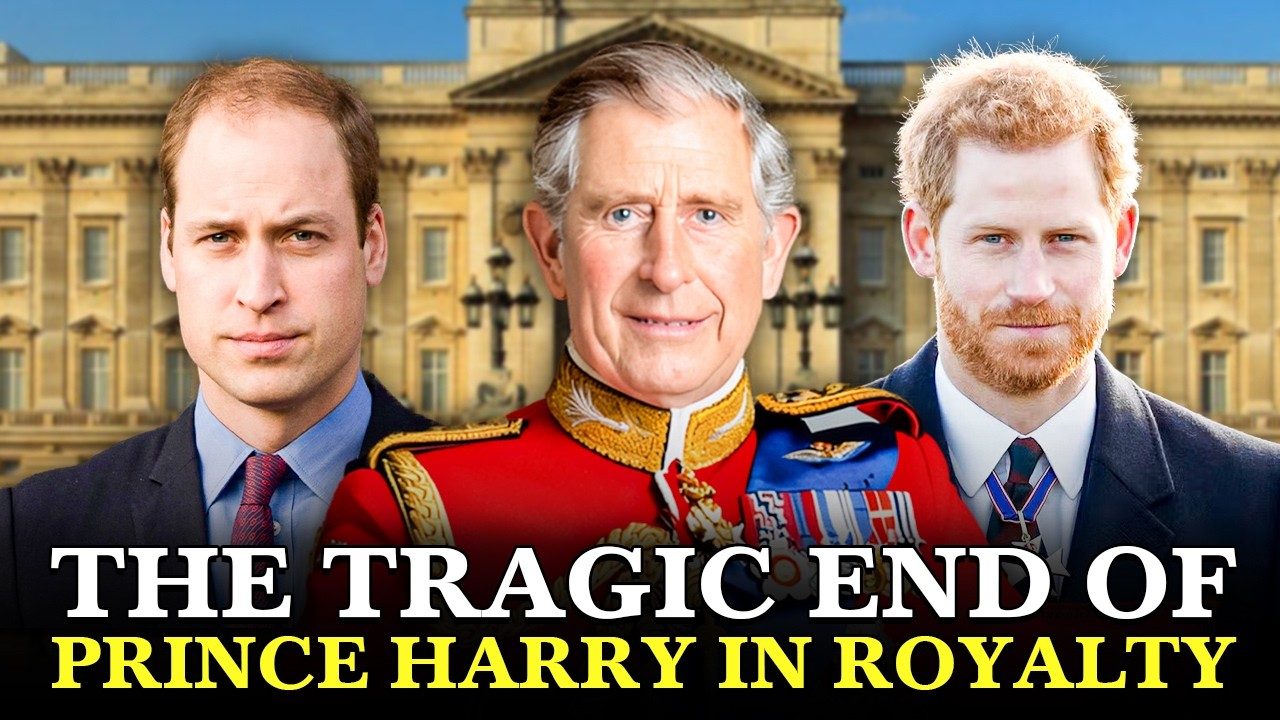
He also revealed that his father, King Charles III, has refused to speak with him while the legal case was ongoing. The palace responded with a single sentence. It stated that the issues raised by the Duke of Sussex had been examined repeatedly and meticulously by the courts, with no mention of family or grandchildren. The judgment was the latest chapter in a conflict that has defined Harry’s relationship with the House of Windsor for half a decade.
To understand how a senior royal ended up standing outside a London courthouse fighting to bring his children home safely, it is necessary to trace the institutional logic that shaped the monarchy for nearly a century. In December 1936, King Edward VIII signed the instrument of abdication at Fort Belvedere so he could marry American divorcee Wallis Simpson. The monarchy responded not with rage but with contraction. It tightened around the new sovereign, George VI, and treated Edward not as a traitor but as a presence that simply was no longer needed.
Edward kept his title and bloodline but lost belonging. The institution carried on without him, and that carrying on was the banishment. Elizabeth II learned that lesson as a child and applied it throughout her 70-year reign. The monarchy survives, the logic held, by preserving the line of succession and keeping the sovereign above the mess of individual personality.
Private feelings must never threaten institutional coherence. Every crisis, from Princess Margaret’s impossible love for Peter Townsend to the disintegration of Charles and Diana’s marriage, confirmed the same pattern: contract, recalibrate, survive. Charles was formed inside that machine. Born in 1948, he was heir from age three and grew up oriented toward the throne.
His childhood at Gordonstoun was built on toughness and suppression of emotion. He became a prince of Wales with strong opinions but no constitutional authority. The system required composure above expression, and that tension would define his relations with both his sons. The financial architecture matters because it converts family feeling into administrative fact.
Working royals receive funding, offices, staff, residences, and security. Non-working royals do not. The royal household’s own financial records show that Charles met the official expenditure of Harry and Meghan only until March 31, 2020. That date marks the moment when abstract family rupture became a line item in an annual report.
Harry was born on September 15, 1984, the second son of Charles and Diana. From birth, he was spare, a word that would become the title of his memoir. William was the future sovereign; Harry was constitutional insurance. Their mother’s presence transformed both boys.
Diana took them to homeless shelters and AIDS wards and showed them a world outside the gilded perimeter, but her marriage to Charles disintegrated publicly, and the boys were drawn into an emotional reality the palace was not equipped to handle. Diana died in a car crash in Paris on August 31, 1997, pursued by photographers. Harry was 12 years old. He walked behind her coffin through the streets of London days later.
He later said he barely remembers the walk. The dissociation between what the institution required and what his young psyche could process became the foundational crack in his relationship with the monarchy. He registered that the institution had put a child in front of cameras at the worst moment of his life, and that registration never faded. Harry was, by all accounts, extremely good at being royal.
The military transformed him. He deployed twice to Afghanistan, flying Apache missions in 2012. He founded the Invictus Games in 2014, the most effective piece of original public communication any royal of his generation produced. He was emotionally immediate, and that quality made him essential to the brand and irrelevant to the constitutional line.
Meghan Markle entered his life in 2016. She brought directness, personal agency, and modern media fluency. She was not from the aristocratic gene pool, and she did not arrive with an instinctive understanding of the palace’s coded press strategies. The racial abuse directed at her online and in parts of the tabloid press was persistent.
Harry’s November 2016 statement condemning the media’s treatment of his then-girlfriend was the first visible sign that his protective instincts and the palace’s media instincts were no longer aligned. The wedding at St George’s Chapel on May 19, 2018 was the last moment it all appeared to hold together. An estimated 1. 9 billion people watched the broadcast.
Two glamorous couples occupied two complimentary roles. But the geometry was already unforgiving. Two households of that visibility could not coexist indefinitely in equilibrium. The Kensington Palace household was formally divided, and the machinery of fracture assembled itself behind the public facade.
On January 8, 2020, it shattered. Harry and Meghan announced they wanted to step back as senior working royals and build a financially independent life while retaining their titles and place in the succession. They were asking for a stable version of half-belonging that the institution’s deepest logic could not accommodate. The House of Windsor had faced that question once before in 1936, and the answer had been unambiguous: contract around the center and let the periphery go.
The Queen’s statement after the Sandringham crisis summit balanced warmth with boundary precisely. She said the family respected and understood their wish to live a more independent life, but would have preferred them to remain full-time working royals. It was the last time anyone in the family managed to hold together both affection and institutional non-negotiable in the same breath. The formal terms were announced on January 18, 2020.
Harry and Meghan would step back from senior royal duties. They would repay the £2. 4 million of public money spent on renovating Frogmore Cottage. Their HR titles would no longer be used officially.
A 12-month review period would follow. The emotional rupture had been translated into administrative language. The 12-month review concluded in February 2021 with a confirmation that the departure was permanent. Their honorary military appointments were returned to the Queen, including Harry’s role as captain general of the Royal Marines.
Their patronages were returned. The Sussex Royal brand was closed. The message was clear: you chose to leave, and now the leaving is complete. Harry and Meghan chose not to accept the reclassification quietly.
In March 2021, they sat for an interview with Oprah Winfrey watched by tens of millions. Meghan said she had experienced suicidal thoughts during her pregnancy and that the institution had refused to help her because of how it would look. She revealed that conversations had occurred within the family during her pregnancy about how dark her unborn child’s skin might be, without naming who made the remarks. The palace responded that the issues raised were concerning, would be addressed privately, and that recollections may vary.
That final phrase was the institution at its most compressed, simultaneously acknowledging the claim, casting doubt on it, and closing the door on further public engagement. Harry used the interview to speak of his father and brother. He said Charles had stopped taking his calls, that his relationship with William was space, and that the family had initially lived off the inheritance Diana had left him. The interview did not simply narrate the rupture, it poured concrete into it.
Every word was now part of the permanent public record. Elizabeth II died on September 8, 2022. She had reigned for 70 years and 214 days. With her death, the last informal bridge between Harry and the institution was gone.
At the funeral, Harry wore a morning suit because his honorary military appointments had been stripped, and he no longer had the right to wear the uniform he had earned through a decade of service. The absence of the uniform was belonging made visible in its absence. The second fracture followed as a sustained barrage across the winter of 2022 into early 2023. Netflix released a six-part documentary series, Harry and Meghan, in December 2022, a production told entirely from the couple’s perspective.
A month later, Spare was published. The memoir sold 1. 4 million copies on its first day, the fastest-selling non-fiction book in British publishing history. Harry described a physical altercation with William, being told by his father there was not enough money to support them, and killing 25 Taliban fighters in Afghanistan.
The institutional damage was not primarily reputational. The real damage was relational, of a kind no mechanism could repair. Every disclosed conversation made it harder for the family to occupy the same room without the weight of what had been published. Then came Frogmore.
Reports emerged in early 2023 that King Charles had asked the Sussexes to vacate the cottage. The house where they had begun their married life, and where Archie had spent his first months, was reassigned. The last physical foothold inside the royal perimeter was gone. The losses accumulated plainly.
Harry had lost his senior royal status, his military appointments, his patronages, his Duchy of Cornwall funding, his residence, and his proximity to the family. The institution had not needed to slam a door. It had removed the hinges one at a time until the door was no longer a door. A shift came on February 5, 2024, when Buckingham Palace announced that the King had been diagnosed with cancer.
Harry flew to London immediately. He saw his father at Clarence House for roughly 45 minutes, their first private meeting as far as the public record shows since the departure. The visit lasted less than an hour, and it changed nothing visible. Harry left and flew back to California the following day.
He returned to London in May 2024 for the 10th anniversary of the Invictus Games. A spokesperson confirmed he would not meet the King because of Charles’s full schedule. The institution had placed a diary between a father and son, and the diary had won. The security case that would produce the story’s climactic scene had been moving through the courts since 2021.
Harry challenged the Home Office decision to remove him from the regular cohort of royals receiving automatic police protection. He argued the decision was unlawful and that his risk level remained high regardless of his working status. He pointed to documented threats and said publicly he could not bring Meghan and the children to Britain safely under the current arrangements. Harry lost at the High Court in February 2024.
He appealed. The Court of Appeal heard the case in the spring of 2025, and the judgment delivered on May 2 upheld the earlier ruling. The judges found the committee had acted lawfully and that the case-by-case arrangement was a proportionate response to a change in circumstances Harry himself had initiated. That evening, the BBC broadcast an interview with Harry arranged in advance of the judgment.
He spoke as a son, not a litigant. He said he wanted reconciliation with his father but that the King would not speak to him. He described the security situation in the language of fatherhood. He said he could not imagine bringing Meghan and the children back to the United Kingdom safely under the current arrangements.
He said it not with anger, but with weariness. Buckingham Palace responded the same day with one sentence: the issues raised had been examined repeatedly and meticulously by the courts. No warmth. No mention of Archie or Lilibet.
The institution had spoken in the passive voice, and the subject was closed. The day brought together the three registers of the entire narrative. The court’s language of citations and administrative law. Harry’s human language of sons and fathers and safety.
And the palace’s institutional terminal language. The monarchy no longer needed Charles to intervene personally. The operating system did the work. The courts processed the case, the committee processed the security, the communications office processed the response, and the institution turned its attention to the next engagement.
In the aftermath, the family’s collective response to the most emotionally exposed moment in its recent public history was the absence of response. The King’s schedule continued. The Prince of Wales attended public events. The machinery turned.
As of spring 2026, the situation remains unresolved. Charles, 77, continues to receive cancer treatment while carrying out official duties. William and Catherine occupy the emotional center of the monarchy’s future, with their three children representing the next positions in the line of succession. The working monarchy is smaller and tighter than in decades.
Harry remains the Duke of Sussex, fifth in line to the throne. He lives in Montecito with Meghan, Archie, now six, and Lilibet, now four. His charitable operation continues, and the Invictus Games remains his most significant independent achievement. But 2025 brought a loss that complicated the narrative.
Harry resigned as patron of Sentebale, the charity he co-founded in 2006 to work with children affected by HIV in southern Africa. The charity had been rooted in Diana’s memory, and its loss was another severance of the life he had built while still inside the institution. The absence of those who shaped this story is felt most acutely in its present tense. Diana has been dead 28 years and never saw her grandchildren.
Elizabeth has been dead for three years, and her authority was the last force capable of holding the family’s contradictions in balance. The two women who might have softened the ending are gone. The public version of the Windsor family shows balconies, weddings, and choreographed unity. The private version is more painful.
The institution does not destroy by banishing. It survives by reducing, by reclassifying, by withdrawing the operational infrastructure that gives royal identity meaning while leaving the titles and bloodline intact. Edward VIII was the hard version of the method. Harry is the soft version.
No abdication, no formal severance, just a slow administrative removal of every mechanism that once made him a functioning part of the monarchy. Harry reaches his early 40s in a house on the California coast saying he cannot safely bring his own children to the country where his mother died and is buried. The echo across 28 years of a boy who lost his mother to the collision between royal life and public danger, and a man who lost his place in the family to the collision between royal logic and private need, is the most painful rhyme in the story.