The most important Allied victory of 1944 did not happen on a battlefield. It happened in a meeting room, where a single, quiet decision altered the course of the war in Western Europe. In the final winter of that year, the Allied front nearly collapsed under the weight of a desperate German gamble, and the survival of that front rested not on a heroic last stand, but on a hidden piece of preparation that almost no one outside the high command ever knew existed.
The man at the center of that preparation was George S. Patton, and the question Eisenhower asked him would echo through history with a force that still resonates eight decades later.
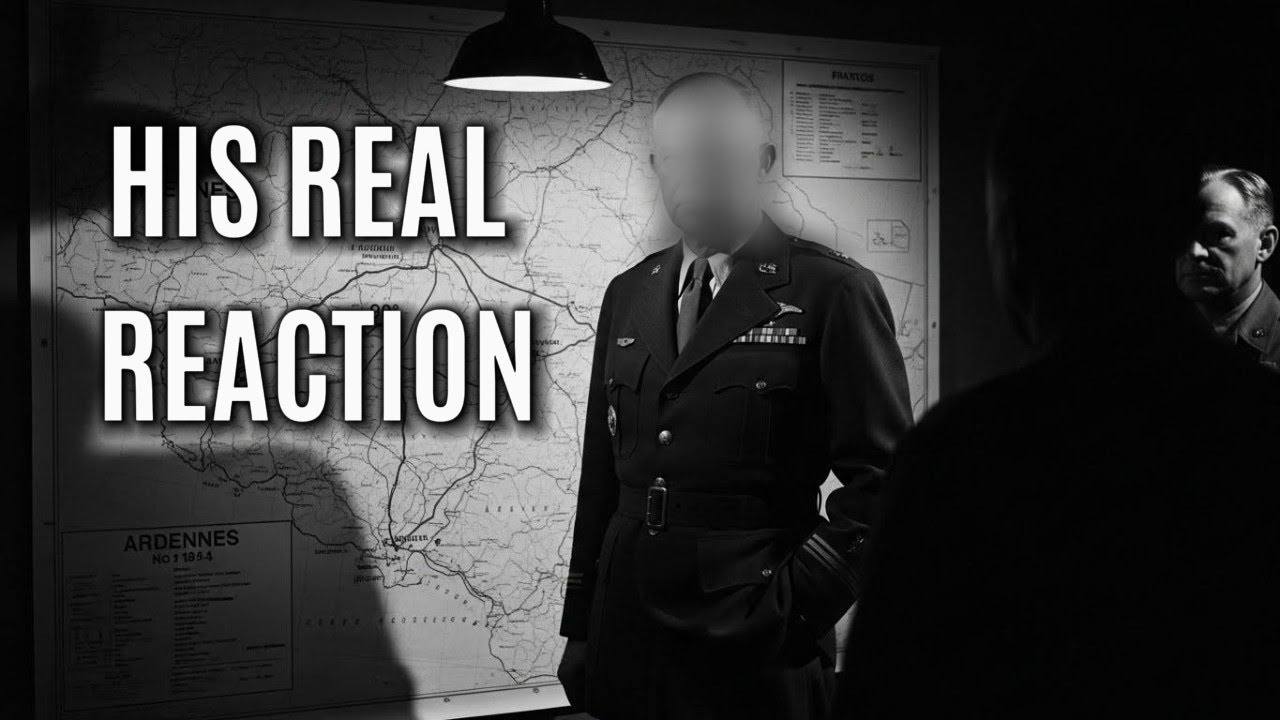 By the end of 1944, most Allied commanders believed the war in Western Europe had entered its final phase. Six months after the breakout from Normandy, American and British forces had liberated France, pushed through Belgium, and were now massed along the German frontier. The front lines were stretched, exhausted, and weatherbeaten, but stable.
And stability in war is often the most dangerous illusion of all. Dwight D. Eisenhower, Supreme Allied Commander, assessed the German army as battered beyond the ability to launch any large-scale offensive.
Intelligence reports reinforced that view. Shortages of fuel, dwindling manpower, and shattered morale seemed to guarantee that Germany could only defend, never attack. The expectation across Allied headquarters was simple.
A hard winter, slow progress, and then a decisive push into the Ruhr once spring arrived.
But beneath that confidence lay cracks no one fully recognized. The Ardennes sector, dense forest, narrow roads, and rugged terrain, was considered too difficult for major operations. It was manned mostly by inexperienced American divisions, resting units, and headquarters elements.
Supply lines were overstretched. Weather grounded Allied aircraft, and the front, though quiet, was thin. To Allied eyes, it looked like the perfect place to hold the line.
To Hitler, it looked like the perfect place to break it. Unknown to Eisenhower’s staff, the German high command had spent months assembling a striking force in almost total secrecy. Entire armored divisions moved under cover of darkness.
Radio traffic was minimized, units were disguised, and the very terrain that Allies believed made an attack impossible was the same terrain Hitler believed would hide one. For a brief moment in December 1944, the Western Front seemed stable, predictable, controlled, manageable, but within days that illusion would shatter. And the man who understood that first was George S.
Patton.
At dawn on December 16th, 1944, the illusion of stability vanished in a single crushing moment. Without warning, the eastern horizon lit up with thousands of German artillery flashes, more guns than the Americans had seen since Normandy. Shells rained down across a 70-mile front, smashing communication posts, supply depots, forward outposts, and road junctions.
Radio operators were killed before they could report what was happening. Entire platoons vanished in the opening barrage. Then came the armor.
More than 200,000 German troops surged out of the dense Ardennes forest, an area the Allies had dismissed as unsuitable for large-scale maneuvers. Behind them rumbled approximately 1,400 tanks and assault guns, including some of Hitler’s last operational armored reserves. Panzer columns poured down narrow icy roads, using the morning fog as a natural shield.
American sentries, half frozen and expecting another quiet day, watched in disbelief as German infantry advanced in overwhelming numbers.
The attack struck some of the least prepared units in the entire theater. Many American formations were new, resting, or recovering from earlier battles. Others were spread dangerously thin across long, quiet sectors as German forces smashed into their lines.
Defensive positions collapsed with terrifying speed. Companies fell back in disorder. Roads filled with retreating vehicles, abandoned equipment, and wounded men stumbling through the snow.
Within hours, the scale of the disaster became clear. Communications across the front broke down. Field commanders received conflicting reports.
Some describing minor probes, others reporting full collapses. Weather conditions made reconnaissance nearly impossible. Allied aircraft were grounded by fog, sleet, and one of the coldest winters Europe had seen in decades.
The fog that blinded Allied eyes became the perfect cover for German armor. As morning turned to afternoon, a massive bulge, an ever widening wedge, began tearing open the Allied line. Bastogne, a vital road junction at the center of the region, was suddenly at risk.
If Bastogne fell, German armored spearheads could reach the Meuse River, split American forces in half, and unravel the entire Western Front.
At SHAEF headquarters, Eisenhower and his staff watched the situation spiral far beyond what anyone had predicted. Reports came in too fast to verify. Divisions overrun, regiments surrounded, units disappearing from the map.
Officers struggled to make sense of the chaos. Was this a local breakthrough or a full-scale strategic offensive? One thing became undeniable.
This wasn’t a raid. It wasn’t a spoiling attack. It was a major German gamble, Hitler’s last desperate bid to change the course of the war.
By the end of December 16th, Eisenhower faced the most serious crisis since the Normandy landings. And while most commanders scrambled to understand what was happening, one man had already begun calculating what needed to be done. George S.
Patton
By December 19th, the scale of the German breakthrough had become impossible to deny. What began as scattered reports of local collapses now formed a single terrifying picture. A massive armored thrust driving straight toward the heart of the Allied line.
The western edge of the bulge widened by the hour. Bastogne was nearly encircled. Entire American units were cut off, unable to retreat or resupply.
It was clear that if the allies didn’t respond immediately and decisively, the German offensive could tear the entire front in two. Eisenhower called for an emergency conference in Verdun. The symbolism was obvious.
Verdun had been the crucible of crisis in the First World War. Now, two decades later, it would serve the same purpose again. As generals and staff officers arrived through freezing winds and snow choked roads, the atmosphere was one of shock and disbelief.
No one had expected an offensive of this magnitude. Certainly not here. Not now
Inside the command room, maps covered in red arrows showed the grim reality. German spearheads were plunging deep toward the Meuse River. Key road junctions were falling in rapid succession.
Weather still grounded Allied aircraft, removing their greatest advantage. And everywhere across the Ardennes, American forces were fighting isolated, outnumbered, and unsure of what lay beyond the next ridge. Eisenhower opened the meeting bluntly.
There was no time for blame, no time for argument. The German attack had achieved strategic surprise. The Allied line was buckling and the situation was deteriorating faster than headquarters could react to it.
The question was no longer how bad is it. The question was how do we stop it? He turned first to the commanders responsible for the central sector.
Omar Bradley’s staff estimated that it could take six to eight days to shift enough forces to form a coherent counterattack. Other generals were equally cautious. Winter roads were treacherous.
Traffic jams stretched for miles. and units were entangled in complex supply routes that couldn’t simply be uprooted overnight. One by one, the commanders explained that redeploying major formations under these conditions would be slow, dangerous, and extremely limited.
The tone in the room grew darker with each assessment, a week, at least a week before the allies could mount a meaningful response
Then Eisenhower turned to the one man who had remained silent, George S. Patton. Patton stood with his hands behind his back, listening with a thin, unreadable expression.
He didn’t need more reports. He didn’t need more time. While others were still trying to grasp the scale of the crisis, he had already begun calculating the counterblow.
Eisenhower asked the question that would echo through history. George, how soon can you attack? There was no pause, no hesitation, new qualification, Patton answered as if the decision had already been made.
I can attack with three divisions in 48 hours. The room fell silent. Some officers turned to each other, certain they had misheard.
Others simply stared. No one believed it. No one thought it was possible.
But Patton had come to Verdun not with doubt, but with a plan
For several seconds after Patton’s declaration, the conference room remained frozen. Three divisions, 48 hours, in the middle of winter, on iced roads, with traffic already collapsing under the weight of a retreating army. It sounded less like a plan and more like a provocation.
Some officers exchanged glances of disbelief. Others leaned forward, trying to read Patton’s expression for any hint of sarcasm. There was none.
Eisenhower narrowed his eyes. George, this is serious. I need a real estimate.
Patton didn’t flinch. 48 hours is the estimate. To the men in that room, men hardened by years of war, this was still unthinkable.
Moving an entire field army wasn’t just a matter of telling troops to march north. It meant reconfiguring every supply line, every fuel dump, every artillery position, every traffic control point across hundreds of miles. Under ideal circumstances, it would be a monumental undertaking.
Under these circumstances, snow, ice, fog, chaos, it bordered on impossible. One logistics officer, unable to stop himself, muttered. There’s no way.
Patton heard him. There is, he replied. Because the orders are already written
Every head turned. Patton then revealed what no one in the room had known. For weeks, long before the German offensive began, he had quietly ordered his staff to develop contingency plans for a rapid pivot north.
Not one plan, three, three fully detailed operations outlining routes, timetables, supply requirements, and command responsibilities. While others believed the Ardennes was too quiet for a major German movement, Patton’s instinct told him otherwise. And unlike most commanders, he trusted his instincts enough to prepare for the scenario no one else expected.
Eisenhower’s stern expression slowly shifted into something else. Part surprise, part calculation. If Patton truly had three plans ready, then 48 hours might not be bravado after all.
It might be the only opportunity to salvage the collapsing front. Finally, Eisenhower spoke, his voice measured, deliberate, carrying the weight of the entire Western Front. George, if you can do it, do it.
 Patton nodded once. But Eisenhower wasn’t finished. He turned to the rest of the commanders and staff officers and delivered a sentence that would be remembered long after the war.
Give Patton everything he needs. Priority fuel, priority roads, priority traffic control. He moves first.
There was no mistaking the tone. Patton wasn’t being allowed to attempt the impossible. He was being expected to accomplish it
The meeting dissolved into urgent motion. Officers rushed to telephones. Messengers ran through hallways.
And Eisenhower’s staff scrambled to issue directives that would clear entire highways for Patton’s army. The fate of the Bulge now depended on one man. and on a 90 degree turn no army had ever attempted in modern warfare.
When the meeting at Verdun broke up, most officers left stunned, still trying to understand how Patton could possibly meet the deadline he had just committed to. But Patton himself didn’t waste a second. He walked straight out of the command room, stepped into the freezing wind, and headed for his command car.
The moment the door slammed shut behind him, he was already issuing orders. Get the staff ready. We’re turning the entire army north
Inside Patton’s headquarters, the atmosphere that night has been described in diaries with words like electric, chaotic, and unbelievable. Maps were yanked off walls, and replaced with new ones. Phones rang non-stop.
Officers sprinted between rooms carrying updated orders, revised timetables, and hastily redrawn routes. It felt less like a headquarters and more like a living organism suddenly jolted awake. This was the moment when Patton’s impossible promise began transforming into action.
And the truth is this. He could only do it because the work had already been done. Weeks before the German attack, while most Allied commanders considered the Ardennes a quiet backwater, Patton had quietly ordered his G2 and G3 staff to study the region.
He didn’t like how quiet it seemed. He didn’t like the vague intelligence indicators. He didn’t like the pattern of German movements that others dismissed as random or desperate.
Patton didn’t know what Hitler was planning, but he sensed something was off, so he prepared. He demanded not one but three full operational plans for a pivot north. Each plan included detailed march routes, fuel consumption calculations, supply line reversals, artillery and engineer repositioning, traffic control points, estimates for enemy resistance, and even contingency routes if roads iced over or jammed.
His officers had complained, of course. They called it unnecessary work. They said the Ardennes was quiet.
They told him he was chasing shadows, but Patton insisted anyway
Now, as the German offensive roared forward and the Western Front began to crumble, Patton’s shadow planning became the most valuable piece of preparation in the entire theater of war. He didn’t need days to think. He didn’t need to wait for updated intelligence.
He didn’t need to invent a plan from scratch. All he needed was Eisenhower’s approval, and he had it. Within hours, entire columns of tanks and support vehicles were rerouted.
Units preparing for their own offensives suddenly received orders to break camp and move immediately in freezing temperatures through narrow French roads already crammed with retreating forces. Military police units were deployed along key intersections to direct traffic night and day. Fuel trucks were sent racing ahead to establish forward dumps along the new axis of advance.
Artillery regiments began calculating firing lines for positions they had not expected to occupy. Engineering battalions prepared to clear roads, build makeshift bridges, and tow vehicles out of ice and snow. Everything Patton had quietly planned was now happening in real time
But the scale of the maneuver was unprecedented. No modern army had ever attempted to reorient itself 90 degrees across hundreds of miles in winter under pressure. And while preparing to attack a fully mobilized enemy, the Third Army wasn’t simply changing direction.
It was reinventing its entire operational posture. In less than two days, Patton moved among his staff like a force of nature. He demanded precise updates on which units were moving, which roads were blocked, which fuel dumps were ready, and which formations would arrive first.
He personally checked radio networks, reviewed march tables, and questioned officers on timing down to the minute. According to several accounts, he seemed almost energized by the scale of the task, as if this crisis was the exact battlefield challenge he had been waiting for. And behind every frantic order, every redrawn map, every shouted instruction, one truth stood out.
Patton wasn’t improvising. He wasn’t gambling. He wasn’t hoping.
He was executing a plan he had been perfecting long before the crisis began. A plan almost no one knew existed
By the night of December 19th, while most Allied commanders were still digesting the scale of the crisis, Patton’s third army was already in motion. Not fully, not perfectly, but moving frantically, aggressively, relentlessly. The kind of movement that only happens when an entire command structure is being ripped out of one directionand thrust into another.
Convoys that had been heading east suddenly turned north. Units that had been preparing to attack in one sector were ordered to pack up instantly. Battalions that had expected a quiet winter were told to march now through snow, ice, and darkness.
And everywhere across northeastern Franceand Luxembourg, the same transformation repeated itself. The Third Army pivoting like a massive steel organism, each part adjusting to the shock of a new missionthat had been delivered without warning. What made it almost surreal was that none of these men knew the big picture.
Most soldiers had no idea there was a major German offensive. They only knew the simple version. Patton wants us moving fast.
But the officers understood. They could see it on the maps. They saw the reports of German armor pushing west.
Of American divisions being surrounded, of Bastogne nearly cut off. They knew what was at stake and they grasped the magnitude of what Patton was attempting
The roads become the battlefield. Winter in the Ardennes wasn’t just cold, it was punishing. Engines refused to start.
Oil thickened. Tracks froze. Men marched through kneedeep snow with boots stiff from ice and breath turning white in the air.
The roads were worse. Narrow, winding, icy, clogged with refugees, reinforcements, retreating elements, and equipment moving in every possible direction. For traffic controllers, it was a nightmare.
For Patton, it was simply another obstacle to be crushed. He issued one of his clearest orders of the campaign. Keep moving.
Do not stop unless you are fired upon. And even then, keep moving. This wasn’t bravado.
This was doctrine. Patton believed speed was a weapon, one that could break an enemy purely through momentum. And in the winter chaos of 1944, speed was the only weapon that could save Bastogne
Military police units were deployed across every major intersection, waving columns forward with flags, lanterns, even their bare hands in the freezing air. Trucksand halftracks rumbled past them for hours at a time. Tank crews leaned out of turrets, shouting for directions.
Ambulances slithered over ice. Engineers worked non-stop clearing roads, towing stuck vehicles, and cutting detours through frozen fields. For some formations, progress was measured not in miles, but in feet.
Yet, the Third Army continued to advance. The logistics chain gets rewired overnight. The true magnitude of Patton’s pivot wasn’t visible on the roads.
It was buried in the supply chain. Fuel dumps were emptied and rushed north. Ammunition stores were reorganized so artillery units could fire immediately upon arrival.
Repair units moved ahead of combat troops, ready to salvage every tank and truckthat the winter tried to 𝓀𝒾𝓁𝓁. Medical teams were repositioned for casualties they knew were coming. Every supporting element, engineers, mechanics, quartermasters, clerks, became part of the same forward driving machine.
For the first time since Normandy, the Third Army’s momentum was being used not to exploit a breakthrough, but to create one
Morale, the invisible fuel. Despite the cold, the exhaustion, and the uncertainty, something strange happened along the march. Morale stayed high.
War diaries describe it simply. Patton is on the move. For men who had served under him in Sicily, France, and the Lorraine campaign,that meant something powerful.
They believed Patton could do the impossible because they had watched him do it before and his presence made all the difference. Whenever possible, he rode forward in his command jeep, standing upright, binoculars in hand, scanning the horizon. Soldiers later recalledthat seeing Patton on the road felt like watching the storm itself take physical form.
A young infantryman put it best. When Patton came through, it felt like we could take on the whole German army
Pressure mounts from Bastogne. While Patton’s army advanced north, inside Bastogne,the situation deteriorated by the hour. German artillery hammered the perimeter.
Supplies were dwindling. Medical tents overflowed. Temperatures fell below freezing.
The defenders, primarily the 101st Airborneand elements of the 10th Armored Division, were exhausted, surrounded, and short of everything except resolve. The famous nuts reply had stiffened morale, but defiance didn’t stop the cold or the shells. If relief didn’t reach them, Bastogne would fall.
And if Bastogne fell, the entire German plan, splitting the Allied frontand pushing to the Meuse, might succeed. Everything now depended on Patton. A moving army, a closing clock.
By December 21st and 22nd, leading elements of the Third Army began reaching the northern roads of Luxembourg. Some units engaged German forces almost immediately. Others crawled forward inch by inch, fighting terrain as much as the enemy.
But the impossible was happening. In less than 48 hours, the Third Army, tens of thousands of men, thousands of vehicles, entire divisions, had pivoted 90 degreesand reoriented itself toward Bastogne. and they weren’t slowing down.
The race to break the encirclement had begun
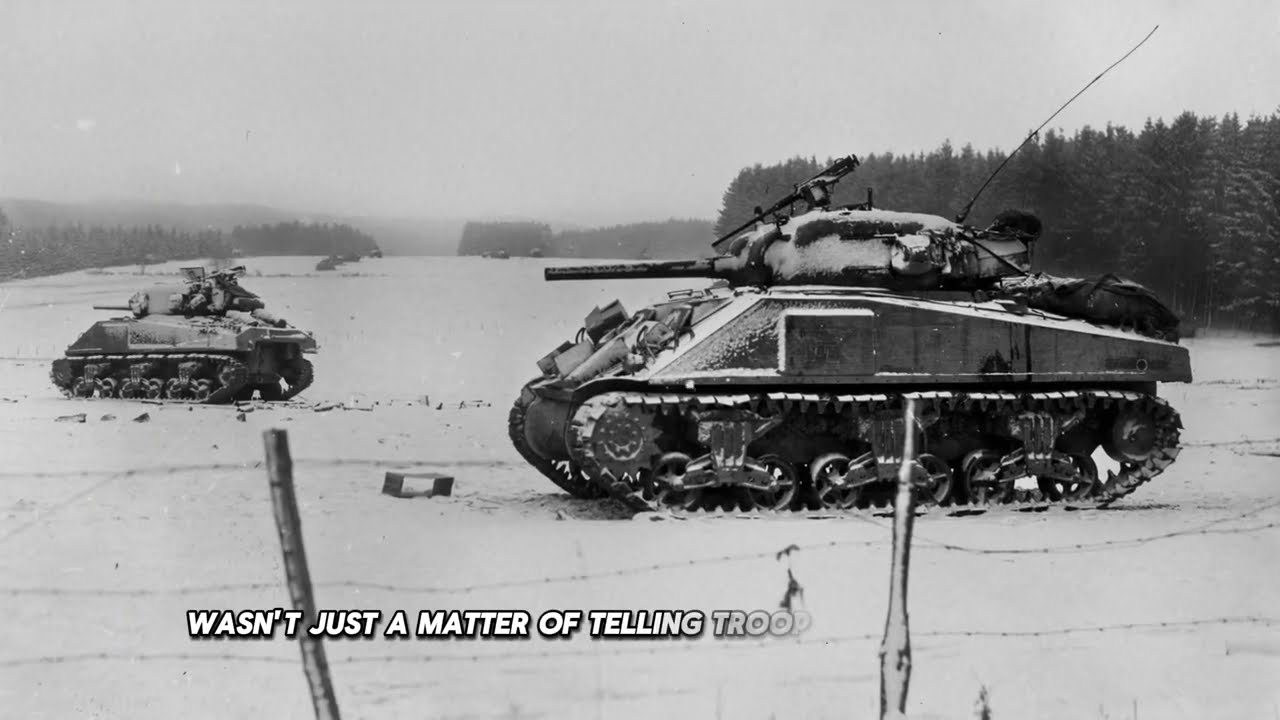 While Patton’s army clawed its way north through ice and chaos, the situation inside Bastogne grew more desperate with every hour. What had begun as a tenuous defense was becoming a siege,and the siege was tightening. The 101st Airborne Division, reinforced by elements of the 10th Armored Division, held the town’s defensive ring.
But held is a generous word. They endured. They froze.
They bled. They fought off attack after attack from German infantry, tanks, and artillery, often with little more than gritand whatever ammunition remained in their pouches. The Germans understood the stakes as clearly as the Americans did.
Bastogne was the knot holding the German advance together. Cut it,and the entire offensive unraveled. Capture it,and the road to the Meuse opened wide.
That’s why German artillery pounded the perimeter relentlessly day night through fogand snow with barely a pause. Inside the town, conditions were brutal. Medical stations were overwhelmed.
Morphine ran short. Bandages were scavenged, washed, reused. The wounded lay in frigid aid stations, their breath freezing above them in small clouds.
Doctors worked by lantern light, wrapped in blankets, their hands shaking from exhaustionand cold. Everywhere,the same question hung over the defenders. When will relief arrive?
And no one had an answer
The nuts moment. On December 22nd, German officers approached American lines under a white flag, demanding surrender. Acting division commander, Brigadier General Anthony McAuliffe, scribbled the now famous reply, Nuts.
It was a brief spark of defiance. A small burst of humor in a worsening nightmare. But defiance alone wouldn’t stop the cold or the artillery or the tanks massing outside the town.
Crosscut. Patton’s army pushes north. While Bastogne battled to stay alive, Patton’s leading divisions fought their own war of attrition.
The fourth armored division serving as the spearhead encountered German defenses that were increasingly frantic, increasingly concentrated. German commanders realizing Patton’s approach threatened to collapse. The offensive began diverting units originally sent west toward the Meuse.
Every mile was a contest of endurance. Every village became a firefight. Every ridge hit a potential ambush.
But despite the worsening resistance, Patton kept pushing. He pressed his commanders relentlessly. Faster.
We must get there faster. Reports reached his headquarters describing the worsening situation inside Bastogne. Ammunition almost gone.
Medical supplies nearly exhausted. Paratroopers fighting on halfrationswith no winter gear. Patton knew what that meant.
He knew the timeline was closing. The German noose was tightening. If the third army didn’t break it soon, Bastogne would suffocate
The weather turns. Then, as if the tension weren’t enough, winter marched in with renewed fury. Snow thickened.
Ice hardened. Fog curled around the trees and roads, shrinking visibility to mere yards. Vehicles skidded into ditches.
Tanks stalled. March columns slowed to a crawl. Patton responded the only way he knew how, by accelerating the pressure.
He visited units on the road shouting encouragement, ordering stalled vehicles pushed aside, clearing choke points, and driving his men through the cold with a singular message. Bastogne is waiting. We do not stop.
It moral held barely, but it held. Bastogne’s breaking point. By December 24thand 25th, the defenders inside Bastogne were nearly at the limit of human endurance.
German artillery increased in intensity. Some foxholes were reduced to muddy craters filled with iceand slush. The wounded shivered in basementas shells cracked overhead.
McAuliffe’s staff kept up a brave face, but privately they knew if relief didn’t reach them soon, the lines would eventually break
The approaches narrow. Meanwhile, the third army was closing the distance. The fourth armored division fought its way toward the town, smashing through German blocking positions that grew more desperate by the hour.
Each engagement drained precious time, but also revealed something important. The Germans had not expected Patton to arrive this fast. They were reacting, not planning.
And that shift, German reaction versus American momentum, was the first sign thatthe tide was turning. A city on the edge, an army on the move. On Christmas Day, the gap between Patton’s spearheadand Bastogne tightened to only a few miles.
The defenders inside the town could hear distant artillerythat wasn’t directed at them. American artillery advancing north. Relief was coming.
Not soon enough, but close. The race entered its final hours
By the early hours of December 26th, the race for Bastogne reached its final breathless stretch. The Third Army had been driving north for days, fighting terrain, weather, exhaustion, and German resistancewith a ferocitythat defied every military expectation. But now, at last, they were close.
Patton’s headquarters monitored every radio report, every map update, every crackling field transmission. The fourth armored division, his chosen spearhead, was within striking distance. The men were frozen, exhausted, and battered by constant combat.
But they were also running on something else. The knowledge that an entire garrison of American soldiers was holding on for dear life, waiting for them. Inside Bastogne,the defenders could sense something changing.
The thunder of German artillery remained constant, but beneath it, faint at first. Then growing, came the unmistakable sound of distant American guns. The sound told them what they dared not assume.
Patton was coming
The final push. Patton pushed his commanders harder than ever. He demanded hourly updates, ensured fuel reached the front, cleared traffic snarlsby personal intervention,and kept every element of the Third Army focused on one mission.
Break the encirclement. German forces realizingthe danger began reinforcing their southern lines. Units that were meant to drive west toward the Meuse were instead dragged back to block Patton’s advance.
The German timetable, once so precise, had begun to fracture. Commanders complained of fuel shortages, broken communications,and mounting casualties. Still,the Germans fought with the desperation of men who understood the stakes.
They launched counterattacks along the southern approaches to Bastogne, slowing American progress to a grinding crawl. Every village became a battleground. Every ridge requireda fight.
Every advance was paid for in blood. But the third army would not stop
The spear point combat command R. Shortly before 1600 hours, combat command R of the fourth armored division fought its way through the German-held village of Assenois,a just a few miles south of Bastogne. It was here in this small hamletthat the final barrier lay.
German defenders threw everything they had into the fight machine guns, anti-tank weapons, infantry assaults across snow-covered fields. The battle raged through houses, across narrow streets,and along the icy roadthat led directly to Bastogne. Then, at approximately 1650 hours, it happened.
Contact. Contact with Bastogne. A small patrol of American tanksand infantry, led by Lieutenant Charles Boggas of Company C, 37th Tank Battalion, pushed past the last German positionsand crested a rise overlooking the southern edge of Bastogne.
In the distance, they saw familiar shapes. Paratroopers of the 101st Airborne waving, signalingwith helmetsand arms. The linkup had been made.
The siege of Bastogne, one of the most desperate defenses of the entire war, had been broken. It wasn’t a grand scene, no sweeping visuals, just a handful of tanks, a few dozen exhausted infantrymenand paratroopers who had been surviving on gritand dwindling supplies for days. But its symbolic weight was enormous.
American unitsthat had been surrounded, isolated, and pounded relentlesslyby German artillery were now connected once more tothe Allied front. Supplies could now flow. Reinforcements could move in.
Casualties could be evacuated. The defenders, who had held on by sheer will, could finally breathe
Patton’s reaction. When news of the breakthrough reached Patton, he did not gloat. He did not boast.
He did not celebrate. He simply said, A man must do his best if we won. It was a typically understated remark from a commander whose audacity had just accomplished what many believed was impossible.
Not the end, only the opening. But breaking the encirclement was not the end. The Germans still held surrounding high ground.
Their forces were dug into strong defensive positions,and the weather remained brutal. The Third Army needed to widen the corridor, secure supply lines,and push the Germans back to prevent another encirclement attempt. Fighting continued for days.
Some of the fiercest clashes of the entire Ardennes campaign happened after the linkup. The Wehrmacht, sensing their offensive slipping away, threw in every reserve they could muster. But the psychological turning point had already occurred.
The moment Patton’s men reached Bastogne,the momentum of the Battle of the Bulge shifted decisively tothe Allies
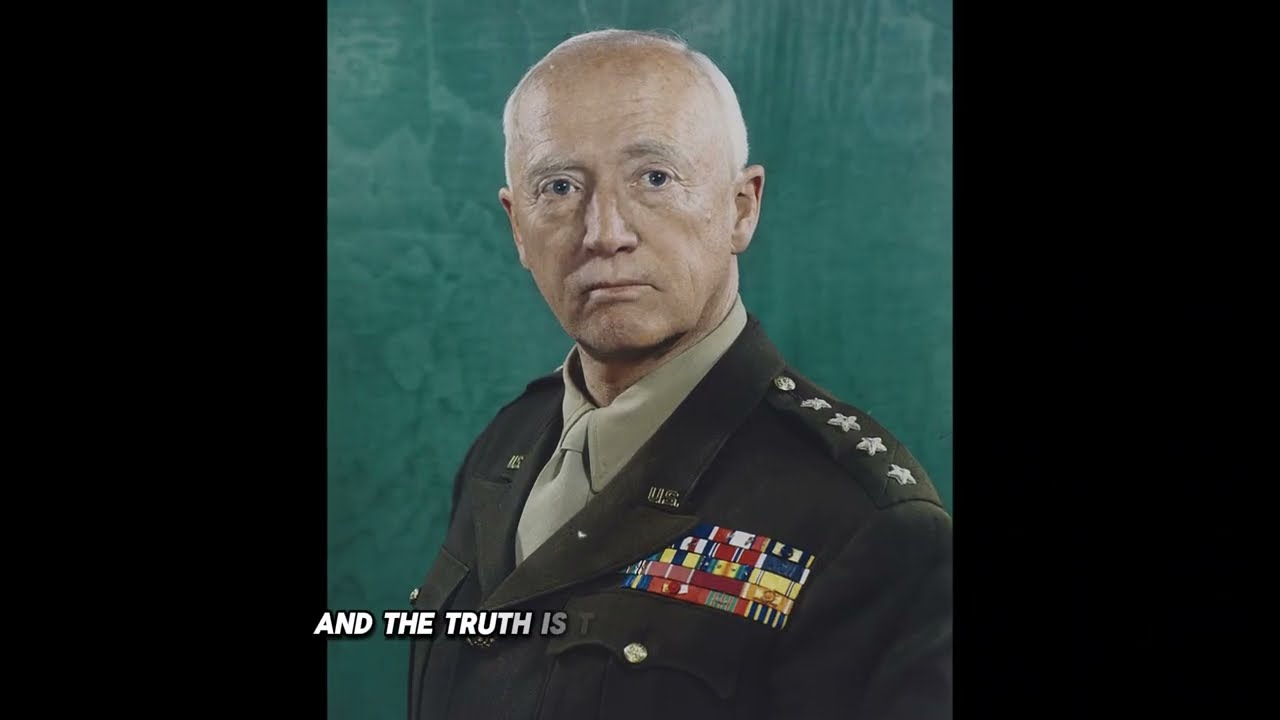 The gamble that paid off. Hitler’s last desperate attempt to splitthe Allied frontand force a negotiated peace, was now unraveling. Patton’s maneuver, unprecedented in scaleand speed, had shatteredthe German timetable, disrupted their operational rhythm,and restored Allied cohesion.
The impossible had been done. The encircled had been reached,and what had begun as a disaster forthe Allies had been transformed into one of their most celebrated actionsbecause one general had prepared for a moment no one else believed would come. When the link up at Bastogne was confirmed,the Allied command felt a wave of reliefthat cannot be overstated.
For days, Eisenhowerand his staff had watchedthe map change with terrifying speed as German arrows pushed westward, threatening to splitthe Allied armies in half. But now, at last, momentum was shifting,and that shift was happening in places far beyond Bastogne itself
Inside German headquarters,the mood was entirely different. There had been no room for optimism, even before the breakthrough. But now,the cascading failures became impossible to ignore.
Fuel shortages crippled armored units. Roads jammed with unexpected American counterattacks. The weather, once a powerful ally, began to clear, bringing Allied aircraft roaring back into the skies.
And worst of all, Patton’s advance had forced German commanders to divert units intended for the main thrust towardthe Meuse. The great German gamble depended on speed, shock,and coordinated thrusts. Patton disrupted all three.
The German timeline shatters. The original plan forthe Ardennes offensive requiredthe Wehrmacht to reach the Meuse River quickly, securing crossingsand fanning out toward Antwerp. But Patton’s rapid pivotand subsequent assault from the south forcedthe Germans to reallocate their reserves.
Instead of racing west, German armor was now entangled in a desperate struggle to block Patton’s spearhead. Every hour Patton advanced northward was an hour stolen from Hitler’s timetable. The German high command realized it too late.
By the time they understood the scale of Patton’s movement,the initiative had slipped from their grasp. Reports from the field were grim. Panzer divisions were immobilized for lack of fuel.
Infantry units were running out of ammunition. Morale plummeted as Allied air power returned. Communications broke down across shattered forestsand snow-covered roads.
One German officer later wrote thatthe situation felt like watchingthe offensive bleed out in the snow
Rapid allied coordination restored. Eisenhower understoodthat Patton’s success was more than just tactical. It was operational glue.
The act that reconnected a front in danger of splitting apart. As supply corridors opened and reinforcements began pouring into Bastogne,the broader Allied line regained its coherence. Divisions that had been on the brink of collapse now stabilized.
Counterattacks became possible. Morale surged. For the first time since December 16th, it wasthe Germans who felt surrounded.
Pressed from the north by the forces defendingthe bulge, from the south by Patton’s third army,and from the air by Allied aircraft now attackingwith a vengeance. Eisenhower’s staff, once near panic, now shifted to cautious optimism. The Supreme Commander had taken a riskin backing Patton, but it was a calculated riskand one that had paid off
Eisenhower’s private assessment. In later diariesand recollections, Eisenhower’s staff describedthe Verdun meetingas the momentthe war in Western Europe almost slipped away. But they also described something else.
The quiet confidence Eisenhower displayed when Patton made his 48-hour promise. He had understood something others did not. That Patton’s unique combination of preparation, intuition,and audacity made such a maneuver possible.
After the linkup, Eisenhower reportedly told his inner circle. Patton’s maneuver wasthe most brilliant operation of the war. There’s no backside.
For a commander who rarely used superlatives, this was a staggering compliment. Eisenhower recognizedthat the relief of Bastogne was not accidental. It was the result of a commander who not only anticipatedthe enemy’s move, but shapedthe battlefield before the crisis arrived
The German offensive runs out of timeand fuel. By early January 1945,the German offensive was unraveling. The Allies launched coordinated counterattacksfrom northand south, squeezingthe bulge like a closing fist.
The German advance stalled, then retreated. Entire armored divisions unable to refuel were abandoned or destroyed. The Ardennes forest became a graveyard of tanksand trucks.
Field commanders reported catastrophic shortages. One wrote, Without fuel, we are no longer an army. As meanwhile,the Allies had regained allthe ground lost during the initial German surge.
The counteroffensive continued through snowstormsand frozen forests until the lines were restoredand then pushed forward. For Germany,the cost of the Ardennes offensive was devastating. Their last strategic reserves were gone.
Their final hope for a negotiated peace evaporated. Their armored strength never recovered. Their ability to resist the upcoming Allied drive into Germany collapsed.
What Hitler envisioned as a decisive counterblow had become a strategic catastrophe
Patton’s role in the larger picture. For Patton,the relief of Bastogne was not simply a tactical achievement. It was the culmination of a philosophy he carried throughout the war.
Anticipatethe unexpected, act decisively,and strike before the enemy can think. His preemptive planningand the speed with which he executed it turned what could have been the allies greatest defeat since Kasserine Pass into a pivotal moment of regained momentum. Historians now viewthe Third Army’s pivotas a case studyin operational brilliance.
Students of military strategy still analyze Patton’s ability to transform intuition into preparationand preparation into action under extreme time pressure. The psychological effect on Allied troops was immense. Soldiers who felt isolatedand abandoned suddenly saw Patton’s tanks rolling toward them through snowand smoke.
The relief was not just physical, it was symbolic. A man who refused to accept the impossible had arrived to breakthe impossible. And as the German offensive collapsed, one truth became clear to every Allied commander.
The battle had turned because Patton had turned his army first
By January 1945,the Ardennes offensive had become what German commanders privately feared it would be, a catastrophic failure. The Allies had regained almost allthe ground lost during Hitler’s surprise attack. The German armored spearheads were broken, their fuel exhausted, their reserves spent.
What began as a daring gamble to splitthe Allied armies ended as a slow, grinding collapse through snowand ice. But amid the wreckage of the Ardennes, one operation stood out. One maneuverthat historians, officers,and even the soldiers who lived through it still struggle to fully comprehend.
The Third Army’s 90-degree turn in 48 hours. To Eisenhower’s staff, it wasn’t just fast. It wasn’t just bold.
It was unprecedented. No modern army had ever executed such a reorientation under combat conditions in winter across congested roads while fighting a fully mobilized enemy. The scale alone defied logic.
The speed gave it an almost mythic quality. And the most astonishing part was this. Patton had prepared for it before anyone knew it would be needed
Eisenhower’s reflection. In the days followingthe relief of Bastogne, Eisenhower reviewed afteraction reports, staff diariesand firsthand accounts. The more he read,the more extraordinarythe story became.
Refugees moving through snow choked roads had watched endless columns of tanks pushing north. Engineers had described chopping through frozen groundwith numb hands. Staff officers had recalled rewriting entire operational plans in hours rather than days.
And at the center of it all was Patton demanding updates by the minute, visiting units in personand driving his menwith a sense of urgencythat radiated through the entire army. Eisenhower was not a man given to dramatic praise. His leadership style was calm, measured,and deeply focused on coalition unity.
But when it came to Patton, especially in these critical days, he spoke with admirationthat few had heard before. To one group of officers, he remarked, Patton’s maneuver was a masterpiece. It alteredthe course of the battleand perhaps the war.
That was no ceremonial compliment. It was an honest assessmentfrom the commander responsible for the entire Western Front
The German collapseand Allied advance. The relief of Bastognedidn’t just save a division, it savedthe integrity of the Allied line. It gave Allied forcesthe breathing room needed to reorganizeand counterattack,and it shattered Hitler’s dream of forcing a negotiated peace.
By late January,the German army inthe West was a shell of its former self. Their armored core had been ripped apart. Their fuel depots emptied.
Their strategic reservesto be used for the defense of the Rhinewere gone. The path to Germany now lay open. And looking back, Eisenhower would repeatedly point to the same momentas the hinge upon whichthe entire Ardennes campaign turned.
Not the German offensive. Not the nuts reply. Not any single tank battle or defensive stand, but the decision made behind closed doors at Verdunand Patton’s immediate response
A lesson etched into history. For decades, military historians have studied Patton’s 48-hour promise, searching for the deeper lesson. Was it intuition?
Was it professional discipline? Was itthe product of years of studying mobility, momentum,and shock warfare? The answer, as the Verdun meeting revealed, is simplerand far more rare.
It was preparation. Preparation done quietly. Preparation dismissed by others.
preparationthat existed only because Patton refused to believe the enemy was finished. And when the impossible moment arrived,that preparation became the difference between collapseand victory. Eisenhower’s final judgment.
As the campaign closedand the Western Front surged forward again, Eisenhower offered an assessmentthat would become one of the most iconic statements of the war. Speaking to his staff, he summarizedthe entire Ardennes crisis in a single line. one that captured both the scale of the challengeand the force of the man who met it.
If anyone could accomplish the impossible, it was Patton. As of building deny 80 years later,that remains the legacy of the 90-degree turn. A maneuver born not of luck, but of foresight, discipline,and leadership of the rarest kind
But the story of the Ardennes doesn’t end with the relief of Bastogne. Because while Patton’s third army was racing north, another battle just as desperate, just as decisive, was unfolding on the opposite flank of the bulge. A battle where a handful of American tank crews faced one of the most powerful armored formations Germany had leftand won.
A battle almost forgotten, overshadowed by the 𝒹𝓇𝒶𝓂𝒶 at Bastogne, yet crucial to stoppingthe German drive towardthe Meuse. The stand that bought Patton the time he needed. The fight that denied Hitler the breakthrough he counted on.
And the clashthat revealed one of the most overlooked armored duels of World War II. If you want to understand howthe Battle of the Bulge was truly stopped, you need to see what happened there. That’s the story we tell next