John Gotti Jr. was born on October 27, 1940, in the Bronx, into a family marked by poverty. His father’s sporadic income as a laborer left the family struggling, and by age 12, Gotti was already running with street gangs linked to the Mafia. At 14, a construction accident left him with a permanent limp, but he remained undeterred.
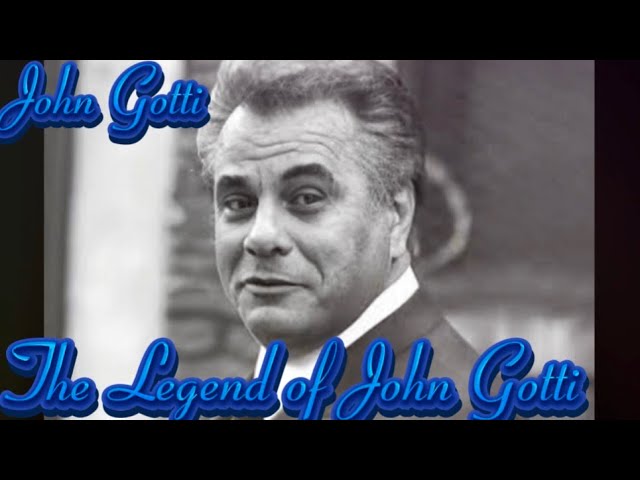
He joined the Fulton Rockaway Boys gang and formed ties with future mob figures like Angelo Ruggiero and Wilfred “Willy Boy” Johnson. In 1958, Gotti met Victoria DiGiorgio, and they married in 1962, eventually having five children. Though he briefly tried legitimate work as a truck driver and factory presser, he was drawn back into crime and served multiple prison sentences by his mid-20s. By the late 1960s, Gotti was climbing the ranks of the Gambino crime family under the guidance of underboss Aniello Dellacroce.
Based in Ozone Park, Queens, he ran operations involving gambling, loansharking, and racketeering, establishing himself as one of the family’s top earners. His relationship with Gambino boss Paul Castellano, however, was tense. Castellano preferred a discreet, business-minded approach, while Gotti’s flamboyant personality and love of attention clashed with the boss’s low-key style. Tensions grew when members of Gotti’s crew were indicted for drug trafficking, a crime Castellano strictly forbade.
In December 1985, Gotti orchestrated the murder of Castellano, who was gunned down outside a Manhattan steakhouse. With Castellano eliminated, Gotti seized control of the Gambino family, becoming one of the most powerful figures in organized crime. His reign was defined by his flashy lifestyle and media charm. Wearing expensive suits and courting the press, Gotti earned the nickname “The Dapper Don.
” After escaping conviction in three major trials during the 1980s, he gained another nickname, “The Teflon Don,” as prosecutors repeatedly failed to secure convictions amid allegations of jury tampering and witness intimidation. At the height of his power, Gotti was reported to earn between $5 million and $20 million a year. His downfall came from within his inner circle. In 1991, underboss Salvatore “Sammy the Bull” Gravano turned state’s evidence after hearing Gotti disparage him on FBI wiretaps.
Gravano’s testimony helped convict Gotti on charges including five murders, racketeering, obstruction of justice, and tax evasion. In 1992, Gotti was sentenced to life in prison without parole. Imprisoned at the U. S.
Penitentiary in Marion, Illinois, he remained a symbol of the American Mafia even as his health declined. Diagnosed with throat cancer, he spent his final years in a prison medical facility and died on June 10, 2002, behind bars. Gotti’s early years were marked by a rapid ascent in the underworld. By his mid-teens, he was running errands for Carmine Fatico, a captain in what was then the Anastasia family.
He participated in truck hijackings at Idlewild Airport, later known as John F. Kennedy International Airport, and formed an alliance with future Bonanno boss Joseph Massino. In February 1968, federal authorities arrested Gotti after United Airlines employees identified him as a suspect who had signed for stolen goods. Two months later, while out on bail, he was arrested again for intercepting a shipment of cigarettes worth $50,000 on the New Jersey Turnpike.
He later pleaded guilty to a hijacking charge involving Northwest Airlines cargo trucks and received a three-year sentence at Lewisburg Federal Penitentiary. After his release on parole in 1972, Gotti reunited with his old crew and was appointed acting captain of the Bergen crew by Fatico. He reported regularly to Dellacroce at the Ravenite Social Club, and their mentor-protégé relationship deepened. In 1973, Gotti was assigned to a hit squad tasked with avenging the murder of Emanuel Gambino, nephew of then-boss Carlo Gambino.
Posing as NYPD detectives, the crew attempted to kidnap suspect James McBratney from a Staten Island bar. A scuffle broke out, and Ralph Galione fatally shot McBratney. Witnesses and an informant identified Gotti as a perpetrator, leading to his arrest in June 1974. With the help of high-powered attorney Roy Cohn, Gotti negotiated a plea deal reducing the charge to attempted manslaughter and received a four-year sentence.
Law enforcement took note of Gotti’s rise. Retired NYPD detective Remo Franceschini recalled in a 1993 interview that Gotti was a charismatic natural leader with a sharp mind and unwavering loyalty to his crew. “There were few men who would go against him,” Franceschini said. “He exuded toughness and had a sharpness about him that made him a standout.
”
Carlo Gambino died on October 15, 1976, and unexpectedly handpicked Paul Castellano as his successor over his loyal underboss Dellacroce. The decision created a rift within the family, splitting it into competing factions. In 1976, the family reopened its membership books, and Gotti was formally inducted after his release from prison in July 1977. Gotti took control of the Bergen crew and ran lucrative ventures, including loansharking, while holding a no-show job as a plumbing supply salesman.
FBI informants alleged he may have been involved in financing drug deals, though those claims were never fully substantiated. One of Gotti’s most infamous involvements came in December 1978 with the Lufthansa heist at Kennedy Airport. Gotti arranged for the getaway van to be destroyed, but driver Parnell “Stacks” Edwards left it parked near a fire hydrant instead, drawing attention and leading to major repercussions. Tragedy struck the Gotti family on March 18, 1980, when his youngest son Frank was accidentally killed by a neighbor, John Favara, who struck the boy with his car.
The death was ruled accidental, but Favara was abducted and disappeared without a trace four months later. It is widely believed Gotti ordered the murder, though he was on vacation in Florida when Favara vanished. In 1984, Gotti was indicted on assault charges. The following year, he, Dellacroce, and others from the Bergen crew were indicted in a racketeering case.
The indictment also revealed that Wilfred “Willy Boy” Johnson had been working as an FBI informant. Gotti grew increasingly frustrated with Castellano’s leadership, viewing him as distant and excessively profit-driven. He also had ongoing disputes with Castellano over the financial cut from hijacking operations. Rumors suggested Gotti was exploring drug trafficking, which Castellano had explicitly banned.
In 1983, Gotti’s brother Gene and friend Angelo Ruggiero were arrested on heroin distribution charges, with evidence stemming from surveillance in Ruggiero’s home. Castellano demanded access to the recordings, straining Ruggiero’s position and leading Castellano to consider demoting Gotti. In 1984, Castellano was indicted in a RICO case tied to violent crimes committed by Roy DeMeo’s crew. The following year, he was again indicted for his involvement in the Mafia’s governing body, the Commission.
Facing a likely life sentence, Castellano appointed Gotti, Thomas Bilotti, and Thomas Gambino as acting bosses in his absence. Gotti began secretly conspiring to overthrow Castellano, aligning with key allies including Frank DeCicco, Joseph “Joe Piney” Armone, and soldiers like Gravano and Robert “DB” DiBernardo. The group, later nicknamed “The Fist,” shared a common goal. Historically, Mafia rules prohibited killing a boss without Commission approval, and Gotti’s plan would mark the first unsanctioned assassination of a Five Families boss since the 1950s.
The opportunity arose on December 16, 1985, when Gotti learned that Castellano and Bilotti would meet at Sparks Steakhouse in Manhattan that evening. Assassins lay in wait, and when the two men arrived, the ambush took place, killing both. Gotti and Gravano observed from a nearby car. Gravano later described that night in detail.
“I’m the guy in the car with a walkie-talkie with a gun. I made myself a backup shooter,” he recalled. He noted that two police officers were standing nearby, and his job, if the shooting went wrong, was to kill them so the shooters could escape. “Thank God just before they came, they turned around and started walking up the avenue chatting the other way,” he said.
With Castellano eliminated, Gotti quickly consolidated power. He was placed on a temporary three-man committee and officially recognized as the new boss in January 1986. DeCicco became underboss, and Gallo remained consigliere. In April 1986, DeCicco was killed in a car bombing orchestrated by rival mobsters from the Lucchese family.
Bombings were rare in the American Mafia due to the risk to innocent bystanders, leading the Gambino family to suspect Sicilian mafiosi. Gotti’s legal troubles worsened when a judge revoked his bail over allegations of witness intimidation. From jail, Gotti continued to assert control, orchestrating the murder of Robert DiBernardo, who had been vying to replace DeCicco. In August 1986, jury selection for Gotti’s racketeering trial resumed.
Juror number 11, George Pape, secretly held ties to Bosco Radonjic, leader of the Westies gang. Through this connection, Gravano reportedly arranged for Pape to accept a $60,000 bribe to secure Gotti’s acquittal. Gotti’s defense lawyer Bruce Cutler used an aggressive strategy, portraying the government’s case as a personal vendetta and dismissing the existence of the Gambino family. The defense also attacked the credibility of prosecution witnesses with criminal histories.
On March 13, 1987, the jury acquitted Gotti on all charges, clearing him of loansharking, illegal gambling, and truck hijacking. Pape later served time for obstruction of justice. Even as Gotti celebrated, his associates weren’t as fortunate. Underboss Joseph Armone and consigliere Joseph Gallo faced their own racketeering charges, resulting in convictions by the end of 1987.
Gotti’s brother Gene and Ruggiero were also entangled in heroin trafficking trials. Gotti promoted Gravano, a move that would later have serious repercussions. In early 1988, Gotti’s capos gathered weekly at the Ravenite Social Club, which FBI agents had bugged. Though high-quality incriminating recordings were elusive at first, the surveillance captured critical conversations.
In a 1988 Commission meeting, Gotti met with Vincent “The Chin” Gigante of the Genovese family and Lucchese boss Vittorio “Little Vic” Amuso to ease rising tensions. Gotti also leveraged his sway over the New Jersey-based DeCavalcante family. On Christmas Eve 1988, Gotti inducted his son John Jr. into the Gambino family.
Gravano oversaw the ceremony, and by the end of the year, John Jr. had been promoted to capo. Gotti dealt ruthlessly with perceived threats. Real estate developer Fred Weiss, suspected of turning informant, was eliminated by the DeCavalcante family at Gotti’s request.
Law enforcement grew wise to Gotti’s methods in 1989 when they discovered he used a nearby apartment to discuss sensitive matters out of reach of the bugs at the Ravenite. Once the apartment was also bugged, FBI agents obtained crucial insights into Gotti’s role as boss. In one conversation, Gotti discussed ordering multiple hits. In February 1990, Gotti escaped yet another conviction, igniting celebratory fireworks in his neighborhood.
FBI officials warned the public against glorifying him, noting he was far from a Robin Hood figure. The FBI’s relentless pursuit continued. In December 1990, federal agents raided the Ravenite, arresting Gotti, Gravano, and consigliere Frank Locascio. Prosecutors charged Gotti with five murders, conspiracy, loansharking, illegal gambling, obstruction of justice, bribery, and tax evasion.
The government had amassed enough evidence from the Ravenite tapes to deny bail. Gotti’s defense attorneys Cutler and Gerald Shargel were disqualified from the case, as prosecutors argued they were involved in the criminal organization to a degree that could make them potential witnesses. The tapes also revealed a rift between Gotti and Gravano, with Gotti accusing Gravano of being overly ambitious and greedy. Feeling betrayed and recognizing his slim chances of winning, Gravano decided to cooperate with the government, becoming one of the highest-ranking members of a New York crime family to turn state’s witness.
The trial began in early 1992 in a Brooklyn federal court. To prevent jury tampering, the jury was kept anonymous and sequestered, a first for a Brooklyn federal case. Prosecutors played tapes depicting Gotti discussing criminal activities and his animosity toward Castellano. Gravano’s testimony provided detailed accounts of Gotti’s involvement in various crimes, and he admitted to personally participating in 19 murders.
“They have said you are the single most important witness ever to testify against the mob,” Gravano was told. “I think I am an underboss, the highest position who’s ever cooperated,” he replied. Despite efforts by Gotti’s new defense attorney Albert Krieger to discredit Gravano, his testimony held up under cross-examination. On April 2, 1992, after just 14 hours of deliberation, the jury found Gotti guilty on all counts.
FBI official James Fox famously declared, “The Teflon is gone. The Don is covered with Velcro, and all the charges stuck. ”
On June 23, 1992, Gotti was sentenced to life in prison without parole. He was incarcerated in a high-security federal prison in Marion, Illinois, where he spent 23 hours a day in his cell.
His last appeal was rejected by the U. S. Supreme Court in 1994. Even in prison, Gotti’s infamy persisted.
In 1996, he was assaulted by another inmate, allegedly after making a racial remark. Gotti reportedly sought revenge through the Aryan Brotherhood, but his target was later transferred. While Gotti’s grip on the Gambino family weakened, he continued to assert his title as boss. His brother Peter and son John Jr.
acted as intermediaries. By the late 1990s, John Jr. had risen to acting boss but faced legal troubles of his own, later pleading guilty to racketeering charges. Gotti’s wife Victoria grew increasingly frustrated, blaming her husband for the life their son had chosen.
She reportedly threatened to leave him if he did not allow their son to step away from mob life. In 1998, Gotti was diagnosed with throat cancer. He was transferred to a medical facility in Missouri for treatment, but the cancer returned two years later. On June 10, 2002, he died at age 61.
The Catholic Diocese of Brooklyn prohibited Gotti’s family from holding a requiem mass, though a memorial service was later allowed. His funeral was held outside church grounds, and no representatives from the other New York Mafia families attended, a pointed message disapproving of his leadership style. Gotti’s aggressive tactics had led to numerous investigations and prosecutions that left the Gambino family in disarray. By the early 2000s, the organization was a shadow of its former self.
His legacy is one of paradox. While he became an icon of the Mafia’s golden age, he also marked the beginning of its end. His public persona and media savvy brought unprecedented attention to organized crime, leading to an intense crackdown through wiretaps and RICO prosecutions that weakened organized crime across the country.