A 17-year-old social media influencer who became famous for flaunting a glamorous lifestyle alongside armed men was found dead with 15 gunshot wounds after posting a video that insulted a major cartel boss in Mexico, according to reports. Juan Luis Laguna Rosales, who went by the nickname “El Niño” online, was not an actor or a politician’s child. Yet by his mid-teens, his name was already well known across Mexico and beyond. He stood out from others his age through videos that showed him wearing expensive clothes, using harsh language, and speaking without any filter.
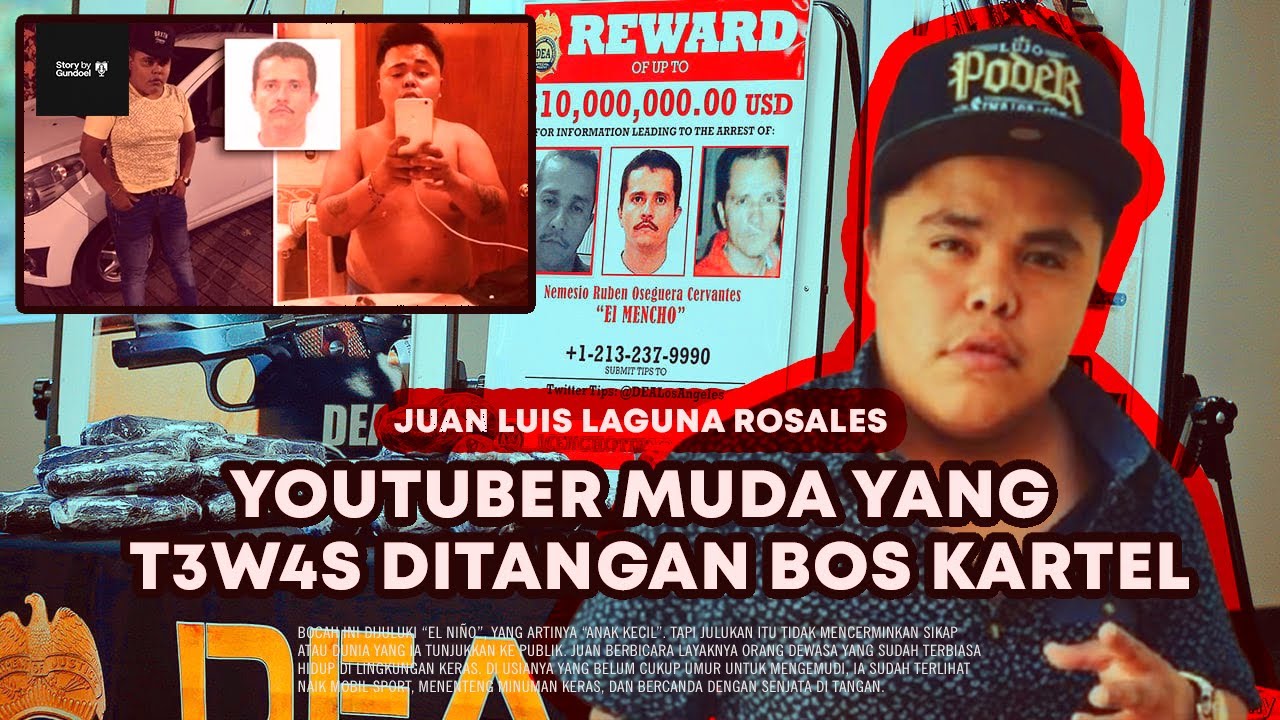
What drew the most attention was his setting. He was frequently seen surrounded by armed men and luxury vehicles commonly associated with the world of drug cartels. Despite his nickname, which translates to “the little kid,” his behavior suggested someone far older. Although he was under the legal driving age, he appeared in videos driving sports cars, holding alcoholic drinks, and joking around with weapons in his hands.
His rise online sparked strong reactions. Many internet users asked how a child could behave so openly in such an extreme way without any visible consequences. Others, however, supported him and turned him into an idol. His follower count kept growing as his name circulated on internet forums, WhatsApp groups, and local media.
He was no longer just a viral figure. He had become a national talking point. Beyond the fame lay troubling questions. Who allowed this to happen?
Did his parents know about and approve of his actions? Was his environment simply looking the other way, or was someone deliberately shaping his public image for a specific purpose? Unlike most influencers, Juan did not promote beauty products, post comedy clips, or create educational content. He sold an image of strength, power, and closeness to the real world of organized crime.
The most worrying part was that this image was wrapped around the body of a teenager who should still have been in school. His case forced many to ask whether fame could be bought with controversy and whether society had begun to normalize something genuinely dangerous. Media platforms such as Instagram and TikTok have the power to elevate almost anyone in a short amount of time, including children. Juan Luis Laguna Rosales became a clear example of that.
His content revolved around violence, firearms, and real armed groups. He was often shown speaking while holding a gun, commenting on important figures in the criminal world, and taunting rivals as if he were part of the conflicts himself. All of it was recorded in short videos filled with symbols of power and extreme bravado. In his clips, he mentioned names linked to cartel networks and expressed support for or closeness to certain sides.
What might have seemed like teenage antics turned into statements with potentially massive consequences. Mexico is not a country where talk about cartels can be taken lightly. Mentioning a name in a disrespectful tone can be a death sentence. The digital world is never fully separate from the real one.
Every video and every word can be read by those who take offense, and retaliation can come at any time. Juan’s fame did not just bring him public attention. It put him on the radar of the very groups he was commenting about. He was no longer a kid playing with a camera.
He had crossed a line that was not safe to cross. In recent years, drug cartels in Mexico have expanded not only their business operations but also their methods of spreading influence. Social media has become a propaganda tool. Documentary-style videos, clips full of weapons, and posts showing off wealth are effective ways to attract attention, especially from young people.
Juan became part of that trend. He was not formally a cartel member, but the lifestyle he showed online was closely tied to the symbols of those organizations. He named major figures, showed closeness to armed men, and lived inside a narrative that matched the image cartels build to inspire both fear and admiration. Many believed Juan was not acting alone.
Behind his videos, there were suspected to be adults who directed him, filmed him, and possibly financed the life he displayed. This led to suspicions that he was being used as a pawn, either for propaganda or as a hidden recruitment tool aimed at younger generations. If a particular cartel faction was directly involved, this was not simply a case of a child going viral. It was a planned strategy to use children to attract sympathy, weaken society’s moral boundaries, and slowly shape the perception that this kind of life was normal or even attractive.
But reality had the final word. When someone goes too deep into a world they do not fully understand, they lose control over their own life. In Juan’s case, the game was no longer about content. It was about life and death.
In December 2021, his fate came to a violent end. His body was found full of gunshot wounds after an attack by an unknown group at an entertainment venue. He was not alone. An adult man believed to be his bodyguard was also found dead at the scene.
The attack was quick, brutal, and clearly directed at Juan. According to reports circulating at the time, his death came shortly after he uploaded a video considered insulting to a major figure in the cartel world. To ordinary people, the video might have looked like a teenager’s joke. But for criminal groups that place high value on honor and power, such statements are a serious offense that must be answered.
In the world of cartels, honor is not just about words. It is the foundation of power. Anyone seen as humiliating a leader can expect a quick reaction. When Juan mentioned the wrong name with a tone seen as disrespectful, he may have crossed a line that could not be forgiven.
The incident made one thing clear. The internet is not a place separated from reality. Every post, especially those involving violent groups, carries risk. For Juan, that risk came in the form of bullets.
His death proved that fame protects no one. He may have been well known and had many followers, but none of that gave him any protection when faced with the anger of a very dangerous real world. His death opened many people’s eyes to the real danger facing children in a country affected by organized violence. He was not the only child involved in such things, but his case became an extreme example of how young people can be dragged into conflicts that should never be their concern.
Children in Mexico, especially in areas with strong cartel influence, live under heavy pressure. On one side, they face poverty, limited access to education, and weak social protection. On the other side, they are shown the image of cartel life as something strong, rich, and feared. In such conditions, many are tempted to join, even if only through image.
Content like the kind Juan created can become an entry point for indirect recruitment. Other children watching might see it as a cool lifestyle. They see the money, the cars, and the power. They do not see the violence, the pressure, and the constant risk of losing their lives.
The state, families, and society are supposed to protect children. But in Juan’s case, all of those protections appeared to fail. He was allowed to go too deep into a world that had no place for a child. Today, Juan Luis Laguna Rosales is only a name.
His social media accounts are still remembered by some. His videos still circulate widely online. But what remains is not just a digital footprint. What remains is the pain, the concern, and the big questions.
Will his death serve as a warning, or will it inspire other children who want fast fame even at great risk? The bigger problem is that there is no system that truly works to protect children from this kind of exploitation. In a country with a weak legal system, where law enforcement can be bought and social media has no effective age limits, children remain vulnerable to being used as tools by anyone with an interest.
The case serves as a reminder that the world has changed, that the line between the real world and the digital world is getting thinner, and that children can become victims not because of their own choices, but because the adults around them allowed it to happen.