Michael Jordan built the most carefully protected public image in sports history—six championships, billions in brand value, and a mythology so powerful that the machinery built to defend it may have also hidden the most serious threat it ever faced. The story begins long before the NBA. His father, James Jordan, loved gambling and taught his son that any game with money on the line was competition in its purest form. People who knew Michael as a kid describe the same thing: he could not tolerate losing at anything, whether cards, golf, or a casual argument.
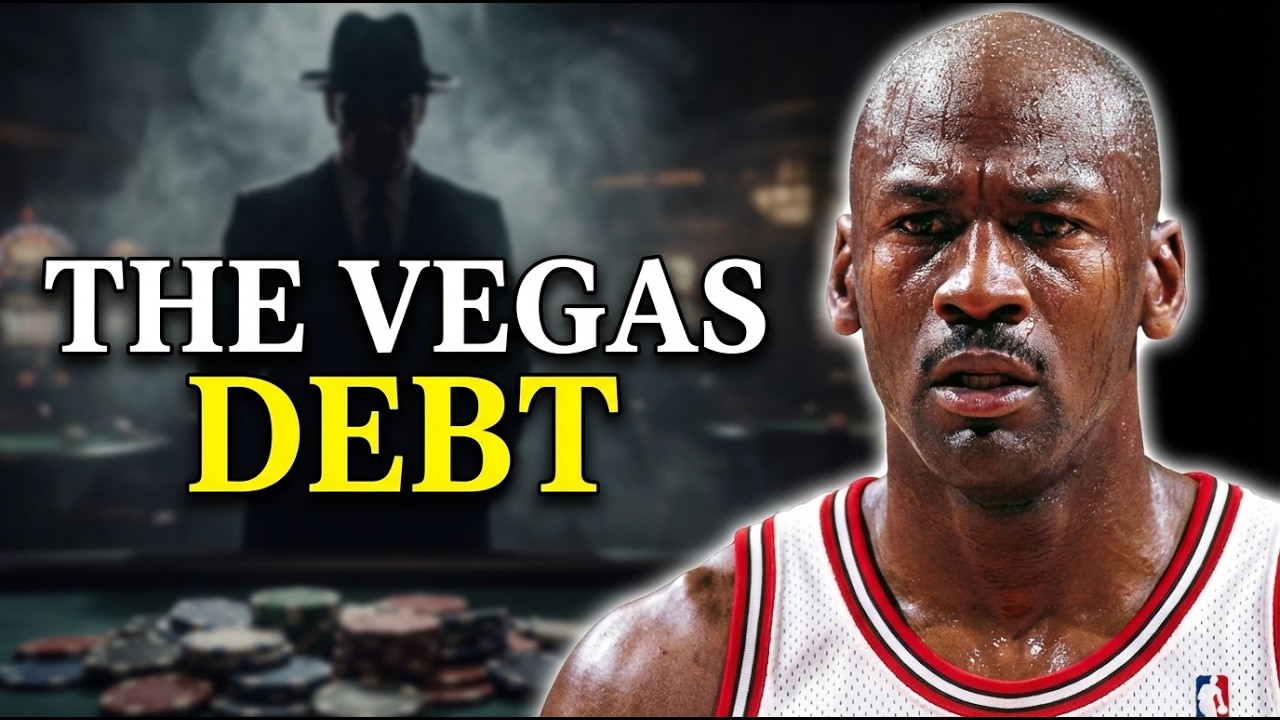
That refusal to accept defeat made him the greatest basketball player ever. It also created a compulsion that would put him at tables with men federal agents were actively investigating. Golf became his obsession in the mid-1980s. Within months he was playing every spare hour and betting sums that escalated steadily.
The card games on Bulls charter flights are now well documented. Teammates knew about them, coaches knew, and reporters suspected. The stakes went from hundreds to thousands of dollars per hand. Scottie Pippen, underpaid and unable to absorb big losses, reportedly positioned himself away from Jordan on planes to avoid being pulled into games he couldn’t afford.
Phil Jackson’s philosophy of treating adults as adults meant Jordan’s habits were treated as his own business, and no one with power had incentive to look too closely. In October 1992, Jordan wrote a $57,000 check to James Bouler, a Charlotte man involved in illegal gambling with a cocaine trafficking conviction. Federal agents seized the check during their investigation of Bouler. Jordan said it was a loan to a friend.
Around the same time, he wrote a nearly identical check—$57,800—to Eddie Dow, a Washington bail bondsman who also ran illegal gambling operations. Dow was shot to death in December 1991 in what investigators said was a conflict tied to his gambling operation. He never had the opportunity to explain what the money represented. Bouler was convicted, and his trial put the Jordan check into public court records.
The FBI’s interest in Jordan then sharpened. Investigators were not trying to build a case that Jordan was a criminal. The picture forming was more uncomfortable: a man whose need for high-stakes action pulled him into rooms with people whose problems could easily become his own. The scale of the golf debts was staggering by any reasonable accounting.
Multiple sources described Jordan routinely wagering five figures per hole on private courses, with single rounds reaching six figures and weekly totals climbing past $300,000. He could afford it financially—his endorsement income was enormous—but the issue was never whether he could pay. It was who he was paying. In the summer of 1993, Richard Esquinas published a book claiming Jordan had accumulated $1.
2 million in golf debts over roughly 18 months of play. Jordan’s camp dismissed the figure as wildly inflated and accused Esquinas of trying to monetize a friendship. The media, still largely protective of Jordan, treated it as a dispute between two parties where neither could be fully believed and moved on quickly. The timing was catastrophic.
In May 1993, Jordan had been photographed leaving an Atlantic City casino at 2:30 in the morning before a playoff game against the Knicks. The Bulls lost that game. Jordan was defiant, insisting he was an adult with the right to manage his own time. But NBA security had already been briefed on the federal investigation, and Commissioner David Stern understood exactly what was in those files.
The critical question in league offices was whether Jordan had ever bet on basketball games. The league hired lawyer Larry Pedowitz to investigate. His report concluded Jordan had not bet on NBA games, and the matter was declared resolved. The report was never released in full.
Critics noted that the investigation was designed with a narrow scope: it asked only whether Jordan bet on basketball. When the answer came back no, the league could close the file and protect its most valuable asset. The broader questions—who Jordan owed money to, what those men knew, what access their knowledge purchased—were not part of the assignment. Stern was the most powerful commissioner in professional sports, having built the modern NBA around the marketing of two transcendent figures: Magic Johnson and Michael Jordan.
By 1993, Magic had retired, leaving Jordan as the entire product, the justification for TV deals, international expansion, and shoe contracts. A genuine scandal would have been catastrophic, not just financially but culturally, because Jordan was the proof that the league had transformed itself from its troubled past. Jordan retired on October 6, 1993. Three championships deep and playing the best basketball of his life, he stood at a podium and said the joy was gone.
He cited the murder of his father, James Jordan, in a roadside robbery in July of that year, and said he had nothing left to prove. The grief was genuine and devastating. But reporters privately asked whether the retirement was entirely his choice, on his timeline, for the reasons he gave. The circumstantial case was hard to ignore: an active federal investigation, the Esquinas book on shelves, the Bouler check in court records, the Atlantic City photographs everywhere, and a sealed internal league report.
Three months later, the most dominant player in basketball was done. Stern consistently denied that any pressure was applied and called the suggestion an insult to Jordan’s legacy. Years later, former league officials acknowledged that the relationship with Jordan was managed with extraordinary care and that certain accommodations were made. What those accommodations consisted of has never been clearly described by anyone with direct knowledge willing to speak publicly.
After an 18-month break, Jordan returned with a two-word fax. Three more championships followed, and the mythology sealed over everything beneath it. After his return, the gambling continued. He was photographed in casinos and played golf for stakes that made partners nervous.
In Las Vegas, he reportedly lost significant sums at blackjack tables, with operators extending unlimited credit and ensuring discreet treatment. People who worked in Vegas casino operations during those years described Jordan arriving in the small hours and moving to private gaming areas. Sports book operators understood that being owed money by Michael Jordan was worth more than the face value of the debt—the connection itself was a form of currency. The Last Dance documentary, released in 2020, presented a controlled narrative.
Jordan acknowledged the card games and golf bets, framing them as the same competitive fire that made him a champion. But Bouler is not in the documentary. Dow is not mentioned. Esquinas is not mentioned.
The dollar figures from court documents are not addressed. The FBI investigation and the Pedowitz review are absent. Questions about the 1993 retirement are not explored. The documented record shows this: Jordan maintained a compulsive gambling habit across at least a decade of his career.
He wrote checks to two men with criminal records who were under active federal investigation for amounts not plausibly explained as casual loans. He accumulated golf debts in the hundreds of thousands by conservative accounting and over a million by the most credible published account. He was investigated by federal law enforcement and by his own league. He was never officially sanctioned.
The league investigation was structured narrowly enough that its conclusion was predetermined by the questions it chose to ask. He retired at the peak of his powers under circumstances never fully explained, and the championships that followed his return covered everything over. What is not known is equally significant. The full scope of the Las Vegas private rooms is unknown.
What Bouler and Dow knew and communicated is unknown. Whether the 1993 retirement was purely grief or involved pressure from somewhere is unknown. What Pedowitz left out of scope and why is unknown. What Stern decided not to pursue, and what that decision cost, is unknown.
What is known is that the infrastructure assembled to protect Jordan’s image was the most sophisticated ever built around an individual athlete. Every institution with a financial stake in his purity had powerful reasons to keep the story manageable. A narrow investigation asked a narrow question and got a useful answer. A retirement paused scrutiny at the moment it was hardest to contain.
A comeback reframed the narrative so completely that the previous chapter stopped feeling relevant. Jordan is now in his sixties. His brand generates revenues dwarfing what he earned playing basketball. The men who held his markers have not spoken publicly in detail.
The federal files contain only fragments of a picture whose complete shape was never officially drawn. In a hotel room on the Las Vegas Strip in the early 1990s, a man who needed to compete more than anything else sat at a table with men who understood exactly what that need was worth. He thought he was just playing cards.
They knew better.