Lucky Luciano did not become the most powerful man in American organized crime by out-shooting his rivals. His rise was built on a brutal, precisely executed double-cross that dismantled the old world of the Mafia and replaced it with a corporate structure that would define organized crime for generations. Before Luciano’s vision took hold, the American Mafia of the 1920s was a fractured and chaotic world. The great wave of Italian immigration brought old-world tribal loyalties to America’s shores, and Prohibition, which began in 1920, poured fuel on the fire, creating immense illegal wealth.
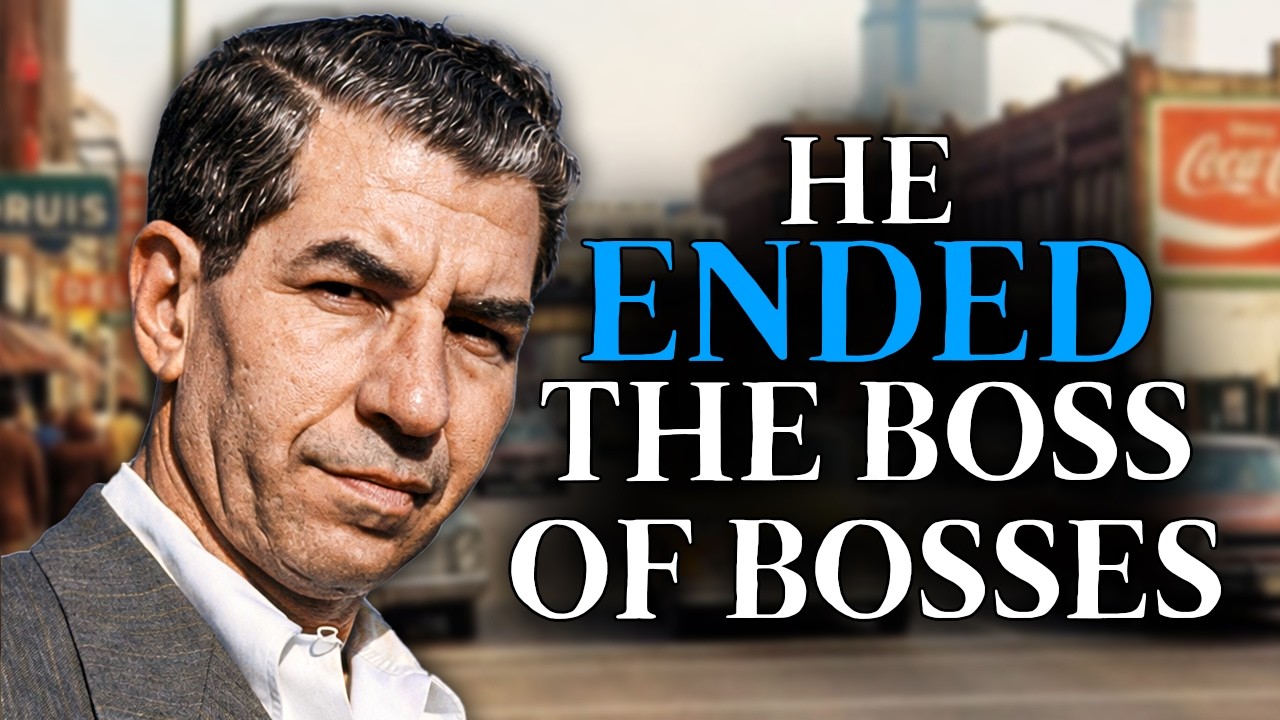
Yet, that wealth was controlled by men whose mindsets were still formed in 19th-century Sicily, where respect was measured by lineage and village loyalty. In New York, this mentality was embodied by two rival bosses: Joe “the Boss” Masseria and Salvatore Maranzano. While they fought a bloody, indecisive war for total control, the younger generation, including Luciano, Vito Genovese, Frank Costello, and Meyer Lansky, saw only chaos and missed opportunity. Luciano, having attached himself to Masseria, observed the conflict with a detached, calculating eye.
He saw that the old bosses treated their younger soldiers as servants, not partners, and he saw that the endless killings were jeopardizing a potential fortune. He was not a patient man in his personal life, but in business, he was the most patient man in any room. He understood that the only way to win was not to fight but to eliminate both old-guard leaders, including his own boss, Masseria, and restructure everything. The first step was eliminating Masseria.
On April 15, 1931, Luciano arranged for a private meeting with his boss at a Coney Island restaurant. After a meal, Luciano suggested a card game. As they played, Luciano excused himself to use the bathroom. The moment he left, four gunmen entered and killed Masseria.
Legend has it he was holding the ace of spades. The most powerful criminal figure in New York was dead, but Maranzano, who had been planning to kill Luciano and his allies, was now a direct threat. With Maranzano declaring himself “boss of all bosses,” Luciano realized he had to act again, and fast. For his next move, Luciano used the intelligence network run by Meyer Lansky.
Learning that Maranzano planned to lure him to a meeting to be killed, Luciano decided to strike first. On September 10, 1931, four men, strangers to the building, posed as government agents and arrived at Maranzano’s real estate office. They disarmed his guards and entered his private office. Inside, they found Maranzano, who had seen Luciano’s plan coming but not the execution, and killed him in a hail of bullets, stabbing him first before shooting him.
Maranzano’s vision of a traditional Mafia died with him, and the old world was gone for good. What came next was not just another power grab. Luciano did not seek to become the next “boss of all bosses. ” Instead, he called a meeting of the top crime bosses and proposed a radical new structure.
He created a “Commission” of the five New York families, where each family would govern its own territory, and no single man could unilaterally order the death of a boss from another family. He also pushed for integrating criminal enterprises across ethnic lines. By doing this, Luciano transformed the Mafia from a collection of warring street gangs into a corporation that operated on business principles rather than old-world loyalty. The structure he established in 1931 would still be recognizable three decades later.
Despite his criminal success, Luciano’s time would come. By 1936, Special Prosecutor Thomas Dewey had Luciano in his sights and secured a conviction against him for compulsory prostitution, a charge Luciano’s supporters claimed was a frame-up. It was a decision that ended up saving Luciano from the fate of his predecessors. In 1946, with the help of his crime family and alleged assistance to the U.
S. government during World War II, his sentence was commuted by Governor Thomas Dewey, the same man who had put him away. As part of the deal, Luciano was deported to Italy, never to be allowed back on American soil. Although he had been exiled, the structures he built survived him.
The Commission he created continued to function, and the families he had helped organize were still operating decades later. Luciano would die in Naples in 1962, a man whose single greatest legacy was not the men he killed, but the organizational blueprint he left behind. He had turned the mob from a street gang into a corporation, and in doing so, he had built a world that would outlive him.