
The specter of a Nazi warplane appearing over the skyscrapers of Manhattan has long been relegated to the realm of wartime fantasy, a “what if” scenario dismissed by historians as technologically impossible. However, newly surfaced claims from a former Luftwaffe pilot, combined with declassified documents and a re-examination of a mysterious captured aircraft, suggest that Adolf Hitler’s dream of bombing New York City was not merely a pipe dream but a meticulously planned, near-executed operation that involved a daring refueling stop on the frozen shores of Greenland.
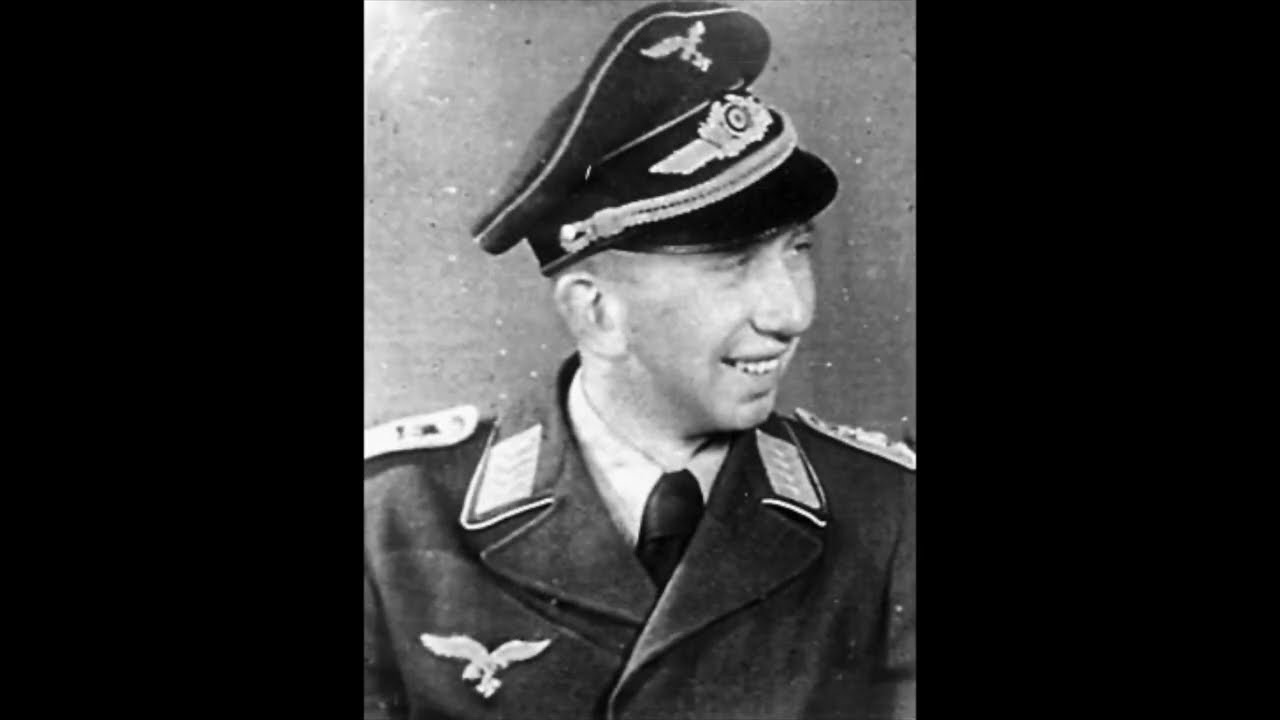
The startling revelation came to light in 2005 when Peter Brill, a 19-year-old Luftwaffe lieutenant during the final years of World War II, came forward with a detailed account of his training for a top-secret mission. Brill claimed he was part of an elite group of pilots handpicked for an intensive flying and navigation course, specifically tailored for an unprecedented transatlantic strike. The aircraft chosen for this audacious mission was the Heinkel He 177, Germany’s only purpose-built heavy bomber, a formidable yet notoriously troubled machine that had already seen service in the desperate bombing raids over England.
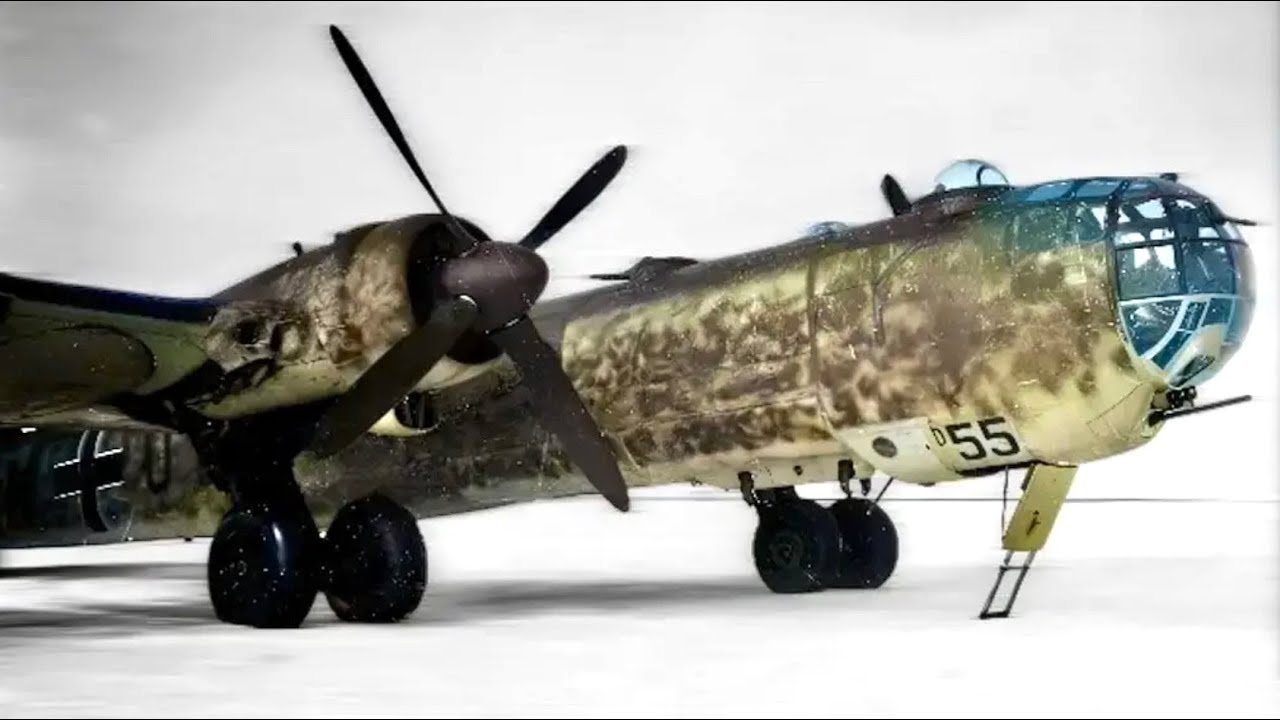 The He 177, nicknamed the “Greif” or Griffin, was a beast of an aircraft, but its early models were plagued by engine fires and mechanical failures. For the New York mission, however, the Luftwaffe had developed a highly advanced variant, the He 177 A-7. This upgraded version boasted a significantly larger wingspan of 36 meters and was powered by four massive Daimler-Benz 613 engines, each producing a staggering 3,748 horsepower.
Only a handful of these super-bombers are believed to have ever been built and flown, making them one of the most secretive and advanced weapons in the German arsenal.
The key to understanding the feasibility of this audacious plan lies in a peculiar aircraft discovered by Allied forces at the end of the war. In 1945, at a Luftwaffe airbase in Czechoslovakia, military investigators stumbled upon a heavily modified He 177, designated the V38. This particular aircraft was an enigma.
Its bomb bays had been ingeniously welded together to create a single, cavernous space, large enough to accommodate a massive single bomb or, as some experts now believe, a series of auxiliary fuel tanks. This discovery has fueled decades of speculation, with some fringe theorists suggesting it was designed to carry a German atomic bomb—a theory soundly rejected by postwar investigations. The more plausible explanation, supported by the recent testimony, is that the V38 was the prototype for the New York raider, its modified interior designed to extend its range to the absolute limit.
To understand the logistics of the planned attack, one must look at the stark geography of the North Atlantic. The direct distance from Trondheim, Norway, where the mission was slated to originate, to New York City is approximately 3,590 miles. Standard range calculations for the He 177 A-5, a model similar to the A-7, show a maximum range of 3,700 miles without a bomb load, which drops to 3,300 miles when carrying a 1,000-kilogram bomb.
 This meant a one-way mission was theoretically possible, but it would leave no margin for error, no fuel for maneuvering over the target, and absolutely no chance of return. The pilots were, in effect, being trained for a suicide mission.
Brill’s testimony, however, reveals a more complex and daring plan that involved a secret layover in the most unforgiving environment on Earth: Greenland. The plan called for the He 177s to fly from Trondheim to a pre-established secret landing strip on the sea ice near Cape Susi in northeastern Greenland. This was not a random choice.
During the war, the Germans and Allies fought a clandestine “Weather War” across the Arctic, establishing remote automated and manned stations to gather vital meteorological data. One such station, code-named “Bassgeiger,” had been set up at Cape Susi in 1943, and its existence proved a crucial point: a large German aircraft could land and take off from the Arctic ice completely undetected.
The story of the Bassgeiger station is a testament to German tenacity. Established by an eight-man team transported by the converted trawler Koburg, the station faced a series of catastrophic setbacks. The ship became trapped in the ice, was crushed, and eventually sank.
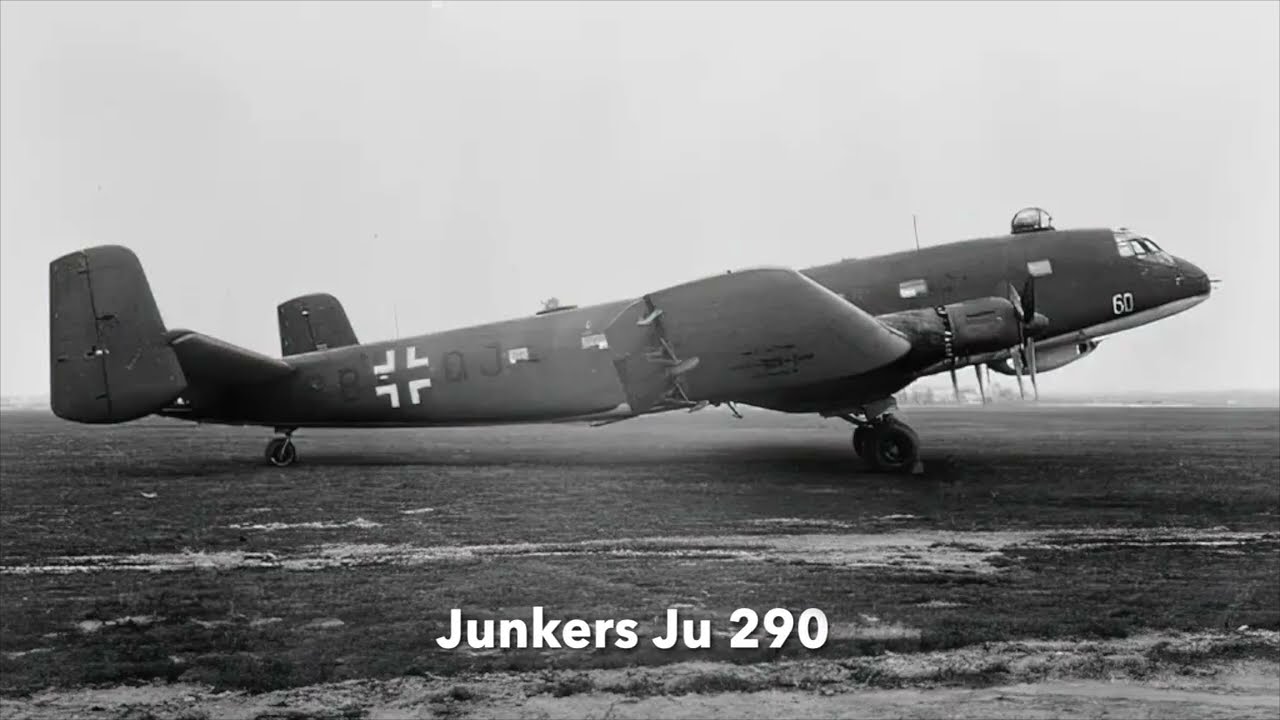
 The crew was forced to build makeshift shelters in snow caves and a small wooden hut to house their vital radio equipment. After a skirmish with a Danish sledge patrol, the stranded Germans radioed for evacuation. In a stunning display of logistical capability, a massive Junkers Ju 290 transport aircraft flew from southern France, landed on a stretch of firm sea ice on June 3, 1944, and successfully evacuated all 26 men on a round trip of over 5,000 miles.
This successful rescue mission proved to German high command that the Greenland refueling stop for the New York raid was not only possible but viable. The plan was to use Ju 290s to ferry vast quantities of aviation fuel from Norway to the Greenland ice strip, stockpiling it for the arrival of the He 177 strike force. The distance from Trondheim to Cape Susi is roughly 1,370 miles, a flight well within the He 177’s range.
This would allow the bombers to take off from Norway with a significantly reduced fuel load, enabling them to carry a much heavier payload of bombs. Upon landing in Greenland, their tanks would be topped up, and they would then embark on the final 2,454-mile leg to New York City.
The revised flight plan would have allowed each of the five He 177s to carry at least 2,000 kilograms of bombs, a significant enough load to cause substantial damage and chaos in the heart of Manhattan. The plan was for the bombers to approach New York, drop their payloads, and then fly out to sea to rendezvous with waiting U-boats. The crews would bail out over the ocean, and the submarines would rescue them before the bombers crashed into the Atlantic.
 This final phase, however, remains the most baffling and dangerous part of the entire operation. By 1944, the U. S.
East Coast was a heavily patrolled killing zone for U-boats, and the idea of a submarine surfacing to coordinate a rescue with aircraft overhead seems like a death sentence.
Military historians are divided on this point. Some believe the U-boat rescue was a fabrication, a desperate lie told to the pilots to give them hope for survival on a mission that was always intended to be one-way. The Luftwaffe, by this stage of the war, was suffering immense losses and could ill-afford to sacrifice its most advanced heavy bombers and trained crews for a symbolic gesture.
Yet, the very fact that they trained for it, modified aircraft for it, and established the logistical groundwork suggests a level of commitment that is hard to dismiss. The plan was likely shelved not because it was deemed impossible, but because the strategic cost outweighed the potential psychological benefit. A single raid on New York, while a propaganda coup, would have done little to alter the course of a war that Germany was decisively losing.
The legacy of this near-miss is a chilling reminder of how close the world came to a very different reality. The idea of swastika-adorned bombers over the Manhattan skyline is a powerful and terrifying image, one that forces a re-evaluation of the war’s reach and the desperate gambles of a dying regime. The He 177 V38, captured in Czechoslovakia, stands as a silent, physical testament to this ambition.
Its strange, cavernous bomb bay is no longer a mystery but a piece of a puzzle that, thanks to the testimony of a then-19-year-old pilot, has finally been assembled. While the bombs never fell, the plan was real, the aircraft were built, and the pilots were trained. The raid on New York was not a fantasy; it was a mission that was only forestalled by the relentless advance of the Allied armies and the final, crushing defeat of Nazi Germany.