
The world believed it was watching an empire collapse under the weight of war, revolution, and political incompetence. But the final, fatal unraveling of the three-hundred-year-old Romanov dynasty was not a story of Bolshevik conspiracies or military defeat, but of a private tragedy so profound and a conviction so absolute that it blinded a mother to the abyss opening beneath her feet.
In the cold, waning days of February 1917, while the Russian capital descended into bloody chaos, the most powerful woman in the world was walking the corridors of the Alexander Palace, exhausted and isolated. Four of her five children lay upstairs, delirious with measles. Her son, the heir to the throne, was among them, a fragile boy whose secret illness had governed her every decision for over a decade.
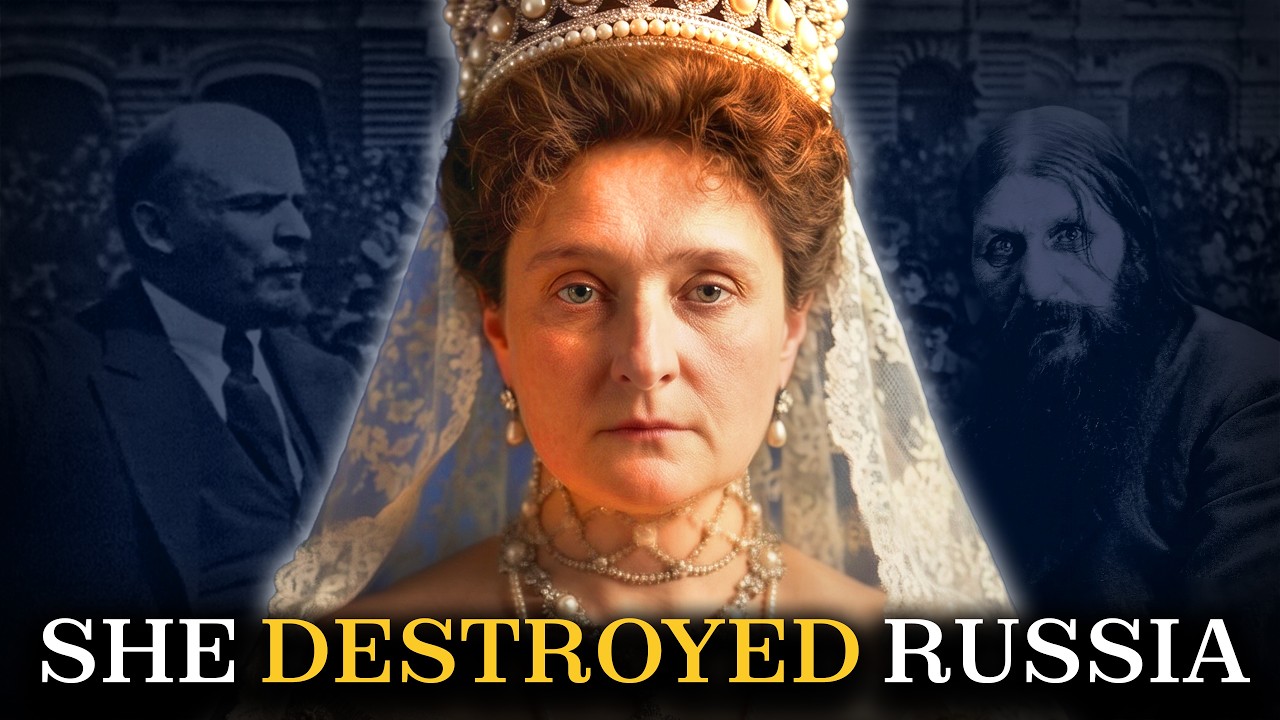 As rioters smashed bakeries in Petrograd and soldiers began to mutiny, Empress Alexandra Feodorovna composed a letter to her husband, Tsar Nicholas II, dismissing the revolution as a “hooligan movement” that would dissolve if only “the weather would turn very cold.” It was a catastrophic misreading of reality, born from a lifetime of deliberate isolation and a singular, unshakeable belief that compromise was a sin against God.
This is the story of how a marriage built on profound tenderness and a mother’s desperate love became the primary instrument of the dynasty’s destruction. It is not a story of treason, as the pamphleteers of the era insisted, nor one of sexual depravity. The truth is far stranger and more disturbing.
A sincere woman, utterly devoted to her husband, her son, and her God, believed with the full force of her being that the autocracy was a divine institution, immune to the petty demands of politics. And she was willing to sacrifice an empire to prove it.
Born Princess Alix of Hesse and by Rhine in 1872, her early life was defined by tragedy. At the age of six, diphtheria swept through her German court, killing her younger sister and her mother, Princess Alice, who had contracted the disease while nursing her children. The bright, cheerful child nicknamed “Sunny” was transformed into a watchful, withdrawn figure, haunted by loss.
Her grandmother, Queen Victoria, took charge of her education, instilling in her a rigid Victorian morality where right was right, wrong was wrong, and a monarch’s duty was derived directly from God, not from negotiation. These lessons in German Lutheranism and English severity would later map perfectly onto the most reactionary doctrines of the Russian Orthodox Church.
When she finally married Nicholas in 1894, the transition was jarring. The peer, as she was known, converted to Orthodoxy with a convert’s zeal. For a woman who had lost everything she loved, the faith became a fortress, an absolute truth in a foreign and hostile land.
She absorbed the ideology of Konstantin Pobedonostsev, the reactionary statesman who had taught Nicholas that any concession to liberalism was a betrayal of the divine compact between the Tsar and his people. For Alexandra, this doctrine became her oxygen. An unyielding God demanded an unyielding Tsar.
To accept a limitation on his authority was not bad politics; it was a sin.
 Her failure to integrate into the social life of the Petersburg court compounded her isolation. She viewed the aristocracy and the educated classes as a “thin layer of foreign poison floating on top of an ocean of authentic Russian devotion,” a group whose complaints were mere noise against the sacred loyalty of the peasantry. She retreated inward, building a world around her husband and her four daughters.
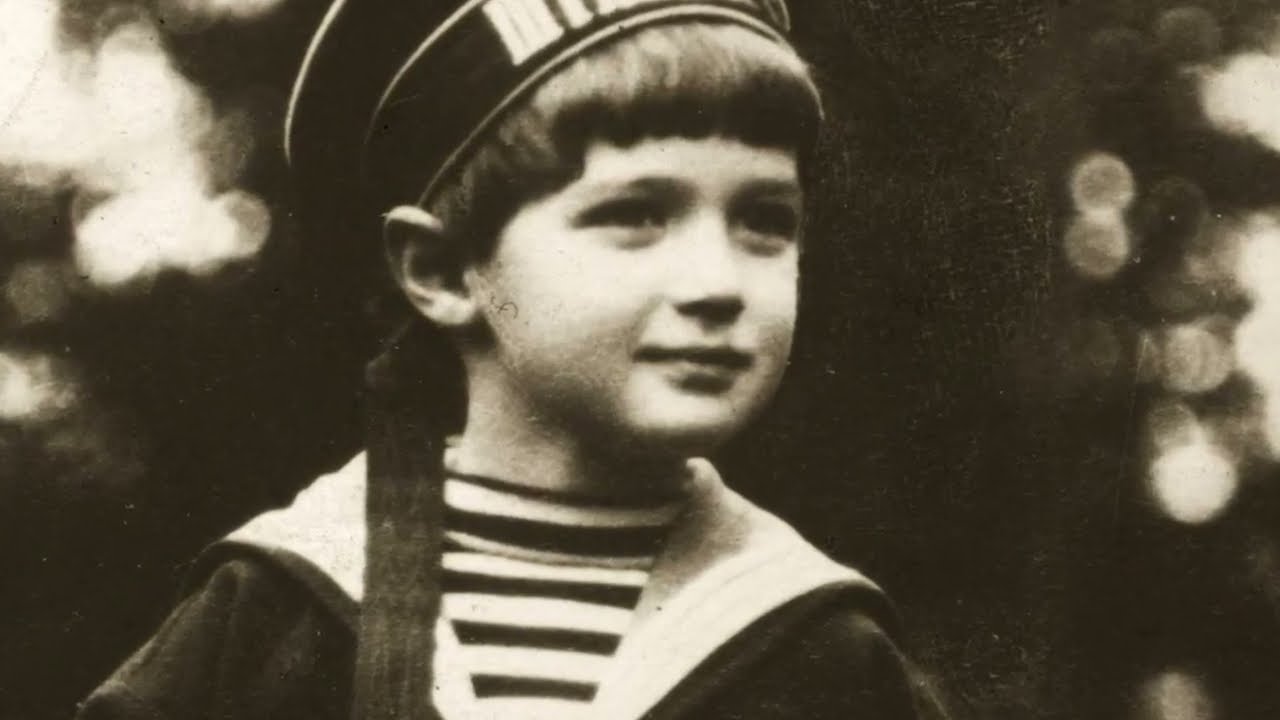
But the pressure to produce a son was immense. When her son, Alexei, was finally born in 1904, the joy was immense, but it was shattered within weeks when doctors diagnosed him with hemophilia, a severe bleeding disorder passed down through Queen Victoria’s line. Terrified that any sign of weakness would be exploited by the dynasty’s enemies, the parents swore a disastrous oath of silence, attempting to hide a condition that would define their lives.
The boy’s suffering was Alexandra’s agony. She watched him bleed and bruise, and the court watched her withdraw further. When doctors proved powerless, she fell under the sway of mystics, desperately seeking any cure.
And then, in 1905, she met Grigori Rasputin. The man was a wandering Siberian peasant with a magnetic presence and unconventional religiosity, not the sexual degenerate of legend. The investigations conducted after the revolution found no evidence of impropriety.
What he offered was something more potent: he could stop the bleeding. By dismissing the doctors and their blood-thinning medications, and providing a calming presence, Rasputin seemed to perform miracles. To a desperate mother, he was sent by God.
From that moment, Alexandra’s fate and that of Russia were sealed. His opinions became divine commands. To attack him was to attack her son, to attack the dynasty, to defy God.
When Germany went to war with Russia in 1914, the Tsar made the fatal decision to take personal command of the army in 1915, a move heavily lobbied for by Alexandra, who believed it would fulfil his mystical connection to his soldiers. He left the capital to lead the army, leaving his wife in charge of the home front. This was the empire’s true death knell.
 For eighteen months, Alexandra and Nicholas corresponded daily, and her letters were a relentless stream of political poison. She demanded the dismissal of any minister who cooperated with the Duma, the parliament she considered an affront to God, and the appointment of her own sycophants, often on Rasputin’s recommendation. The “ministerial leapfrog” began.
Four prime ministers and a revolving door of other officials passed through the government in two years, each more incompetent than the last, each crippled by the knowledge they served at the pleasure of the Tsarina and her peasant friend, not the needs of a nation at war.
The final appointments were catastrophic. A man suffering from dementia was put in charge of the police and food supply of the capital. This was the grist for the rumor mill.
In the public imagination, the German-born Empress was a traitor, a spy who shared her bed with a peasant, orchestrating Russia’s defeat for the Kaiser. The charge of treason was false, but it did not matter. The nation was bleeding, starving, and beaten.
They needed a narrative, and the “German Woman” in the palace provided one. The Duma leader’s famous speech, “Is this stupidity or is this treason?” crystallized the national fury, implicating the Empress without even naming her.
As the regime teetered, the aristocracy themselves tried to intervene. Grand Dukes, aunts, and even the Tsar’s own mother warned Nicholas that Alexandra was destroying the dynasty. They were ignored.
They begged her to see reason, and the door was slammed in their faces. Seeing no other option, a group of them, including Prince Felix Yusupov and Grand Duke Dmitri Pavlovich, a cousin of the Tsar, took the law into their own hands. In December 1916, they assassinated Rasputin in a bloody, botched 𝒶𝒻𝒻𝒶𝒾𝓇.
 They believed killing the peasant would free the Tsar from his influence and save the monarchy. Instead, it hardened Alexandra’s grief into a fanatical rage. She demanded severe punishment for the conspirators, which Nicholas refused.
The murder of Rasputin was the last desperate act of a doomed ruling class, and it failed.
On March 8, 1917, the bread riots in Petrograd escalated beyond control. The garrison, underfed and exhausted, refused to fire on the crowds, instead turning their rifles on their officers. With the capital ablaze, Nicholas was stranded at army headquarters, and his generals, convinced he could no longer rule, sent telegrams demanding his abdication.
On March 15, in a railway carriage at Pskov, Nicholas II abdicated the throne for himself and his son, ending three centuries of Romanov rule in a few brief moments. The dynasty did not fall to the Bolsheviks; it was handed to them.
The family was placed under arrest, moved to Siberia, and ultimately to Ekaterinburg. In the early hours of July 17, 1918, they were led into a basement and executed by firing squad. The irony that historians still grapple with is that Alexandra’s motives were pure in her own mind.
She acted out of love—a fierce, protective, and unshakable love for her son and her husband. She was no traitor, no degenerate. She was a frightened mother who believed she was fulfilling God’s will.
But in her absolute conviction, she destroyed the very institutions that could have saved her family, alienating the army, the aristocracy, and the government until no one was left to defend them. The revolution she dismissed as a “hooligan movement” born of a cold snap devoured her, her husband, her beautiful daughters, and her little boy. Her personal tragedy became a political catastrophe of such magnitude that it reshaped the entire world, proving once more that history is not driven by abstract forces, but by the desperate, blinding love and fatal miscalculations of a single human heart.