Joseph Bonanno, founder of one of New York’s five original crime families and the youngest boss in American Mafia history, died quietly in his bed in Tucson, Arizona, on May 11, 2002, at the age of 97. No bullets. No shallow graves. No FBI standoff when his heart stopped.
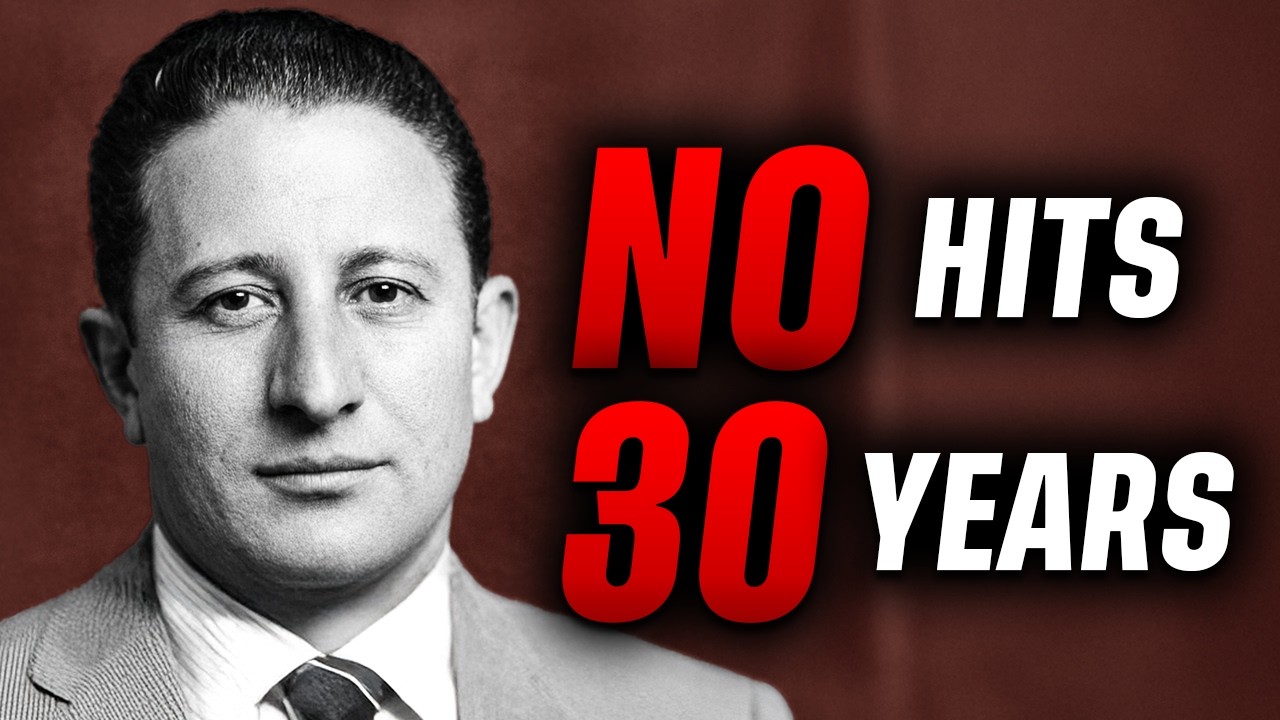
Every man he had ever sat across from on the Mafia’s ruling commission was already dead, most of them violently. Bonanno outlived them all. The popular story of the Mafia rewards violence: the bosses who ordered the most hits, ruled through the most fear, and buried the most enemies were the ones who survived. For most of them, that story ended in a federal courtroom or a parking lot with bullets in the back of the head.
Bonanno ended in a hospital bed with his family around him, at an age most men in legitimate professions never reach. The reason he survived when everyone else didn’t comes down to one decision he made early and one principle he followed for three decades. He refused to kill his way to the top, and he refused to kill his way to stay there. Joseph Charles Bonanno was born January 18, 1905, in Castellammare del Golfo, a small port town on the northwestern coast of Sicily.
The town was a network and bloodline of men who shaped American organized crime. Salvatore Maranzano and Stefano Magaddino both came from Castellammare, as did the men who would fight the Castellammarese War that birthed the modern American Mafia. Bonanno’s father died when he was 15, and his mother died shortly after. Essentially alone by his teens, he came to America and found his family in the Sicilian immigrant underworld of New York.
He was disciplined, understood people, and could command respect from violent men without raising his voice. By 1928, he was a significant figure in the Sicilian faction of New York organized crime, not a killer or enforcer but a strategist who thought several moves ahead. When the Castellammarese War broke out between Salvatore Maranzano and Joe Masseria, Bonanno picked the right side, survived the bloodshed, and emerged in 1931 at 26 years old as boss of his own crime family. He became the youngest boss in the history of American organized crime, a record that has never been broken.
That year, Lucky Luciano had Masseria killed, Maranzano was murdered four months later, and the entire architecture of American organized crime was rebuilt. Luciano created the commission, a governing body for the five New York families. Sitting at that table, the youngest man in the room, was Joe Bonanno. Most bosses in that room built their reputations on bodies.
Albert Anastasia, called the Lord High Executioner, ran Murder Incorporated and killed for reasons that sometimes existed only in his own head. Vito Genovese poisoned rivals and manipulated the commission like a chessboard. These were men who understood power as violence. Bonanno operated on a different principle, one he later articulated in his memoir: a man of respect doesn’t need to demonstrate his power through constant displays of it.
Power that has to be proven every day is performance, and performance gets you killed, because the moment the performance slips, the men watching are already calculating how to replace you. Bonanno didn’t perform. He governed. He built legitimate businesses alongside criminal ones, maintained discipline without ruling through terror, and resolved disputes through negotiation before they became conflicts.
When conflicts couldn’t be resolved, he disengaged and walked away, taking the loss. Other bosses called this weakness. It was a strategic calculation: every time Bonanno walked away from a confrontation, he stayed alive to walk into the next one. For 30 years, from 1931 to 1964, Bonanno ran one of the five most powerful criminal organizations in America without ordering a single documented assassination of a rival boss or commission member.
In a world where men were killed for looking at the wrong person, owing money, or talking to the FBI, Bonanno maintained peace not because there were no threats, but because he refused to let threats escalate into wars. His response to threats was always the same: negotiate, compensate, withdraw if necessary, but don’t shoot first. Every time he refused to escalate, he put the moral weight on the other side. If someone came after him, they were the aggressor, the ones breaking commission rules, the ones who would have to answer to the other families.
Bonanno was never the problem, and that perpetual political innocence protected him in ways an army of gunmen never could. The strategy almost failed in 1964. By the early 1960s, Bonanno had developed a plan. Depending on which account you believe, it was either an ambitious restructuring of commission power or an actual plot to assassinate rival bosses including Carlo Gambino and Tommy Lucchese.
The plan, known as the Banana Split or the Banana War, was supposedly revealed to the commission by one of Bonanno’s own trusted lieutenants who had secretly flipped. The commission turned against him. Other families began maneuvering against his territory. On October 19, 1964, two gunmen abducted Bonanno off Park Avenue in Manhattan.
The official story changed several times. Bonanno claimed he was kidnapped by enemies. Others claimed he staged his own disappearance to avoid a commission hearing. The FBI wasn’t sure, and neither was the commission.
For the next two years, Bonanno was in the most dangerous position a mob boss can occupy. His family was under siege, rival factions within his own organization were fighting for control, and the commission wanted him gone. He didn’t launch a war or order retaliatory hits. He negotiated his own exit, reluctantly and voluntarily, and agreed to step back from day-to-day operations and eventually retire.
He gave up power rather than spend lives defending it. The men who chose violence as their primary instrument didn’t fare as well. Albert Anastasia got shot seven times in a barber’s chair at the Park Sheraton Hotel in October 1957 at age 63. Joe Colombo got shot in the head at his own rally in Columbus Circle in June 1971, spent seven years in a coma, and died in 1978 at 54.
Carmine Galante was shot dead in the garden of a Brooklyn restaurant in July 1979, still holding a cigar between his teeth at 69. The pattern was clear. The bosses who ruled through fear died through fear. If you build your power by being willing to kill anyone, you teach everyone around you that killing is how power transfers, and eventually someone younger and hungrier turns that lesson back on you.
Bonanno understood that violence is a debt, and every hit ordered is money borrowed against your own life. By the late 1960s, with the Bonanno war settled and his official standing on the commission finished, Bonanno did something no major mob boss had ever done voluntarily. He moved to Tucson, Arizona. He bought a house, put down roots, and lived openly without bodyguards.
The FBI watched him for decades but waited for something that never happened. He tended his garden, attended church, and had dinner with his family. In 1983, he published his memoir, A Man of Honor, the first sitting or former mob boss to write a book about his own life. The commission was furious.
Some members believed he’d broken the code of silence. Bonanno maintained he’d revealed nothing that could hurt anyone still living. He went on television to talk about it, and nothing happened to him, because nobody was going to fly to Tucson to kill a 78-year-old man writing about events from 40 years ago. The FBI eventually concluded that Bonanno had been out of active organized crime for years.
He was an old man in the desert writing about the past, and old men in the desert writing about the past don’t get shot. When Bonanno died on May 11, 2002, at 97, the five families he helped build in 1931 were unrecognizable. The Gambinos were fractured after John Gotti’s conviction. The Luccheses had been gutted by federal prosecutions.
The Colombos had spent years shooting each other in an internal war. The Genoveses were weakened. The Bonanno family had been through Carmine Galante’s assassination, the Pizza Connection heroin trial, and so many federal investigations that the name had become synonymous with exposure. The institution Bonanno helped design was dismantled by the exact forces he’d spent 30 years refusing to feed: violence, betrayal, and greed.
Every man who sat alongside him on that original commission met a worse end. Lucky Luciano died in exile in Naples in 1962. Vito Genovese died in a federal prison cell in 1969. Frank Costello survived an assassination attempt but spent his final years diminished.
Meyer Lansky made it to 80 but spent his last years in courtrooms fighting extradition. Bonanno outlived every single one of them by decades. He understood something the others didn’t: in a world built on violence, the man who uses violence least controls it most. Everyone else was trapped in an escalation they couldn’t stop because they were the ones who started it.
Bonanno stepped off that treadmill, not because he was soft or afraid, but because he was the only one smart enough to see where it ended. In a world where the average mob boss died violently before 60, Bonanno’s death at 97 from heart failure in his own bed, with his family around him, was not just survival. It was a masterpiece.